
Holistic Dentist and Upper Cervical Chiropractic: A Powerful Combination for TMJ and Neck Pain Relief
By Dr. Rusty Lavender, D.C. — upper cervical chiropractor, Lavender Family Chiropractic, Sarasota, FL. Reviewed and updated October 2026.
Our complete guide to TMJ treatment in Sarasota covers the jaw–neck connection, who treats TMJ, and how we evaluate the upper neck.
Holistic Dentist and Upper Cervical Chiropractic Care: In today’s fast-paced world, many individuals are suffering from persistent jaw pain, headaches, and neck discomfort without knowing the true source of the problem. For those struggling with temporomandibular joint (TMJ) disorders and chronic neck pain, a holistic approach that integrates both dental and chiropractic care can offer lasting relief. This in-depth blog post explores how a holistic dentist specializing in TMJ and neck pain, paired with an upper cervical chiropractor—such as those at Lavender Family Chiropractic—provides a comprehensive solution that addresses the root causes of pain rather than merely masking the symptoms.
In this post, we will delve into:
- What TMJ is: An overview of the temporomandibular joint, its function, and the common symptoms of TMJ disorders.
- The connection between TMJ and upper neck misalignments: How postural issues and spinal misalignments can trigger or exacerbate TMJ disorders.
- The holistic dentistry approach: How holistic dentists look beyond the teeth to evaluate overall health and address interconnected issues.
- Upper cervical chiropractic adjustments: How these specific adjustments realign the upper neck to support proper jaw function.
- The synergy between holistic dentistry and upper cervical chiropractic care: Why combining these two disciplines creates a powerful strategy for achieving optimal health.
Holistic Dentist and Understanding TMJ Disorders
What is the TMJ?
The temporomandibular joint (TMJ) is one of the most complex joints in the human body. Located on each side of your head in front of your ears, these joints connect the jawbone to the skull. They allow for the smooth movement of the jaw necessary for talking, chewing, and even yawning. Given its pivotal role, even slight disturbances in the TMJ can have significant consequences on overall function and comfort.
Symptoms and Challenges of TMJ Disorders
People suffering from TMJ disorders may experience a wide range of symptoms, including:
- Jaw pain or tenderness: Often occurring near the joint, pain can worsen with movement.
- Limited jaw movement or locking: This can lead to difficulty opening the mouth wide or chewing properly.
- Clicking, popping, or grating sounds: Abnormal noises during jaw movement indicate irregular joint function.
- Headaches and earaches: Misalignment or inflammation in the TMJ can contribute to tension headaches or a feeling of fullness in the ears.
- Neck and shoulder pain: Due to the interconnectedness of the jaw, neck, and shoulder muscles, TMJ dysfunction can lead to discomfort in these areas as well.
These symptoms can be chronic and debilitating, affecting daily activities and quality of life. Many patients initially seek conventional dental treatments, such as bite guards or dental splints, but often these approaches only address the symptoms rather than the underlying causes.
The Connection Between TMJ and Upper Neck Misalignments
How the Jaw and Neck Work Together
The human body is an integrated system, and the structures of the head and neck are no exception. The muscles, nerves, and joints in these regions work in tandem to support functions like chewing, speaking, and maintaining posture. When there is an imbalance or misalignment in one area, it can cascade into dysfunction elsewhere.
Upper Cervical Misalignments Explained
The upper cervical spine, which includes the atlas (C1) and axis (C2) vertebrae, plays a critical role in supporting the head and facilitating movement. Even a slight misalignment in these vertebrae can create a domino effect:
- Altered Neural Communication: Misalignments can compress or irritate nerves that serve both the jaw and the head, leading to pain and dysfunction.
- Muscular Compensation: When the upper neck is misaligned, muscles may work harder to stabilize the head, leading to tension that radiates into the jaw and TMJ.
- Postural Shifts: A misaligned neck can alter overall posture, causing the jaw to settle into an unnatural position, which may trigger or worsen TMJ symptoms.
By understanding these connections, it becomes clear that a successful treatment strategy for TMJ must also address the health and alignment of the upper cervical spine.
Holistic Dentistry: Addressing the Whole Picture
What is Holistic Dentistry?
Holistic dentistry goes beyond traditional dental care by considering the mouth’s health as an integral part of overall well-being. Rather than focusing solely on symptoms, holistic dentists assess the underlying causes of dental and orofacial issues, including TMJ disorders. Their approach is rooted in the belief that optimal oral health contributes to—and is influenced by—the health of the entire body.
Principles of Holistic Dentistry for TMJ and Neck Pain
- Whole-Body Health: Holistic dentists consider how systemic issues—such as nutritional imbalances, stress, and environmental toxins—might contribute to TMJ dysfunction and chronic pain.
- Biocompatible Treatments: Instead of relying on synthetic materials, many holistic practitioners opt for natural, biocompatible alternatives that work harmoniously with the body.
- Interdisciplinary Collaboration: Recognizing that the jaw is part of a larger system, holistic dentists often collaborate with other healthcare professionals, including upper cervical chiropractors, to ensure comprehensive care.
- Preventive Focus: Rather than simply treating symptoms as they arise, holistic dentistry emphasizes prevention and maintaining balance within the body. This proactive approach is essential for long-term relief from TMJ and neck pain.
Techniques and Therapies Employed
Holistic dentists may use a range of techniques to treat TMJ disorders, including:
- Occlusal Analysis and Adjustment: Evaluating the bite to identify areas of misalignment and imbalance.
- Custom-Fitted Splints: Designed to help realign the jaw and reduce clenching or grinding.
- Nutritional Counseling: Offering dietary advice to reduce inflammation and support overall health.
- Stress Management: Techniques such as biofeedback or relaxation therapies to decrease muscle tension.
- Collaboration with Chiropractors: Working in tandem with upper cervical chiropractors to address neck misalignments that contribute to TMJ dysfunction.
This comprehensive approach not only targets the immediate pain but also works to restore harmony to the interconnected systems of the body.
The Role of Upper Cervical Chiropractic Adjustments
Understanding Upper Cervical Chiropractic Care
Upper cervical chiropractic care focuses specifically on the alignment of the top two vertebrae—the atlas and axis—which have a profound influence on the body’s nervous system and overall posture. When these vertebrae are misaligned, they can create a cascade of problems that affect not only neck function but also jaw movement.
How Misalignments Affect TMJ
A misaligned upper cervical spine can disturb the delicate balance of the head and neck. Some key effects include:
- Nerve Impingement: Misalignments can put pressure on the nerves that control the muscles around the jaw, leading to pain, inflammation, and dysfunction.
- Muscular Tension: The muscles surrounding the upper neck and jaw may become overactive in an effort to compensate for poor alignment, leading to chronic tension and spasms.
- Reduced Range of Motion: Improper alignment can limit the natural movement of the neck and jaw, contributing to stiffness and further discomfort.
Benefits of Upper Cervical Adjustments
Upper cervical chiropractic adjustments are designed to correct these misalignments safely and effectively. The benefits include:
- Enhanced Neural Communication: By restoring proper alignment, adjustments can relieve nerve pressure and improve the overall function of the nervous system.
- Reduced Inflammation: Proper alignment decreases abnormal strain on muscles and joints, reducing inflammation and pain.
- Improved Posture: With a balanced cervical spine, overall posture improves, which in turn supports proper jaw alignment.
- Enhanced Overall Health: Better neural communication and reduced pain contribute to improved quality of life and well-being.
Upper cervical chiropractic care is particularly effective when integrated with holistic dental practices, as both disciplines share the goal of addressing the root causes of pain and dysfunction rather than just managing symptoms.
Lavender Family Chiropractic: A Complement to Holistic Dentistry
Who Are Lavender Family Chiropractic?
Lavender Family Chiropractic is known for its specialized approach in upper cervical care. Their focus on gentle, precise adjustments aligns perfectly with the principles of holistic health. Patients seeking “upper cervical chiropractor near me” have consistently praised the clinic for its commitment to restoring balance and function to the head, neck, and jaw.
Integrating Care for Maximum Benefit
When a holistic dentist and an upper cervical chiropractor work together, the treatment plan addresses multiple facets of TMJ and neck pain:
- Coordinated Evaluations: Both practitioners assess the patient’s overall health, ensuring that dental issues and spinal misalignments are evaluated together.
- Personalized Treatment Plans: Treatment is tailored to each patient’s unique needs, often combining dental therapies, occlusal adjustments, and precise chiropractic corrections.
- Ongoing Collaboration: Regular communication between the holistic dentist and the upper cervical chiropractor ensures that any adjustments in one area support improvements in the other.
This interdisciplinary approach is particularly beneficial for patients who have experienced little relief from traditional treatments. By addressing both the dental and musculoskeletal components of TMJ and neck pain, patients can experience faster, more comprehensive recovery.
Patient Success Stories
Many patients report dramatic improvements when treated with this integrative approach. Consider the case of a middle-aged professional who suffered from chronic jaw pain, frequent headaches, and neck stiffness. After visiting a holistic dentist who identified occlusal imbalances and then consulting with an upper cervical chiropractor at Lavender Family Chiropractic, the patient experienced:
- Significant Pain Reduction: Within weeks, the patient noted a marked decrease in both jaw and neck pain.
- Improved Range of Motion: Correcting the upper cervical misalignment allowed for smoother jaw movement and reduced clicking sounds.
- Enhanced Overall Well-Being: The combined treatment not only alleviated physical symptoms but also improved the patient’s quality of sleep and stress levels.
Stories like these underscore the power of integrating holistic dental care with upper cervical chiropractic adjustments.
An Integrated Approach: Why It Works
The Interconnected Nature of Health
One of the cornerstones of holistic healthcare is the understanding that the body functions as an interconnected whole. The jaw, neck, and spine do not operate in isolation—issues in one area can significantly impact the others. This is why the combination of holistic dentistry and upper cervical chiropractic care is so effective for treating TMJ and neck pain:
- Holistic Dentistry: Focuses on identifying and correcting dental imbalances that contribute to TMJ dysfunction.
- Upper Cervical Chiropractic: Targets the spinal misalignments that exacerbate or even cause these imbalances.
Together, these practices address both the cause and the effect of TMJ disorders, creating a synergistic effect that can lead to lasting relief and improved overall health.
The Science Behind the Synergy
Research and clinical observations have long indicated that proper alignment of the upper cervical spine can have far-reaching effects on overall health:
- Nervous System Regulation: The brainstem, which is critical for many automatic functions in the body, is located near the upper cervical spine. When this area is in proper alignment, nerve signals are transmitted more effectively.
- Musculoskeletal Balance: Adjustments in the upper cervical area can restore muscular balance, reducing tension in the jaw and neck muscles.
- Enhanced Healing: With reduced nerve interference and better blood flow, the body’s natural healing processes can work more efficiently.
This scientific basis supports the integration of these two complementary therapies, making it a compelling option for those seeking a long-term solution to TMJ and neck pain.
What to Expect During Treatment
Initial Consultation and Assessment
When you first seek care from a holistic dentist and an upper cervical chiropractor, the process typically involves:
- Comprehensive Evaluation: Both practitioners will review your medical and dental history, conduct a physical examination, and possibly request imaging studies. This comprehensive evaluation helps to identify the precise sources of your TMJ and neck pain.
- Occlusal Analysis: The holistic dentist will assess your bite and look for any misalignments or dental issues that may be contributing to TMJ dysfunction.
- Postural and Spinal Assessment: The chiropractor will examine the alignment of your cervical spine, focusing on the atlas and axis vertebrae to identify any subluxations or misalignments.
Developing a Personalized Treatment Plan
Based on the initial assessments, your healthcare team will develop a treatment plan that addresses both the dental and musculoskeletal components of your condition. This plan might include:
- Dental Interventions: Such as custom-fitted splints, occlusal adjustments, or even dietary recommendations to reduce inflammation.
- Chiropractic Adjustments: Gentle, precise adjustments targeting the upper cervical spine to restore proper alignment and improve neural function.
- Follow-Up Evaluations: Regular check-ups to monitor progress and make any necessary adjustments to your treatment plan.
The Treatment Process
The integrated treatment process is gradual and patient-focused:
- Initial Adjustments: You may begin with a series of chiropractic adjustments to address the most pronounced misalignments. This often leads to an immediate reduction in pain and tension.
- Ongoing Dental Care: In parallel, your holistic dentist may make adjustments to your bite or recommend specific therapies to support jaw function.
- Collaborative Monitoring: Both practitioners will communicate regularly about your progress. This ensures that improvements in one area are reinforced by complementary treatments in the other.
Long-Term Benefits
Patients who commit to an integrated treatment approach often experience long-term benefits, such as:
- Sustained Pain Relief: Addressing the root causes of TMJ and neck pain can lead to lasting relief, reducing the need for medications or temporary fixes.
- Improved Function: With proper alignment and balanced muscular function, activities such as chewing, speaking, and even sleeping become more comfortable.
- Enhanced Quality of Life: Beyond physical improvements, many patients report reduced stress, better sleep, and an overall improvement in well-being.
Case Studies: Real-World Applications
Case Study 1: Overcoming Chronic Jaw Pain
A 42-year-old patient had been dealing with chronic jaw pain and frequent headaches for years. After numerous visits to traditional dentists and even neurologists, a referral to a holistic dentist finally uncovered that her bite was misaligned. Further evaluation by an upper cervical chiropractor revealed that her atlas vertebra was slightly out of alignment, exacerbating the TMJ symptoms.
- Treatment: The patient underwent occlusal adjustments along with a series of upper cervical chiropractic adjustments.
- Outcome: Within three months, her jaw pain decreased significantly, and her headaches became less frequent. The combined approach not only provided symptomatic relief but also improved her overall posture and energy levels.
Case Study 2: Resolving Neck Pain and TMJ Dysfunction
A young professional in his early thirties experienced neck stiffness and TMJ clicking that affected his concentration at work. Initial treatments focusing solely on the jaw did little to alleviate the symptoms. A holistic evaluation led to the discovery of an underlying upper cervical misalignment.
- Treatment: A treatment regimen combining a custom dental splint, dietary modifications to reduce inflammation, and precise upper cervical adjustments was implemented.
- Outcome: The patient reported a dramatic improvement in neck mobility and a reduction in TMJ symptoms. His productivity improved, and he experienced a renewed sense of well-being.
These examples underscore the importance of a dual approach that targets both the oral and spinal elements of TMJ and neck pain.
Integrating Holistic Dentistry and Upper Cervical Chiropractic: The Future of Pain Management
A Shift Towards Interdisciplinary Care
Modern healthcare is increasingly recognizing that isolated treatments may not always provide the complete picture. Holistic dentistry and upper cervical chiropractic care exemplify how interdisciplinary collaboration can lead to more effective and sustainable treatment outcomes.
- Patient-Centered Focus: By viewing the patient as a whole, rather than as a collection of isolated symptoms, practitioners can design treatments that are tailored to individual needs.
- Enhanced Communication: Regular dialogue between your holistic dentist and upper cervical chiropractor ensures that all aspects of your condition are being addressed simultaneously.
- Preventive and Proactive Care: This combined approach not only resolves current issues but also prevents future problems by maintaining balance throughout the body.
What Research Suggests
Emerging research supports the integration of dental and chiropractic care in the management of TMJ disorders. Studies indicate that patients receiving coordinated care between these disciplines often experience:
- Faster recovery times
- More stable, long-term outcomes
- A reduction in the recurrence of pain and dysfunction
These findings are encouraging and highlight the potential for integrative approaches to become the standard in treating complex, interconnected conditions like TMJ and neck pain.
Practical Tips for Finding the Right Practitioners
If you’re considering this integrative approach, here are some practical steps to help you find the right holistic dentist and upper cervical chiropractor:
- Research Credentials: Look for practitioners with specialized training in holistic dentistry and upper cervical chiropractic care. Verify their certifications and read patient testimonials.
- Ask for Referrals: Your primary care doctor, friends, or family members might have recommendations based on their experiences.
- Schedule Consultations: Many practitioners offer initial consultations. Use these meetings to ask questions about their treatment philosophy, experience with TMJ and neck pain, and how they work with other healthcare providers.
- Evaluate Communication: It’s important that your holistic dentist and chiropractor communicate effectively with one another. A collaborative approach is key to successful treatment.
- Consider Location and Accessibility: If you search for “upper cervical chiropractor near me,” you can find local practitioners like those at Lavender Family Chiropractic who are experienced in providing personalized care.
Final Thoughts
Chronic TMJ and neck pain can be debilitating, affecting every aspect of your life—from basic functions like eating and speaking to your overall quality of life. A holistic approach that integrates the expertise of a holistic dentist and an upper cervical chiropractor can provide a comprehensive solution. By addressing the root causes—whether they lie in dental misalignments or upper cervical subluxations—this dual strategy offers patients a pathway to long-term relief and improved overall health.
The collaboration between holistic dentistry and upper cervical chiropractic care is more than just a trend; it’s a proven, patient-centered approach that recognizes the intricate connections between our body systems. Whether you are suffering from jaw pain, chronic headaches, or neck stiffness, exploring this integrative path might just be the key to reclaiming a pain-free, balanced life.
As more patients seek alternatives to conventional treatments that only offer temporary relief, the future of pain management is shifting toward these interdisciplinary approaches. With practitioners like those at Lavender Family Chiropractic leading the way, patients have access to advanced, compassionate care that addresses the whole person—not just isolated symptoms.
By taking the time to understand the complex interplay between the TMJ, dental health, and the upper cervical spine, you empower yourself with the knowledge to make informed decisions about your health. If you suspect that misalignments in your upper neck might be contributing to your TMJ symptoms, consider consulting both a holistic dentist and an upper cervical chiropractor. Their combined expertise might be the key to unlocking a healthier, more harmonious state of being.
Embracing a Healthier Future
In conclusion, a combined approach to treating TMJ and neck pain through holistic dentistry and upper cervical chiropractic care is not only innovative but also profoundly effective. This integrative method offers a refreshing alternative to conventional treatments that tend to address only the symptoms rather than the underlying causes. By restoring balance to the body’s interconnected systems, you set the stage for a healthier future free from chronic pain.
Your journey toward wellness may start with a simple consultation, but its impact can be life-changing. Whether you are experiencing persistent jaw discomfort, unexplained neck stiffness, or frequent headaches, remember that the solution might lie in the union of these two dynamic disciplines. Embrace the possibility of a holistic approach where every aspect of your health is considered, and take the first step toward a pain-free, vibrant life today.
By understanding what TMJ is, recognizing the vital link between jaw and neck health, and exploring the benefits of an integrative approach, you can make informed choices that lead to lasting relief. Holistic dentists and upper cervical chiropractors, such as those at Lavender Family Chiropractic, work together to provide care that transcends traditional boundaries—ensuring that your journey to recovery is both comprehensive and compassionate.
In a world where pain often limits our potential, embracing holistic health practices can open the door to renewed vitality, improved function, and a deeper sense of overall well-being. Consider exploring this innovative approach, and join the many patients who have discovered that true healing begins with addressing the body as a unified whole.
What the Research Says About Jaw Pain and the Neck
To be clear about the evidence: the research pool we rely on contains no trial of upper cervical chiropractic for TMJ disorders, so support there is limited to case reports plus what is established about the neck. The jaw and neck are closely linked in the sensory system. In the tinnitus literature, consensus criteria describe a somatosensory form in which symptoms can be changed by movements or pressure on the head, neck or jaw, or that began alongside neck or jaw problems (Michiels et al., Trends Hear 2018), and a review describes input from the cervical spine and jaw interacting within auditory pathways (Ralli et al., J Int Med Res 2017). Neck pain itself is common, affecting roughly 30 to 50 percent of adults in a year (Hogg-Johnson et al., Spine 2008).
A dentist addresses the bite and the joint; upper cervical care addresses the neck component that can accompany jaw pain. Manual therapy of the neck has solid support: a Cochrane review of 51 trials found cervical manipulation and mobilization produce meaningful short-term improvement in pain and function (Gross et al., Cochrane 2015). The atlas sits a short distance behind and below the jaw joint, and the proposed mechanism for manipulation’s effects is a change in sensorimotor integration, how the nervous system processes spinal input (Haavik & Murphy, J Electromyogr Kinesiol 2012). When we co-manage with a dentist, we image the atlas in 3D, correct what the images show, and re-measure, so the neck side of the picture is handled with the same precision the dentist brings to the bite.
Frequently Asked Questions
Why would an upper cervical chiropractor work with a holistic dentist?
The jaw and the upper neck are mechanically linked. The atlas sits just beneath the jaw joints, and head position affects how the teeth meet. A holistic dentist addresses the bite, airway, and oral structures, while we correct the alignment of the atlas that affects head position. Working together addresses both ends of the problem. We share CBCT imaging on request and measure nervous system regulation with thermography before and after each correction.
How do the jaw and neck work together?
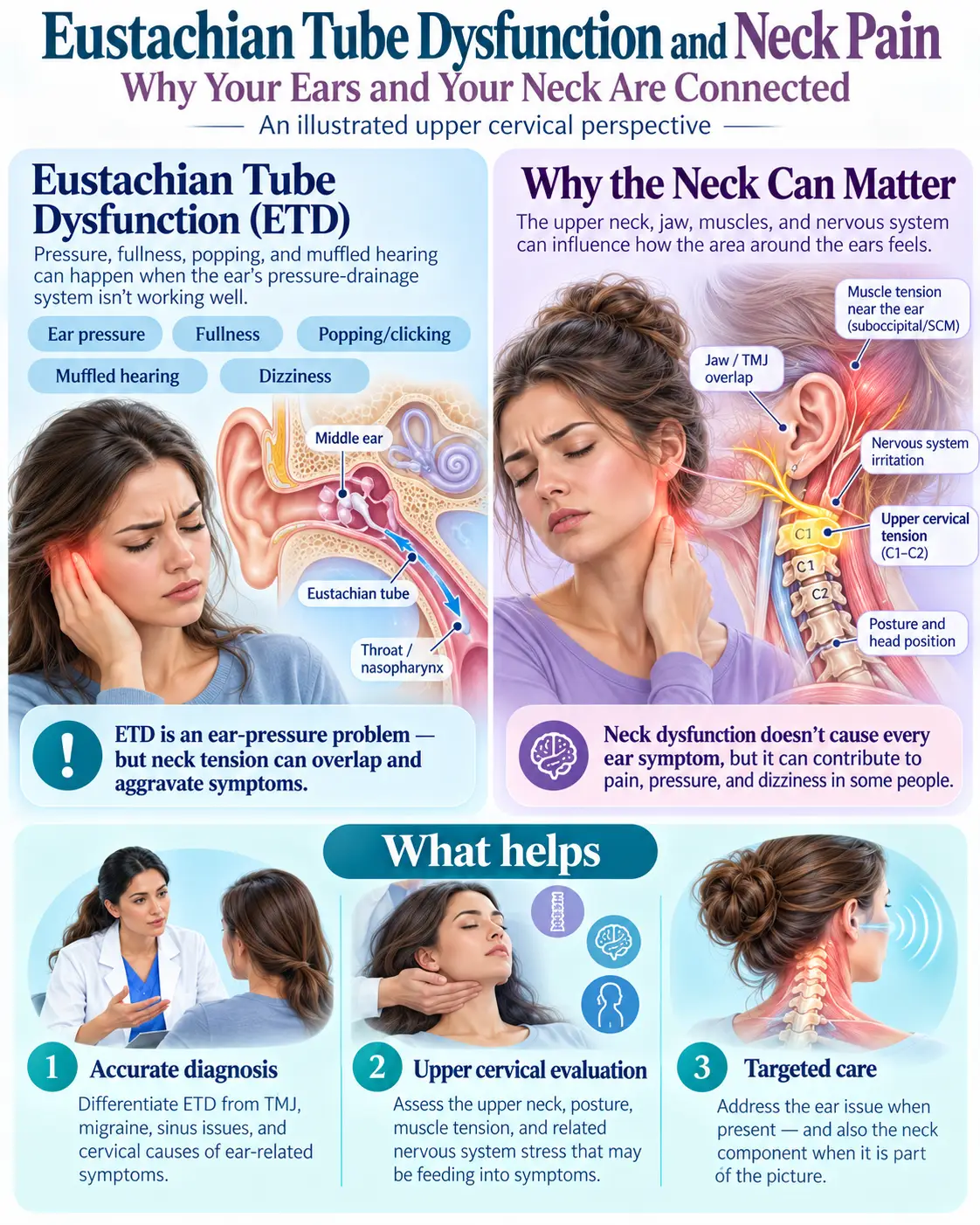
When the head tilts or shifts forward on the atlas, the lower jaw moves to keep the teeth meeting, and the jaw muscles on one side work harder. Over time this produces clicking, clenching, facial pain, and headaches. Both the jaw and the upper neck feed sensation into the trigeminocervical complex, so irritation in one is felt in the other. Correcting the atlas addresses the position the jaw has been compensating for.
What TMJ symptoms suggest the upper neck should be evaluated?
Jaw pain that comes with neck stiffness, headaches at the base of the skull, ear fullness, dizziness, or a bite that feels different from day to day points to the upper neck. If a night guard or dental adjustment has helped only partly, the head position may be the missing piece. We take a 3D cone-beam CT of the upper cervical spine to see the atlas position directly and confirm the nervous system response with thermography.
What does co-management with a holistic dentist look like?
We coordinate timing so dental work and atlas corrections complement each other. Often the atlas is corrected first so head position is stable before a splint or bite adjustment is made. We share imaging and thermography findings, and the dentist shares their assessment. Care plans are individual and reassessed at each visit. Many patients notice jaw comfort improve as the correction holds, though results vary. We refer to holistic dentists in the area when appropriate.
Do you see TMJ patients from Lakewood Ranch and Bradenton who already have a dentist?
Yes, and we are happy to coordinate with the dentist you already have. Our office at 5899 Whitfield Avenue, Suite 107 in Sarasota is minutes from Lakewood Ranch, Bradenton, and University Park. An evaluation includes history, jaw and neck examination, CBCT imaging of the upper cervical spine, and thermography. If the upper neck is not involved, we say so. Call (941) 243-3729 to schedule an evaluation.
Schedule With Us!
Lavender Family Chiropractic in Sarasota Florida offers complimentary consultations to learn more about you. Click the link below!
https://intake.chirohd.com/new-patient-scheduling/724/lavender-family-chiropractic
Visit our Website!
To learn more about us go to http://www.chiropractorsarasotaflorida.com
We also service Bradenton, Parrish, Ellenton, Ruskin, Venice, Tampa, St. Pete, Osprey, Longboat, Lakewood Ranch, Myakka City.
Remember, your health is a journey, and every step you take toward understanding and addressing the underlying causes of your discomfort is a step toward a brighter, pain-free future. By combining the insights of holistic dentistry with the precision of upper cervical chiropractic care, you can unlock the potential for true, lasting healing.

Get our upper cervical articles first.
Patients Experience