Why Do Allergies Clog My Ears? The Allergy–Eustachian Tube Connection
By Dr. Rusty Lavender
Why Do Allergies Clog My Ears? If your ears feel full, muffled, or plugged every time your allergies flare, you are not imagining the connection. That runny nose and those itchy, watery eyes are the obvious face of allergies — but for a great many people, the ears get pulled in too. In a place like Sarasota, where pollen, mold, and year-round allergens keep noses busy through every season, clogged ears from allergies are one of the most common complaints we hear about.
This article explains why allergies make your ears feel clogged, how nasal inflammation reaches the eustachian tube, when allergy-related ear symptoms need medical attention, and where upper cervical chiropractic care may fit as part of the picture. At Lavender Family Chiropractic in Sarasota, we help people understand what is behind their ear fullness so they can pursue the right kind of relief.
Why Do Allergies Clog My Ears? The Eustachian Tube: Where Your Nose and Ears Meet
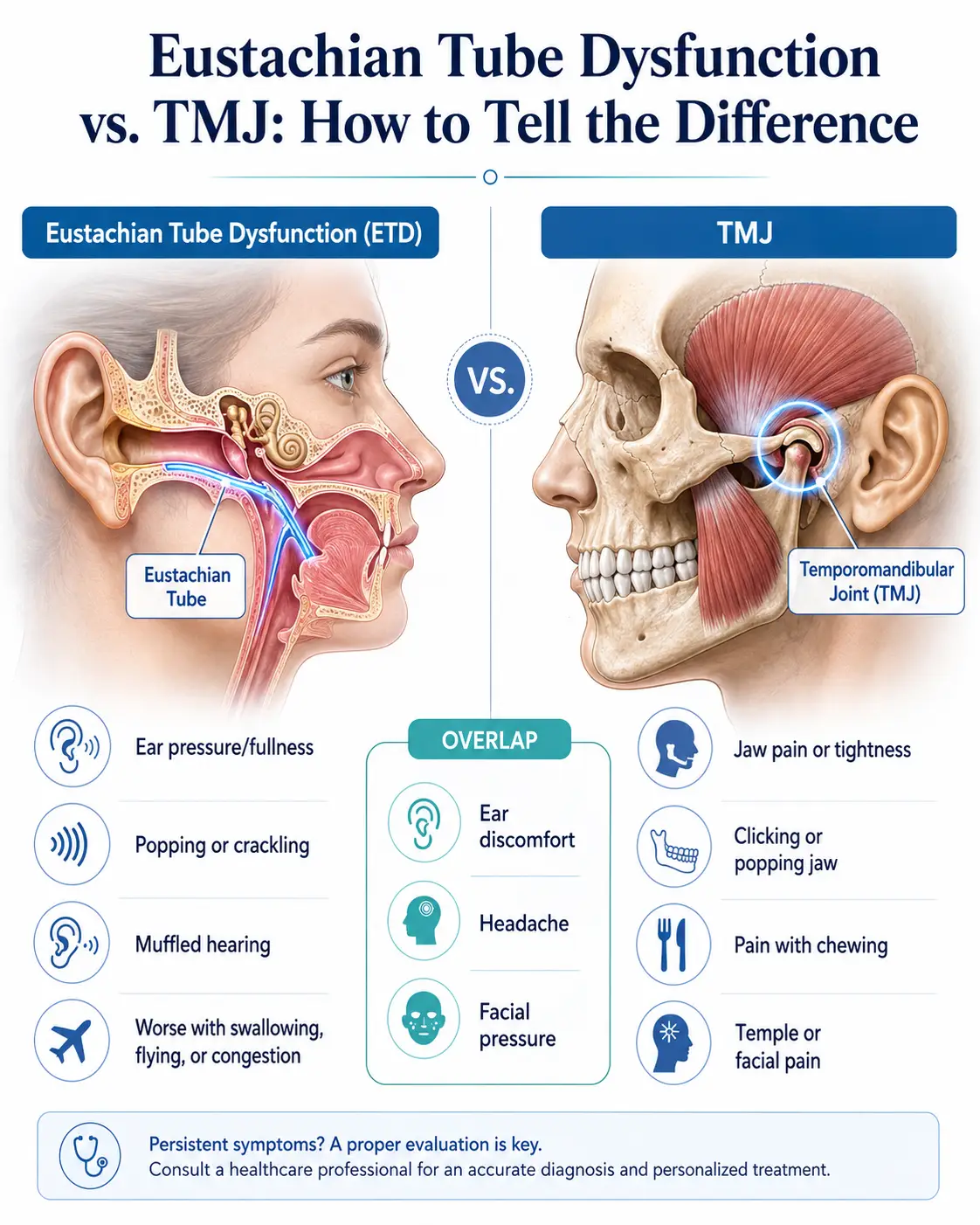
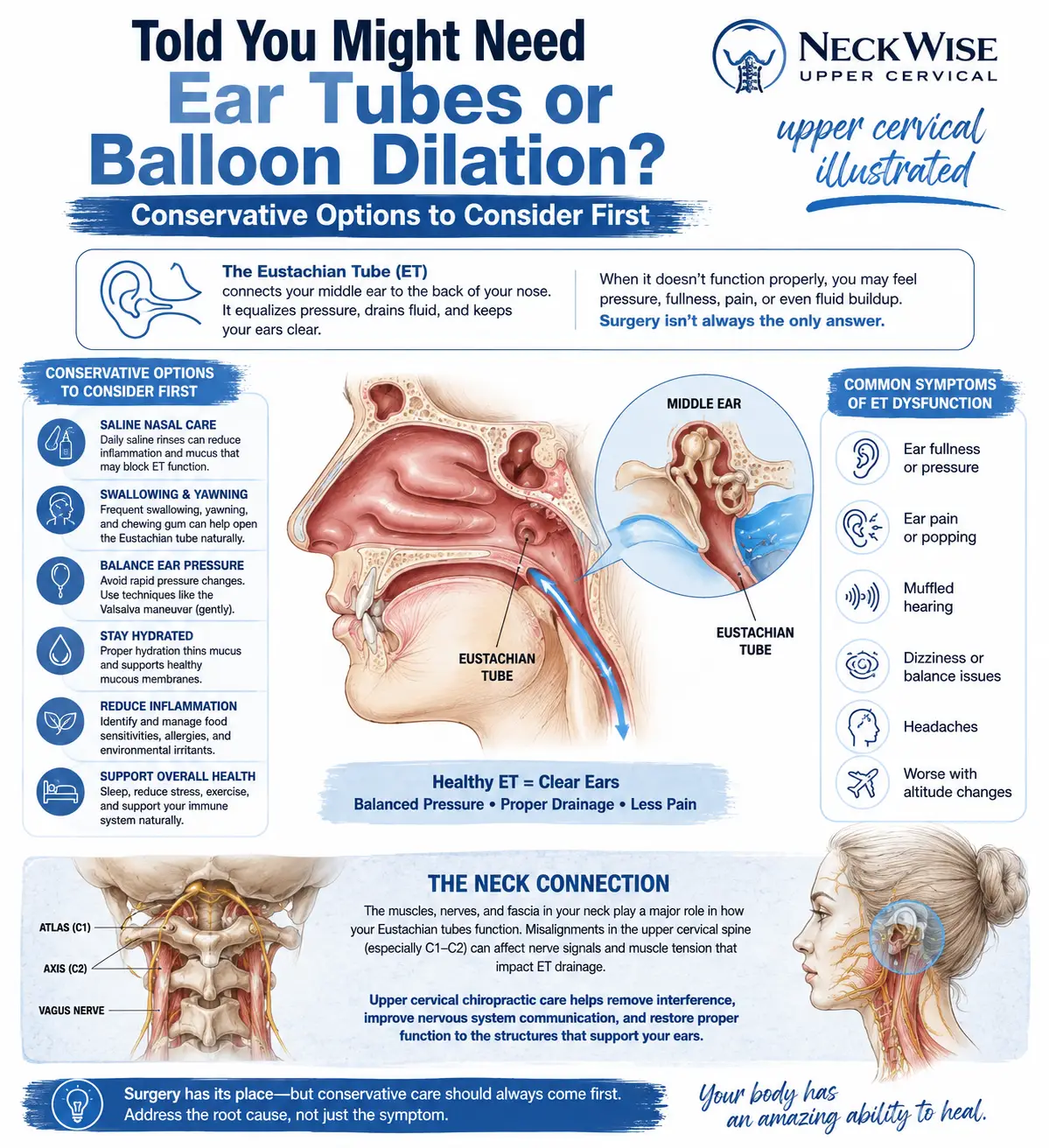
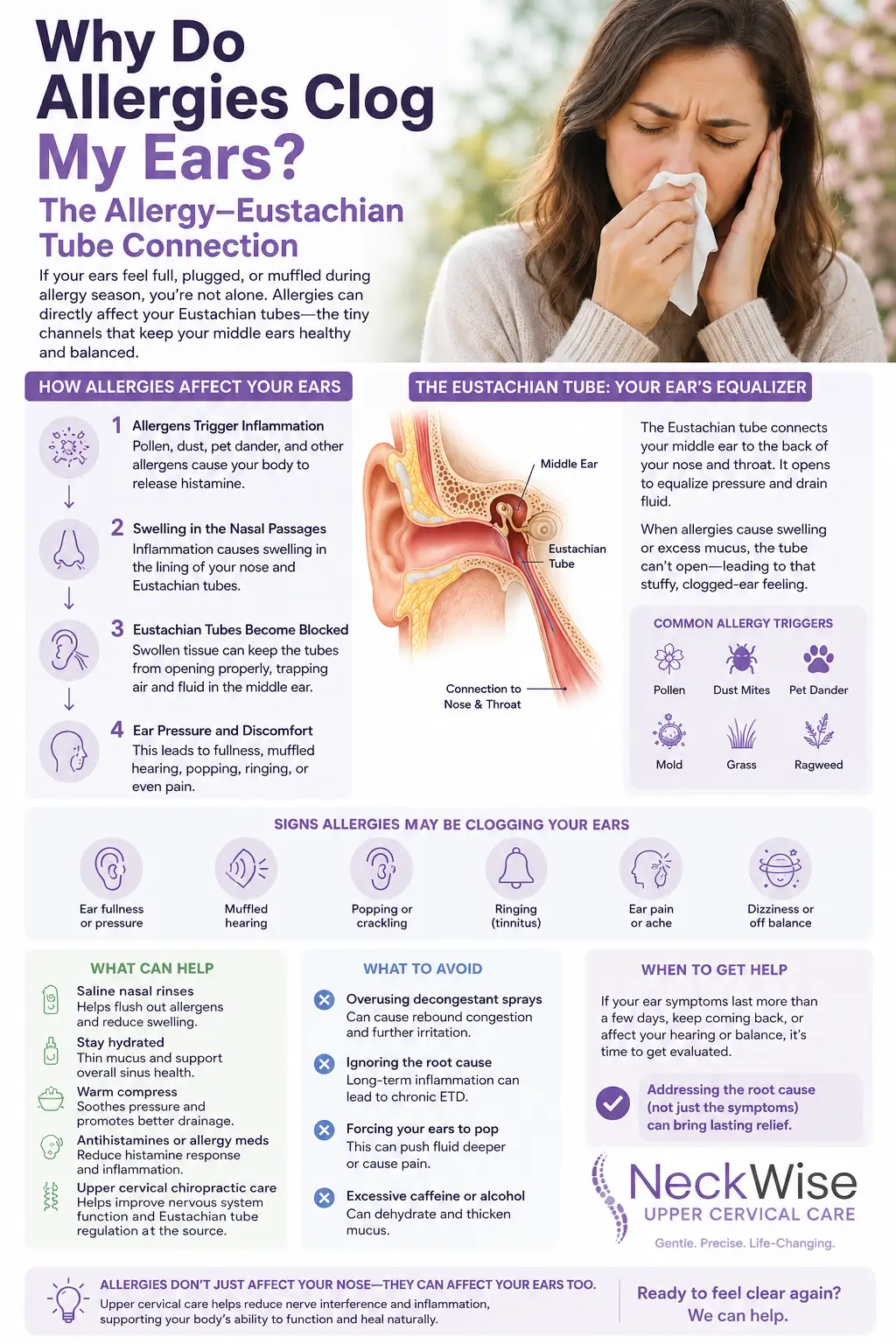
The key to understanding allergy-clogged ears is a small canal called the eustachian tube. It connects the middle ear to the back of the nose and throat, and its job is to equalize the air pressure behind your eardrum and let fluid drain. Normally it stays closed, opening briefly when you swallow, yawn, or chew. When it opens and closes on schedule, your ears feel clear and hearing is crisp.
The important detail is where the tube opens: right at the back of the nose, in the same territory that allergies inflame. So when your nasal passages are swollen and congested, the tube’s opening is caught in the same storm. This is why an allergy problem so often becomes an ear problem — the two share the same real estate. Our overview on our eustachian tube dysfunction page covers the anatomy in more depth.
How Allergies Clog the Ears
When you are exposed to something your immune system treats as a threat — pollen, dust, mold, pet dander — it releases histamine and other inflammatory chemicals. These cause the familiar allergy symptoms, but they also swell the lining of the nose and the eustachian tube, and they ramp up mucus production. Several things follow.
The tube swells shut. Inflammation narrows the eustachian tube or causes it to stick closed, so it can no longer equalize pressure. Air trapped behind the eardrum is gradually absorbed, creating a vacuum that pulls the eardrum inward and produces that plugged, full sensation.
Fluid gets trapped. With the tube unable to drain properly, fluid can collect in the middle ear. This muffles hearing, can make sounds seem underwater, and sometimes causes crackling or popping.
Pressure will not equalize. Because the tube is not opening on cue, the pressure changes of driving over a bridge, flying, or even a passing weather front become harder to manage, so your ears feel worse at those moments.
The result is a cluster of symptoms: fullness or pressure, muffled hearing, popping or crackling, sometimes mild dizziness or ringing. If this pattern shows up alongside your other allergy symptoms, allergies are very likely part of the story. Our page on why your ears feel full walks through the sensation in detail.
Is It Really Allergies? Reading Your Ear-Clogging Pattern
Because so many things can plug an ear, it helps to look at whether yours truly tracks with allergies or whether something else is driving it. A few patterns tend to sort this out.
It rises and falls with your nose. The clearest allergy signature is ear fullness that marches in lockstep with your other allergy symptoms. When your nose is running and your eyes are itching, your ears plug up; when the allergy calms, the ears clear. If your ears and your nose move together like that, allergies are almost certainly part of the picture.
It tracks the Sarasota calendar. Florida’s allergy load shifts through the year — oak and pine pollen in late winter and spring, grasses through the warm months, and mold that thrives in our humidity almost any time. If your clogged ears flare during the same weeks each year, or spike on high-pollen and high-humidity days, that seasonal rhythm points squarely at an allergic trigger rather than a lingering infection.
It answers to allergy control. When your ears ease within a day or two of a good antihistamine, a saline rinse, or simply getting indoors away from pollen, that responsiveness is another allergy clue. Fullness that ignores every allergy measure is a sign something else may be involved.
It affects both ears fairly evenly. Allergies inflame the whole nasal lining, so allergy-driven ear fullness often shows up in both ears, even if one is worse. Stubborn fullness in only one ear is less typical of allergies and is the pattern that most warrants an ENT check, as the next section explains.
It comes without pain or fever. Allergy fullness is uncomfortable but usually painless. If you develop real ear pain, fever, or drainage, that shift suggests infection rather than simple allergic swelling and deserves prompt medical attention.
When Allergy-Related Ear Symptoms Need Medical Attention
Most allergy-related ear fullness is uncomfortable but not dangerous, and it eases as the allergic inflammation calms. Still, some patterns call for medical evaluation rather than continued self-treatment. See a physician or ENT if you develop ear pain, fever, or drainage that could indicate infection, if your hearing drops suddenly or noticeably, if fullness persists in only one ear and does not clear, if you have true spinning dizziness, or if symptoms simply are not improving with allergy management. Persistent one-sided ear fullness in an adult in particular should always be checked by an ENT. Being honest about this comes first — upper cervical chiropractic care is appropriate only once a physician has ruled out infection and other medical causes. Managing the underlying allergies with your medical provider is the foundation, and our article on ear pressure and eustachian tube dysfunction can help you think through your symptoms.
The Upper Neck Connection People Overlook
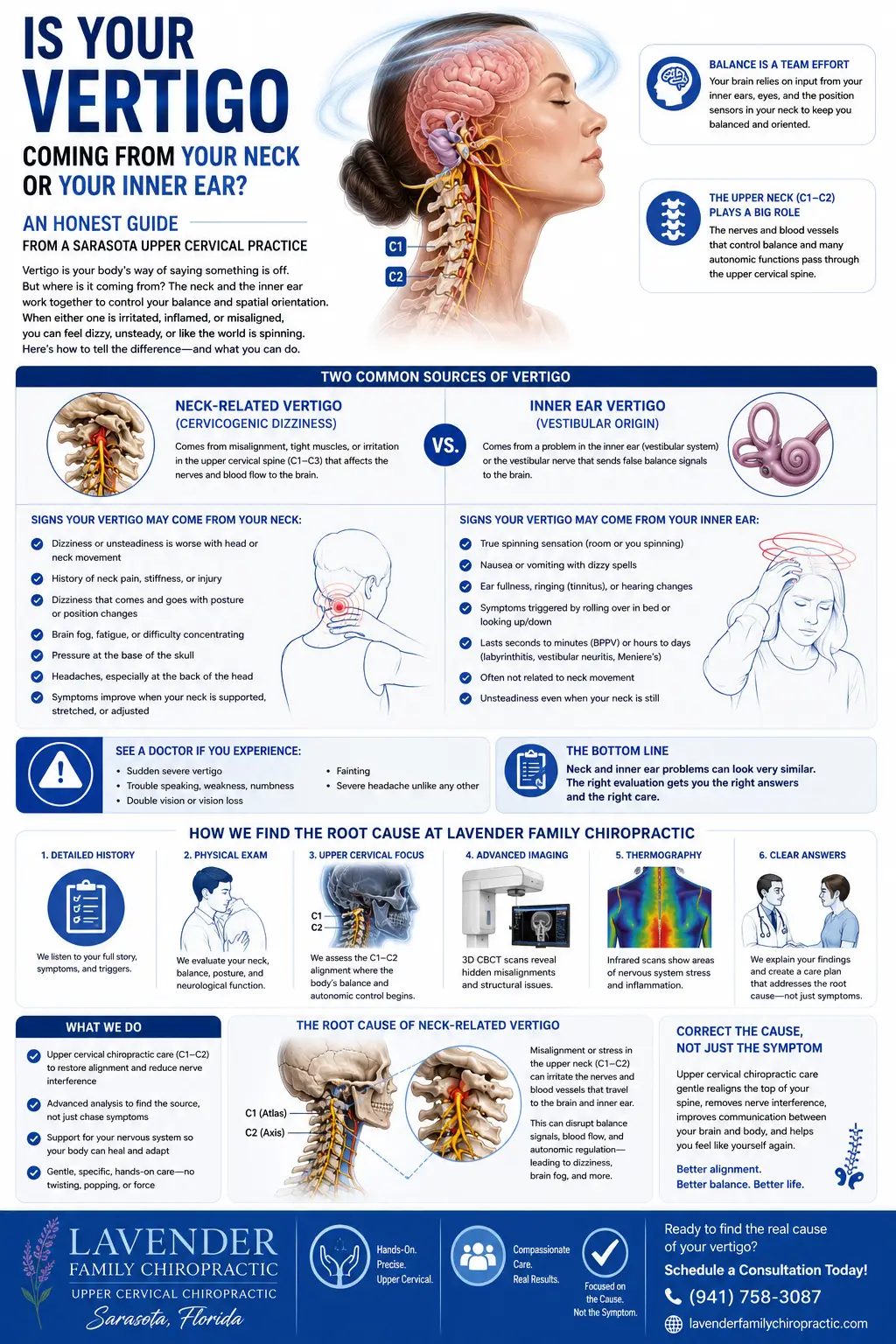
Allergies get all the attention in the story of clogged ears — and rightly so, since they are usually the trigger. But there is a contributor that often goes unnoticed: the upper neck. The muscles that open and time the eustachian tube, and the nerves that coordinate them, are influenced by the region where the head meets the neck. The top two vertebrae, the atlas and axis, sit just beneath the base of the skull, near the palate muscles and the autonomic pathways that regulate blood flow, mucous membranes, and drainage in the head.
When the upper neck is misaligned, it can affect this nerve coordination and the tone of the tissues around the eustachian tube. The idea is not that the neck causes your allergies, but that a pre-existing upper-neck problem can leave the eustachian tube less able to open and drain efficiently when allergic inflammation is already stressing it — one reason two people with similar allergies can have very different ear symptoms. Because the autonomic nervous system that helps regulate the ear’s blood vessels and mucous membranes is influenced by the upper neck, addressing that region may support the ear’s ability to cope. Our page on ear pressure and the upper cervical connection explores this relationship further.
How Upper Cervical Chiropractic Care May Help
Upper cervical chiropractic focuses specifically on the alignment of the atlas and axis and their influence on the nervous system. If a misalignment in the upper neck is affecting the nerve and muscle coordination that governs the eustachian tube, correcting that alignment may support the tube’s ability to open and drain more normally — which can matter when allergic inflammation is already taxing the system.
At Lavender Family Chiropractic, we practice a precise, gentle approach called the Knee Chest Upper Cervical technique. It uses a specific, low-force correction rather than the twisting or cracking many people associate with chiropractic. Before any correction, we map your alignment with 3D CBCT imaging and evaluate nervous-system function with paraspinal infrared thermography, so our care is guided by objective findings rather than guesswork.
It is important to be candid: upper cervical care does not treat allergies and is not a substitute for allergy management or medical care. What it addresses is a different, frequently overlooked contributor — the neck’s role in the nerve and muscle coordination around the eustachian tube. For some people, allergy-clogged ears have more than one contributor, and the neck is one piece worth evaluating alongside good allergy control. You can learn more about our overall approach on our upper cervical chiropractic care page.
If your ears clog up every allergy season, call Lavender Family Chiropractic at (941) 243-3729 to talk through whether an upper cervical evaluation makes sense for you.
What the Research Says
Research increasingly documents the link between allergies and eustachian tube dysfunction.
A review of allergy in the pathogenesis of eustachian tube dysfunction describes how allergic inflammation drives dysfunction of the tube — the core mechanism behind allergy-clogged ears.
Research applying epidemiological criteria to the question of whether allergic rhinitis is related to otitis media with effusion examines the connection between nasal allergy and middle-ear fluid in adults and children.
A prospective study of audiological manifestations in patients with allergic rhinitis documents measurable ear and hearing effects in people with nasal allergies.
A clinical review of the management of eustachian tube dysfunction summarizes how ETD is diagnosed and the treatment options available when symptoms persist.
Finally, a study on the autonomic innervation of the human ear maps the nerve supply to the ear’s blood vessels, providing an anatomical basis for how nervous-system regulation influences ear function.
Practical Steps to Reduce Allergy-Clogged Ears
Alongside professional care, several habits can help your ears through allergy season.
Control the allergies at the source. Reducing your exposure to triggers and working with your physician on an allergy plan is the foundation — calmer allergies mean calmer ears.
Rinse the nose. Saline sprays or rinses can clear allergens and thin mucus at the back of the nose, right where the eustachian tube opens. Ask your physician before using medicated decongestant sprays, which are not meant for prolonged use.
Stay hydrated. Thin mucus drains more easily than thick mucus, so steady hydration helps — something that matters year-round in Florida’s climate.
Encourage the tube to open gently. Swallowing, yawning, and chewing gum prompt the tube to open. Any attempt to equalize pressure should be gentle, never forceful.
Reduce indoor triggers. Keeping windows closed on high-pollen days, changing air filters, and managing dust and mold at home lowers the allergic load your ears are reacting to.
Watch pressure changes. Flying or driving through elevation changes is harder on an inflamed tube; swallow and yawn frequently, and time travel around your worst allergy days when you can.
What to Expect at Your First Visit
If allergy-clogged ears have you wondering whether your neck is part of the picture, it helps to know what a first visit looks like.
We begin with an unhurried conversation about your history. We want to understand when your ears clog up, how it tracks with your allergies, whether it is one ear or both, how your hearing is affected, and what else you are noticing. These details help us understand your situation and recognize when something belongs with a physician or ENT first.
Next, we gather objective data. The 3D CBCT imaging shows us the precise position of your atlas and axis, and paraspinal infrared thermography helps us evaluate nervous-system function. Together they guide whether an upper cervical correction is appropriate or whether we should refer you for further evaluation.
If care is indicated, we explain our findings in plain language and outline a customized treatment plan built around your goals. We practice on a cash-pay basis and review the details with you in advance. We will always be candid about where upper cervical care fits and where allergy and medical care belong. If you would like to talk anything through before scheduling, call us any time at (941) 243-3729.
Areas We Serve Around Sarasota
Lavender Family Chiropractic is located at 5899 Whitfield Avenue, Suite 107, in Sarasota, at the corner of University and Whitfield. We care for people seeking natural relief from ear and eustachian tube symptoms across the region, including Bradenton, Lakewood Ranch, Palmetto, Ellenton, Ruskin, Venice, Osprey, Myakka, Tampa, and St. Pete.
Top 15 Frequently Asked Questions About Clogged Ears From Allergies
1. Why do my ears clog up when my allergies flare? Allergic inflammation swells the lining of the nose and the eustachian tube, which opens at the back of the nose. When the tube swells shut, it cannot equalize pressure or drain, so the ear feels full and muffled.
2. Can allergies really affect my hearing? Yes. When fluid collects behind the eardrum or the tube cannot ventilate the middle ear, hearing can become muffled or sound underwater until the inflammation settles.
3. How long does allergy ear fullness last? It usually eases as the allergic inflammation calms with good allergy control. Fullness that persists, especially in one ear, or that comes with pain or hearing loss, deserves a medical evaluation.
4. Which allergies cause clogged ears? Any allergy that inflames the nose can do it — pollen, mold, dust mites, and pet dander are common culprits. In Florida, year-round allergens keep this a common complaint.
5. Is a clogged ear from allergies dangerous? Usually not, but see a physician for ear pain, fever, drainage, sudden hearing loss, true spinning dizziness, or one-sided fullness that does not clear.
6. Can a chiropractor help allergy-clogged ears? Upper cervical care does not treat allergies. It addresses a different contributor — the nerve and muscle coordination around the eustachian tube — which for some people is part of why their ears struggle when allergies flare.
7. How does my neck relate to my ears and allergies? The muscles and nerves that open the eustachian tube, and the autonomic pathways that regulate the mucous membranes, are influenced by the upper neck. A misalignment there may leave the ear less able to cope with allergic inflammation.
8. Should I take antihistamines? Allergy medications can help many people, and they are a decision for you and your physician. Controlling the allergies is the foundation of calming the ears.
9. Do nasal sprays help? Saline sprays and rinses can gently clear allergens and thin mucus. Medicated decongestant sprays are not meant for prolonged use, so check with your physician.
10. Why are my ears worse when the weather changes? An inflamed tube handles pressure changes poorly, so weather fronts and barometric shifts can make allergy-clogged ears feel worse. Our page on barometric pressure covers this connection.
11. Does hydration matter? Yes. Thin mucus drains more easily than thick mucus, so staying hydrated supports the process, especially in Florida’s heat.
12. What testing do you perform? We use 3D CBCT imaging to assess upper cervical alignment and paraspinal infrared thermography to evaluate nervous-system function, alongside a history and screening to help recognize when medical care is needed first.
13. Will this keep coming back every allergy season? It can, if the allergies remain uncontrolled. Combining good allergy management with attention to other contributors, including the upper neck, gives you the best chance of steadier ears.
14. When should I see a doctor instead of waiting? If you have pain, fever, drainage, sudden or lasting hearing loss, or one-sided fullness that does not clear, see a physician or ENT rather than continuing to self-treat.
15. Where are you located and who do you serve? We are at 5899 Whitfield Avenue, Suite 107, in Sarasota, serving patients from Bradenton, Lakewood Ranch, Venice, Palmetto, Ellenton, and the surrounding area.
Ready to Get Your Ears Through Allergy Season?
Clogged ears do not have to be the price you pay every time your allergies flare. Understanding whether nasal inflammation, trapped fluid, your upper neck, or some combination is behind your ear fullness is the first step toward steadier, clearer ears. If you are ready to find out, call Lavender Family Chiropractic at (941) 243-3729 or book your consultation online at https://intake.chirohd.com/new-patient-scheduling/724/lavender-family-chiropractic. Our Sarasota team is here to help you pursue natural relief as part of a comprehensive plan.