
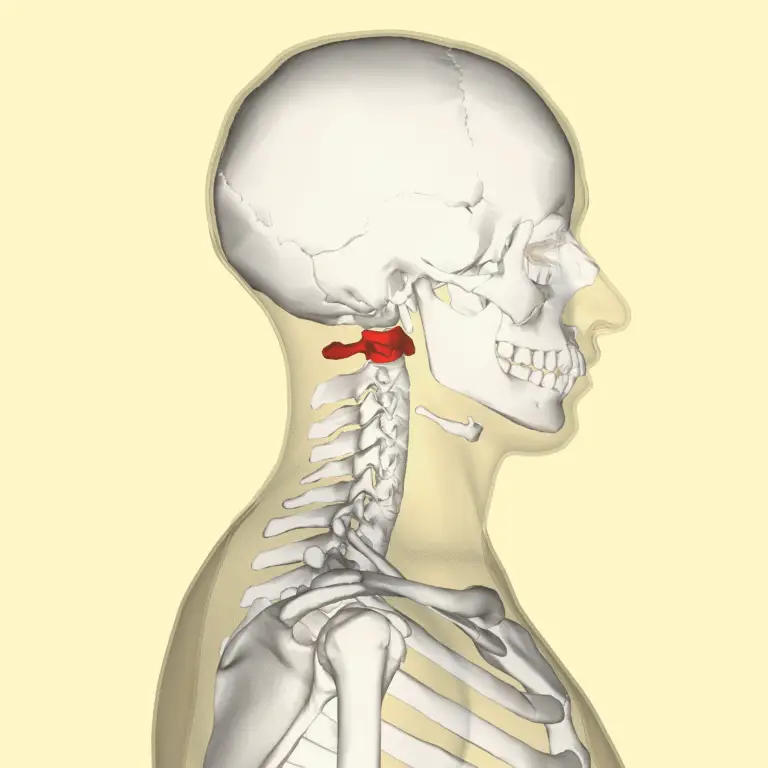
The Atlas C1 Vertebra and the Power of Upper Cervical Chiropractic at Lavender Family Chiropractic
By Dr. Rusty Lavender, D.C. — upper cervical chiropractor, Lavender Family Chiropractic, Sarasota, FL. Reviewed and updated October 2026.
When most people think about chiropractic care, they often imagine twisting, popping, or cracking of the spine. But at Lavender Family Chiropractic in Sarasota, Florida, we focus on a much more precise and gentle approach—one that targets the most important vertebra in the human spine: the Atlas, or C1 vertebra. This small but mighty bone at the top of your neck plays a crucial role in brain-body communication, balance, and whole-body health. And when it becomes misaligned, it can lead to a cascade of health problems. Atlas Chiropractic is practiced by very few chiropractors due to the complexity of the upper cervical region.
In this blog, we’ll take a deep dive into:
What the Atlas (C1 vertebra) is and why it’s so important
How Atlas misalignments occur and the symptoms they cause
What makes upper cervical chiropractic care at Lavender Family Chiropractic so unique
Our state-of-the-art diagnostic tools including 3D CBCT imaging and functional nervous system scans
How gentle Atlas adjustments can help you reclaim your health
Frequently Asked Questions about Atlas misalignments and upper cervical chiropractic
Understanding the Atlas: The C1 Vertebra
The Atlas (C1) is the very first cervical vertebra at the top of your spine. Named after the Greek Titan who held up the sky, the Atlas vertebra holds up your head—literally. It sits just beneath the base of the skull and supports the weight of your head, which averages between 10–12 pounds.
But the Atlas does far more than just hold your head up. It also:
Protects the brainstem, the communication highway between your brain and body
Allows a wide range of head movement, including nodding and rotation
Plays a key role in balance and posture, affecting muscle tone throughout the body
Regulates neurological function, particularly affecting systems like digestion, circulation, and immune response through the autonomic nervous system
Because of its delicate structure and mobility, the Atlas is highly susceptible to misalignment, which we refer to as Atlas subluxation. And when that happens, it can interfere with normal brain-to-body communication, often without any obvious signs at first.
How Atlas Misalignments Occur
Atlas misalignments can occur from a variety of sources, including:
Birth trauma
Falls or accidents in childhood
Sports injuries
Car accidents (especially whiplash)
Prolonged poor posture
Repetitive stress and tension
Emotional stress
What makes Atlas subluxations so dangerous is that they often go undetected for years, slowly affecting posture, balance, and internal function.
At Lavender Family Chiropractic, many patients arrive after visiting doctor after doctor with no answers. They struggle with headaches, migraines, dizziness, vertigo, TMJ, POTS, fibromyalgia, neck pain, and brain fog, among other symptoms. In many cases, we find the root cause is a misalignment of the Atlas affecting the entire spine and nervous system.
Symptoms of Atlas Misalignment
Because the Atlas affects such a central part of your nervous system, a wide range of symptoms can result from its misalignment:
Chronic headaches or migraines
Vertigo and balance issues
TMJ dysfunction or jaw pain
Neck pain and stiffness
Tingling or numbness in the hands or feet
Brain fog, poor memory, or difficulty concentrating
Fatigue and poor sleep
Postural distortion (head tilt, uneven shoulders, leg length inequality)
Tinnitus or ear fullness
Facial pain, including trigeminal neuralgia or occipital neuralgia
These symptoms often lead to unnecessary prescriptions or even surgeries that do not resolve the underlying issue. The good news? Upper cervical chiropractic care offers a non-invasive, natural solution to restore balance and alignment.
What Is Upper Cervical Chiropractic?
Upper cervical chiropractic is a specialized field of chiropractic that focuses exclusively on the top two vertebrae of the spine: the Atlas (C1) and Axis (C2). These vertebrae surround and protect the brainstem, which regulates nearly every vital function in the body.
At Lavender Family Chiropractic, we practice an advanced hands-on technique called AHKC (Advanced HIO Knee-Chest). This method is:
Gentle – There is no twisting, cracking, or yanking of the neck
Precise – Adjustments are customized based on your individual anatomy
Effective – Designed to correct the root of your problem, not just the symptoms
Sustainable – The goal is to allow your spine to hold the correction long-term, not require ongoing frequent adjustments
Unlike general chiropractic adjustments, we do not manipulate the entire spine. Instead, we correct the misalignment at the Atlas, allowing the rest of the spine to naturally realign. This leads to improved posture, reduced nerve pressure, and restored nervous system function.
The Lavender Family Chiropractic Difference
At Lavender Family Chiropractic, located at 5899 Whitfield Ave Ste 107, Sarasota, FL 34243, we are proud to offer the most advanced form of upper cervical chiropractic in Sarasota, Bradenton, and Lakewood Ranch. Our clinic is led by Dr. Rusty Lavender, Dr. Jacob Temple, and Dr. Will Guzinski, all trained and certified in AHKC upper cervical care.
Here’s what sets us apart:
 3D CBCT Imaging
We use Cone Beam Computed Tomography (CBCT), a high-resolution 3D X-ray that provides detailed views of your Atlas and skull base. This allows us to see the misalignment in multiple planes, identify anatomical variances, and plan a precise correction tailored to your spine.
Functional Nervous System Scanning
Using Tytron paraspinal infrared thermography, we measure heat differentials in the spine which indicate nerve irritation. This allows us to monitor neurological function and determine when (and when not) to adjust.
No Twisting or Popping
All adjustments are performed by hand using the AHKC Knee-Chest technique. The correction is made with you in a relaxed, kneeling position for maximum spinal ease.
Comprehensive Care
We don’t just adjust your Atlas and send you on your way. We monitor your scans, posture, leg length, and overall function to ensure you’re healing from the inside out.
Same-Day Appointments
We understand pain doesn’t wait—call (941) 243-3729 for same-day appointments and care when you need it most.
Conditions We Commonly See in Our Practice
People often find us after years of frustration and failed treatments. Here are just a few of the conditions we see improve with upper cervical care:
Migraines and chronic headaches
Vertigo, dizziness, and Meniere’s Disease
TMJ and jaw pain
Post-concussion syndrome
POTS (Postural Orthostatic Tachycardia Syndrome)
Fibromyalgia and chronic fatigue
Trigeminal neuralgia
Occipital neuralgia
Sciatica and herniated discs
Whiplash from car accidents
Neck and shoulder pain
Patient Testimonials
“After years of daily headaches and countless visits to neurologists, I found Dr. Rusty. His CBCT scans revealed a severe Atlas misalignment. After just a few gentle adjustments, my headaches began to fade, and now I’m headache-free!”
– Jessica M., Sarasota
“I suffered from severe vertigo for years. I saw ENTs, took medications, and even considered surgery. Lavender Family Chiropractic changed my life. With their upper cervical care, I have my balance—and my life—back.”
– Robert L., Bradenton
“Dr. Temple and Dr. Will are miracle workers. I had been diagnosed with TMJ, fibromyalgia, and chronic fatigue. After getting my Atlas adjusted, I feel like a new person.”
– Sandra D., Lakewood Ranch
Areas We Serve
We proudly serve patients from Sarasota, Bradenton, Lakewood Ranch, Parrish, Ellenton, Venice, Osprey, Punta Gorda, St. Petersburg, Siesta Key, Longboat Key, Lido Key, and Myakka City. Many patients drive from hours away to receive this unique, life-changing care.
Take the First Step Toward Healing
If you’ve been struggling with chronic health issues, unexplained symptoms, or persistent pain—and nothing else has worked—it’s time to look up. The Atlas may be small, but its impact on your health is massive. And at Lavender Family Chiropractic, we’re here to help you realign, restore, and revive your health.
Let us help you rediscover health through the power of your Atlas and the precision of upper cervical care. You don’t have to live with pain—relief starts here.
Frequently Asked Questions
What is the atlas vertebra and why is it so important?
The atlas, or C1, is the ring-shaped vertebra that holds up the skull and sits at the junction of skull and spine around the brainstem. The vertebral arteries and sympathetic fibers pass through it, and the vagus nerve exits beside it. Because it has no disc and no locking joint, it is the most mobile and most easily shifted vertebra. Its position influences the whole spine below.
How does an atlas misalignment happen?
Common causes include birth trauma, childhood falls, car accidents, sports collisions, and years of forward head posture. The force does not need to be dramatic; a minor whiplash can shift the atlas by a few degrees. Once shifted, muscles lock it in the new position and the body compensates below. We see the exact shift on 3D CBCT imaging rather than guessing from palpation.
Which symptoms are commonly traced to an atlas misalignment?
Because the atlas surrounds the brainstem, symptoms range widely: headaches, migraines, neck pain, dizziness, brain fog, uneven shoulders, a leg that functions shorter, and low back pain from pelvic compensation. Many patients have several at once. Serious causes should be ruled out by a physician. Thermography reveals uneven nervous system regulation, and correcting the atlas often changes several symptoms together; results vary.
What makes Lavender Family Chiropractic different for atlas care?
We measure. Every patient receives 3D CBCT imaging so the correction is calculated, not estimated, and paraspinal thermography before and after each correction so results are confirmed, not assumed. The Knee Chest technique is low force with no twisting or cracking. Care plans are individual and reassessed each visit, with no preset packages. We coordinate with physicians, neurologists, ENTs, and dentists and share imaging on request.
Do you provide atlas chiropractic for patients from Lakewood Ranch and Bradenton?
Yes. Our office at University Parkway and Whitfield in Sarasota is minutes from Lakewood Ranch, University Park, and Bradenton, and about thirty minutes from Venice. The atlas evaluation includes history, 3D imaging, and a baseline thermography scan. If the atlas is not involved, we say so and refer you. Call (941) 243-3729 to schedule an evaluation.