Migraine Treatment in Sarasota, Florida
Migraines can be Debilitating, affecting the quality of your life and the activities you do. At Lavender Family Chiropractic, we focus on providing effective Migraine treatment though targeted chiropractic care. Our team in Sarasota, Florida is dedicated to heling you live a life free from the debilitating pain of migraines.
Migraines
Migraine Treatment in Sarasota, Florida — Upper Cervical Chiropractic Care at Lavender Family Chiropractic
If you’re searching for migraine relief in Sarasota, Bradenton, or Lakewood Ranch, you’ve likely been on a long road. Maybe you’ve tried prescription medications that worked for a while and then stopped. Maybe you’ve sat through neurology appointments, kept headache diaries, eliminated foods, adjusted your sleep, and still — the migraines keep coming. You’re not alone, and more importantly, you’re not stuck.
At Lavender Family Chiropractic, located at 5899 Whitfield Avenue in Sarasota, we take a fundamentally different approach to migraines. Drs. Rusty Lavender and Jacob Temple specialize in upper cervical chiropractic care — a precise, gentle technique that addresses one of the most overlooked drivers of migraine: misalignment of the top two vertebrae in your neck, the atlas (C1) and axis (C2). For thousands of migraine sufferers across Southwest Florida, correcting this single area has been the missing piece.
This page is your complete guide to migraines and the upper cervical spine — what migraines actually are, why they happen, why conventional treatment often falls short, and how upper cervical care offers a root-cause path forward.
What Is a Migraine?
A migraine isn’t just a “bad headache.” It’s a complex neurological event involving the brainstem, blood vessels, neurotransmitters, and the trigeminal nerve system. Migraines affect over 39 million Americans — and roughly 1 in 4 households has someone who suffers from them.
Classic migraine symptoms include:
- Throbbing or pulsating pain, often on one side of the head
- Nausea and vomiting
- Extreme sensitivity to light (photophobia) and sound (phonophobia)
- Visual disturbances or “aura” — flashing lights, blind spots, zigzag lines
- Dizziness, vertigo, or balance issues
- Cognitive fog, difficulty concentrating, or speech changes
- Tingling or numbness on one side of the body (in some migraine types)
- Stiff neck, jaw tension, or shoulder tightness before or during an episode
Migraines unfold in phases — prodrome (warning signs hours or days before), aura (sensory disturbances), the attack itself (4 to 72 hours), and postdrome (the “migraine hangover”). Understanding these phases matters because each one offers clues about what’s happening neurologically — and in many cases, the upper cervical spine is part of that picture.
Common Types of Migraines
Migraines aren’t one condition. They’re a family of related conditions, each with its own pattern.
Migraine without aura — the most common type. Throbbing one-sided head pain, nausea, light and sound sensitivity, lasting 4–72 hours.
Migraine with aura — preceded by sensory disturbances (visual changes, tingling, speech difficulty) that last 5–60 minutes before the headache begins.
Vestibular migraine — characterized by vertigo, dizziness, and balance disruption alongside (or instead of) head pain. We discuss this condition in detail on our dedicated vestibular migraine page.
Hemiplegic migraine — a rare subtype causing temporary weakness or paralysis on one side of the body, often mistaken for stroke.
Chronic migraine — migraines occurring 15 or more days per month for at least three months.
Menstrual migraine — migraines tied to hormonal cycles, typically occurring in the days before or during menstruation.
Barometric migraine — triggered by changes in atmospheric pressure, particularly common in Florida during summer storm season and hurricane months. Read our deep dive on barometric pressure headaches.
Regardless of which type you experience, one common thread runs through nearly all migraine subtypes: a hypersensitive central nervous system. And the nervous system’s most vulnerable, high-traffic intersection is at the upper neck.
The Nerve and Vascular Anatomy of Migraine
To understand why the upper cervical spine matters so much, you have to understand what sits there.
The atlas (C1) is the topmost vertebra in your spine. It cradles the base of your skull. Just below it is the axis (C2). Together, these two bones form the upper cervical complex — and this complex is unlike any other joint in the body. It has no intervertebral disc. It allows roughly 50% of your head’s rotation. And it surrounds some of the most critical neurological and vascular structures you have:
- The brainstem — the control center for blood pressure, heart rate, breathing, balance, and pain modulation
- The vertebral arteries — major blood vessels carrying oxygen to the back of your brain
- The trigeminal nucleus — the central processing hub for pain signals from the face, head, and upper neck
- Cerebrospinal fluid (CSF) flow — the fluid that cushions and nourishes your brain
- The vagus nerve — the master regulator of your parasympathetic nervous system
When the atlas or axis shifts even a fraction of a millimeter out of optimal alignment, every one of these structures can be affected. A small bony misalignment becomes a large neurological disturbance — and that disturbance plays out as the cascade of symptoms we call a migraine.
The Trigeminocervical Connection
This is the piece that conventional migraine treatment often misses entirely.
The trigeminocervical nucleus is a region in the upper spinal cord and lower brainstem where sensory nerves from the face (via the trigeminal nerve) and the upper neck (via the upper cervical nerves) converge. They share neurons. They share processing pathways. From your brain’s perspective, pain signals from your atlas and pain signals from your forehead are arriving at the same switchboard.
This is why upper neck dysfunction so frequently presents as head pain. Your brain literally cannot tell the difference between irritation from your C1/C2 region and pain from inside your skull. A misaligned atlas can trigger the exact same pain pathways as a classic migraine — and conversely, correcting the atlas can quiet those pathways at the source.
This isn’t a fringe theory. The trigeminocervical convergence is well-documented in neurology and is one of the leading explanations for why so many migraine sufferers report neck pain or stiffness alongside their head pain. The neck and the migraine aren’t two problems. They’re the same problem.
Why the Upper Cervical Spine Is the Most Important Area for Migraine Sufferers
Beyond the trigeminal connection, the upper cervical spine influences migraines through three additional mechanisms:
1. Blood flow regulation. The vertebral arteries pass through small openings in the C1 and C2 vertebrae. When these bones rotate or shift, the arteries can be subtly compressed or kinked, reducing blood flow to the back of the brain and brainstem. Reduced oxygen delivery is a known migraine trigger.
2. Cerebrospinal fluid circulation. CSF flow is sensitive to upper cervical alignment. When the atlas is misaligned, CSF circulation can become sluggish, increasing intracranial pressure and contributing to the throbbing, expansive head pain that defines migraine.
3. Autonomic nervous system imbalance. The upper cervical region houses the brainstem nuclei that regulate the autonomic nervous system — the system controlling stress response, blood vessel dilation, digestion, and the inflammatory chemicals that drive migraine. When this region is irritated, the entire stress-response system becomes hyperreactive. Bright lights become unbearable. Smells become triggers. The body lives in a state of low-grade neurological alarm.
This is why upper cervical care often produces results that other migraine treatments don’t. It addresses the bony, vascular, neurological, and autonomic drivers all at once — at their physical source.
Conventional Migraine Treatment — and Where It Falls Short
Conventional migraine treatment generally falls into two categories:
Abortive treatments — taken when a migraine begins, designed to stop it. These include triptans (sumatriptan, rizatriptan), NSAIDs, anti-nausea medications, and newer CGRP-receptor antagonists (gepants).
Preventive treatments — taken daily to reduce migraine frequency. These include beta-blockers, anticonvulsants, antidepressants, Botox injections, and CGRP monoclonal antibodies (Aimovig, Emgality, Ajovy).
These medications help many people, and we never tell patients to stop their prescriptions without consulting their physician. But they share a common limitation: they manage symptoms; they don’t address why the migraine started in the first place.
Common patient frustrations we hear in our Sarasota office:
- Medications worked initially, then lost effectiveness
- Side effects (fatigue, weight gain, cognitive fog, GI issues) became as bad as the migraines
- Medication overuse headaches developed from frequent abortive use
- Injections required ongoing high cost and visits
- Lifestyle changes alone weren’t enough
For these patients, the question isn’t “how do I better manage migraines?” It’s “what’s actually causing them, and can that be corrected?” That’s where upper cervical care enters the conversation.
How Upper Cervical Chiropractic Care Treats Migraines
Upper cervical chiropractic isn’t general chiropractic. There’s no twisting, popping, or forceful manipulation of the neck. Instead, we use a highly specific, precisely measured correction — a gentle, sustained contact applied at a calculated vector to the atlas vertebra.
At Lavender Family Chiropractic, our process for migraine patients involves:
Detailed history and examination. We map your migraine pattern — triggers, frequency, duration, prior treatments, accompanying symptoms.
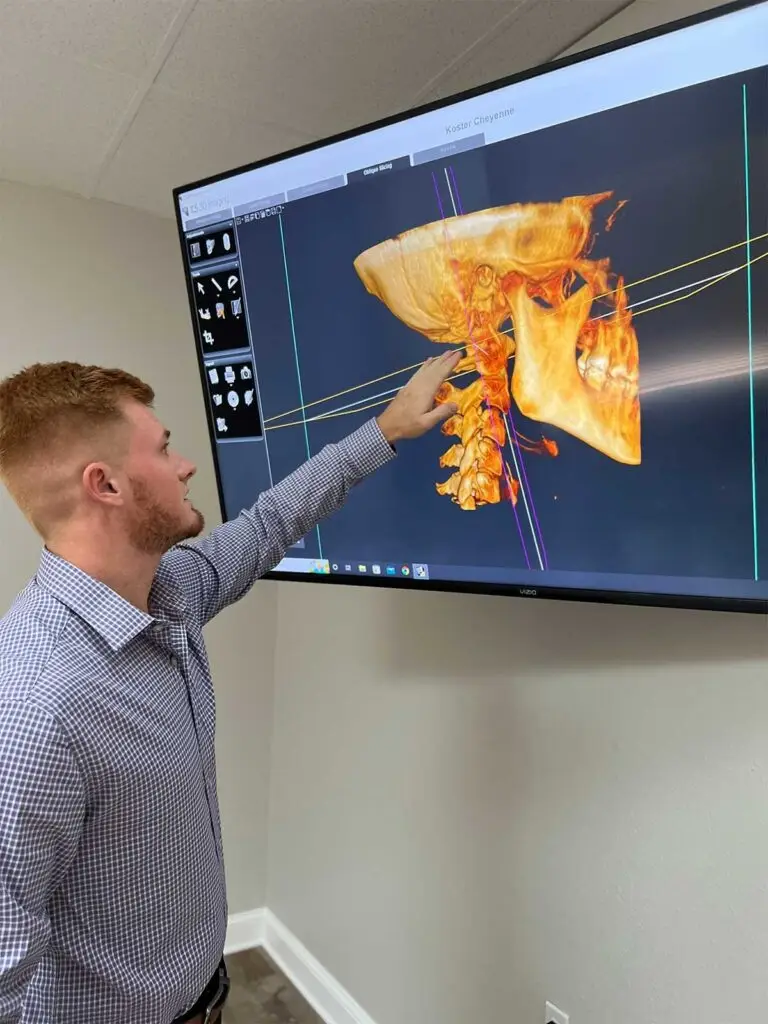
3D CBCT imaging. We use cone-beam computed tomography to measure your upper cervical spine to within one hundredth of a millimeter. No guessing. No generic adjustments. We see exactly how your atlas and axis are positioned.
Paraspinal infrared thermography. This non-invasive scan reads autonomic nervous system function along your spine, helping us track how your nervous system is responding to care over time.
The Knee Chest Upper Cervical technique. This is the gentle, no-force technique Drs. Lavender and Temple specialize in. The correction is precise, calculated from your imaging, and designed to hold so your body can begin healing without repeated intervention.
Personalized care plans. Every migraine case is different. Some patients respond rapidly. Others, particularly those with years of chronic migraine, need a longer correction phase. We design a comprehensive care plan tailored to your specific case — and we tell you honestly what to expect from day one.
What to Expect as a New Patient
Patients often ask what their first visits will look like. Here’s the honest breakdown.
Visit 1 — Consultation and exam. We sit down with you, hear your full story, and perform a neurological and structural evaluation. If you’re not a good candidate for upper cervical care, we tell you. We don’t accept patients into care we don’t think we can help.
Visit 2 — Imaging review and first correction. We review your 3D CBCT scans and explain exactly what we found. We’ll walk you through a customized care plan built specifically for your condition, your spine, and your goals. Then we deliver your first upper cervical correction, calculated specifically for your spine.
Care plan visits. Each migraine patient at Lavender Family Chiropractic is placed on a structured care plan designed to bring your atlas into alignment and — just as importantly — keep it there long enough for your nervous system to fully recalibrate. Chronic migraine doesn’t develop overnight, and it doesn’t fully resolve overnight either. The care plan gives your body the consistent input it needs to make lasting changes.
You can read more about what to expect at our office.
The Research Behind Upper Cervical Care for Migraine
Several peer-reviewed studies have examined upper cervical chiropractic for migraine and headache disorders. Notable findings include:
- A 2000 study published in the Journal of Manipulative and Physiological Therapeuticsfound that chiropractic care produced significant improvement in migraine frequency, duration, disability, and medication use compared to a control group.
- Research published in Cephalalgia has documented the role of the upper cervical spine and the trigeminocervical convergence in migraine pathophysiology.
- Case series and observational data on upper cervical specific techniques have shown reductions in migraine frequency and intensity in patients who had failed conventional treatment.
We’re transparent: large-scale randomized controlled trials specifically on upper cervical chiropractic for migraine are still limited, and we never promise outcomes. What we offer is a clinically reasoned, anatomically grounded approach with a long track record of patient-reported improvement in our office and across the broader upper cervical chiropractic community.
Lifestyle Strategies That Support Migraine Recovery
Upper cervical care addresses the structural and neurological root, but several lifestyle factors can support — or sabotage — your recovery.
Hydration. Dehydration is one of the most common migraine triggers, especially in Florida’s heat. Aim for at least half your body weight in ounces of water daily.
Sleep consistency. Inconsistent sleep schedules disrupt the hypothalamic systems closely tied to migraine. Same bedtime, same wake time, even on weekends.
Trigger awareness. Common dietary triggers include aged cheeses, processed meats, red wine, MSG, artificial sweeteners, and excess caffeine. Keep a simple log to identify your patterns.
Posture and screen time. Forward head posture from phones and computers loads the upper cervical spine. Take regular breaks. Set your monitor at eye level.
Stress regulation. Stress doesn’t cause migraines — but it lowers your threshold. Breathwork, daily walks, and consistent exercise raise that threshold significantly.
Hormonal patterns. For women, tracking migraines against your menstrual cycle can reveal hormonal triggers that warrant additional support.
For a deeper look at one of the most powerful but overlooked influences on migraine, read our article on vagus nerve dysfunction — a key autonomic player in chronic migraine.
Serving Sarasota, Bradenton, Lakewood Ranch, and Surrounding Areas
Lavender Family Chiropractic is located at 5899 Whitfield Avenue, Suite 107, Sarasota, FL 34243 — at the corner of University and Whitfield, just minutes from downtown Sarasota, Lakewood Ranch, Bradenton, University Park, Palmer Ranch, and Siesta Key. We see patients from throughout Manatee and Sarasota counties, including Bradenton, Lakewood Ranch, Parrish, Ellenton, Palmetto, Venice, Osprey, Nokomis, and Longboat Key. Read more about the areas we service.
If you’ve searched “migraine chiropractor near me,” “natural migraine treatment Sarasota,” or “upper cervical chiropractor Lakewood Ranch” — you’re in the right place. Our entire practice is built around upper cervical care for conditions like yours.
Top 15 FAQs About Migraines and Upper Cervical Care
1. Can chiropractic care really help migraines, or is that a stretch?
Upper cervical chiropractic specifically — not general chiropractic — has a strong mechanistic basis for migraine relief through the trigeminocervical connection, blood flow regulation, and autonomic nervous system balance. Many migraine sufferers experience meaningful improvement when the upper cervical spine is corrected.
2. Is upper cervical chiropractic safe?
Yes. The Knee Chest Upper Cervical technique involves no twisting, popping, or forceful movement. It’s one of the gentlest forms of chiropractic care available, and it’s specifically designed to be safe for sensitive necks, prior injury patients, and patients with conditions like migraine where forceful manipulation would not be appropriate.
3. How long until I notice a difference?
It varies. Some patients notice changes within the first one to three weeks. Others — particularly those with chronic migraine of many years — require longer. We’re honest about timelines during your care plan consultation based on your specific case.
4. Do I have to stop my migraine medication?
No. We never tell patients to discontinue medications. Many patients find they need them less as care progresses, and any medication changes should be discussed with the prescribing physician.
5. Will my migraines come back if I stop care?
Once your atlas is corrected and the alignment is stable, many patients maintain their results with continued wellness care. Your care plan is designed to bring you through correction and into stability so the changes hold for the long term.
6. What if I’ve already had a chiropractor adjust my neck and it didn’t help?
General chiropractic and upper cervical specific care are fundamentally different. Most chiropractors don’t perform the Knee Chest Upper Cervical technique and don’t use 3D CBCT imaging to measure the upper cervical spine. If your previous experience didn’t help, it doesn’t mean upper cervical care won’t.
7. I have hemiplegic migraine — can you help?
Hemiplegic migraine is rare and complex. We evaluate carefully and coordinate with your neurologist when appropriate. Several hemiplegic migraine patients have done well with upper cervical care.
8. I have vestibular migraine with vertigo. Is upper cervical right for me?
Vestibular migraine is one of the conditions upper cervical care addresses most directly, because the vestibular system and upper cervical spine are so deeply integrated. Visit our vestibular migraine page for more.
9. Do I need a referral?
No. You can schedule a consultation directly.
10. Do you take insurance and how does payment work?
We offer customized care plans designed around your specific condition and goals. During your report of findings, we walk you through the full plan and the investment involved, so there are no surprises. We accept HSA and FSA, and we provide detailed receipts for out-of-network reimbursement when applicable.
11. What’s the difference between a migraine and a regular headache?
Migraines are neurological events involving specific brain regions, nerve pathways, and vascular changes. They typically include nausea, light or sound sensitivity, and disability that lasts hours to days. Tension headaches, sinus headaches, and cervicogenic headaches are different conditions, though they can coexist with migraine.
12. Can a misalignment really cause migraines?
The upper cervical spine doesn’t single-handedly cause migraines in everyone — but in many people, it’s a major contributing factor that triggers or worsens the neurological cascade. Correcting it removes one of the largest physical drivers.
13. What if I have other conditions like POTS, TMJ, or neck pain?
Many of our migraine patients also have related conditions like POTS, TMJ dysfunction, trigeminal neuralgia, or neck pain. These conditions often share upper cervical involvement and frequently improve alongside migraine.
14. How is the Knee Chest Upper Cervical technique different from other chiropractic?
It’s a knee-chest technique applied with no force and a precisely calculated vector based on your CBCT imaging. There’s no rotational movement of your neck, no popping, no audible release. It’s one of the most specific, gentlest techniques available.
15. How do I get started?
Call us at (941) 243-3729 or book online for a consultation. We’ll go through your history, examine you, and tell you honestly whether we believe upper cervical care can help.
Ready to Find Out If Your Migraines Start in Your Neck?
For many of our patients in Sarasota, Bradenton, and Lakewood Ranch, the answer to a decade of migraines was hiding one inch below the base of their skull. The atlas vertebra is small — but its influence on the brainstem, blood flow, and nervous system is enormous.
If you’ve tried medications, trigger elimination, supplements, Botox, and infusions without lasting results, it may be time to investigate the structural and neurological root of your migraines. We’d be honored to help.
Call (941) 243-3729 or book your consultation online.
Lavender Family Chiropractic 5899 Whitfield Avenue, Suite 107 Sarasota, FL 34243 At the corner of University and Whitfield