Why Ear Pressure, Headaches, Dizziness, and “Storm Sensitivity” Often Have a Neck-and-Nervous-System Root Cause
How Lavender Family Chiropractic (NeckWise North Sarasota) Helps You Get Relief Without Living on Decongestants
Eustachian tube Dysfunction: If you live in Sarasota, Bradenton, or Lakewood Ranch, you already know Florida weather doesn’t “ease in.” One day is calm and clear, the next brings humidity shifts, wind, and storm fronts that roll through quickly. For many people, those changes are more than a weather update—they’re a symptom trigger. Ears feel clogged. The head feels heavy. Pressure builds behind the eyes or deep in the face. Some people notice pain at the base of the skull, neck tightness, or dizziness that shows up for no obvious reason. Others get recurring ear infections or a constant sensation of fullness, muffled hearing, popping, and crackling.
A common label for this cluster is Eustachian Tube Dysfunction (ETD). But here’s the problem: lots of people get told they have ETD and then get handed the same solutions—decongestants, allergy meds, nasal sprays, steroids, “wait it out,” or repeated rounds of antibiotics. Sometimes those help temporarily. Often they don’t. And even when they do, symptoms tend to return—especially with the next barometric pressure swing.
This is where a different conversation matters: what if the ear pressure isn’t only an “ear” issue? What if it’s a pressure-regulation and drainage issue, driven by the nervous system and upper neck—especially the top bones of the neck, where the brainstem and key neurological control centers are located?
At Lavender Family Chiropractic (NeckWise North Sarasota), our focus is upper cervical chiropractic—a specialized approach that addresses the top two bones of the neck (C1/atlas and C2/axis). This is not general chiropractic care. It’s a targeted, imaging-guided, neurologically focused method designed to reduce irritation to the nervous system and restore normal function—often helping people with ear pressure, congestion, headaches, pain and pressure in the back of the head, dizziness/vertigo, and chronic ear infections—without depending on decongestants as a long-term strategy.
This article is a full deep-dive into ETD—what it is, why it becomes chronic, why Sarasota-area barometric pressure swings can make it worse, and how upper cervical chiropractic can be a root-cause solution.
What Is the Eustachian Tube and Why Does It Matter?
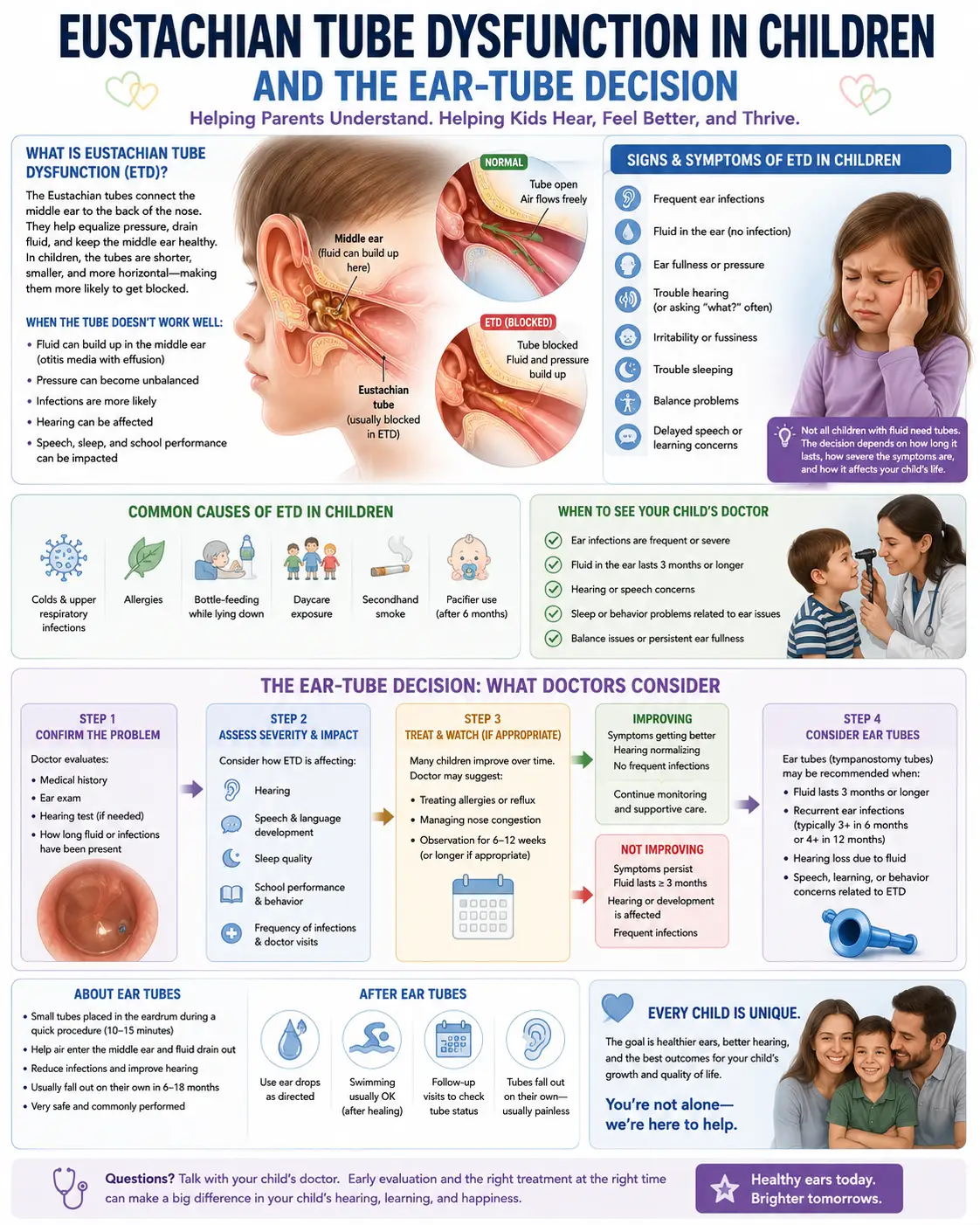
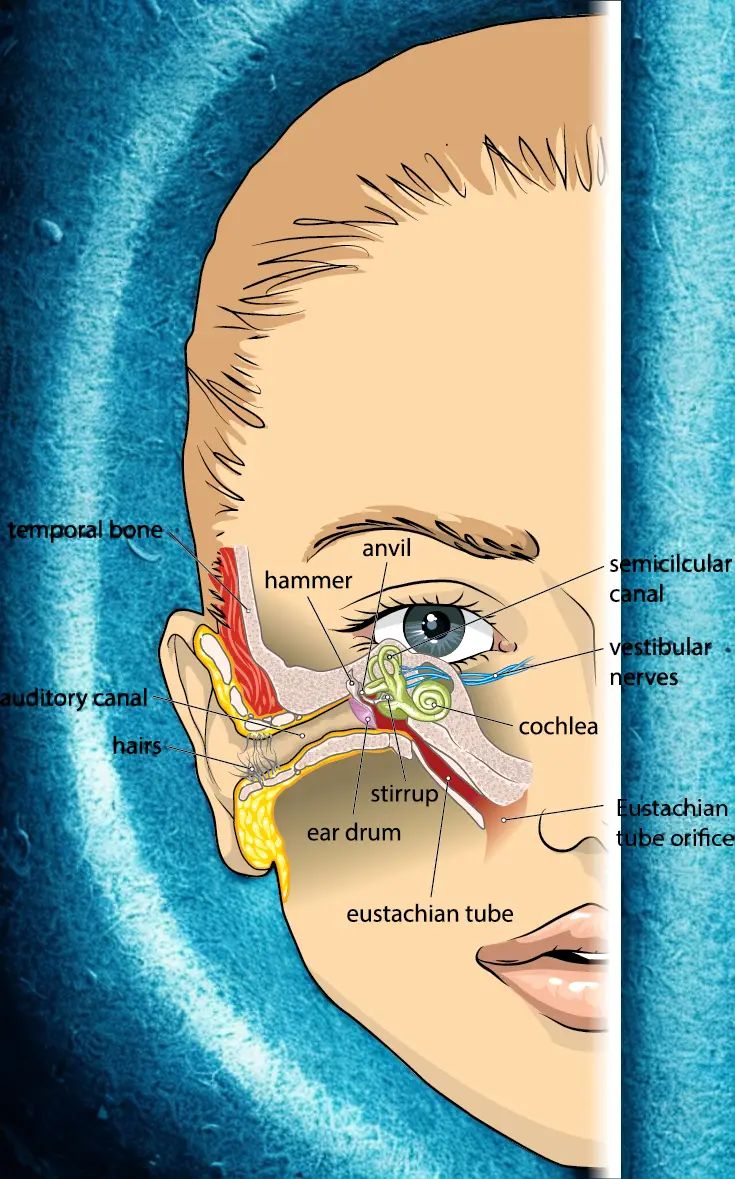
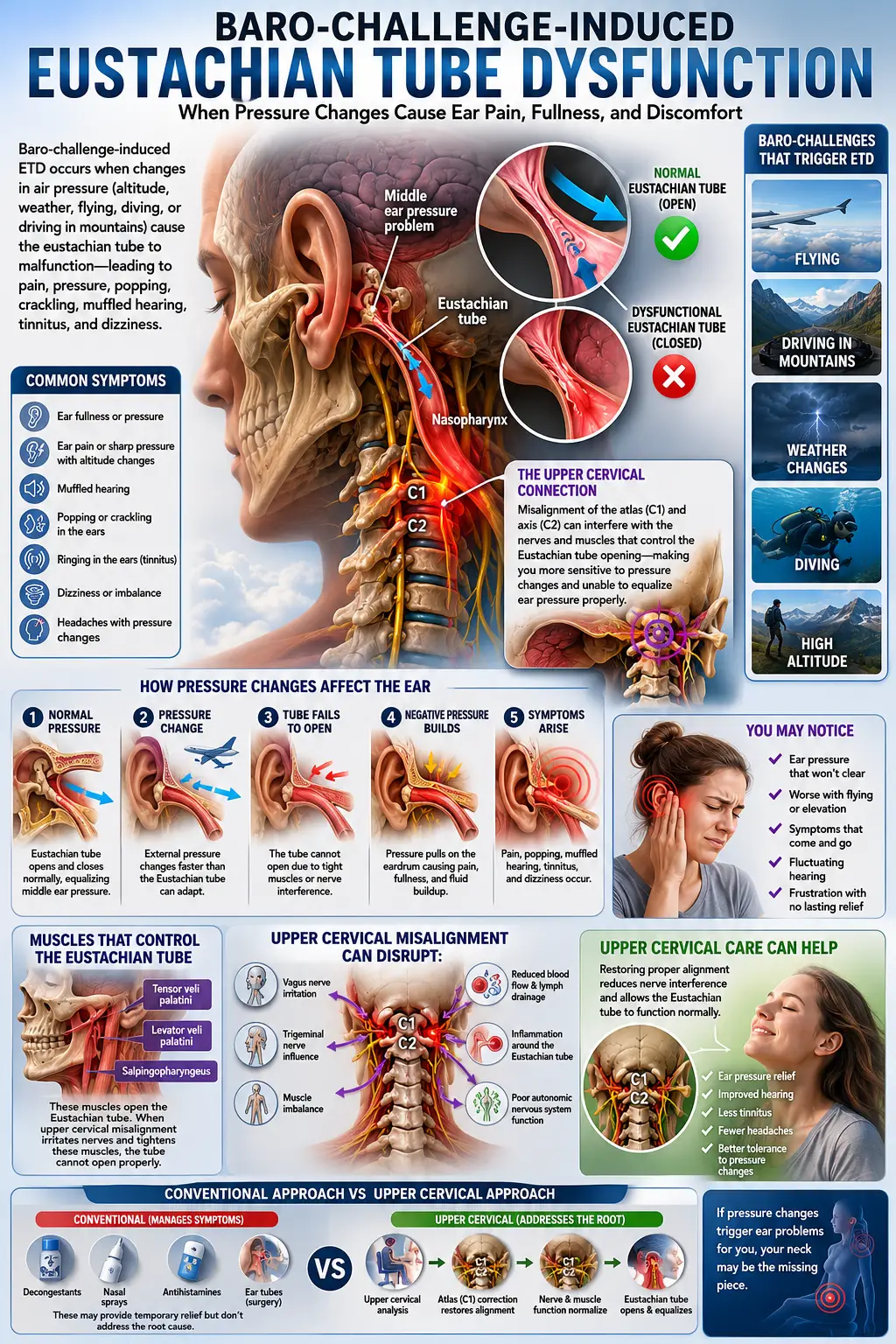
The Eustachian tube is a narrow channel connecting the middle ear to the back of the nose and upper throat (the nasopharynx). It has three major roles:
- Pressure equalization
It helps equalize pressure between your middle ear and the outside environment. - Fluid drainage
It allows fluid and mucus to drain out of the middle ear so you don’t accumulate stagnant fluid behind the eardrum. - Protection
It helps prevent bacteria, viruses, and secretions from the throat from traveling into the middle ear.
When the Eustachian tube opens and closes properly, you barely notice it. When it does not, you feel it—often as pressure, fullness, muffled hearing, crackling, popping, pain, imbalance, and even headache.
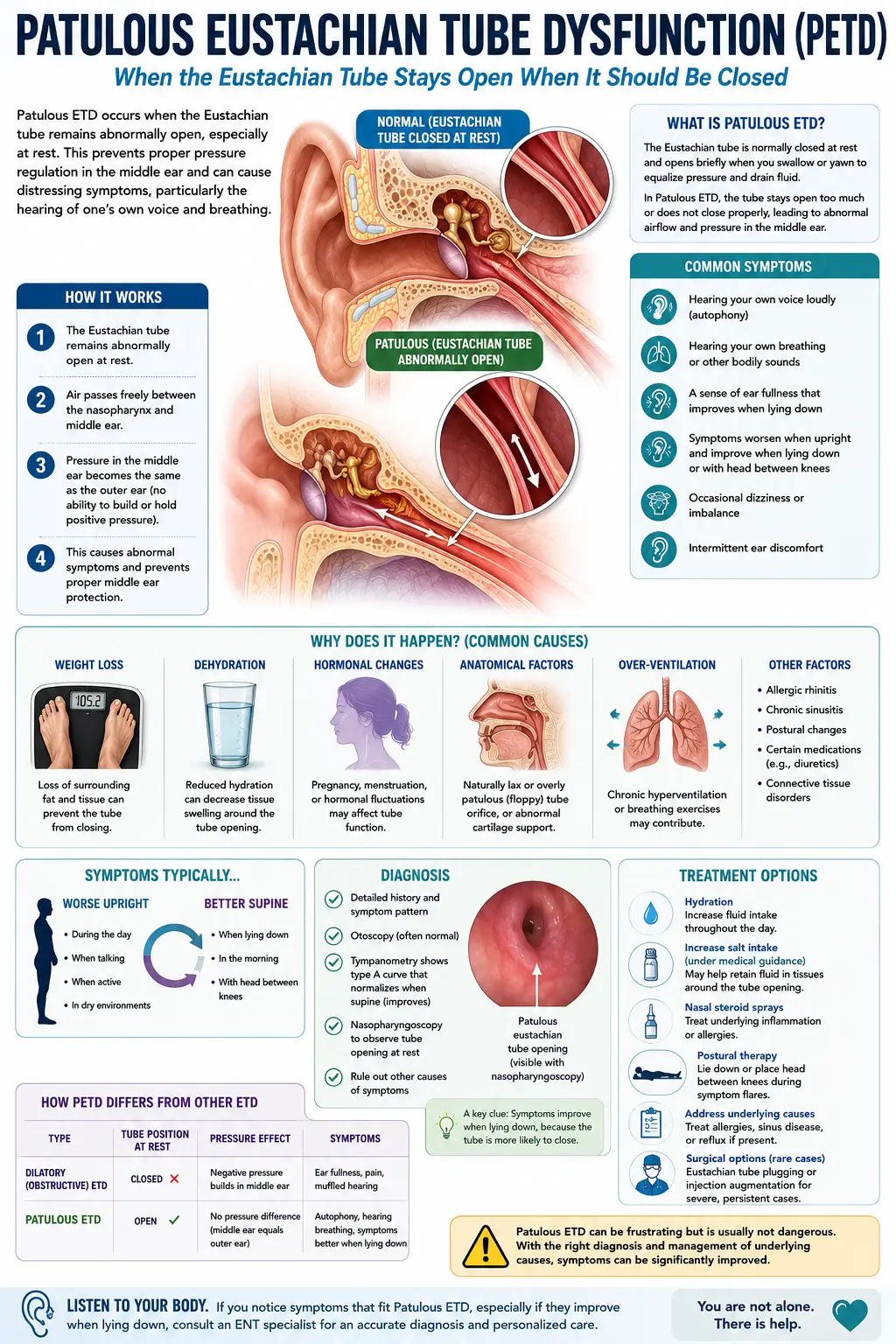
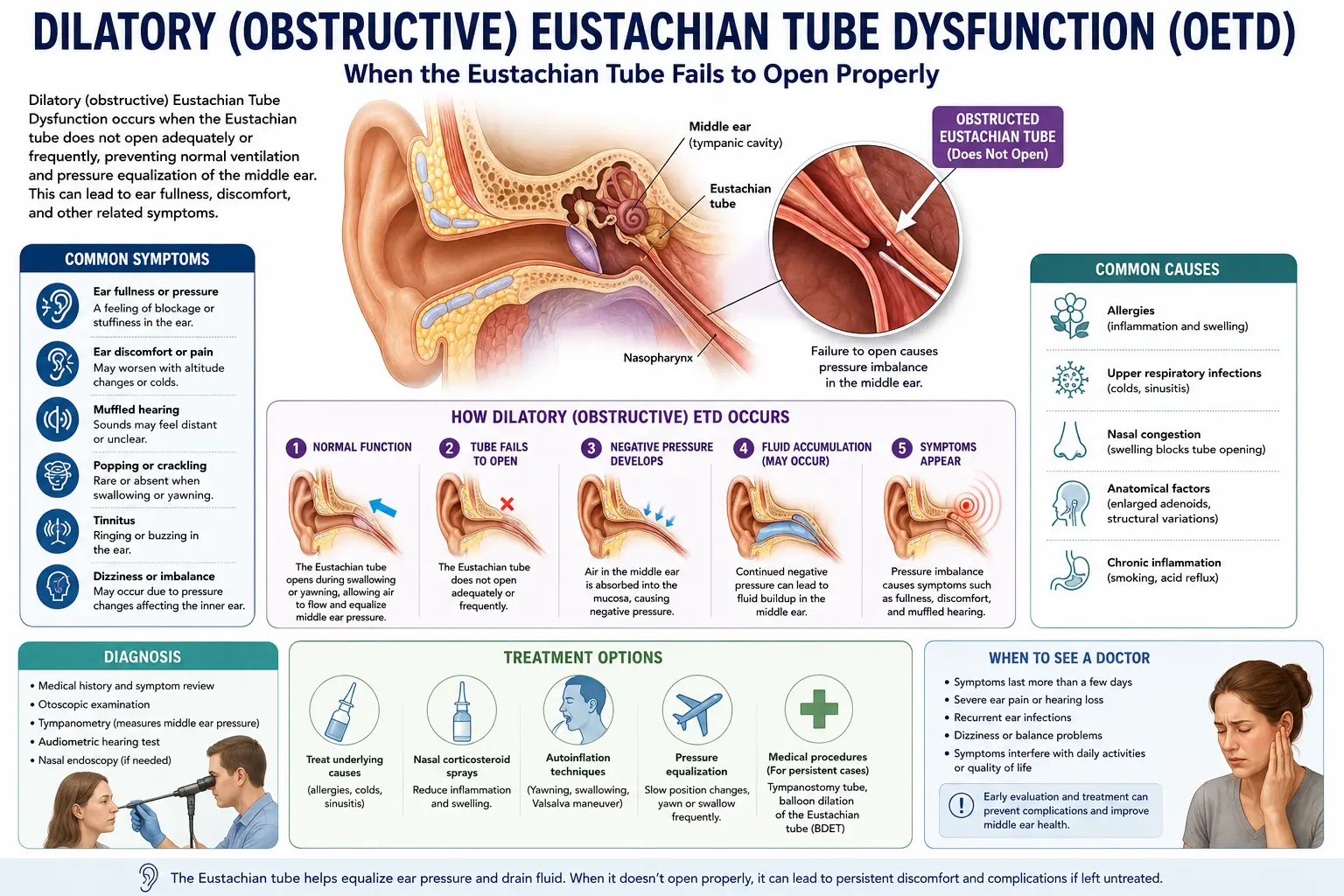
What Is Eustachian Tube Dysfunction (ETD)?
Eustachian Tube Dysfunction means the tube isn’t functioning normally. It may not open effectively, may close too much, may be inflamed, or may be blocked. The result is typically one or more of the following:
- Ear pressure or fullness
- Popping, crackling, or clicking
- Muffled hearing or reduced hearing clarity
- Ear pain or tenderness
- A sensation of fluid or “water in the ear”
- Tinnitus (ringing/buzzing in some cases)
- Dizziness, imbalance, or vertigo
- Pressure headaches (especially with storms or flights)
- Recurrent ear infections
ETD can be acute (short-lived) or chronic (persistent or recurring). Chronic ETD often involves more than simple congestion—it can involve mechanics, neurological control, inflammation patterns, and drainage efficiency.
Why Barometric Pressure Changes in Sarasota and Bradenton Make ETD Worse
Barometric pressure is the pressure of the air around you. When storms approach, pressure often shifts quickly. Your ears must constantly equalize these changes through the Eustachian tube. If the tube is already struggling, pressure changes can feel like your head is in a vise.
What people commonly experience during pressure shifts
- Sudden ear pressure or clogging
- Headaches that start “out of nowhere”
- Increased facial pressure or sinus-like symptoms
- Neck stiffness and base-of-skull pressure
- Dizziness, lightheadedness, or “off” balance feelings
- Fatigue and brain fog
Why it happens
When outside pressure changes, the middle ear must adjust. If the Eustachian tube doesn’t open well—because of swelling, muscular tension, poor coordination, or neurological dysfunction—pressure equalization becomes difficult. That pressure can irritate the ear structures and trigger symptoms up the chain, including headaches and dizziness.
The Symptom Web: ETD Rarely Stays “Only in the Ear”
ETD often overlaps with symptoms that feel like separate problems:
- Congestion and sinus pressure
- Headaches or migraines
- Pain and pressure in the back of the head
- Neck pain and tightness
- Dizziness/vertigo
- Recurrent ear infections
- Jaw tension and TMJ-type symptoms
This overlap is not random. It reflects how closely connected the ear, throat, jaw, upper neck, and nervous systemreally are.
ETD, Headaches, and Pain at the Base of the Skull
A huge number of people with ETD also report:
- pressure at the base of the skull
- tension headaches that climb up the back of the head
- headaches behind the eyes
- migraines triggered by weather shifts
Why? Because pressure regulation and inflammation often interact with the upper cervical spine and surrounding nerves.
Why base-of-skull pressure is such a clue
The base of the skull is where the upper cervical spine meets the head. It’s also where the brainstem transitions and where important neurological structures pass through. When the top of the neck is stressed—by posture, trauma, or misalignment—it can change muscle tone, blood flow dynamics, drainage, and how your nervous system responds to triggers like barometric pressure.
ETD and Dizziness/Vertigo: The Ear-Neck-Brainstem Triangle
Your balance system is not only your inner ear. It’s a three-part coordination system:
- Inner ear (vestibular apparatus)
- Eyes (visual tracking and stability)
- Upper neck proprioception (position feedback from the neck joints and muscles)
The brain integrates these signals. If the upper neck is sending distorted input—often due to misalignment and abnormal muscle tension—the brain may interpret movement incorrectly. That can cause:
- dizziness
- lightheadedness
- unsteadiness
- vertigo-like sensations
- motion sensitivity
So if ETD is present and the neck is also irritated, symptoms can amplify each other.
Chronic Ear Infections: Why They Keep Coming Back
Many adults and children experience repeated ear infections, especially when ETD is chronic. A common pathway looks like this:
- Eustachian tube doesn’t drain well
- Fluid accumulates behind the eardrum
- Stagnant fluid becomes a breeding ground
- Infection develops or recurs
- Antibiotics reduce infection load temporarily
- But the drainage issue remains
- Infections return
If your recurring infections are driven by poor drainage mechanics and chronic dysfunction, simply treating infection episodes doesn’t solve the root cause.
The Overlooked Root Cause: The Upper Cervical Spine
Here’s where upper cervical chiropractic becomes highly relevant.
The upper cervical spine (C1 and C2) is the most mobile and neurologically significant region of the spine. It surrounds and protects the brainstem—an area that influences:
- autonomic nervous system regulation (sympathetic/parasympathetic balance)
- inflammation control and immune response
- muscle tone patterns in the neck, jaw, and throat
- coordination of balance signals
- vascular and drainage dynamics in the head and neck
When C1/C2 are misaligned—even subtly—your body may compensate with muscle tension, altered motion patterns, and neurological irritation.
Common causes of upper cervical misalignment
- car accidents (even minor)
- sports impacts and falls
- childhood injuries
- repetitive strain and posture (phones, desks)
- jaw issues and clenching
- whiplash and concussions
Many people with ETD symptoms have a history of one of these—even years earlier.
How Upper Cervical Misalignment Can Contribute to ETD Symptoms
Upper cervical misalignment can influence ETD in several practical ways:
1) Muscle tension and mechanical dysfunction
Muscles that influence the jaw, throat, and upper neck can become hypertonic (too tight) or uncoordinated. That affects how effectively the Eustachian tube opens and closes.
2) Autonomic nervous system imbalance
When the nervous system is stressed, tissues can become more reactive—swelling more easily, producing more inflammation, and becoming “trigger sensitive” with weather changes.
3) Drainage and pressure dynamics
Head and neck drainage depends on healthy motion, balanced muscle tone, and normal neurological coordination. When the upper neck is dysfunctional, drainage may become less efficient, contributing to pressure and congestion sensations.
4) Vestibular sensitivity and dizziness
If the upper neck is sending distorted balance input, dizziness and vertigo sensations can persist even when the ear “looks fine” on exam.
Why Decongestants Often Don’t Solve Chronic ETD
Decongestants can reduce swelling temporarily. But they do not correct:
- neurological dysregulation
- upper cervical misalignment
- chronic muscle tension patterns
- vestibular coordination problems
- underlying drainage inefficiency
The medication loop many people get stuck in
- Symptoms flare → decongestant helps briefly
- Symptoms return → stronger meds or more frequent use
- Side effects increase (dryness, jitteriness, blood pressure issues, rebound congestion)
- Long-term relief never arrives
If the root cause is structural/neurological, medication alone can’t provide a lasting solution. That doesn’t mean medications are “bad”—it means they may not be the complete answer for chronic cases.
Upper Cervical Chiropractic: What It Is (and What It Is Not)
Upper cervical chiropractic focuses on correcting the top bones of the neck only. If you’re being adjusted in the mid-back, low back, or multiple spinal regions and told it’s “upper cervical,” that’s not actually upper cervical care.
What upper cervical chiropractic IS
- precise, specific correction of C1/C2
- objective measurements guiding care
- gentle force (no twisting/cracking required)
- designed to help the body hold alignment and self-correct patterns
What upper cervical chiropractic is NOT
- full-spine twisting and popping
- “cracking” the neck repeatedly
- guessing-based adjustments without imaging and analysis
Why Lavender Family Chiropractic (NeckWise North Sarasota) Approaches ETD Differently
At Lavender Family Chiropractic (NeckWise North Sarasota), we take a root-cause, measurement-based approach.
Step 1: Identify whether the upper cervical spine is involved
Many people have no idea their upper neck is a key driver. We look for patterns in history and symptoms—especially:
- storm sensitivity and barometric headaches
- base-of-skull pressure
- dizziness/vertigo
- chronic congestion without clear infection
- repeated ear infections
- history of whiplash, falls, or concussions
Step 2: Advanced imaging to measure the misalignment
We use 3D CBCT imaging to see the exact position of C1 and C2. That matters because the upper neck is highly specific—millimeters and degrees matter.
Step 3: Functional nervous system testing
We also use functional nervous system scans to detect patterns of imbalance and irritation, helping us track progress objectively over time.
Step 4: Gentle, precise correction
Upper cervical corrections are designed to restore alignment and reduce neurological interference without twisting, cracking, or forcing motion.
Step 5: Let the body stabilize and heal
Once the nervous system calms and alignment improves, many people notice improvements in:
- ear pressure
- congestion patterns
- headache frequency/intensity
- dizziness and balance
- overall resilience to weather changes
How Upper Cervical Chiropractic May Help You Avoid Living on Decongestants
When ETD symptoms are driven by chronic dysfunction—not just acute congestion—upper cervical care can be the missing piece by helping the body restore its own regulation.
People often report:
- less frequent pressure flare-ups
- improved ability to “clear” ears naturally
- fewer headache storms
- improved steadiness and less dizziness
- reduced dependence on sprays and decongestants
Again: the goal isn’t to “fight symptoms harder.” The goal is to help your body stop producing the symptoms in the first place.
ETD “Look-Alikes” That Can Confuse the Picture
Many people get labeled with ETD when the real driver is mixed or overlapping, such as:
- TMJ dysfunction (jaw tension affects ear pressure)
- vestibular migraine
- neck-driven dizziness (cervicogenic dizziness)
- chronic sinus inflammation
- post-viral sensitivity
- long-standing autonomic imbalance
A root-cause approach doesn’t ignore these—it helps you identify what’s actually happening and why your symptoms behave the way they do.
What You Can Do at Home (Without Relying on Decongestants)
These are supportive strategies that often help, especially alongside a root-cause plan:
Hydration and mucous membrane support
Dry tissues become more reactive. Hydration supports healthier mucus consistency and drainage.
Gentle nasal breathing habits
Mouth breathing can increase throat irritation and change pressure mechanics.
Posture awareness
Forward head posture increases upper neck strain and can amplify base-of-skull pressure and headache triggers.
Avoid overusing sprays
Frequent use can lead to rebound effects for some people.
Track barometric pressure patterns
Many people find their flares correlate strongly to weather shifts—tracking helps you see that your symptoms aren’t random.
These aren’t the cure for chronic ETD, but they can reduce stress on the system while you address the root cause.
Serving Sarasota, Bradenton, and Lakewood Ranch: Why Local Matters
If you live in Sarasota, Bradenton, Lakewood Ranch, Ellenton, Parrish, Venice, Osprey, Siesta Key, Longboat Key, Lido Key, Myakka City, Punta Gorda, or St. Petersburg, you’ve likely experienced how quickly weather shifts affect pressure-related symptoms. Local care that understands these patterns matters—especially when you’re trying to break a cycle that’s been repeating for years.
Top 15 FAQs About Eustachian Tube Dysfunction and Upper Cervical Chiropractic
1. What does Eustachian tube dysfunction feel like?
Most people describe ear fullness, popping, muffled hearing, pressure, and sometimes pain—often paired with headaches or dizziness.
2. Can ETD cause headaches?
Yes. Pressure changes and inflammation can trigger headaches, and many people feel pain behind the eyes or at the base of the skull.
3. Why do storms make my ears and head feel worse?
Barometric pressure changes force your ears to equalize pressure. If your system is already stressed, symptoms flare quickly.
4. Can ETD cause dizziness or vertigo?
Yes. The inner ear is part of balance, and pressure or dysfunction can contribute to dizziness and vertigo sensations.
5. Why do I keep getting ear infections?
Often because the middle ear isn’t draining properly, allowing fluid to accumulate and infections to recur.
6. Is ETD always caused by allergies?
No. Allergies can contribute, but many chronic cases involve mechanics, tension patterns, and neurological regulation.
7. Can neck problems cause ear pressure?
They can contribute. The upper neck influences neurological control, muscle tension, and balance signaling related to ear function.
8. What is upper cervical chiropractic?
A focused chiropractic specialty that corrects only the top bones of the neck (C1/C2) to improve neurological function.
9. How is upper cervical care different from regular chiropractic?
Upper cervical is more precise, often imaging-guided, and does not rely on twisting/cracking full-spine adjustments.
10. Does upper cervical chiropractic use decongestants?
No. The goal is to help your body regulate pressure and drainage naturally rather than masking symptoms.
11. What tests do you use at Lavender Family Chiropractic (NeckWise North Sarasota)?
We use 3D CBCT imaging and functional nervous system scans to objectively measure misalignment and track progress.
12. How long does it take to see improvement?
Some notice changes quickly; others improve over time depending on chronicity, inflammation patterns, and how well the body stabilizes.
13. Can upper cervical care help “pressure at the base of my skull”?
Often, yes—especially when that pressure is linked to upper neck tension and neurological irritation.
14. Is upper cervical care safe?
Upper cervical care is gentle and specific. Corrections are designed to be precise and controlled.
15. What if ENT workups are “normal,” but I still feel pressure and dizziness?
That’s common in chronic ETD-like cases. When scans look normal but symptoms persist, neurological and structural factors are worth exploring.
The Takeaway: ETD Isn’t Always an “Ear Problem”—It’s Often a Regulation Problem
If you’re stuck in a loop of ear pressure, congestion, headaches, dizziness/vertigo, and chronic infections—especially if you’re sensitive to barometric pressure—there’s a strong chance your body is dealing with a pressure regulation and drainage issue, not just a “congestion issue.” And when regulation is the problem, the nervous system and upper neck must be part of the conversation.
Upper cervical chiropractic care at Lavender Family Chiropractic (NeckWise North Sarasota) is designed to address that root cause by restoring alignment in the top of the neck and helping the nervous system function the way it’s supposed to—often reducing or eliminating the need to depend on decongestants for relief.
Schedule a Consultation
If you’re searching for a chiropractor sarasota florida, chiropractor near me, upper cervical chiropractor near me, or you’ve been looking for answers to ear pressure, dizziness, vertigo, headaches, and chronic congestion, we’re here to help.
Lavender Family Chiropractic (NeckWise North Sarasota)
5899 Whitfield Ave Ste 107, Sarasota, FL 34243
www.chiropractorsarasotaflorida.com
(941)243-3729
To learn more about us go to http://www.chiropractorsarasotaflorida.com
We also service Bradenton, Parrish, Ellenton, Ruskin, Venice, Tampa, St. Pete, Osprey, Longboat, Lakewood Ranch, Myakka City.
If you are in Tampa, Land O Lakes, Fort Myers, or Salt Lake City, you can visit my other locations! NeckWise Upper Cervical. Visit, www.neckwise.com
If you are not local, visit www.uccnearme.com to find a doctor in your area
Serving Sarasota, Bradenton, Lakewood Ranch, Parrish, Ellenton, Venice, Osprey, Siesta Key, Longboat Key, Lido Key, Myakka City, Punta Gorda, and St. Petersburg.
Related Posts
Popular Posts