
By Dr. Rusty Lavender, D.C. — upper cervical chiropractor, Lavender Family Chiropractic, Sarasota, FL. Reviewed and updated October 2026.
Our complete guide to upper cervical chiropractic care in Sarasota explains what the top two vertebrae control, how we measure them with 3D imaging, and what a correction feels like.
Chiropractic care is a licensed health care profession that focuses on the diagnosis and treatment of musculoskeletal problems. It has been shown to be effective in treating a variety of conditions, including back pain, neck pain, and headaches. In this blog post, we will discuss a couple of conditions that can be treated with chiropractic care. If you are experiencing any of these issues, please consult a chiropractor! While it is best known for its ability to relieve back and neck pain, chiropractic care can also be used to treat conditions such as headaches, migraines, TMJ, carpal tunnel, and more. If you are suffering from any of these conditions, consider seeking out chiropractic care to find relief.

Table of Contents
Back pain and Chiropractic Care
Back pain is an unfortunate and all-too-common condition that impacts millions of people worldwide. From chronic lower back pain to acute sharp pains, this problem can feel devastating for those who experience it. Fortunately, there are a variety of treatments available to manage the pain and make life more bearable, from physical therapy to massage therapy and much more. While back pain can be a challenge to work through, it’s important to remember that you don’t have to suffer alone and help is out there for those in need.
Headaches Chiropractic Care
Headaches can be a real pain, literally! They can range from mild to severe, and even impact our ability to function. Among the most commonly reported causes of headaches are stress and dehydration, but they can also be caused by sinus pressure, allergies, or poor posture. Thankfully, headaches can often be treated with ibuprofen or other pain medications. If you are prone to headaches, it is important to make sure that you are managing your stress levels and staying hydrated. Taking regular breaks from screens and long periods of sedentary activities may also provide relief from headache symptoms.
Neck pain Chiropractic Care
Neck pain affects many people, with some experiencing it on a daily basis. If not treated properly, it can have drastic consequences that impede everyday activities. Fortunately, there are a number of possibilities for managing your neck pain and living an active lifestyle.
Exercise and relaxation techniques can help loosen tight muscles in the neck and provide relief for occasional or chronic pain. Over-the-counter medications and hot or cold therapy can also be used to reduce swelling and ease discomfort. In extreme cases, medical treatments such as physical therapy or surgery may provide longer-lasting solutions to neck pain. Taking care of your body is essential when combating neck pain, so take control of your health before the problem becomes more severe.
Arthritis Chiropractic Care
Arthritis is a painful and debilitating condition that affects millions of people worldwide. Although it most commonly affects those over the age of 65, arthritis can strike at any age, causing stiffness, pain, swelling, and reduced mobility in the joints.
Those suffering from arthritis may experience difficulty performing basic activities such as walking or even reaching for items. While there is no known cure for arthritis, physicians often prescribe treatments including pain relief medications and physical therapies to help manage its effects. Making lifestyle changes such as quitting smoking, eating healthy, and exercising regularly can also improve the quality of life for those living with this challenging condition.
Scoliosis Chiropractic Care
Scoliosis is a common medical condition that affects the spine and is characterized by an abnormal curvature of the vertebral bones. This condition can cause pain and other symptoms, such as problems with posture, balance, and mobility. Scoliosis is usually diagnosed during adolescence, though in some cases it may not be detected until adulthood or later. Treatment for scoliosis typically includes physical therapy or surgery, depending on the severity of the curve in the spine. Longer-term treatment options can include bracing or other assistive devices to help keep the body properly aligned. While it cannot be cured, early diagnosis and treatment can often reduce or even stop further curvature from occurring.
Carpal tunnel syndrome Chiropractic Care
Carpal tunnel syndrome is a common condition affecting the hands and wrists. It is caused by increased pressure on the median nerve, resulting in numbness, tingling, or pain in the affected hand. Carpal tunnel syndrome can cause severe discomfort and can interfere with daily activities if left untreated. Repairing the condition requires medical intervention such as a splint, physical therapy, steroid injections, and/or surgery.
Taking preventive measures like using ergonomically designed keyboards, maintaining good posture while working, taking frequent breaks to stretch, and wearing wrist braces are important steps to avoid developing carpal tunnel syndrome. Early detection and treatment of carpal tunnel syndrome lessen its impact on day-to-day life.
There are many things that can be causing your chronic pain. Finding the root of the problem is essential to finding lasting relief. If you suffer from chronic pain, give us a call. We would love to help you find freedom from your pain so you can live your life to the fullest potential.
What the Research Says About Which Conditions Respond to Chiropractic
The honest answer is that evidence is strong for some conditions and weak for others. A UK evidence report that reviewed manual therapies found evidence of effectiveness for spinal manipulation or mobilization in acute, subacute and chronic low back pain, neck pain combined with exercise, migraine, cervicogenic headache and cervicogenic dizziness, while the evidence for many non-musculoskeletal conditions such as asthma and hypertension was inconclusive or negative (Bronfort et al., Chiropr Osteopat 2010). A Cochrane review of 51 trials reached a similar conclusion for the neck, with cervical manipulation and mobilization producing meaningful short-term improvements in pain and function (Gross et al., Cochrane 2015). So the list of conditions with solid support centers on the spine, the head and balance, not on organs or immunity.
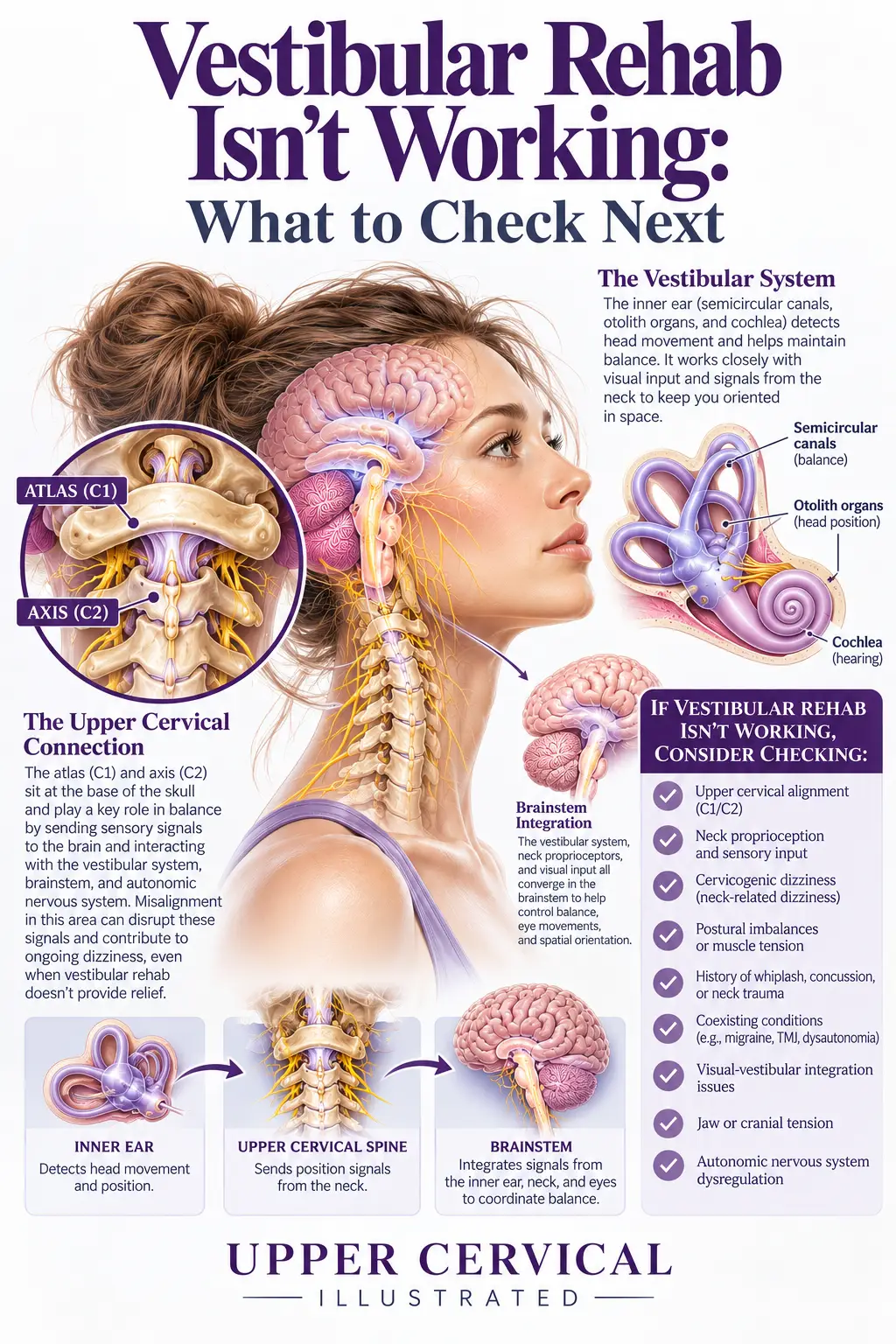
Within that list, the upper neck has a clear place. Upper cervical structures from C1 to C3 converge on the trigeminocervical complex, which is why pain from the top of the neck can be felt as headache (Bogduk & Govind, Lancet Neurol 2009), and disturbed input from the upper cervical joints can alter head and eye movement control and produce unsteadiness (Kristjansson & Treleaven, J Orthop Sports Phys Ther 2009). Across 1,090 patients in 83 upper cervical offices, patient-rated improvement and satisfaction were high and reactions after care were mostly mild and short-lived (Eriksen et al., BMC Musculoskelet Disord 2011). We stay inside what this evidence supports: 3D imaging of the atlas, a correction matched to those images, and a follow-up measurement to show whether the position actually changed.
Frequently Asked Questions
How does the upper neck relate to low back pain?
The head weighs ten to twelve pounds, and the body keeps the eyes level no matter where the atlas sits. When the atlas is misaligned, the shoulders, hips, and pelvis compensate, loading one side of the low back more than the other. Correcting the atlas with a precise Knee Chest correction lets that compensation release. We measure the position on 3D CBCT and track nervous system regulation with thermography.
Why do you focus on the atlas for headaches and neck pain?
The upper neck feeds the trigeminocervical complex, where headache signals converge, and the atlas and axis are the most mobile and vulnerable joints in the spine. A misaligned atlas irritates that region and strains the neck muscles that hold the head up. Rather than cracking the neck, we calculate a low-force correction from your imaging and confirm the response with thermography before and after.
Can upper cervical care help arthritis in the spine?
Arthritis is the result of uneven wear over years, and a misaligned atlas distributes the head’s weight unevenly down the entire spine. We cannot reverse joint changes already present, and your physician manages arthritis medication. What we address is the alignment driving the uneven load. Many patients notice easier movement as the atlas is corrected and held, and thermography at each visit shows how the nervous system is responding.
Does upper cervical care address scoliosis?
Scoliosis has several causes, and structural curves should be monitored by a physician. From the upper cervical point of view, the spine curves beneath the head to keep the eyes level, so an atlas misalignment can add to or aggravate a curve. We measure the atlas on 3D CBCT, correct it, and track the response with thermography. Results vary, and we coordinate with your orthopedic providers.
Do you see back, neck, and headache patients from Lakewood Ranch?
Yes. Our Sarasota office at University Parkway and Whitfield is minutes from Lakewood Ranch, University Park, and Bradenton. Whatever the condition, the evaluation is the same: history, 3D CBCT imaging of the upper cervical spine, and a baseline thermography scan. If the upper neck is not involved, we say so and refer you. Call (941) 243-3729 to schedule an evaluation.
Schedule With Us!
Lavender Family Chiropractic offers consultations to learn more about you. Click the link below!
https://intake.chirohd.com/new-patient-scheduling/724/lavender-family-chiropractic
Visit our Website!
To learn more about us go to http://www.chiropractorsarasotaflorida.com