
Ear Pressure and Upper Cervical Chiropractic: Relief Through Precision Care at Lavender Family Chiropractic
By Dr. Rusty Lavender, D.C. — upper cervical chiropractor, Lavender Family Chiropractic, Sarasota, FL. Reviewed and updated October 2026.
Ear pressure, ear fullness, and vertigo can disrupt daily life, making even simple tasks feel overwhelming. These symptoms often stem from complex issues like Eustachian tube dysfunction or misalignments in the upper cervical spine. At Lavender Family Chiropractic in Sarasota, Florida, upper cervical chiropractic care offers a natural, non-invasive approach to address these conditions. Using advanced technology like 3D Cone Beam Computed Tomography (CBCT), the team at Lavender Family Chiropractic provides precise, personalized care to help patients find lasting relief. In this comprehensive guide, we’ll explore the causes of ear pressure, the role of the Eustachian tube, the connection to vertigo, and how upper cervical chiropractic care can restore balance and well-being.
Understanding Ear Pressure: A Common but Complex Issue
Ear pressure, often described as a feeling of fullness or blockage in the ear, can range from mild discomfort to severe pain. It’s a sensation many people experience at some point, whether during a cold, an airplane flight, or seemingly without cause. For some, ear pressure becomes chronic, accompanied by symptoms like muffled hearing, tinnitus (ringing in the ears), dizziness, or vertigo. These issues can significantly affect quality of life, leading to frustration when conventional treatments provide only temporary relief.
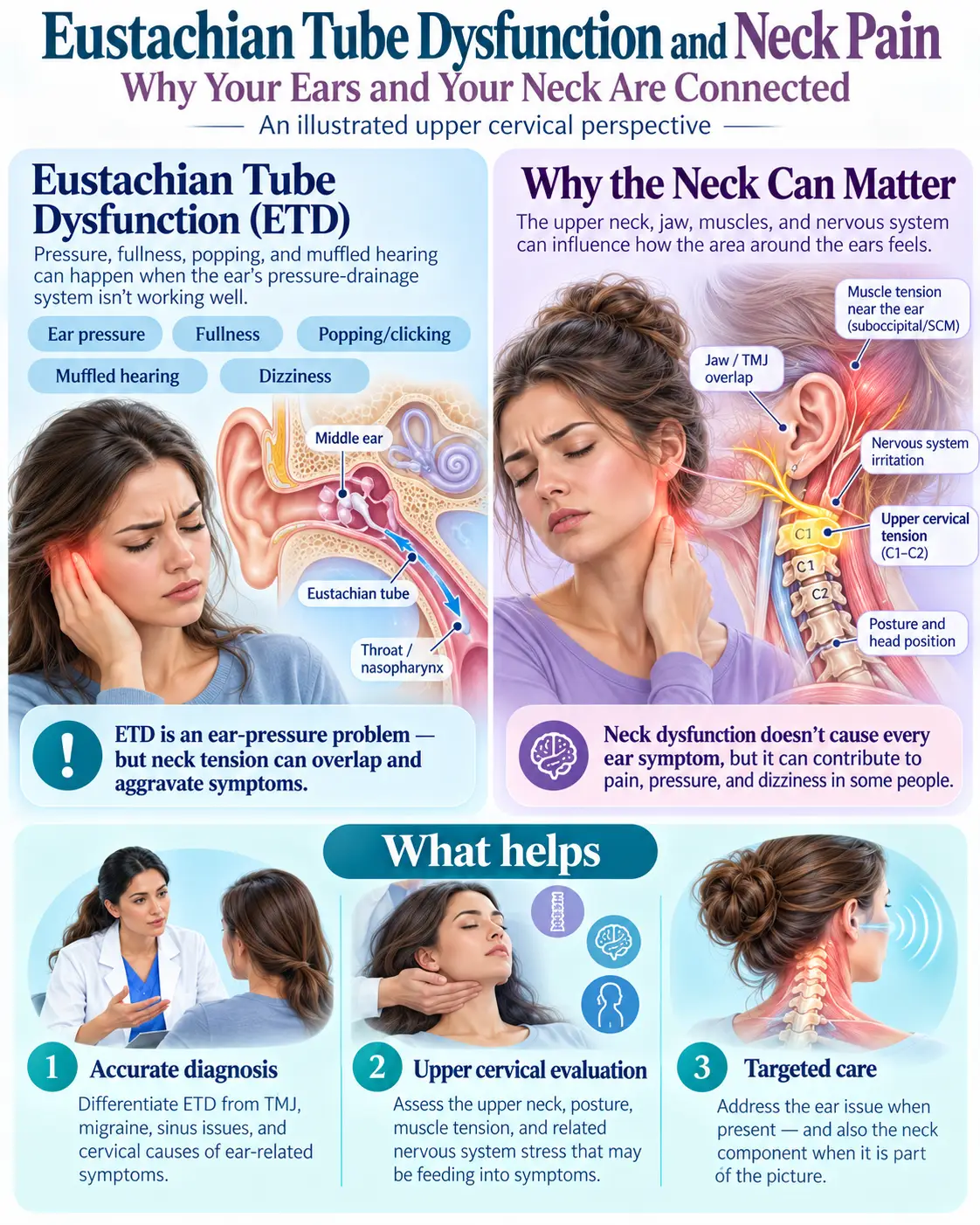
Ear pressure is frequently linked to Eustachian tube dysfunction (ETD), a condition where the Eustachian tubes—small passages connecting the middle ear to the back of the throat—fail to function properly. However, the root cause of ETD and related symptoms may lie beyond the ear itself. Misalignments in the upper cervical spine, the top two vertebrae of the neck (the atlas (C1) and axis (C2)), can disrupt nerve signals and muscle tone, contributing to ear pressure and associated symptoms. Upper cervical chiropractic care, as practiced at Lavender Family Chiropractic, targets these misalignments to restore proper function and alleviate discomfort.
What Is Eustachian Tube Dysfunction (ETD)?
The Eustachian tubes are narrow canals that connect the middle ear to the nasopharynx (the area at the back of the throat and nasal cavity). These tubes serve three critical functions:
- Pressure Equalization: They regulate air pressure in the middle ear to match atmospheric pressure, preventing discomfort during altitude changes (like during flights or driving in mountains).
- Fluid Drainage: They allow fluid and mucus to drain from the middle ear to prevent buildup.
- Protection: They shield the middle ear from pathogens and loud sounds.
When the Eustachian tubes become blocked or fail to open and close properly, it’s known as Eustachian tube dysfunction. This can result in:
- Ear Fullness: A sensation that the ear is plugged or underwater.
- Muffled Hearing: Sounds may seem distant or unclear.
- Tinnitus: Ringing, buzzing, or other noises in the ear.
- Ear Pain: Discomfort ranging from mild to severe.
- Vertigo or Dizziness: Balance issues due to pressure changes affecting the inner ear.
- Hearing Loss: Temporary or, in rare cases, permanent if untreated.
Causes of Eustachian Tube Dysfunction
ETD can arise from various factors, including:
- Upper Respiratory Infections: Colds or sinus infections can cause inflammation and mucus buildup, blocking the tubes.
- Allergies: Seasonal or environmental allergies can lead to congestion and swelling.
- Chronic Sinusitis: Persistent sinus inflammation can affect Eustachian tube function.
- Structural Issues: In children, smaller and more horizontal Eustachian tubes make them more prone to dysfunction.
- Upper Cervical Misalignments: Misalignments in the atlas or axis can disrupt nerve signals to the muscles controlling the Eustachian tubes, such as the tensor veli palatini muscle.
Left untreated, ETD can lead to complications like chronic ear infections (otitis media), fluid buildup behind the eardrum, or even hearing loss. At Lavender Family Chiropractic, upper cervical chiropractic care addresses the neurological and structural components of ETD, offering a holistic solution.
Ear Fullness and Vertigo: How Are They Connected?
Ear fullness and vertigo often go hand in hand, especially when Eustachian tube dysfunction or inner ear issues are involved. Let’s break down these symptoms and their relationship.
Ear Fullness
Ear fullness feels like your ear is clogged or under pressure, similar to the sensation during a flight or when you have a cold. It’s often caused by:
- Fluid Buildup: When the Eustachian tube is blocked, fluid or mucus can accumulate in the middle ear, creating pressure.
- Inflammation: Swelling in the nasopharynx or surrounding tissues can compress the Eustachian tube.
- Muscle Dysfunction: The tensor veli palatini muscle, which helps open the Eustachian tube, may not function properly due to neurological interference from upper cervical misalignments.
Ear fullness can be intermittent or chronic, and it may worsen with changes in altitude, allergies, or stress. For some, it’s accompanied by tinnitus or muffled hearing, making it difficult to focus or communicate.
Vertigo
Vertigo is the sensation that you or your surroundings are spinning, often leading to dizziness, nausea, or balance problems. It’s closely tied to the inner ear, which houses the vestibular system responsible for balance and spatial orientation. When pressure changes or fluid buildup in the middle or inner ear disrupt the vestibular system, vertigo can result. Common causes include:
- Eustachian Tube Dysfunction: Pressure imbalances in the middle ear can affect the inner ear’s balance mechanisms.
- Meniere’s Disease: A chronic inner ear disorder characterized by vertigo, tinnitus, ear fullness, and hearing loss, often linked to fluid buildup.
- Upper Cervical Misalignments: Misalignments in the atlas or axis can interfere with nerve signals to the brainstem and vestibular nucleus, which regulate balance.
Vertigo can be triggered by specific head movements, stress, or even lying down, and it can range from mild to debilitating. At Lavender Family Chiropractic, upper cervical chiropractic care targets the root causes of vertigo, helping patients regain stability and confidence.
Upper Cervical Chiropractic Care: A Precise Path to Wellness
Upper cervical chiropractic care is a specialized branch of chiropractic that focuses on the alignment of the top two vertebrae in the spine—the atlas (C1) and axis (C2). These vertebrae, located at the base of the skull, play a critical role in supporting the head, protecting the brainstem, and facilitating communication between the brain and body. Misalignments in this region can disrupt nervous system function, leading to a wide range of health issues, from headaches and neck pain to dizziness and digestive problems. By correcting these misalignments with gentle, precise adjustments, upper cervical chiropractic care offers a natural, non-invasive approach to restoring health and improving quality of life.
The Importance of the Upper Cervical Spine
The atlas and axis are unique among the spine’s 33 vertebrae. The atlas, named after the mythological figure who carried the world on his shoulders, supports the skull and allows for the head’s nodding motion. The axis, directly below, enables the head to rotate side to side. Together, these vertebrae form a complex joint that provides exceptional mobility but also makes them vulnerable to misalignment from trauma, poor posture, or repetitive stress.
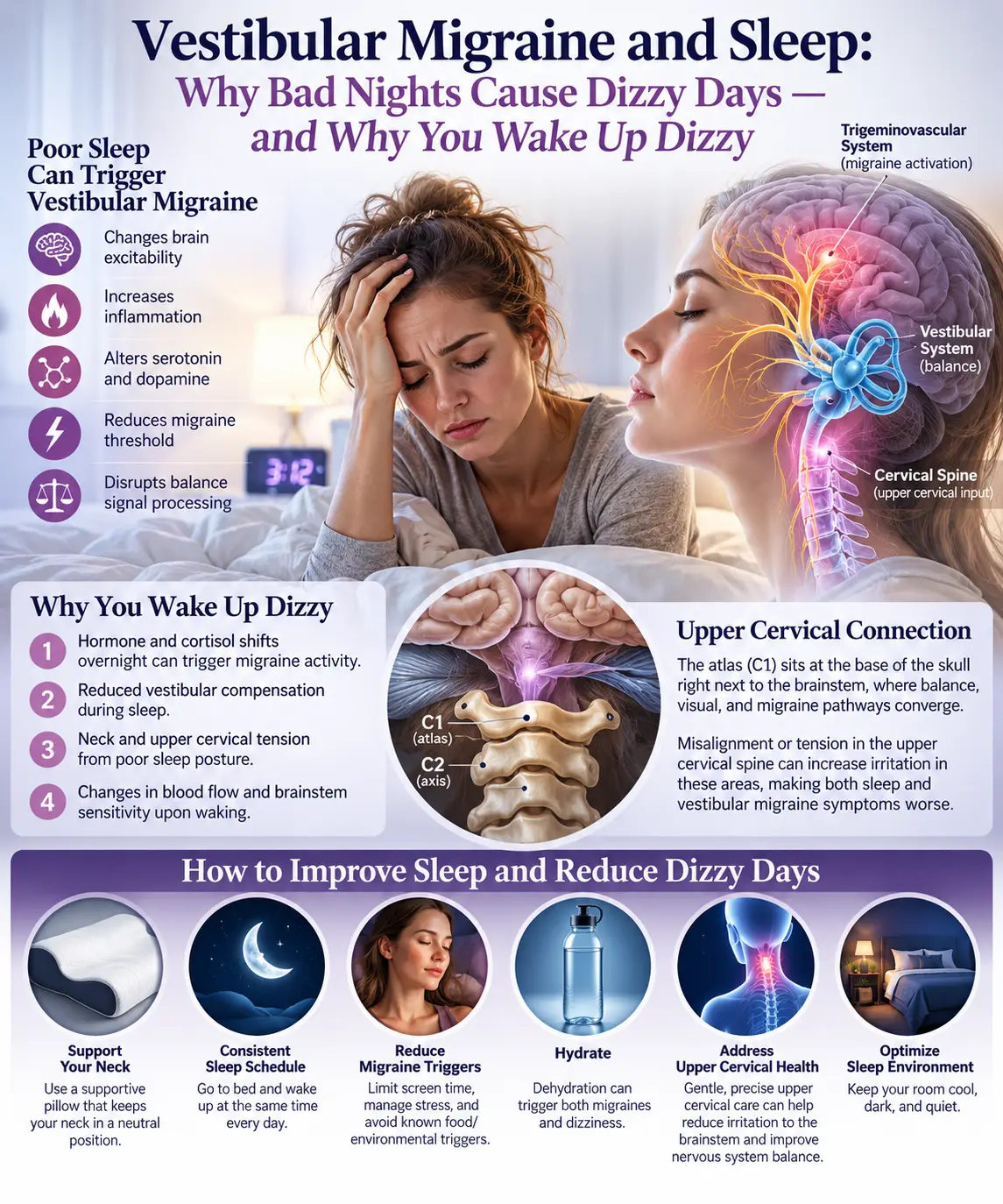
The upper cervical spine is also home to the brainstem, the critical link between the brain and spinal cord. The brainstem regulates essential functions like heart rate, breathing, and balance while relaying nerve signals to the rest of the body. Even a slight misalignment—sometimes as small as a millimeter—can compress or irritate the brainstem or surrounding nerves, disrupting these vital processes. This neurological interference can manifest as symptoms far beyond the neck, including migraines, vertigo, fibromyalgia, or even immune system dysfunction.
Upper cervical chiropractic care targets these misalignments, known as subluxations, to restore proper nerve function and allow the body to heal itself. Unlike general chiropractic, which may involve adjustments to multiple spinal segments, upper cervical care is highly specific, focusing solely on the atlas and axis for maximum precision and effectiveness.
How Upper Cervical Chiropractic Works
Upper cervical chiropractors use advanced diagnostic tools and gentle techniques to identify and correct misalignments. The process typically begins with a thorough assessment, including a detailed health history, physical examination, and often advanced imaging like 3D Cone Beam Computed Tomography (CBCT) or digital X-rays. These tools provide a clear picture of the patient’s unique spinal anatomy, revealing the exact position and degree of misalignment.
Once the misalignment is identified, the chiropractor delivers a precise adjustment tailored to the patient’s needs. Unlike traditional chiropractic adjustments, which may involve twisting or cracking, upper cervical adjustments are gentle and low-force. Knee Chest Upper Cervical technique is used to guide the vertebrae back into alignment. The goal is to restore balance without causing discomfort or stress to the body.
After the adjustment, the chiropractor monitors the patient’s progress to ensure the correction holds. Because the upper cervical spine influences the entire body, patients often notice improvements in symptoms that seem unrelated to their neck, such as better sleep, improved digestion, or reduced anxiety. This holistic effect underscores the interconnectedness of the nervous system and the body’s innate ability to heal when properly aligned.
Conditions Addressed by Upper Cervical Chiropractic
Upper cervical chiropractic care is effective for a wide range of conditions, particularly those linked to nervous system dysfunction. Some of the most common issues treated include:
- Headaches and Migraines: Misalignments in the atlas or axis can irritate nerves and blood vessels in the neck, triggering chronic headaches or migraines. Correcting these misalignments often reduces frequency and intensity.
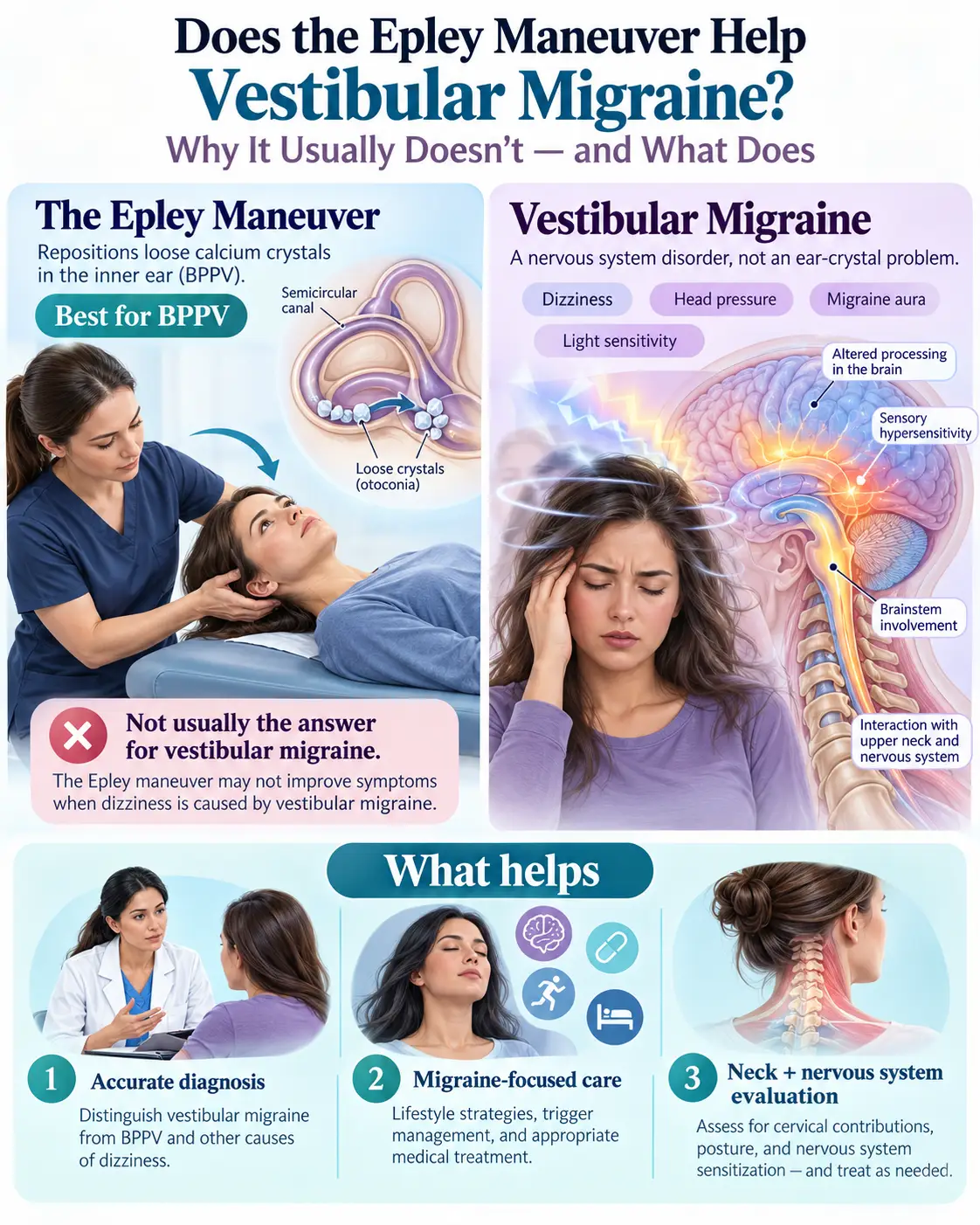
- Vertigo and Dizziness: The upper cervical spine influences the vestibular system, which controls balance. Misalignments can disrupt this system, causing vertigo or unsteadiness, as seen in conditions like Meniere’s disease.
- Neck Pain and Stiffness: Subluxations in the upper cervical spine can strain surrounding muscles and ligaments, leading to chronic discomfort.
- Eustachian Tube Dysfunction: Misalignments may affect the muscles controlling the Eustachian tubes, causing ear pressure, fullness, or tinnitus.
- Fibromyalgia and Chronic Fatigue: By improving nervous system function, upper cervical care can alleviate widespread pain and fatigue associated with these conditions.
- Post-Concussion Syndrome: Gentle adjustments can help reduce symptoms like brain fog, headaches, and dizziness following a head injury.
- TMJ Disorders: Misalignments in the upper cervical spine can contribute to jaw pain and dysfunction by affecting craniofacial alignment.
Because the nervous system governs every bodily function, upper cervical care has the potential to benefit conditions beyond these examples, including digestive disorders, high blood pressure, and immune challenges. Each patient’s response depends on their unique health history and the extent of nervous system interference.
Benefits of Upper Cervical Chiropractic Care
Patients who choose upper cervical chiropractic care often experience benefits that extend beyond symptom relief. Some key advantages include:
- Precision and Personalization: Advanced imaging and specific techniques ensure adjustments are tailored to each patient’s anatomy, maximizing effectiveness.
- Gentle Approach: The low-force nature of upper cervical adjustments makes it suitable for patients of all ages, from infants to seniors, and those with sensitive conditions.
- Non-Invasive and Drug-Free: Upper cervical care offers a natural alternative to medications or surgery, minimizing risks and side effects.
- Holistic Healing: By optimizing nervous system function, upper cervical care supports overall health, not just symptom management.
- Long-Lasting Results: Because adjustments are precise, corrections often hold for weeks or months, reducing the need for frequent visits.
What to Expect During Treatment
For those new to upper cervical chiropractic, the process is straightforward and patient-centered. During the initial visit, the chiropractor will review your health history, including past injuries, symptoms, and lifestyle factors. A physical exam may include tests for posture, range of motion, and neurological function. Imaging, such as CBCT or X-rays, is often used to assess the upper cervical spine’s alignment.
Based on the findings, the chiropractor will develop a personalized care plan. The first adjustment is typically followed by a rest period to allow the body to adapt to the correction. Follow-up visits monitor progress and may include additional adjustments if needed. Over time, as the spine stabilizes, visits become less frequent, focusing on maintenance and prevention.
Patients often report feeling relaxed and energized after adjustments, though some may experience mild soreness or fatigue as the body adjusts. These sensations are temporary and typically resolve within a day or two.
Why Choose Upper Cervical Chiropractic?
Upper cervical chiropractic care stands out for its focus on the body’s foundation—the nervous system. In a world where quick fixes like medications or invasive procedures are common, this approach offers a refreshing alternative rooted in the body’s natural healing potential. By addressing the root cause of symptoms rather than masking them, upper cervical care empowers patients to take charge of their health.
For those dealing with chronic pain, dizziness, or other persistent issues, upper cervical chiropractic provides hope where conventional treatments may have fallen short. Its emphasis on precision, safety, and holistic wellness makes it a valuable option for anyone seeking lasting relief and improved well-being.
If you’re curious about upper cervical chiropractic care, consult a qualified practitioner to discuss your symptoms and goals. With the right care, you can unlock your body’s potential for healing and enjoy a healthier, more vibrant life.
Lavender Family Chiropractic: A Leader in Upper Cervical Care
Located in Sarasota, Florida, Lavender Family Chiropractic is dedicated to helping patients overcome ear pressure, vertigo, and related conditions through specialized upper cervical chiropractic care. Led by experienced chiropractors, the practice emphasizes a holistic approach, addressing the root causes of symptoms rather than masking them with medications.
Why Choose Lavender Family Chiropractic?
- Expertise in Upper Cervical Care: The team at Lavender Family Chiropractic is trained in advanced techniques, such as the Blair Chiropractic Technique, which focuses on precise, low-force adjustments to the upper cervical spine.
- Personalized Treatment Plans: Every patient receives a thorough assessment, including advanced imaging, to create a customized care plan.
- State-of-the-Art Technology: The use of 3D CBCT allows for unparalleled accuracy in diagnosing and correcting misalignments.
- Holistic Approach: In addition to chiropractic adjustments, the practice offers guidance on lifestyle changes, nutrition, and supplements to support overall health.
- Proven Results: Patients with ear pressure, vertigo, and Eustachian tube dysfunction have reported significant improvements after care at Lavender Family Chiropractic.
3D CBCT: Revolutionizing Upper Cervical Chiropractic Care
One of the standout features of Lavender Family Chiropractic is its use of 3D Cone Beam Computed Tomography (CBCT), a cutting-edge imaging technology that enhances the precision of upper cervical care. Unlike traditional X-rays, which provide two-dimensional images, 3D CBCT creates detailed, three-dimensional views of the spine, skull, and surrounding structures.
How 3D CBCT Works
- Imaging Process: The CBCT scanner rotates around the patient’s head, capturing multiple images from different angles. These images are combined to create a 3D model.
- Low Radiation: CBCT uses significantly less radiation than traditional CT scans, making it safe for patients.
- Detailed Analysis: The 3D images allow chiropractors to assess the exact position, angle, and degree of misalignment in the upper cervical spine.
Benefits of 3D CBCT in Upper Cervical Care
- Precision Diagnosis: CBCT reveals misalignments that may not be visible on standard X-rays, ensuring accurate identification of the problem.
- Customized Adjustments: The 3D images guide chiropractors in delivering precise adjustments tailored to each patient’s unique anatomy.
- Improved Outcomes: By targeting the exact source of the misalignment, CBCT enhances the effectiveness of treatment, leading to faster and longer-lasting relief.
- Comprehensive Assessment: CBCT can also evaluate the health of the temporomandibular joint (TMJ) and cranial bones, which may contribute to ear pressure and vertigo.
At Lavender Family Chiropractic, 3D CBCT is a cornerstone of their diagnostic process, enabling the team to provide unparalleled care for patients with ear pressure, vertigo, and Eustachian tube dysfunction.
How Upper Cervical Chiropractic Addresses Ear Pressure and Vertigo
The connection between the upper cervical spine and ear-related symptoms lies in the intricate relationship between the nervous system, muscles, and inner ear. Here’s how upper cervical chiropractic care at Lavender Family Chiropractic can help:
1. Correcting Misalignments
Using 3D CBCT imaging, chiropractors identify misalignments in the atlas or axis. Gentle adjustments restore proper alignment, reducing pressure on nerves and improving communication between the brain and body. This can alleviate muscle tension in the tensor veli palatini, allowing the Eustachian tube to function normally.
2. Reducing Inflammation
Misalignments often cause local inflammation in the neck and craniofacial muscles, which can compress the Eustachian tubes. Adjustments reduce inflammation, relieving pressure and promoting fluid drainage.
3. Restoring Balance
By correcting misalignments, upper cervical care improves nerve signals to the vestibular nucleus, reducing vertigo and dizziness. Patients often report improved balance and fewer vertigo episodes after treatment.
4. Enhancing Overall Health
Upper cervical adjustments optimize nervous system function, supporting the body’s natural healing processes. This holistic approach can reduce the frequency of colds, allergies, and sinus issues that contribute to ETD.
Case Studies and Success Stories
At Lavender Family Chiropractic, patients with chronic ear pressure, vertigo, and Eustachian tube dysfunction have experienced remarkable improvements. For example:
- Case 1: A 35-year-old woman with chronic ear fullness and vertigo found relief after three months of upper cervical care. 3D CBCT revealed a significant atlas misalignment, which was corrected using the Blair Technique.
- Case 2: A 42-year-old man with tinnitus and ear pressure reported a 90% reduction in symptoms after six weeks of adjustments, guided by CBCT imaging.
These success stories highlight the potential of upper cervical chiropractic care to transform lives.
Complementary Strategies for Managing Ear Pressure and Vertigo
While upper cervical chiropractic care is highly effective, patients can enhance their results with lifestyle changes and complementary strategies:
- Stay Hydrated: Drinking plenty of water helps thin mucus, promoting Eustachian tube drainage.
- Manage Allergies: Work with a healthcare provider to control seasonal allergies, which can exacerbate ETD.
- Avoid Dairy: Dairy products can increase mucus production, worsening ear fullness. Consider reducing or eliminating dairy temporarily.
- Practice Stress Management: Stress can tighten neck muscles, contributing to misalignments. Yoga, meditation, or deep breathing can help.
- Chew Xylitol Gum: Studies suggest that chewing xylitol gum can reduce the risk of ear infections by promoting Eustachian tube opening.
- Use a Humidifier: Keeping the air moist can prevent nasal and throat dryness, reducing ETD symptoms.
Lavender Family Chiropractic offers guidance on these strategies, along with holistic supplements to support immune function and reduce inflammation.
When to Seek Care at Lavender Family Chiropractic
If you’re experiencing persistent ear pressure, ear fullness, vertigo, or related symptoms, it’s time to seek professional care. Consider scheduling a consultation at Lavender Family Chiropractic if:
- Symptoms last more than two weeks.
- You’ve tried medications or home remedies without success.
- You have a history of neck injuries, such as whiplash, which may contribute to misalignments.
- You’re seeking a natural, non-invasive alternative to surgery or long-term medication.
During your first visit, the team will conduct a comprehensive assessment, including 3D CBCT imaging, to determine if upper cervical misalignments are contributing to your symptoms. From there, they’ll create a personalized treatment plan to help you find relief.
What the Research Says About Upper Cervical Care, Ear Pressure, and the Vestibular System
At Lavender Family Chiropractic, we believe patients deserve more than testimonials — they deserve to understand the science behind the care they’re receiving. The connection between the upper cervical spine and ear-related symptoms isn’t a marketing claim; it’s supported by a growing body of peer-reviewed neuroanatomical research and chiropractic case studies. Here’s what the evidence actually shows.
The Trigeminocervical Complex: Where Your Neck and Your Ears Meet
The most well-established piece of this puzzle is something called the trigeminocervical complex (TCC) — a region in the brainstem where sensory nerve fibers from the upper cervical spine (C1, C2, and C3) converge with fibers from the trigeminal nerve (cranial nerve V).
This convergence has been documented in peer-reviewed neuroanatomy literature for over two decades. Foundational research by Piovesan and colleagues (2003) on the convergence of cervical and trigeminal sensory afferents, along with the influential work of Bartsch and Goadsby (2003) on the trigeminocervical complex and migraine, describes how nerve signals from the upper neck and the face/head share the same processing center in the brainstem — meaning irritation in one area can produce symptoms in the other.
Why does this matter for ear pressure? Because the tensor veli palatini — the muscle responsible for opening your Eustachian tube each time you swallow — is innervated by the mandibular branch of the trigeminal nerve. When upper cervical misalignment irritates the trigeminocervical complex, it can disrupt the trigeminal nerve’s signaling to the tensor veli palatini, leading to impaired Eustachian tube function, ear fullness, popping, and pressure that no decongestant can touch. A 2017 review on somatosensory tinnituspublished through the Spinal Manipulation Institute describes this exact mechanism: trigeminal over-activation can directly affect the auditory system by altering tensor veli palatini function and middle ear pressure.
Case Studies in the Upper Cervical Chiropractic Literature
The Journal of Upper Cervical Chiropractic Research (JUCCR) and related peer-reviewed journals have published multiple case studies documenting improvement in ear-related symptoms following upper cervical correction:
- A 2016 study by Dr. Michael Burcon followed 300 patients with medically diagnosed Meniere’s disease over six years of upper cervical specific care. Patients reported a 97% improvement in vertigo intensity, with the mean self-reported vertigo score dropping from 8.5 to below 1 on a 10-point scale. Notably, all 300 patients had a prior history of whiplash trauma — pointing directly to the upper cervical spine as the common denominator.
- A 2012 case study in JUCCR (Jones & Salminen) documented a 52-year-old man with Meniere’s disease, tinnitus, low-frequency hearing loss, and tension headaches. After identifying an atlas misalignment and providing a specific course of upper cervical care, the patient reported approximately 60% improvement by his fifth visit, with sustained results over two months of care.
- A 2015 case study in JUCCR (Pennington & Miller) documented successful chiropractic management of a patient with Meniere’s disease who had previously undergone a vestibular nerve section.
- The 2004 case report in the Journal of Manipulative and Physiological Therapeuticsdocumented a 75-year-old woman with longstanding vertigo, tinnitus, and progressive hearing loss who experienced clinical improvement following upper cervical-specific chiropractic care.
It’s important to be honest about what these studies are and aren’t. Most are case reports or case series — meaning they document patient outcomes in specific clinical settings, not randomized controlled trials. They don’t prove that upper cervical care will resolve every case of ear pressure or tinnitus. What they do is provide consistent clinical evidence that, in patients where upper cervical misalignment is a contributing factor, gentle correction can produce meaningful improvement.
Vestibular Dysfunction After Head and Neck Trauma
The link between head trauma and vestibular (balance) symptoms is well-documented in the medical literature. A retrospective cohort study from the Children’s Hospital of Philadelphia found that approximately 81% of pediatric concussion patients showed vestibular abnormalities on initial clinical examination. Patients with persistent vestibular signs took significantly longer to return to school and full activity than those without.
Vestibular dysfunction after concussion is now widely recognized in sports medicine literature as a major driver of prolonged recovery. A 2018 review in Current Sports Medicine Reports confirms that vestibular dysfunction is a high-prevalence symptom profile following sport-related concussion, and includes dizziness, vertigo, disequilibrium, nausea, and visual impairment — many of which overlap with what our ear pressure patients describe.
The picture is more nuanced when it comes to whiplash specifically. Some studies have reported high rates of dizziness following whiplash injury, while a 2008 study on low-grade whiplash patients found no persistent otological symptoms in that specific subgroup. What’s clear is that trauma to the head and neck region can disrupt the vestibular and auditory systems, and that patients with persistent symptoms after such trauma deserve a thorough evaluation of the upper cervical spine, not just the inner ear.
What This Means for You
Here’s the honest takeaway. We don’t claim upper cervical chiropractic care is a guaranteed cure for ear pressure, tinnitus, or vestibular dysfunction. The research base is still growing, and well-designed randomized controlled trials in this specific area remain limited.
What the research does support is this: the upper cervical spine and the systems controlling your ears, balance, and facial sensation are neurologically intertwined. When the atlas and axis are misaligned, those systems can be affected. When the misalignment is corrected, many patients see improvement — sometimes dramatic, sometimes gradual.
At Lavender Family Chiropractic, we use 3D CBCT imaging to identify whether upper cervical misalignment is present in your case and the Knee Chest Upper Cervical technique to deliver a precise, gentle correction. If your imaging and exam suggest upper cervical care is the right fit, we’ll tell you. If not, we’ll tell you that too. Our complete guide to Eustachian tube dysfunction and the upper cervical spine covers the types of ETD, why the ear and the neck are connected, and how we evaluate it in Sarasota.
Top 15 FAQs About Ear Pressure and Upper Cervical Chiropractic Care
1. Can a chiropractor really help with chronic ear pressure?
Yes — when the root cause is an upper cervical misalignment. The nerves that control the muscles opening and closing your Eustachian tube originate near the top of your neck. When the atlas (C1) or axis (C2) is out of alignment, those nerve signals get disrupted, and the Eustachian tube stops doing its job. At Lavender Family Chiropractic in Sarasota, we use precise 3D CBCT imaging to find the exact misalignment and correct it gently — which often resolves ear pressure that ENT treatment alone hasn’t touched.
2. How is upper cervical chiropractic different from a regular chiropractor?
A regular chiropractor typically adjusts multiple segments of your spine, often with twisting, popping, or cracking. Upper cervical chiropractic focuses only on the top two vertebrae — the atlas and axis — using a specific, low-force adjustment guided by 3D imaging of your individual anatomy. There’s no twisting and no popping. It’s a precision approach designed for people whose symptoms haven’t responded to other care.
3. Does the adjustment hurt?
No. We use the Knee Chest Upper Cervical technique, where you rest comfortably in a knee-chest position while Dr. Rusty Lavender or Dr. Jacob Temple delivers a light, specific adjustment. Most patients describe it as gentle, comfortable, and surprisingly subtle compared to what they expected from a chiropractor.
4. How long before I notice relief from ear pressure?
It varies. Some patients notice changes within the first few visits — others need several weeks of consistent care, especially if the misalignment has been present for years. We’ll give you a realistic timeline based on your exam findings and imaging during your initial consultation.
5. Will my ear pressure come back after I stop care?
Holding the correction is the goal. That’s why we build personalized care plans designed to stabilize the upper cervical correction over time. Patients who follow their plan and complete the corrective phase tend to see the longest-lasting results. We’ll explain exactly what your plan looks like before you commit to anything.
6. Do I need a referral from my doctor or ENT?
No referral is needed. You can call us directly at (941) 243-3729 or book your complimentary consultation online.
7. Is upper cervical care safe for children?
Yes. The Knee Chest Upper Cervical technique is gentle enough for children, seniors, and patients with sensitive conditions like Ehlers-Danlos syndrome or post-concussion symptoms. We routinely care for patients across the entire age spectrum.
8. My ENT said my ears look fine — so why do I still feel pressure?
This is one of the most common reasons patients find us. ENTs are excellent at identifying structural problems inside the ear — infections, fluid, eardrum issues. But when the ear itself looks healthy and the pressure persists, the cause is often outside the ear: a nerve and muscle signaling problem driven by upper cervical misalignment. That’s the gap we fill.
9. Can ear pressure cause dizziness or vertigo?
Yes. Your middle ear, inner ear, and vestibular (balance) system are all interconnected. Pressure imbalances behind the eardrum can disrupt the vestibular system and trigger dizziness, lightheadedness, or full-blown vertigo episodes. That’s why many of our patients come in for ear pressure and discover their balance issues resolve at the same time.
10. Why did my ear pressure start after a car accident?
Whiplash is one of the most common causes of upper cervical misalignment. Even a low-speed rear-end collision can shift the atlas and axis enough to disrupt the nerve signals controlling the Eustachian tube. That’s why ear pressure, fullness, or muffled hearing can show up weeks — or even months — after the accident itself.
11. Do you accept insurance?
We’ll walk you through your options during your consultation, including what your insurance covers and what it doesn’t. We also offer care plans designed to make consistent, long-term care affordable for our patients regardless of insurance coverage.
12. What exactly is a care plan?
A care plan is a personalized schedule of visits — built specifically for you based on your 3D CBCT imaging, exam findings, and how long your symptoms have been present. It’s designed to correct the misalignment, hold the correction, and then transition you to long-term wellness care. We don’t do one-size-fits-all.
13. What is 3D CBCT and why do you use it for ear pressure cases?
3D Cone Beam Computed Tomography gives us a true three-dimensional view of your upper cervical spine — something a flat 2D X-ray simply can’t provide. For ear pressure cases, this matters because the misalignment we’re looking for is often subtle and rotational. CBCT lets us see exactly how your atlas and axis are positioned so the correction is specific to your anatomy, not a generic adjustment.
14. When should I see a medical doctor instead of (or in addition to) a chiropractor?
If you have sudden hearing loss, severe ear pain, drainage from the ear, fever, or symptoms immediately following a head injury, see a medical doctor first to rule out infection or acute injury. For chronic, unexplained ear pressure, fullness, or vertigo that hasn’t responded to medications or ENT visits, that’s exactly the kind of case upper cervical care is designed for.
15. How do I get started at Lavender Family Chiropractic?
It’s simple. Call (941) 243-3729 or book your complimentary consultation online. You’ll sit down with Dr. Rusty Lavender or Dr. Jacob Temple, talk through your symptoms and history, and find out whether upper cervical chiropractic is the right fit for you. We’re located at 5899 Whitfield Avenue, Suite 107, Sarasota, FL 34243 — at the corner of University and Whitfield, easy to reach from Bradenton, Lakewood Ranch, Parrish, and across the Suncoast.
Conclusion: Find Relief with Lavender Family Chiropractic
Ear pressure, ear fullness, and vertigo can be debilitating, but they don’t have to control your life. At Lavender Family Chiropractic in Sarasota, Florida, upper cervical chiropractic care offers a natural, effective solution for addressing the root causes of these symptoms. By using advanced 3D CBCT imaging and precise adjustments, the team helps patients overcome Eustachian tube dysfunction and restore balance to their lives.
If you’re ready to experience relief from ear pressure and vertigo, contact Lavender Family Chiropractic today to schedule a consultation. With their expertise, state-of-the-art technology, and commitment to holistic care, you can take the first step toward lasting wellness.
Schedule With Us!
Lavender Family Chiropractic in Sarasota Florida offers complimentary consultations to learn more about you. Click the link below!
https://intake.chirohd.com/new-patient-scheduling/724/lavender-family-chiropractic
Visit our Website!
To learn more about us go to http://www.chiropractorsarasotaflorida.com
We also service Bradenton, Parrish, Ellenton, Ruskin, Venice, Tampa, St. Pete, Osprey, Longboat, Lakewood Ranch, Myakka City.
If you are not local, visit www.uccnearme.com to find a doctor in your area.
Get our upper cervical articles first.