
Introduction: My Nose Drips
It sounds strange, My nose drips—but some people notice that when they press on the back of their neck, their nose suddenly begins to drip. This is not a common symptom, and because of that, it often gets dismissed or misunderstood. However, in rare cases, this phenomenon can point toward something deeper happening within the nervous system—specifically involving the upper cervical spine, cranial nerves, and sinus regulation.
This blog will walk you through exactly how this can happen, why the upper neck plays such a critical role in sinus and Eustachian tube function, and how this can tie into other symptoms like migraines, dizziness, vertigo, and chronic neck pain.
The Upper Cervical Spine: A Critical Control Center
The upper cervical spine consists of the atlas (C1) and axis (C2). These two vertebrae sit directly beneath the skull and surround one of the most important structures in the body—the brainstem.
The brainstem acts as a communication highway between the brain and the body. It controls vital functions like breathing, heart rate, balance, and autonomic nervous system regulation.
Because of this, even a slight misalignment of the atlas can create irritation or dysfunction in the nervous system.
How the Neck Connects to the Sinuses and Nose
Most people think of sinus issues as purely ENT-related. However, the nervous system plays a major role in regulating sinus function.
Cranial Nerve Involvement
Several cranial nerves originate in the brainstem and control the face, sinuses, and nasal passages:
- Trigeminal nerve (CN V): sensation in the face and sinuses
- Facial nerve (CN VII): controls glandular secretion
- Glossopharyngeal nerve (CN IX)
- Vagus nerve (CN X): autonomic control
When these nerves are irritated or not functioning properly, it can lead to abnormal sinus activity.
Autonomic Nervous System and Nasal Dripping
Your nasal passages are controlled by the autonomic nervous system.
- Parasympathetic activity increases mucus production
- Sympathetic activity reduces it
If the parasympathetic system becomes overactive—often due to irritation at the brainstem or upper cervical spine—it can cause excessive nasal drainage.
Why Pressing on the Back of the Neck Can Trigger a Runny Nose
In rare cases, pressing on the back of the neck can stimulate nerve pathways connected to the sinuses.
Here’s what may be happening:
1. Direct Nerve Stimulation
Applying pressure to the upper cervical region may temporarily stimulate cranial nerve pathways. This can trigger a reflex that increases mucus production.
2. Brainstem Irritation
If the atlas is misaligned, the brainstem may already be under stress. Pressure on the neck can amplify that irritation and create a noticeable response.
3. Autonomic Reflex Response
Pressure can shift the autonomic balance toward parasympathetic dominance, leading to increased nasal secretions.
4. Sinus Drainage Reflex
There are reflex pathways between the neck and facial structures. Stimulating these pathways can trigger sinus drainage.
The Role of Atlas Misalignment
The atlas is the most neurologically important bone in the spine.
When it shifts out of alignment, it can:
- Irritate the brainstem
- Disrupt cranial nerve function
- Alter autonomic nervous system balance
This can create a hypersensitive nervous system, where even light pressure on the neck produces unusual responses—like nasal dripping.
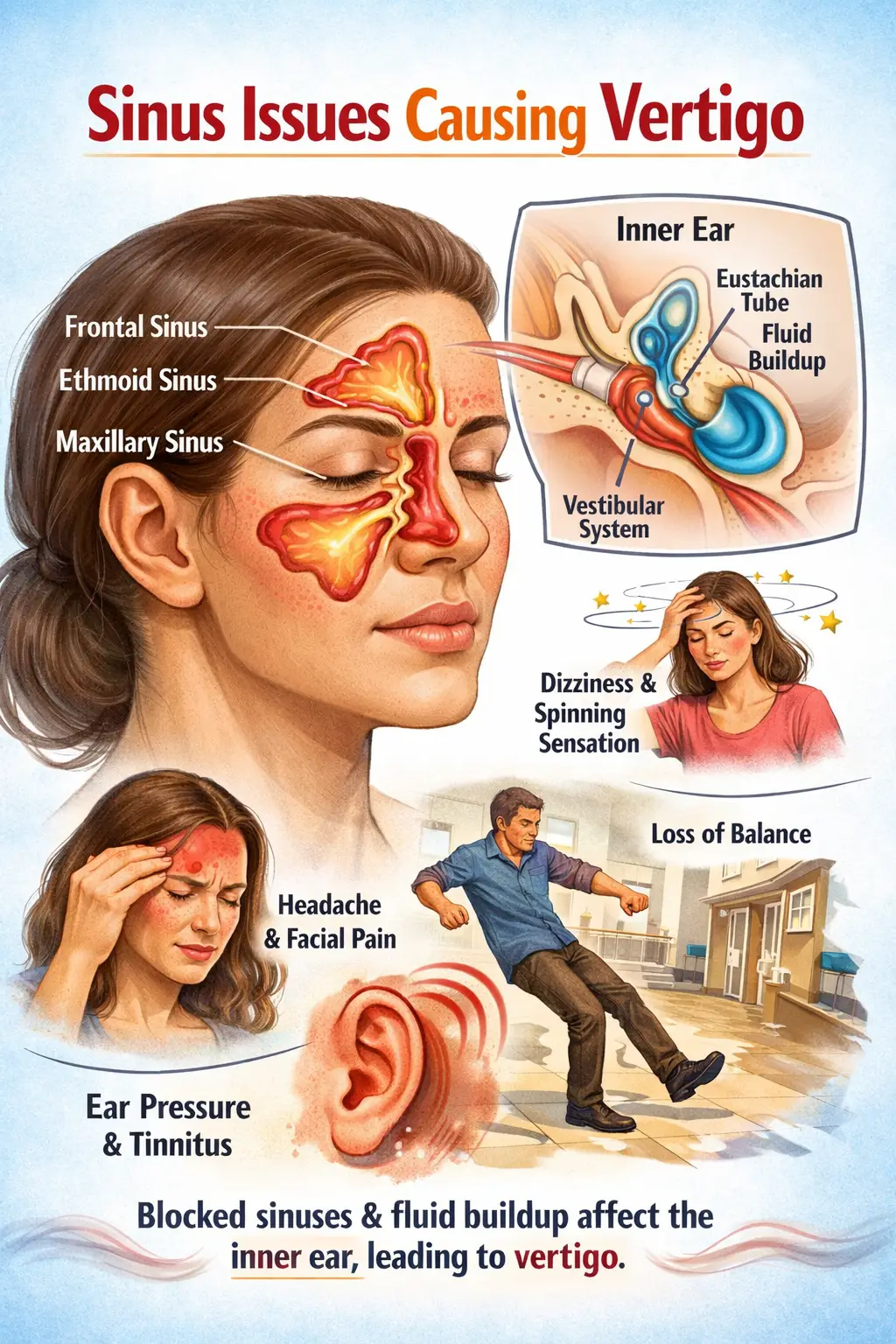
Eustachian Tube Dysfunction and the Neck
The Eustachian tubes regulate pressure in the middle ear and help drain fluid.
They are controlled by surrounding muscles and nerves, many of which are influenced by the upper cervical spine.
When the nervous system is not functioning properly, it can lead to:
- Ear fullness
- Popping or crackling
- Pressure changes
- Fluid buildup
This often occurs alongside sinus issues and nasal drainage.
Associated Symptoms You Should Not Ignore
This condition rarely exists on its own. Many people experiencing this also report other symptoms.
Migraines and Headaches
Upper cervical misalignment can irritate the trigeminocervical nucleus, leading to chronic headaches and migraines.
Dizziness and Vertigo
The upper neck plays a major role in balance. Misalignment can disrupt signals to the brain, causing dizziness or vertigo.
Neck Pain and Stiffness
Chronic tension and misalignment can lead to ongoing neck discomfort.
Brain Fog and Fatigue
When the nervous system is stressed, cognitive clarity often suffers.
Why This Is Often Missed by Traditional Care
Most healthcare approaches separate the body into systems. ENT specialists focus on the sinuses, neurologists focus on the brain, and orthopedics focus on the spine.
However, the upper cervical spine connects all of these systems.
Because of this, the root cause of symptoms like nasal dripping with neck pressure is often overlooked.
Upper Cervical Chiropractic: A Different Approach
Upper cervical chiropractic focuses specifically on the atlas and axis.
What Makes It Different
- Precision-based care
- Focus on the nervous system
- Gentle, specific adjustments
- No twisting, cracking, or popping
Advanced Imaging
3D CBCT imaging allows for precise measurement of misalignment.
Functional Nervous System Scans
Thermography scans help evaluate how the nervous system is functioning.
Gentle Adjustments
Corrections are extremely specific and designed to restore proper alignment without force.
How Correcting the Atlas Can Help
When the atlas is properly aligned, it can:
- Reduce brainstem irritation
- Normalize cranial nerve function
- Improve sinus and Eustachian tube regulation
- Restore autonomic balance
This allows the body to regulate itself more effectively, often reducing symptoms.
Real Patient Patterns
In clinical settings, patients with complex symptoms often present with:
- Sinus issues + migraines
- Ear pressure + dizziness
- Neck pain + brain fog
When the upper cervical spine is addressed, these patterns often begin to resolve together.
When to Rule Out Other Causes
While this condition can be neurologically driven, it is important to rule out:
- Allergies
- Infections
- Structural sinus problems
- CSF leaks (rare but serious)
Proper evaluation is key.
The Bigger Picture: Your Body as a System
Your body is not made up of isolated parts. The nervous system connects everything.
When the upper cervical spine is functioning properly, it allows your body to adapt, regulate, and heal more efficiently.
Top 15 FAQs
1. Is it normal for my nose to drip when I press on my neck?
No, it is not common, but it can occur in rare cases due to nerve stimulation.
2. What part of the neck is responsible?
The upper cervical spine, especially the atlas (C1).
3. Can nerve irritation cause sinus drainage?
Yes, the nervous system controls mucus production and sinus function.
4. What is the vagus nerve’s role?
It regulates autonomic function, including glandular activity and inflammation.
5. Can this be related to migraines?
Yes, upper cervical misalignment is commonly linked to migraines.
6. Why do I feel dizzy with neck issues?
The upper neck plays a major role in balance and spatial awareness.
7. Can ear pressure be connected to this?
Yes, Eustachian tube function is influenced by the nervous system.
8. Is this dangerous?
Not typically, but it should be evaluated to rule out serious causes.
9. What is upper cervical chiropractic?
A specialized approach focusing on the alignment of C1 and C2.
10. Are adjustments safe?
Yes, they are extremely gentle and precise.
11. Will this fix my sinus issues?
It can help if the root cause is neurological or structural in the upper neck.
12. How long does it take to see results?
This varies depending on the individual.
13. Do I need imaging?
Advanced imaging like CBCT helps ensure precision.
14. Can this help with vertigo?
Yes, many cases of vertigo are linked to upper cervical dysfunction.
15. Is this approach different from traditional chiropractic?
Yes, it is more specific, gentle, and focused on the nervous system.
Conclusion
Pressing on the back of your neck and experiencing nasal dripping may seem unusual, but it highlights the deep connection between the upper cervical spine and the nervous system.
In rare cases, this symptom can be a clue that the atlas is misaligned and affecting cranial nerve and autonomic function.
By addressing the root cause rather than masking symptoms, it is possible to restore balance and improve overall health.
Schedule a Consultation
Lavender Family Chiropractic in Sarasota Florida offers complimentary consultations to learn more about you. Click the link below!
Visit our Website!
To learn more about us go to http://www.chiropractorsarasotaflorida.com
We also service Bradenton, Parrish, Ellenton, Ruskin, Venice, Tampa, St. Pete, Osprey, Longboat, Lakewood Ranch, Myakka City.
If you are not local, visit www.uccnearme.com to find a doctor in your area.