
By Dr. Rusty Lavender, D.C. — upper cervical chiropractor, Lavender Family Chiropractic, Sarasota, FL. Reviewed and updated October 2026.
Our complete guide to tinnitus and the upper neck in Sarasota covers why ringing can start in the neck, how it’s told apart from ear causes, and how we evaluate it.
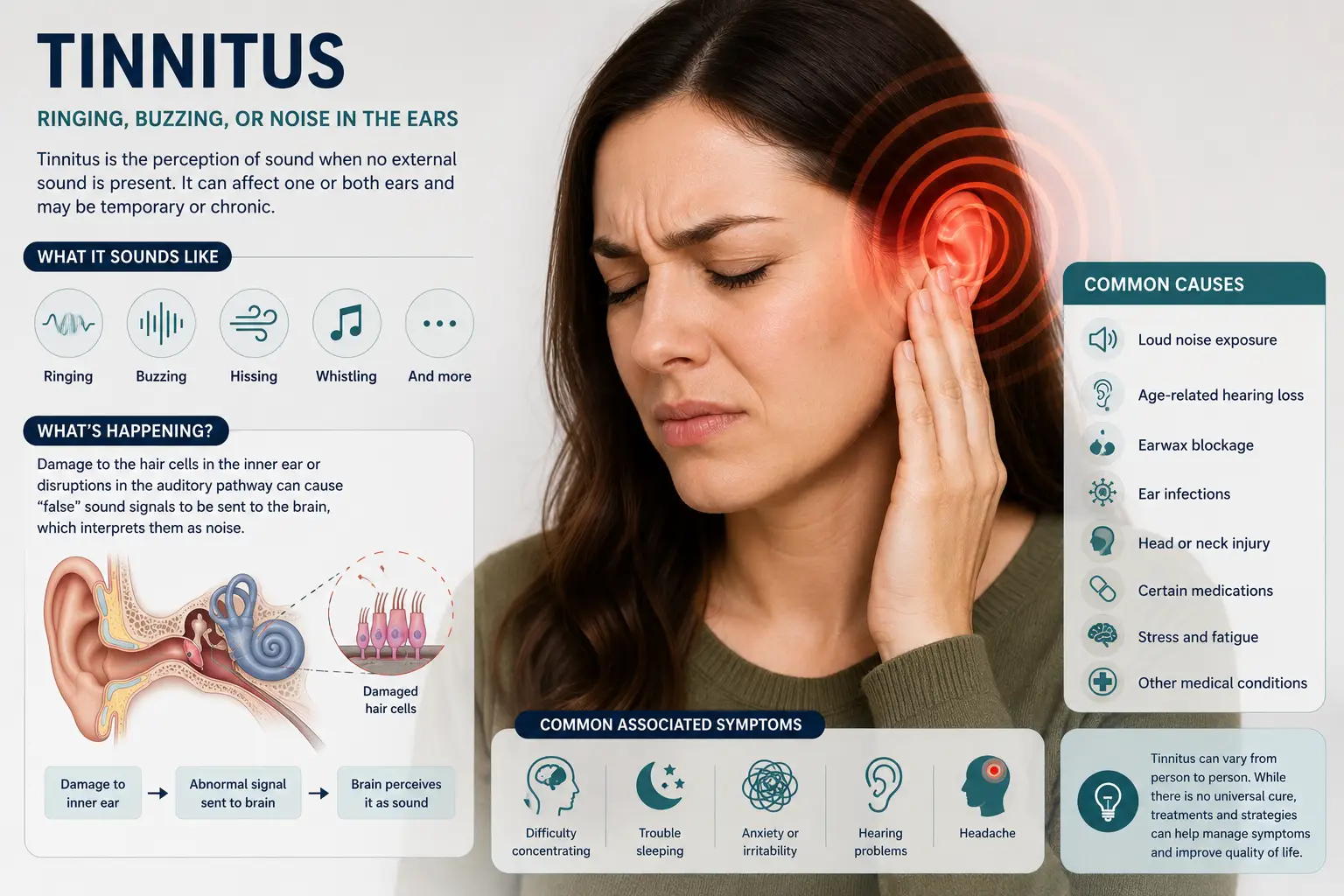
Tinnitus, often described as the persistent perception of ringing, buzzing, or hissing sounds in the ears, affects millions of individuals worldwide. While tinnitus itself is not a condition but rather a symptom of an underlying issue, its impact on quality of life can be significant. Traditional treatments may offer relief for some, but there is a growing interest in exploring alternative approaches, such as Upper Cervical Chiropractic care, to address tinnitus. In this article, we delve into what it is, its potential causes, and how Upper Cervical Chiropractic might offer a natural avenue for relief.
Table of Contents
Understanding Tinnitus
Tinnitus can manifest in various ways, ranging from faint background noise to a constant and disruptive sensation. It can be caused by exposure to loud noises, age-related hearing loss, earwax blockages, certain medications, and underlying medical conditions. The exact mechanisms behind tinnitus are complex and can involve the auditory pathways, the brain’s processing of sound signals, and the nervous system.
Traditional Treatment Approaches
Common treatments for symptoms include hearing aids, sound therapy, cognitive behavioral therapy, and medications. These methods aim to manage the symptoms and improve the individual’s ability to cope with the perceived sounds. While these treatments can be effective for some, there is ongoing research into alternative therapies that target the underlying factors contributing to tinnitus.
The Role of Upper Cervical Chiropractic
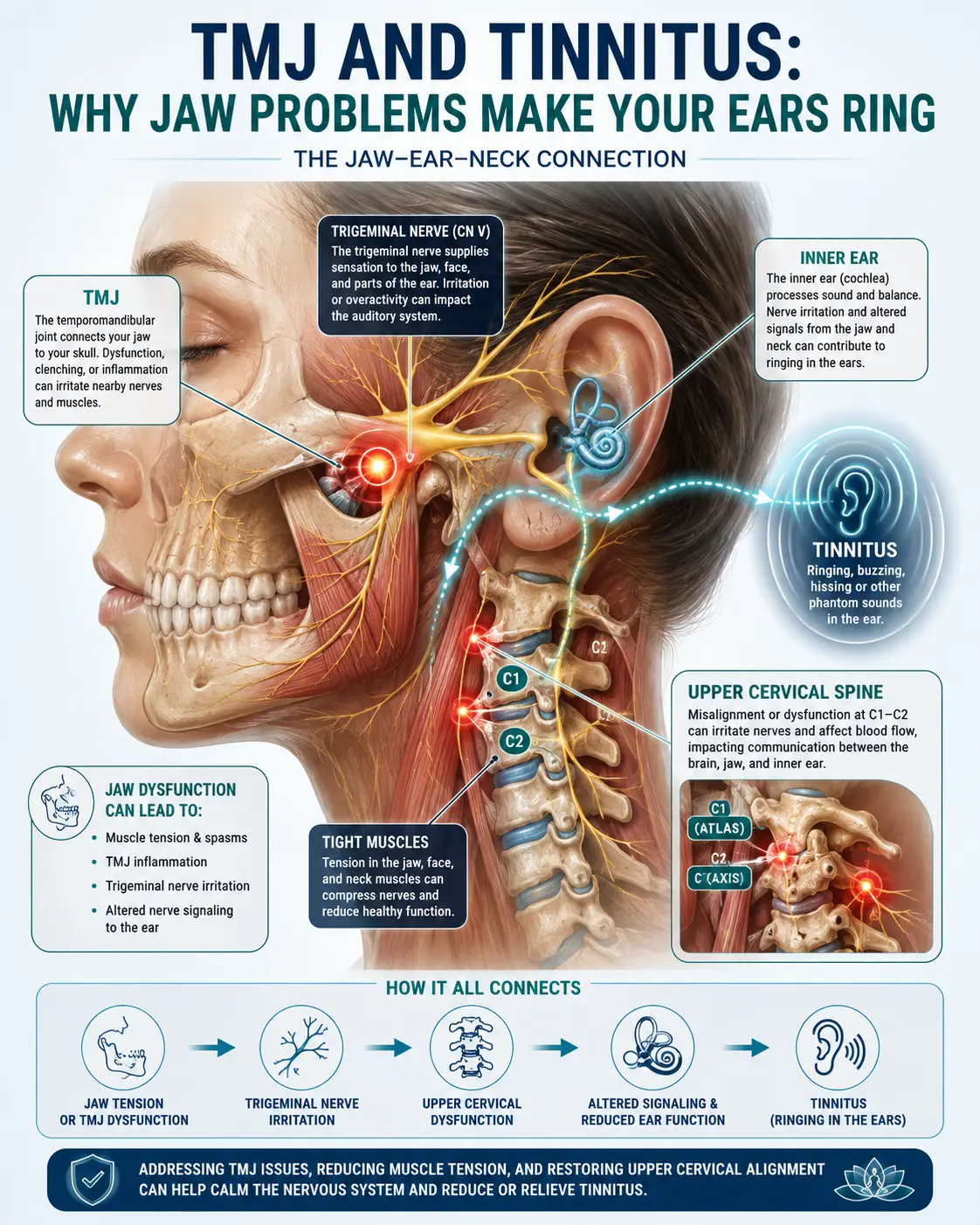
Upper Cervical Chiropractic care is rooted in the belief that misalignments in the upper neck vertebrae, particularly the atlas (C1) and axis (C2) vertebrae, can impact nervous system function and overall health. Proponents of this approach suggest that misalignments in this area could potentially disrupt the intricate network of nerves involved in hearing and sound perception, contributing to symptoms. The nerves in the upper neck enter directly into the ear, and dysfunction in this region can lead to ringing in the ears.
The Treatment Process
Upper Cervical Chiropractic care begins with a thorough assessment that may involve specialized imaging to identify misalignments or asymmetries in the upper cervical spine. Chiropractors then use precise and gentle techniques to perform adjustments aimed at correcting these misalignments. By restoring proper spinal alignment, the pressure on the nervous system is alleviated, potentially addressing any dysfunction that might be contributing to symptoms.
Research and Results
While research into the effectiveness of Upper Cervical Chiropractic for tinnitus is ongoing, some individuals have reported positive outcomes. Reductions in the intensity and frequency of tinnitus symptoms have been documented in anecdotal reports. However, it’s important to note that results can vary widely from person to person, and Upper Cervical Chiropractic might not be a suitable option for everyone.
A Holistic Approach
Upper Cervical Chiropractic care should be considered as part of a holistic approach to managing tinnitus. Collaborating with a healthcare team that includes audiologists, ENT specialists, and other medical professionals ensures a well-rounded strategy. Addressing tinnitus comprehensively may involve a combination of treatments tailored to the individual’s needs and circumstances.
Tinnitus remains a complex and challenging condition, impacting the lives of many. While Upper Cervical Chiropractic care offers a unique and natural approach to addressing tinnitus by focusing on the relationship between the upper cervical spine and the nervous system, its effectiveness is still being explored. Individuals considering this approach should engage in open communication with their healthcare providers, explore a variety of treatment options, and make informed decisions based on their unique situation. Ultimately, by taking a holistic approach and remaining open to various therapies, individuals with tinnitus can strive for improved quality of life and relief from their symptoms.
What the Research Says About Tinnitus and the Neck
Tinnitus, the perception of ringing or buzzing without an outside sound, has no single fix, and honest guidance starts there. The AAO-HNS clinical practice guideline recommends that anyone with persistent tinnitus be evaluated for hearing loss, and it recommends against medications and supplements such as ginkgo, melatonin and zinc; what it does endorse is education, sound therapy and cognitive behavioral options (Tunkel et al., Otolaryngol Head Neck Surg 2014). Within the larger group, specialists have defined a subtype called somatosensory tinnitus, where the sound can be changed by movement or pressure on the head, neck or jaw, or where it first appeared alongside a neck or jaw problem (Michiels et al., Trends Hear 2018). Spotting that subtype matters because it points toward a different source.
Reviews of somatosensory tinnitus describe how sensory signals from the cervical spine and jaw interact with the brain’s auditory pathways, and they note that care directed at the neck or jaw has been reported to help people in this subgroup (Ralli et al., J Int Med Res 2017). Spinal manipulation itself is thought to work partly by changing sensorimotor integration, the way the central nervous system processes input from the spine (Haavik & Murphy, J Electromyogr Kinesiol 2012). Research on upper cervical chiropractic for tinnitus specifically is limited to case reports, so we are careful not to promise more than that. What we can do is find out whether the top of the neck is contributing: 3D imaging of the atlas, a correction built from those measurements, and re-imaging to confirm the alignment changed.
Frequently Asked Questions
How can the upper neck be involved in tinnitus?
The auditory pathways in the brainstem receive input from the upper cervical nerves, and tension in the suboccipital and jaw muscles can change the perception of sound. Some patients notice their tinnitus changes when they turn their head or press on the neck, a sign the upper neck is contributing. Upper cervical care corrects the atlas with a precise, low-force adjustment, and thermography shows how the nervous system responds.
What are the usual treatments for tinnitus, and how is yours different?
Common approaches include hearing aids, sound therapy, stress management, and treating underlying ear conditions. Those stay with your ENT or audiologist, and we coordinate with them. Our approach addresses a structural source that is often missed: an atlas misalignment irritating the brainstem and keeping neck and jaw muscles tense. We measure it on CBCT, correct it without twisting or cracking, and confirm the nervous system response with thermography at each visit.
Should I see an ENT before coming to you?
Yes, when tinnitus is new, one-sided, pulsing, or comes with hearing loss, an ENT should rule out ear and vascular causes first. We share imaging and coordinate with your ENT. Once that is done, our evaluation determines whether an atlas misalignment is present. If it is, correcting it is our focus; if the upper neck is not involved, we tell you and refer you back to your specialist.
What does the tinnitus treatment process involve at your office?
The first visit includes a history of your tinnitus and any neck or jaw injuries, a neurological exam, 3D cone-beam CT of the upper neck, and a thermography baseline. From those measurements we calculate your Knee Chest correction. You rest after each adjustment, and a post-correction scan confirms the response. Many patients notice the sound softens or fluctuates less as their alignment holds. Results vary by person.
Do tinnitus patients from Lakewood Ranch and Venice come to your Sarasota office?
Yes. Our office at the corner of University Parkway and Whitfield Avenue is minutes from Lakewood Ranch and Bradenton and about thirty minutes from Venice. Many tinnitus patients arrive after ear testing came back normal and want to know whether the neck is involved. The evaluation gives a measured answer through imaging and thermography. Care plans are individual with no preset packages. Call (941) 243-3729 to schedule an evaluation.
Schedule With Us!
Lavender Family Chiropractic offers consultations to learn more about you. Click the link below!
https://intake.chirohd.com/new-patient-scheduling/724/lavender-family-chiropractic
Visit our Website!
To learn more about us go to http://www.chiropractorsarasotaflorida.com