
Vestibular Dysfunction in Sarasota and Bradenton
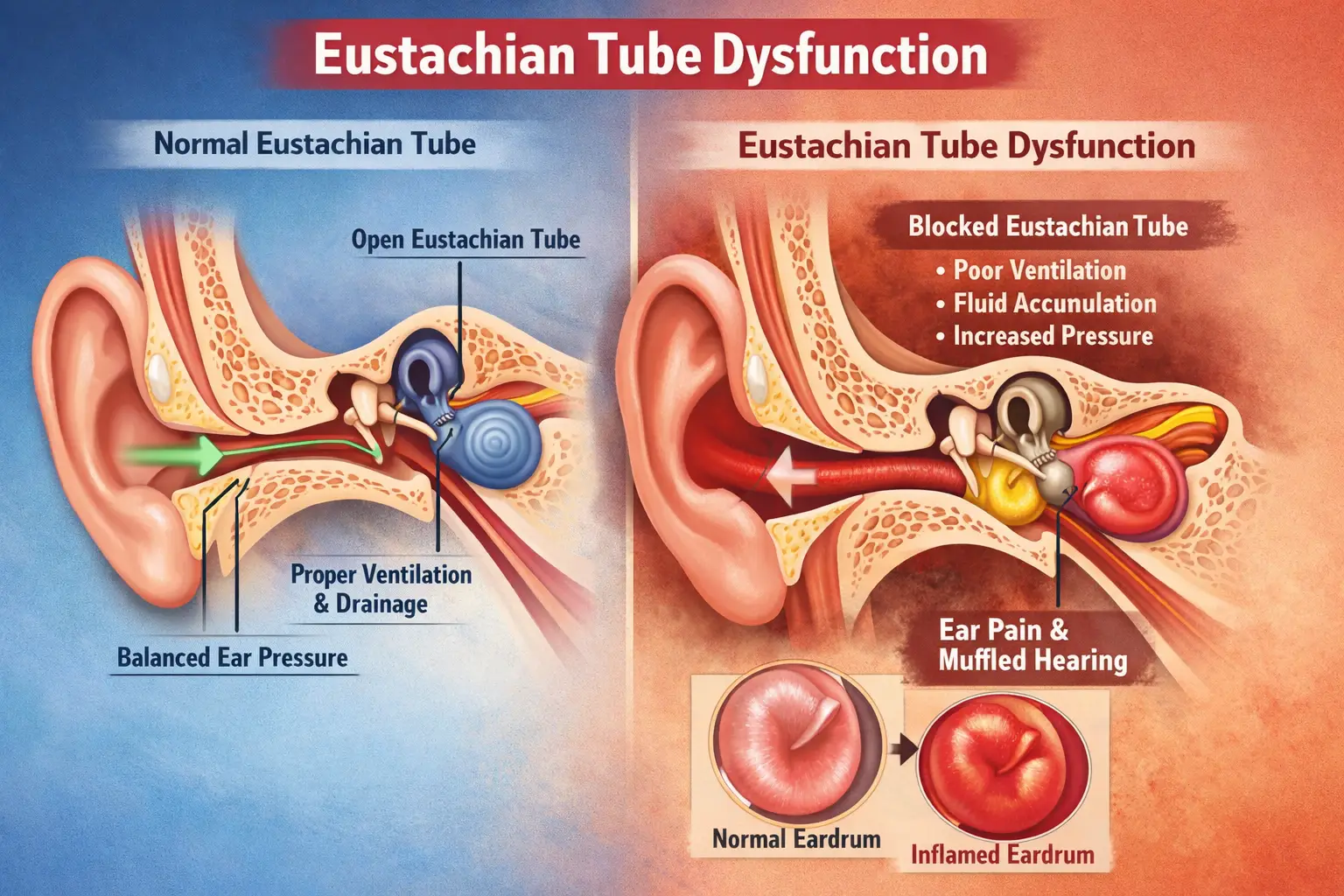
Vestibular Dysfunction: If you live in Sarasota or Bradenton and you’ve been dealing with dizziness, vertigo, balance issues, rocking sensations, head pressure, brain fog, or nausea, you already know how disruptive vestibular symptoms can be. It can affect your work, your confidence driving, your ability to exercise, your social life, and even simple things like walking through a grocery store aisle or scrolling your phone.
Many people assume dizziness always comes from the inner ear. Others get told it’s anxiety, dehydration, “just stress,” or migraines—without a clear plan to actually resolve it. The truth is: vestibular dysfunction is often complex, and it’s common for patients to chase symptoms for months (or years) without real answers.
At Lavender Family Chiropractic powered by NeckWise Clinics, we work with people from Sarasota, Bradenton, Lakewood Ranch, Parrish, Ellenton, Venice, Osprey, Siesta Key, Longboat Key, Lido Key, Myakka City, Punta Gorda, and even St. Petersburg who are looking for a different approach—one that looks deeper than “take this medication and wait it out.”
This blog will walk you through:
- What vestibular dysfunction is
- The most common vestibular conditions (BPPV, MdDS, vestibular hypofunction, vestibular migraine, and more)
- Why symptoms can persist even when tests look “normal”
- The critical relationship between the upper neck (upper cervical spine) and balance/vestibular function
- How upper cervical chiropractic care at Lavender Family Chiropractic may help people restore stability and quality of life
If you’ve been searching for a dizziness doctor near me, a vertigo doctor near me, or the best chiropractor Sarasota Florida and chiropractor Bradenton for vestibular issues—this is for you.
What Is Vestibular Dysfunction?
Your vestibular system is the part of the nervous system that helps you maintain balance, spatial orientation, posture, and visual stability. It uses input from three main systems:
- Inner ear (vestibular apparatus) – senses head movement and position
- Eyes (visual system) – helps confirm where you are in space
- Neck and body joints (proprioception) – tells your brain where your body is positioned
Your brain integrates all three to decide: “Am I moving? Am I stable? Is the room spinning? Am I safe to walk?”
When the vestibular system is disrupted, the brain receives conflicting or distorted signals, and symptoms appear—often suddenly and sometimes unpredictably.
Vestibular dysfunction isn’t just “feeling dizzy.” It can be:
- Spinning
- Floating
- Rocking
- Swaying
- Feeling disoriented
- Feeling like your eyes can’t keep up with movement
- Feeling “drunk” or unsteady even when you’re standing still
And because the vestibular system is tied to survival reflexes, vestibular symptoms can also cause panic, anxiety, and fatigue—even in people who aren’t anxious by nature.
Common Symptoms of Vestibular Dysfunction
People often try to describe dizziness in one word, but vestibular symptoms usually show up as a cluster. Here are the most common symptoms we hear from patients seeking upper cervical chiropractic care:
Dizziness and Lightheadedness
- Feeling faint, woozy, or “not right”
- Feeling like your head is full of air or pressure
Vertigo
- Spinning sensations (room spinning or you spinning)
- Often worsened by positional changes
Imbalance and Unsteadiness
- Veering when walking
- Feeling like you might fall
- Needing to hold onto walls or furniture
Visual Disturbances
- Blurry vision when moving your head
- Trouble focusing
- “Bouncing” vision (oscillopsia)
- Sensitivity to bright lights or screens
Motion Sensitivity
- Feeling worse in crowds, stores, elevators, escalators
- Feeling worse in the car as a passenger
- Symptoms triggered by busy patterns (tiles, aisles, moving water)
Nausea
- Upset stomach with dizziness
- Loss of appetite
- “Sea-sick” feeling
Head Pressure and Neck Tension
- Pressure at the base of the skull
- Tight upper neck and shoulders
- Headaches or migraine patterns
Brain Fog and Fatigue
- Difficulty concentrating
- Feeling disconnected
- Exhaustion after small activities
If any of those sound familiar, it doesn’t mean you’re “broken.” It means your brain is struggling to regulate and integrate balance input.
The Most Common Vestibular Conditions (And Why They’re Often Confused)
Vestibular dysfunction is a big umbrella. Here are several major categories we commonly see patients dealing with:
BPPV (Benign Paroxysmal Positional Vertigo)
BPPV is one of the most well-known vestibular disorders. It happens when small calcium carbonate crystals (otoconia) migrate into the wrong part of the inner ear canals. When you change head position, the crystals shift and send false movement signals.
Common BPPV triggers:
- Rolling over in bed
- Looking up or down
- Bending forward
- Getting up quickly
Common BPPV symptoms:
- Short bursts of intense spinning
- Nausea with head movement
- Feeling “okay” when still
Many people get relief from repositioning maneuvers (like Epley). But a major frustration is recurrence—people feel better, then it comes back weeks later.
That’s where it becomes important to look at why the vestibular system is so sensitive and unstable in the first place—especially after trauma, neck injuries, or long-term misalignment patterns.
MdDS (Mal de Débarquement Syndrome)
MdDS is one of the most misunderstood dizziness conditions. Many patients describe it as:
- Rocking
- Bobbing
- Swaying
- Floating sensations
Often it begins after a cruise, flight, or long car ride—yet sometimes it appears after illness, stress, or concussion.
A hallmark symptom: you may feel better while driving, then worse when standing still. That’s because MdDS is often a neurological adaptation issue—your brain “stays in motion mode.”
Because MdDS is not always a simple inner-ear problem, many patients get dismissed or misdirected. A deeper neurological approach matters.
Vestibular Hypofunction (Unilateral or Bilateral)
Vestibular hypofunction means one (or both) vestibular organs aren’t signaling properly. It can result from viral injury, inflammation, concussion, or other neurological stress.
Common symptoms:
- Difficulty walking straight
- Worse in low light or uneven ground
- Blurred vision when turning your head
- Feeling unstable on stairs
Many people do vestibular rehab for hypofunction—which can be helpful. But if the upper cervical spine is contributing to faulty input into the balance system, rehab can feel like pushing uphill without stabilizing the foundation.
Vestibular Migraine
Vestibular migraine is a major cause of dizziness and vertigo, and it can occur with or without head pain.
Symptoms may include:
- Dizziness episodes that last minutes to hours
- Light sensitivity
- Sound sensitivity
- Visual auras or distortions
- Neck tension and head pressure
Some people are told “it’s just migraines” and sent home with medications. But migraine pathways are heavily connected to the brainstem, upper neck mechanics, and nervous system regulation—which is exactly why upper cervical care can be relevant for the right patient.
Persistent Postural-Perceptual Dizziness (PPPD)
PPPD often feels like:
- Persistent swaying or “unsteady” sensation
- Worse when standing or walking
- Worse in busy environments
- Often triggered after a vestibular event (BPPV, vestibular neuritis, concussion)
It becomes a cycle: symptoms cause fear, fear causes tension, tension worsens neurological sensitivity, and the system stays stuck.
Helping the nervous system calm and stabilize can make a big difference—especially if structural stress at the top of the neck is part of the picture.
Why Vestibular Symptoms Persist Even When Tests Look Normal
This is one of the most discouraging parts for patients.
You can get:
- MRIs that say “normal”
- Blood work that says “fine”
- ENT testing that doesn’t reveal much
- Medications that reduce symptoms temporarily but don’t solve the cause
Here’s what many people don’t realize:
Vestibular problems can be functional, not structural.
Meaning: your nerves and balance pathways may be misfiring, irritated, or integrating poorly—even if there’s no obvious lesion or disease showing up on imaging.
And that brings us to a missing piece in many vestibular cases:
The Upper Cervical Spine: The Overlooked Root Contributor to Dizziness and Vestibular Dysfunction
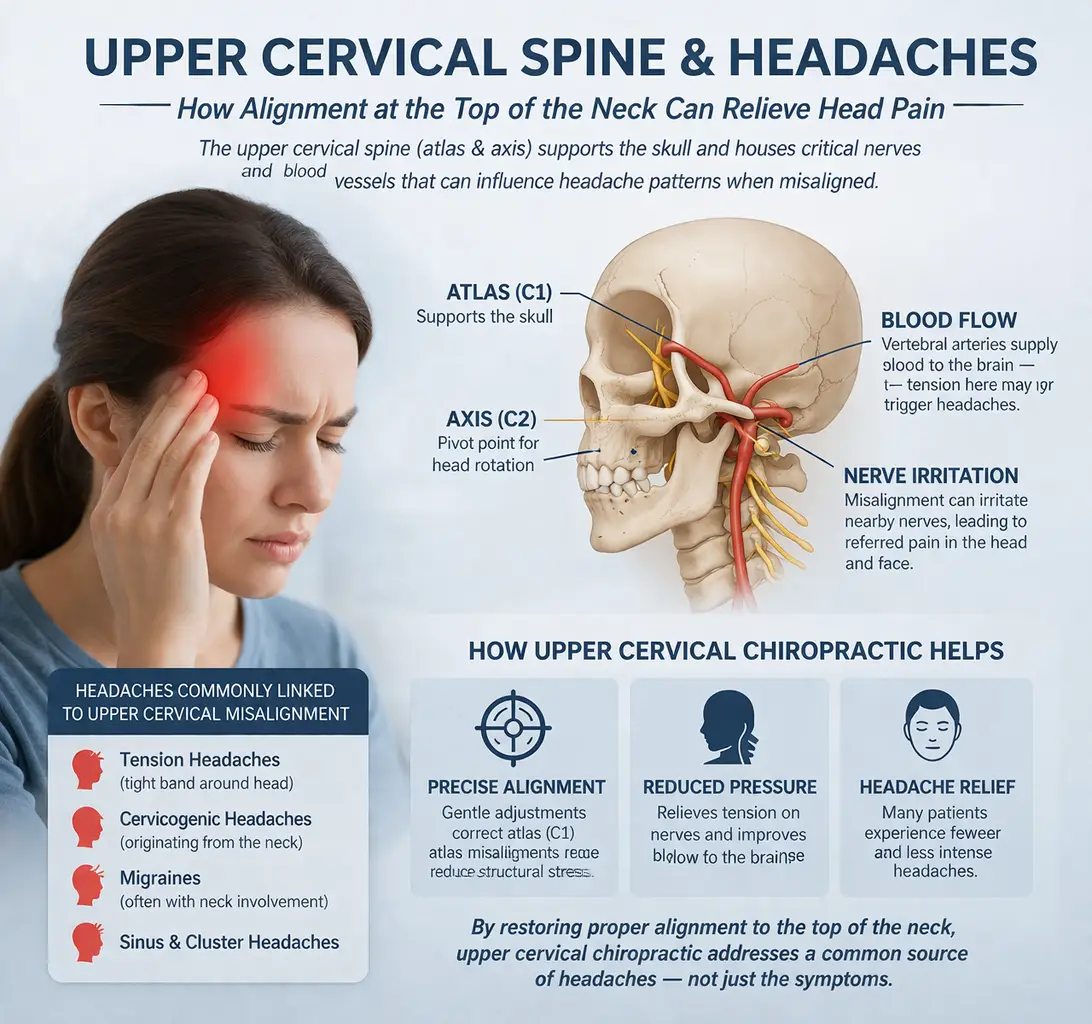
The upper cervical spine is the top two bones in your neck:
- Atlas (C1)
- Axis (C2)
This area is uniquely important because:
- It supports your skull
- It protects the brainstem and upper spinal cord
- It has a high density of mechanoreceptors (position sensors)
- It influences posture, balance, eye tracking, and vestibular integration
When the upper cervical spine is misaligned—even subtly—it can create:
- Mechanical tension on neurological structures
- Abnormal proprioceptive input (faulty “where am I?” signaling)
- Compensation patterns throughout the spine and body
- Increased nervous system stress
This matters because the vestibular system depends on clear, consistent input from the neck and brainstem to coordinate balance.
How Do Upper Cervical Misalignments Happen?
Most people don’t wake up one day with “a vestibular problem.” Often there’s a history of:
- Car accidents and whiplash
- Falls
- Sports injuries
- Repetitive micro-traumas (years of posture strain)
- Dental/TMJ stress affecting head/neck posture
- Previous concussion or head injury
Whiplash is especially important. Even low-speed impacts can shift the head and neck forcefully, leading to misalignment and long-term neurological irritation—sometimes without immediate pain.
Later, symptoms appear:
- Dizziness
- Vertigo
- Headaches
- Brain fog
- Neck pressure
- Visual sensitivity
Patients are often shocked because the dizziness shows up months later. But neurologically, it makes sense: the body can compensate until it can’t.
Upper Cervical Chiropractic Care at Lavender Family Chiropractic Powered by NeckWise Clinics
At Lavender Family Chiropractic, we don’t approach dizziness like a generic musculoskeletal complaint. We approach it as a neurological balance problem that may be driven by upper cervical misalignment and chronic nervous system stress.
What Makes Upper Cervical Chiropractic Different From Traditional Chiropractic?
Traditional chiropractic often involves:
- General spinal adjustments
- Twisting or “cracking” techniques
- Treating many spinal regions in one visit
Upper cervical chiropractic is different because it is:
- Specific (focused on atlas/axis alignment)
- Gentle (no popping, twisting, or cracking)
- Measurement-based (objective imaging and analysis)
- Neurology-driven (aimed at restoring nervous system function)
Instead of chasing symptoms or “loosening muscles,” upper cervical care focuses on correcting the structural imbalance that may be irritating neurological control centers.
How We Evaluate Vestibular Dysfunction Patients
At Lavender Family Chiropractic, we use advanced assessment tools to understand your pattern, not just a label.
1) Detailed Case History
We want to know:
- When symptoms started
- What triggers them
- Injury history (car accidents, falls, concussions)
- Visual/motion sensitivity
- Headaches, migraines, jaw issues, neck pressure
2) 3D CBCT Imaging
We use 3D CBCT imaging to evaluate alignment between:
- Skull
- Atlas (C1)
- Axis (C2)
This allows us to identify misalignments that standard X-rays often miss.
3) Functional Nervous System Scans
We also use functional scanning to evaluate stress patterns and neurological imbalance—helping us monitor objective changes over time.
How Upper Cervical Corrections May Help Vestibular Dysfunction
When the upper cervical spine is corrected and stabilized, several things may happen:
- Abnormal neurological tension reduces
- Brainstem balance processing becomes more stable
- Proprioceptive feedback improves
- Posture and balance reflexes normalize
- The nervous system shifts out of “fight or flight”
Patients often report improvements like:
- Less dizziness and fewer vertigo episodes
- More stable walking and balance confidence
- Less head pressure and neck tightness
- Improved sleep and energy
- Better tolerance for screens, stores, and driving
Every case is different, and healing is never a straight line—but when the underlying structural stress is addressed, the body has a better chance to recover.
Vestibular Dysfunction in Sarasota and Bradenton: Why Local, Specialized Care Matters
When you’re dizzy, you don’t want a generic plan. You want someone who understands:
- vestibular complexity
- neurological causes
- injury patterns like whiplash
- and the upper cervical relationship to balance
That’s why so many patients look specifically for:
- upper cervical chiropractor near me
- chiropractor near me for dizziness
- chiropractor Sarasota Florida for vertigo
- chiropractor Bradenton for vestibular issues
- vertigo doctor near me
- migraine doctor near me (because vestibular migraine overlaps heavily)
Our job is to help you get clear answers and a plan built around your nervous system, your alignment, and your goals.
Top 15 FAQs About Vestibular Dysfunction and Upper Cervical Chiropractic Care
1) What is vestibular dysfunction?
Vestibular dysfunction is a disturbance in the balance system involving the inner ear, brainstem, and sensory integration pathways. It can cause dizziness, vertigo, imbalance, nausea, and visual issues.
2) Is dizziness always an inner-ear problem?
No. Dizziness can be driven by vestibular issues, migraine pathways, brainstem stress, neck proprioception problems, blood flow regulation issues, and nervous system imbalance.
3) What’s the difference between dizziness and vertigo?
Dizziness is a general sense of being off or lightheaded. Vertigo is a specific sensation of spinning or movement when you’re not actually moving.
4) Can the neck cause vertigo and dizziness?
Yes. The upper cervical spine is closely tied to brainstem and balance processing. Misalignment can distort sensory input and contribute to vestibular symptoms.
5) What is MdDS and why does it feel like rocking?
MdDS (Mal de Débarquement Syndrome) often feels like rocking/swaying because the brain remains “adapted” to motion after travel or triggering events.
6) Why does BPPV keep coming back?
BPPV can recur due to repeated triggers, instability in the vestibular system, or unresolved neurological stress patterns—especially after trauma.
7) What is vestibular hypofunction?
Vestibular hypofunction occurs when one or both inner ear balance organs are underperforming, leading to poor balance signaling.
8) Can vestibular dysfunction cause anxiety?
Yes. The vestibular system is linked to survival reflexes. When balance input is distorted, the nervous system can shift into heightened stress responses.
9) What is an upper cervical chiropractor?
An upper cervical chiropractor specializes in the alignment of C1 and C2 to reduce nervous system stress and restore neurological function—using gentle, precise corrections.
10) Do upper cervical adjustments involve cracking or twisting?
No. Upper cervical care is gentle and specific—no popping, twisting, or forceful manipulation.
11) How do you know if I have an upper cervical misalignment?
Through clinical evaluation and imaging such as 3D CBCT. Symptoms and history guide suspicion, but objective imaging confirms alignment.
12) How long does it take to feel results?
Some patients notice changes quickly; others improve gradually over weeks or months. The goal is not temporary relief but long-term stability.
13) Can car accidents cause vestibular problems?
Yes. Whiplash can misalign the upper cervical spine and disrupt neurological control, leading to dizziness, vertigo, headaches, and brain fog.
14) Do you take insurance?
Our office is out of network with insurance. Many of our patients receive a superbill to submit to their insurance for reimbursement based on their coverage. We offer many different payment options as well as finance options.
15) How do I get started at Lavender Family Chiropractic?
Schedule a consultation so we can evaluate your symptoms, history, and alignment pattern and determine if upper cervical care is appropriate for your case.
A Final Word for Anyone Struggling With Dizziness in Sarasota or Bradenton
Vestibular dysfunction can feel scary because it affects your sense of control. But there’s a difference between “no answers” and “no cause.” Many patients simply haven’t had the upper cervical spine evaluated in a way that’s precise enough to reveal the real driver.
At Lavender Family Chiropractic powered by NeckWise Clinics, our focus is helping people restore stability by correcting upper cervical misalignments and reducing neurological interference—so your body can finally do what it was designed to do: regulate, heal, and adapt.
If you’re searching for a chiropractor near me who understands complex dizziness and vertigo patterns, we’re here to help.
Lavender Family Chiropractic in Sarasota Florida offers complimentary consultations to learn more about you. Click the link below!
https://intake.chirohd.com/new-patient-scheduling/724/lavender-family-chiropractic
Visit our Website!
To learn more about us go to http://www.chiropractorsarasotaflorida.com
We also service Bradenton, Parrish, Ellenton, Ruskin, Venice, Tampa, St. Pete, Osprey, Longboat, Lakewood Ranch, Myakka City.
If you are in Tampa, Land O Lakes, Fort Myers, or Salt Lake City, you can visit my other locations! NeckWise Upper Cervical. Visit, www.neckwise.com
If you are not local, visit www.uccnearme.com to find a doctor in your area
Serving Sarasota, Bradenton, Lakewood Ranch, Parrish, Ellenton, Venice, Osprey, Siesta Key, Longboat Key, Lido Key, Myakka City, Punta Gorda, and St. Petersburg.