Why do my ears feel full? Ear fullness is one of the most frustrating and confusing symptoms a person can experience. Patients often describe it as pressure, clogging, popping, or the sensation that their ears won’t “clear.” For some, it feels like being underwater. For others, it’s a constant pressure that comes and goes unpredictably. Many people try allergy medications, nasal sprays, or even decongestants, only to find little or no relief.
If you’ve ever asked yourself, “Why do my ears feel full?” you are not alone. This is one of the most common complaints we see at Lavender Family Chiropractic (NeckWise North Sarasota). What many people don’t realize is that ear fullness is often not just an ear problem—it is a neurological problem that can be connected to the upper cervical spine.
In this in-depth guide, we will explore what causes ear fullness, what Eustachian Tube Dysfunction is, why traditional treatments often fail, and how upper cervical chiropractic care addresses the root cause.
What Does Ear Fullness Feel Like and Why Do My Ears Feel Full?
Ear fullness can present in several different ways, depending on the individual. Some of the most common descriptions include:
- A sensation of pressure in one or both ears
- Feeling like your ears need to “pop” but won’t
- Muffled hearing or reduced sound clarity
- Crackling or clicking sounds when swallowing or yawning
- Intermittent or constant pressure changes
For some individuals, ear fullness is mild and occasional. For others, it can become chronic and severely impact daily life. It may worsen with changes in altitude, weather shifts, barometric pressure, or even stress.
Many patients also report that their symptoms are worse in the morning, after sleeping, or after long periods of sitting. Others notice that flying, driving over bridges, or even subtle weather changes can trigger their symptoms.
What Is Eustachian Tube Dysfunction?
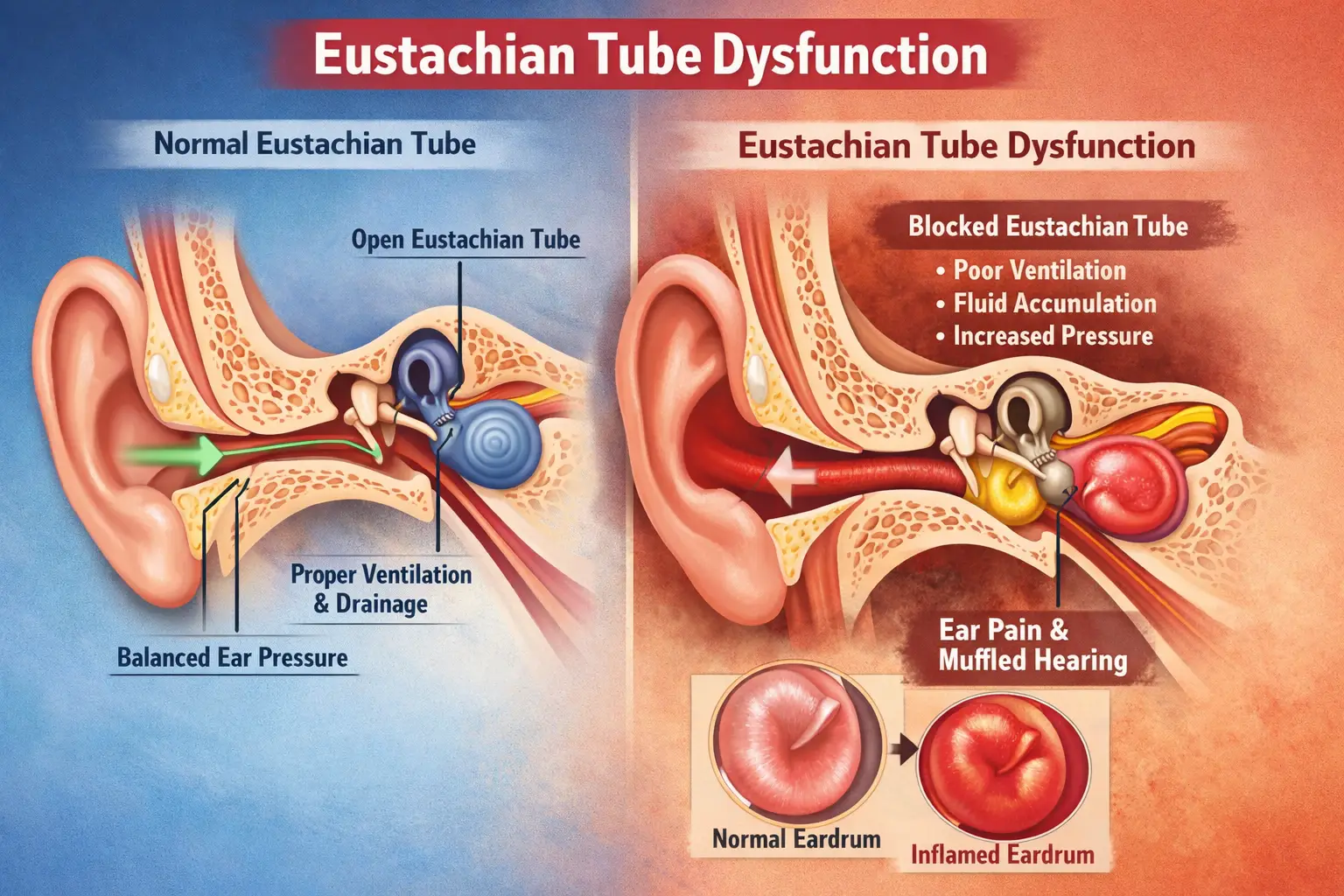
The Eustachian tube is a small passageway that connects the middle ear to the back of the throat. Its primary job is to equalize pressure in the ear and allow proper drainage of fluid.
When the Eustachian tube is functioning correctly, it opens and closes as needed—especially when you swallow, yawn, or chew. This allows air to move in and out of the middle ear, maintaining balance and proper pressure.
Eustachian Tube Dysfunction (ETD) occurs when this tube does not open or close properly. When this happens, pressure builds up in the middle ear, leading to that familiar feeling of fullness.
Common causes of ETD often listed include:
- Allergies
- Sinus infections
- Colds or upper respiratory infections
- Inflammation of the nasal passages
However, many patients experience ear fullness without any of these factors. They are told everything looks “normal,” yet their symptoms persist. That’s where the conversation must go deeper.
The Overlooked Cause: The Upper Cervical Spine
At Lavender Family Chiropractic (NeckWise North Sarasota), we focus on a critical but often overlooked area of the body—the upper cervical spine.
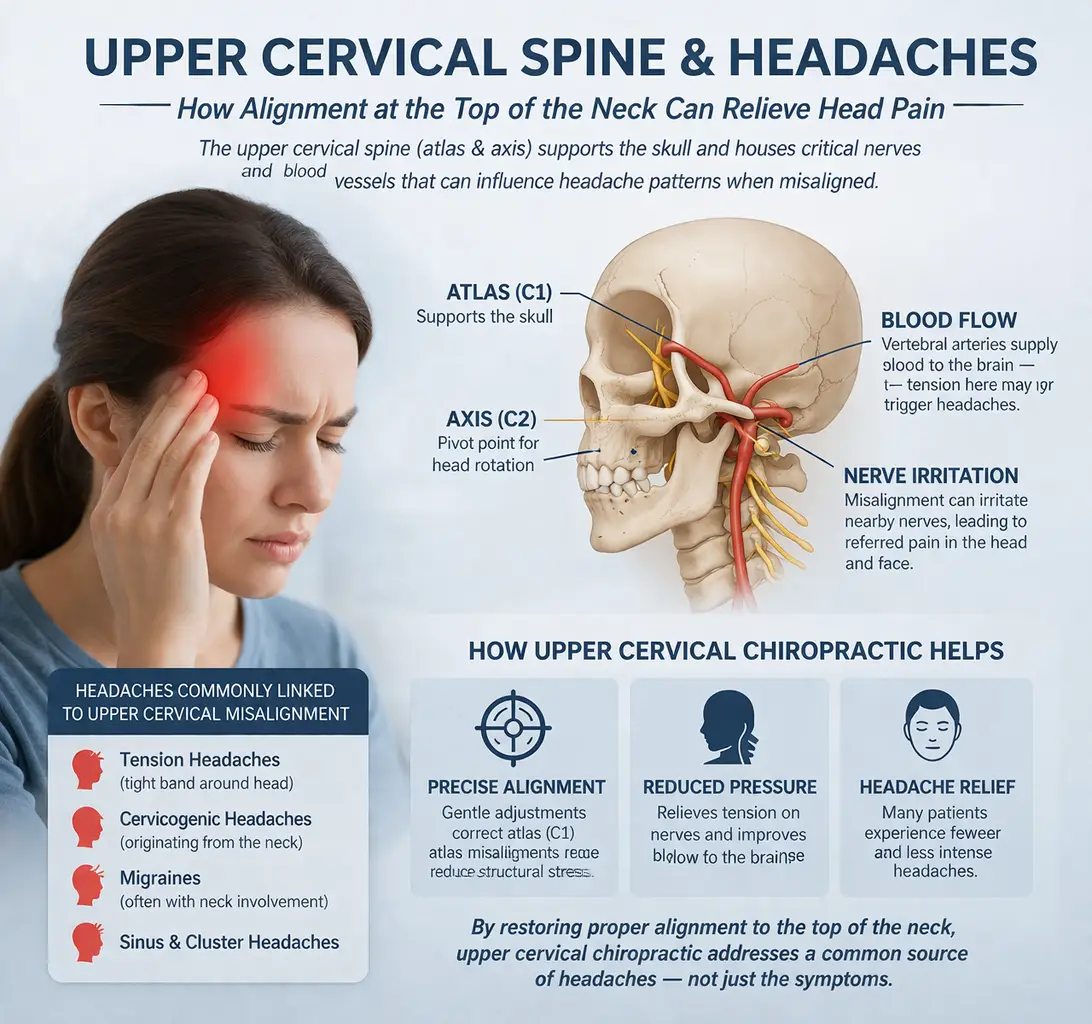
The top two bones in your neck, known as the atlas (C1) and axis (C2), sit directly beneath the skull. This region is responsible for protecting the brainstem, which is one of the most vital control centers in the body.
The brainstem plays a major role in:
- Regulating cranial nerve function
- Coordinating balance and vestibular input
- Controlling autonomic functions such as heart rate and digestion
- Managing sensory input from the head and neck
When there is a misalignment in the upper cervical spine, it can create irritation and stress on the brainstem and surrounding nerves. This can disrupt normal communication between the brain and the body.
Even small misalignments can create measurable neurological interference. Because this region is so neurologically dense, the effects can extend far beyond the neck itself.
How the Upper Neck Affects the Ears
The ears are not isolated structures—they are deeply connected to the nervous system.
Several cranial nerves are involved in ear function, including:
- The vestibulocochlear nerve (cranial nerve VIII), responsible for hearing and balance
- The trigeminal nerve (cranial nerve V), which provides sensory input to the face and jaw
- The glossopharyngeal nerve (cranial nerve IX), which helps regulate pressure and swallowing
- The vagus nerve (cranial nerve X), which influences autonomic function and can impact fluid regulation
These nerves originate from or pass near the brainstem. When the upper cervical spine is misaligned, it can create abnormal tension and irritation in this area.
This irritation can lead to:
- Improper opening and closing of the Eustachian tube
- Disrupted pressure regulation in the middle ear
- Increased sensitivity to barometric pressure changes
- Fluid imbalance within the ear
The result is persistent ear pressure, popping, or fullness that does not respond to traditional treatments.
The Role of the Vagus Nerve
The vagus nerve is one of the most important nerves in the body. It is responsible for regulating the parasympathetic nervous system, often referred to as the “rest and digest” system.
This nerve influences many functions, including:
- Heart rate
- Digestion
- Inflammation control
- Muscle tone in certain structures, including those related to the Eustachian tube
When the vagus nerve is functioning properly, it helps maintain balance in the body. However, when there is irritation at the level of the brainstem due to upper cervical misalignment, vagus nerve function can become disrupted.
This disruption can contribute to:
- Chronic inflammation
- Poor drainage of the Eustachian tube
- Increased pressure sensations in the ears
- Heightened sensitivity to stress and environmental changes
The Brainstem Connection
The brainstem acts as the relay station between your brain and your body. It is responsible for processing incoming sensory information and coordinating appropriate responses.
When the brainstem is under stress due to upper cervical misalignment, it can distort how information is processed. This can create a mismatch between what your body is experiencing and how your brain interprets it.
In the case of ear fullness, this may look like:
- Miscommunication in pressure regulation
- Overactive sensory signaling
- Dysfunction in the muscles that open the Eustachian tube
This explains why ear fullness can feel so persistent and resistant to traditional care.
Why Ear Fullness Often Comes with Other Symptoms
One of the most important clues that ear fullness is neurologically driven is that it rarely occurs in isolation.
Patients often report additional symptoms such as:
- Headaches or migraines
- Dizziness or vertigo
- Brain fog
- Neck pain or stiffness
- Sensitivity to light or sound
This is because the same neurological pathways that affect the ears also influence balance, pain perception, and sensory processing.
For example:
- The vestibular system, which controls balance, is closely linked to the inner ear
- The trigeminocervical nucleus connects the neck and head, explaining why neck issues can trigger headaches
- Brainstem irritation can disrupt multiple systems simultaneously
This is why treating the ear alone often fails to resolve the problem.
Why Traditional Treatments Often Fall Short
Many people with ear fullness are prescribed treatments such as:
- Antihistamines
- Decongestants
- Nasal sprays
- Steroids
While these may provide temporary relief in some cases, they often do not address the underlying cause—especially when the issue is neurological.
If the root problem is coming from the upper cervical spine and brainstem irritation, then treating inflammation in the sinuses will not fully resolve the issue.
This is why so many patients feel stuck. They have tried everything, seen multiple providers, and still deal with the same frustrating symptoms.
What Is Upper Cervical Chiropractic Care?
Upper cervical chiropractic is a specialized form of chiropractic care that focuses exclusively on the top two bones in the neck—the atlas and axis.
Unlike traditional chiropractic care, upper cervical care is extremely precise and gentle. There is no twisting, cracking, or popping. Instead, adjustments are based on detailed imaging and neurological measurements.
At Lavender Family Chiropractic (NeckWise North Sarasota), we utilize:
- 3D CBCT imaging to analyze alignment with precision
- Paraspinal infrared thermography to assess nervous system function
- Detailed posture and neurological assessments
These tools allow us to understand exactly how your upper cervical spine is affecting your nervous system.
How Upper Cervical Care Helps Ear Fullness
When the upper cervical spine is corrected, several important changes can occur:
- Reduced irritation to the brainstem
- Improved cranial nerve function
- Better communication between the brain and body
- Restoration of proper Eustachian tube function
- Improved fluid balance in the ear
As the nervous system stabilizes, the body regains its ability to regulate pressure naturally. This is when patients begin to notice lasting changes.
The Healing Process
Healing does not happen overnight, but it follows a predictable pattern.
Patients often report:
- Early changes in pressure and popping
- Gradual reduction in fullness
- Improvements in associated symptoms like dizziness or headaches
- Increased stability over time
The goal is not constant adjustments, but long-term stability where the body holds its correction and functions properly.
Patient Experiences
Many patients who come into our office have been dealing with ear fullness for months or even years. They have seen ENT specialists, neurologists, and tried medications without lasting relief.
After beginning care, they often describe moments where their ears finally “clear” for the first time in a long time. Others report that their dizziness decreases, their headaches improve, and they feel more mentally clear.
These changes are not coincidence—they are the result of restoring proper neurological function.
Why Precision Matters
The upper cervical spine is one of the most sensitive areas of the body. Even a small misalignment can have a significant impact on the nervous system.
That is why precision is critical.
At Lavender Family Chiropractic (NeckWise North Sarasota), every adjustment is tailored specifically to the patient’s anatomy based on detailed imaging and analysis.
This level of precision allows for:
- Gentle corrections
- Long-lasting results
- Improved stability over time
Patient Testimonials: Real Stories of Ear Fullness Relief
One of the most powerful ways to understand how ear fullness can improve is through real patient experiences. Many people who walk into our office at Lavender Family Chiropractic (NeckWise North Sarasota) have already tried multiple treatments without success.
Patient Story #1: Chronic Ear Pressure and Dizziness
A patient came into our office after dealing with constant ear pressure and dizziness for over a year. They had seen multiple ENT specialists, tried nasal sprays, antihistamines, and even steroids. Every test came back “normal.”
Despite this, their symptoms continued to worsen. They described feeling like their ears were constantly clogged, along with a swaying sensation that made it difficult to function at work.
After undergoing our detailed upper cervical evaluation, we found a misalignment in the atlas affecting their brainstem.
Within the first few weeks of care, they began to notice their ears would intermittently “pop” and relieve pressure. Over time, the fullness decreased significantly, and their dizziness improved.
Patient Story #2: Ear Fullness with Migraines
Another patient struggled with ear fullness alongside severe migraines. They had been told their symptoms were likely due to sinus issues or stress.
However, medications only provided temporary relief.
After starting upper cervical care, they reported not only a reduction in migraines but also a significant improvement in their ear pressure. They described it as feeling like their head was finally “clear.”
Patient Story #3: Ear Fullness After a Car Accident
A patient developed ear fullness following a car accident. Even though they did not have severe neck pain, they began experiencing pressure in their ears along with brain fog and occasional dizziness.
This is a common pattern we see. Trauma can shift the alignment of the upper cervical spine, even without immediate pain.
After correcting the misalignment, their symptoms gradually improved, including the persistent ear fullness that had not responded to other treatments.
These stories highlight an important truth: ear fullness is often not just an ear issue. When the nervous system is addressed, the body can finally begin to heal.
ENT vs Upper Cervical Chiropractic: Understanding the Difference
When dealing with ear fullness, most patients are referred to an ENT (Ear, Nose, and Throat specialist). While ENTs play an important role in ruling out serious conditions, their approach is fundamentally different from upper cervical chiropractic care.
The ENT Approach
ENT specialists primarily focus on the structures of the ear, nose, and throat. Their goal is to identify structural or inflammatory causes of symptoms.
Typical ENT evaluations may include:
- Hearing tests
- Imaging of the sinuses
- Examination of the Eustachian tube
- Allergy testing
Common treatments may include:
- Medications (antihistamines, steroids)
- Nasal sprays
- Decongestants
- In some cases, surgical procedures such as ear tubes
While these approaches can be helpful in certain cases, they often focus on managing symptoms rather than addressing underlying neurological dysfunction.
The Upper Cervical Approach
Upper cervical chiropractic takes a different perspective. Instead of focusing solely on the ear, we focus on the nervous system.
Our goal is to identify and correct interference at the level of the brainstem caused by upper cervical misalignment.
Key differences include:
- Focus on neurological function rather than just structure
- Use of advanced imaging (3D CBCT) to analyze alignment
- Gentle, precise corrections without twisting or cracking
- Emphasis on restoring the body’s natural ability to regulate itself
Why This Difference Matters
If ear fullness is being driven by neurological dysfunction, then treating the ear alone will not fully resolve the issue.
This is why many patients:
- Have normal ENT exams but persistent symptoms
- Experience temporary relief with medications
- Continue searching for answers despite multiple treatments
Upper cervical care bridges this gap by addressing the communication between the brain and the body.
When Both Approaches Work Together
It is important to note that ENT care and upper cervical chiropractic are not mutually exclusive. In fact, they can complement each other.
ENTs are excellent at identifying infections, structural abnormalities, or serious pathology.
Upper cervical care is focused on optimizing neurological function and helping the body heal.
When combined appropriately, patients can receive a more complete approach to their health.
Who Is a Candidate for Upper Cervical Care?
If you are experiencing ear fullness along with any of the following symptoms, you may be a candidate for upper cervical chiropractic care:
- Chronic ear pressure or popping
- Dizziness or vertigo
- Frequent headaches or migraines
- Neck pain or stiffness
- Brain fog or fatigue
Even if you have tried other treatments without success, it is still possible that the root cause has not yet been addressed.
The Bigger Picture: Your Body’s Ability to Adapt
Your body is designed to adapt to changes in the environment, including pressure changes. When the nervous system is functioning properly, the body can regulate itself efficiently.
However, when there is interference in the nervous system—such as from an upper cervical misalignment—the body’s ability to adapt becomes compromised.
This can lead to increased sensitivity to:
- Weather changes
- Altitude shifts
- Stress
And one of the most common ways this shows up is through ear fullness.
Ear Fullness, Barometric Pressure, and Florida Living
In areas like Sarasota, Bradenton, and Lakewood Ranch, rapid weather changes and humidity shifts can make symptoms worse.
Many patients report that their ears feel more full when storms are approaching or when the weather changes quickly. This is because their body is not adapting properly to pressure changes.
When the nervous system is functioning correctly, the body can adjust seamlessly. When it is not, symptoms like ear fullness, headaches, and dizziness become more noticeable.
Advanced Neurological Mechanisms Behind Ear Fullness
To truly understand why ear fullness can persist for months or even years, it is important to go even deeper into the neurological mechanisms involved.
The upper cervical spine sits at a critical junction where mechanical structure meets neurological control. When the atlas or axis becomes misaligned, it does not simply create a structural issue—it creates altered signaling.
This altered signaling can affect:
- Proprioception (your body’s awareness of position in space)
- Vestibular integration (balance and spatial orientation)
- Autonomic regulation (fight-or-flight vs rest-and-digest balance)
When these systems become dysregulated, the body begins to misinterpret sensory input. This can lead to abnormal pressure sensations in the ears even when no physical blockage exists.
This is why many patients say, “My ears feel full, but doctors say everything looks normal.” The issue is not always structural inside the ear—it is often functional within the nervous system.
The Trigeminocervical Nucleus Connection
One of the most important neurological connections to understand is the trigeminocervical nucleus.
This structure is where sensory information from the upper cervical spine and the trigeminal nerve converge. It acts as a processing center for pain and sensory signals from the head and neck.
When the upper cervical spine is misaligned, it can irritate this region, leading to:
- Referred pain into the head and face
- Increased sensitivity in the ears
- Headaches and migraines
- Heightened perception of pressure
This explains why ear fullness is often accompanied by headaches, facial tension, or jaw discomfort.
The Vestibular System and Ear Pressure
The vestibular system, located in the inner ear, is responsible for balance and spatial awareness.
When upper cervical misalignment disrupts communication between the brainstem and vestibular system, patients may experience:
- Dizziness
- Vertigo
- Swaying or rocking sensations
- Sensitivity to motion
These symptoms often occur alongside ear fullness because both systems rely on proper neurological input from the brainstem.
Chronic Stress and Ear Fullness
Another often overlooked factor is chronic stress.
When the body is stuck in a sympathetic (fight-or-flight) state, it can lead to:
- Increased muscle tension
- Reduced drainage in the Eustachian tube
- Heightened sensory awareness
Upper cervical misalignment can contribute to this state by disrupting vagus nerve function.
When the vagus nerve is not regulating the body properly, the system remains in a heightened state of alertness, making symptoms feel more intense and persistent.
Posture, Technology, and the Modern Lifestyle
In today’s world, many people spend hours looking down at phones, laptops, and screens. This forward head posture places significant stress on the upper cervical spine.
Over time, this can lead to:
- Loss of proper cervical curve
- Increased tension in the upper neck
- Greater likelihood of atlas misalignment
This mechanical stress can translate into neurological stress, contributing to symptoms like ear fullness, headaches, and dizziness.
Why Ear Fullness Becomes Chronic
Ear fullness often starts as a temporary issue but becomes chronic when the underlying cause is not addressed.
When the nervous system remains in a dysregulated state, the body adapts to dysfunction. This creates a pattern where symptoms become the new normal.
Without correcting the root cause, patients may cycle through treatments that only provide temporary relief.
Long-Term Outcomes with Upper Cervical Care
When the upper cervical spine is properly aligned and the nervous system is functioning optimally, patients often experience:
- Greater stability in ear pressure
- Reduced sensitivity to weather changes
- Improved balance and coordination
- Fewer headaches and migraines
- Better overall energy and clarity
These outcomes are not achieved by forcing the body to change, but by allowing it to return to its natural state of balance.
Conclusion
If you have been struggling with ear fullness and have not found answers, it may be time to look beyond the ear itself.
The connection between the upper cervical spine, brainstem, and cranial nerves plays a critical role in how your ears function. When this system is disrupted, symptoms such as ear fullness, headaches, and dizziness can arise.
By addressing the root cause through precise upper cervical chiropractic care, it is possible to restore proper function and finally experience relief.
At Lavender Family Chiropractic (NeckWise North Sarasota), our goal is not just to manage symptoms, but to help your body heal and function at its highest level.
If you’re ready to get to the root cause of your ear fullness, we’re here to help.
Top 15 FAQs About Ear Fullness and Upper Cervical Care
- What causes ear fullness?
Ear fullness is often caused by Eustachian Tube Dysfunction, but it can also be related to nervous system interference from the upper cervical spine. - Can neck problems cause ear fullness?
Yes, misalignments in the upper cervical spine can affect the brainstem and cranial nerves, leading to ear-related symptoms. - What is Eustachian Tube Dysfunction?
It is a condition where the tube that regulates pressure in the ear does not function properly. - Can ear fullness cause dizziness?
Yes, the inner ear plays a key role in balance, so dysfunction can lead to dizziness or vertigo. - Why do my ears feel full without infection?
This is often due to pressure regulation issues or neurological factors rather than infection. - Can upper cervical chiropractic help ear fullness?
Yes, by correcting misalignments, it can improve nervous system function and reduce symptoms. - Is upper cervical care safe?
Yes, it is extremely gentle and precise. - Do adjustments hurt?
No, they are very gentle and comfortable. - How long does it take to see results?
This varies, but many patients notice improvements within weeks. - Can this help migraines?
Yes, many patients experience fewer migraines after care. - What is the vagus nerve?
It is a cranial nerve that helps regulate many bodily functions. - Can ETD go away on its own?
Sometimes, but chronic cases often require intervention. - Do I need imaging?
Advanced imaging helps ensure precise care. - Is this covered by insurance?
Our office is out of network with insurance. Many of our patients receive a superbill to submit to their insurance for reimbursement based on their coverage. We offer many different payment options as well as finance options. - How do I get started?
You can schedule a consultation to learn more about your condition and how we can help.
Schedule a Consultation
Lavender Family Chiropractic (NeckWise North Sarasota)
5899 Whitfield Ave Ste 107, Sarasota, FL 34243
www.chiropractorsarasotaflorida.com
(941)243-3729
To learn more about us go to http://www.chiropractorsarasotaflorida.com
We also service Bradenton, Parrish, Ellenton, Ruskin, Venice, Tampa, St. Pete, Osprey, Longboat, Lakewood Ranch, Myakka City.
If you are in Tampa, Land O Lakes, Fort Myers, or Salt Lake City, you can visit other locations! NeckWise Upper Cervical. Visit, www.neckwise.com
If you are not local, visit www.uccnearme.com to find a doctor in your area
Serving Sarasota, Bradenton, Lakewood Ranch, Parrish, Ellenton, Venice, Osprey, Siesta Key, Longboat Key, Lido Key, Myakka City, Punta Gorda, and St. Petersburg.