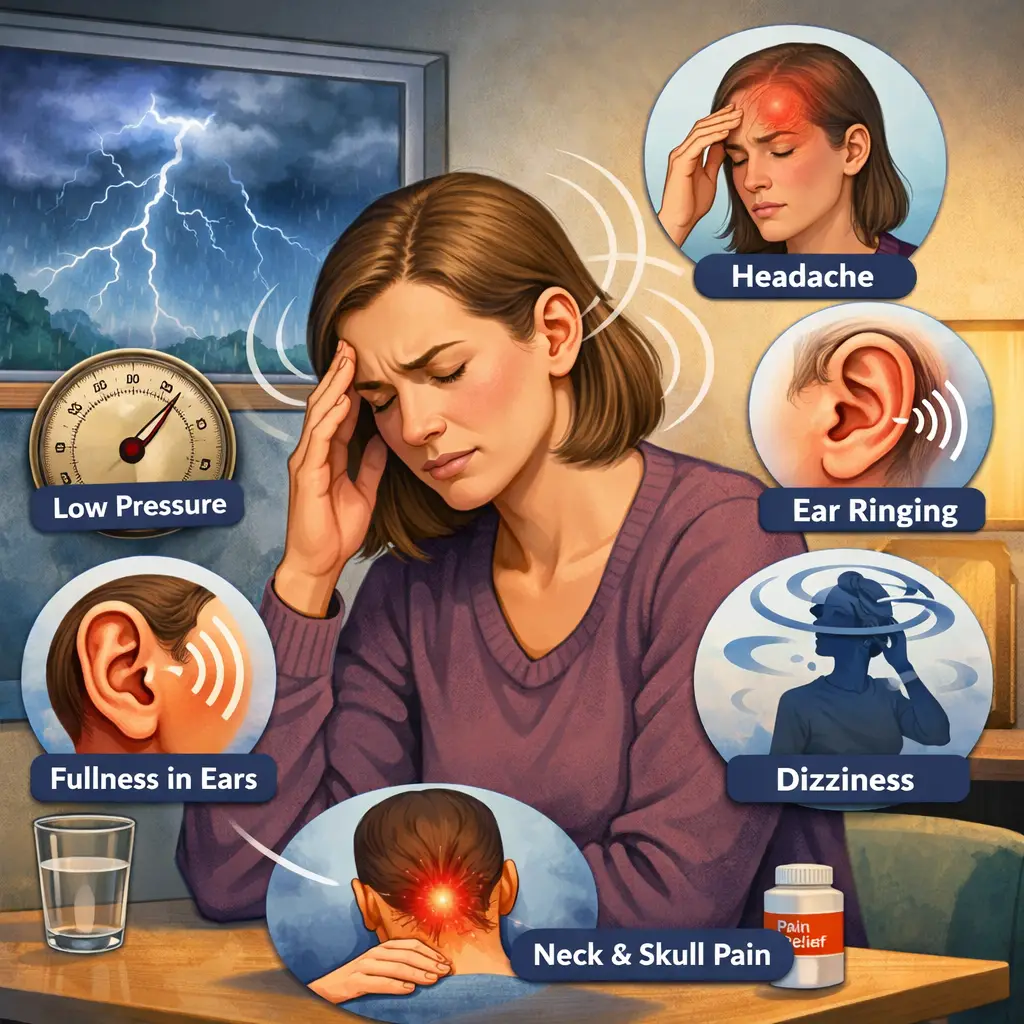
Barometric Pressure Changes: For many people, weather changes are little more than a conversation starter. For others, they are a predictable trigger for misery. Headaches that seem to come out of nowhere. Dizziness or vertigo that makes it hard to function. Full or clogged ears. Ringing in the ears. Pulsatile tinnitus. Pressure and pain at the base of the skull that feels deep, heavy, and unrelenting.
If you’ve ever said, “I can feel a storm coming,” you’re not imagining things.
Barometric pressure changes are a very real stressor on the human nervous system. But here’s the problem: barometric pressure doesn’t cause symptoms on its own. Instead, it exposes an underlying inability in the body to adapt.
At Lavender Family Chiropractic / NeckWise North Sarasota, we see this every day. People who are otherwise healthy suddenly become symptomatic when the weather shifts. And time and time again, the root issue isn’t the weather itself—it’s an upper cervical misalignment that prevents the nervous system from adapting to pressure changes.
This article will explain:
- What barometric pressure is and how it affects the body
- The most common symptoms triggered by pressure changes
- Why the upper cervical spine plays a critical role in pressure adaptation
- How misalignment at the top of the neck disrupts neurological regulation
- How NeckWise upper cervical care helps restore stability and resilience
If you’ve been chasing symptoms without lasting relief, this may finally connect the dots.
What are Barometric Pressure Changes and Why Does It Matter?
Barometric pressure, also known as atmospheric pressure, refers to the weight of the air surrounding us. As weather systems change—storms approaching, cold fronts moving in, humidity shifting—the pressure in the atmosphere rises or falls.
Your body is designed to adapt to these changes seamlessly. Specialized sensors in the nervous system constantly monitor internal and external pressure and make micro-adjustments to maintain balance, blood flow, and neurological stability.
When this system is working properly, you don’t notice the weather at all.
But when it isn’t, even small changes in pressure can trigger big symptoms.
Common Symptoms Triggered by Barometric Pressure Changes
People who are sensitive to pressure changes often report a predictable pattern. Symptoms may start hours or even days before a storm arrives and may linger long after the weather clears.
Headaches and Migraines
Barometric pressure changes are one of the most common migraine triggers. Pressure shifts can alter cerebral blood flow and intracranial pressure, leading to throbbing pain, light sensitivity, nausea, and fatigue.
Dizziness and Vertigo
Many patients experience lightheadedness, imbalance, or full spinning vertigo when pressure drops. This often reflects poor communication between the brain, inner ear, and neck.
Fullness or Pressure in the Ears
That clogged, underwater feeling isn’t always sinus-related. Changes in atmospheric pressure can overwhelm the nervous system’s ability to regulate middle ear pressure.
Ear Ringing (Tinnitus)
Fluctuations in pressure can increase irritation or dysfunction of the auditory nerve, resulting in ringing, buzzing, or humming sounds.
Pulsatile Tinnitus
Some people hear a rhythmic pulsing or whooshing in one or both ears, often synchronized with their heartbeat. This can worsen dramatically during weather changes.
Pain and Pressure at the Base of the Skull
This deep, heavy pressure at the junction of the head and neck is one of the most overlooked clues that the upper cervical spine is involved.
Why Barometric Pressure Doesn’t Affect Everyone the Same Way
This is a critical point.
If barometric pressure alone caused these symptoms, everyone would experience them equally. But they don’t. Some people feel nothing at all, while others are completely debilitated.
The difference lies in neurological adaptability.
Your body’s ability to respond to pressure changes depends on:
- Proper alignment of the upper cervical spine
- Clear brainstem communication
- Balanced autonomic nervous system function
- Healthy blood and cerebrospinal fluid flow
When these systems are compromised, the body loses its ability to self-regulate—and symptoms appear.
The Upper Cervical Spine: The Control Center for Pressure Adaptation
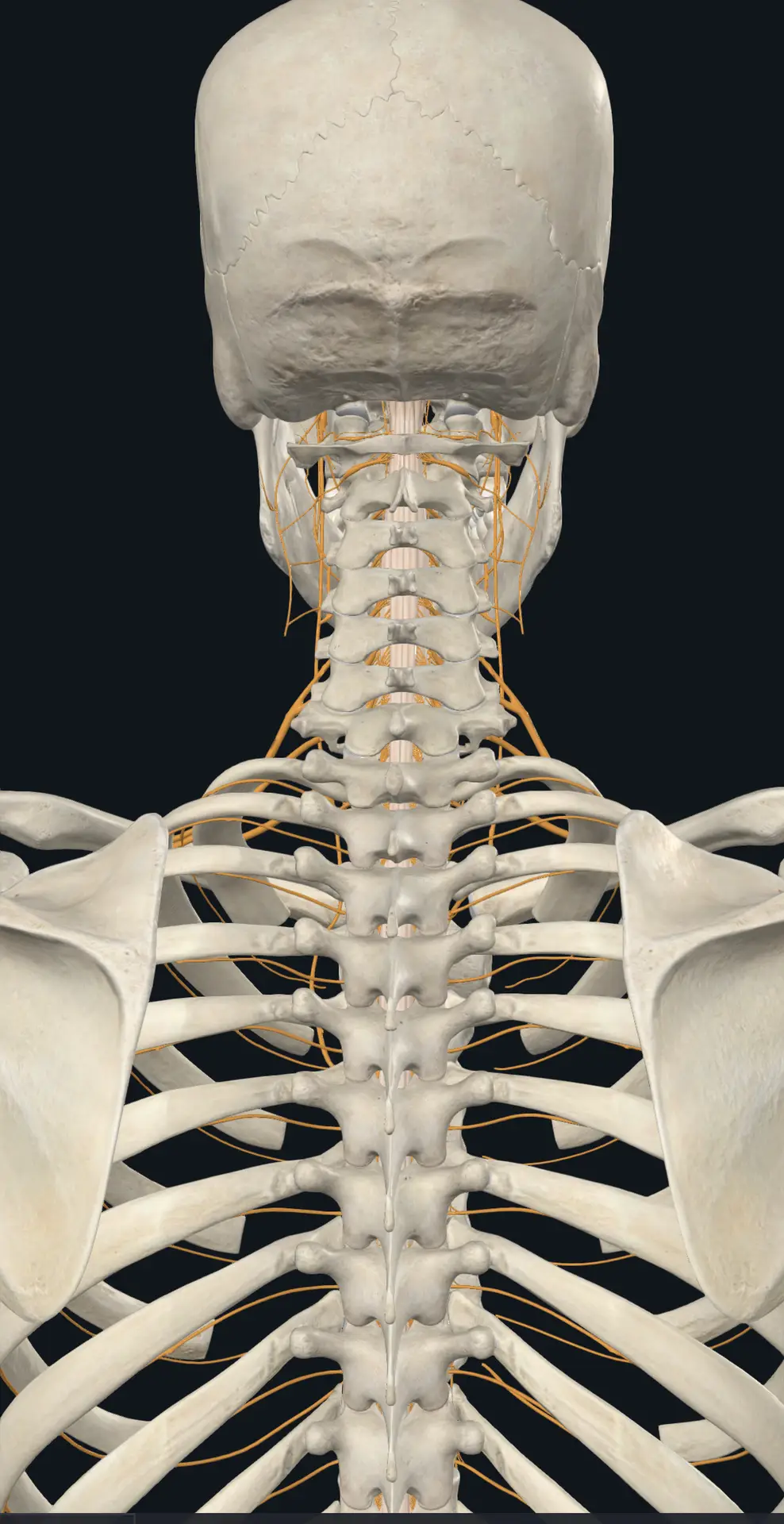
The upper cervical spine consists primarily of the atlas (C1) and axis (C2) vertebrae. These two bones support the head and protect the most delicate and important neurological structure in the body: the brainstem.
The brainstem controls:
- Balance and coordination
- Blood pressure regulation
- Inner ear function
- Autonomic nervous system balance
- Cerebrospinal fluid flow
- Sensory input from the head and neck
Even a slight misalignment in this area can create significant neurological interference.
How Upper Cervical Misalignment Disrupts Pressure Regulation
When the atlas or axis shifts out of proper alignment—often due to past injuries, concussions, whiplash, poor posture, or repetitive stress—it can create a cascade of dysfunction.
Brainstem Irritation
Misalignment alters the space and tension around the brainstem, impairing its ability to regulate pressure changes efficiently.
Abnormal Cerebrospinal Fluid Flow
CSF pressure is highly sensitive to atmospheric changes. Upper cervical misalignment can restrict normal CSF movement, leading to pressure buildup and neurological symptoms.
Autonomic Nervous System Imbalance
The sympathetic (“fight or flight”) and parasympathetic (“rest and regulate”) systems must stay balanced. Upper cervical stress can lock the body into a heightened stress response, amplifying symptoms during weather changes.
Altered Blood Flow
Improper alignment can affect vertebral artery dynamics, contributing to headaches, dizziness, and pulsatile tinnitus.
Why Symptoms Spike During Storms and Pressure Drops
When barometric pressure drops, the external pressure on your body decreases. Internally, your nervous system must adjust to maintain equilibrium.
If the upper cervical spine is misaligned:
- The brainstem struggles to coordinate pressure regulation
- Blood vessels may dilate or constrict improperly
- Inner ear pressure becomes unstable
- Neurological signaling becomes distorted
The result? Symptoms flare, often suddenly and intensely.
Why Traditional Approaches Often Miss the Root Cause
Many people are told their symptoms are due to:
- Sinus problems
- Allergies
- Anxiety
- Migraines with no clear cause
- Inner ear disorders
While these labels describe symptoms, they often fail to explain why the body can’t adapt.
IV therapy may be a temporary option for relief from these headaches
Medications may temporarily dull pain or reduce inflammation, but they don’t correct the neurological imbalance driving pressure sensitivity.
What Makes NeckWise Upper Cervical Care Different
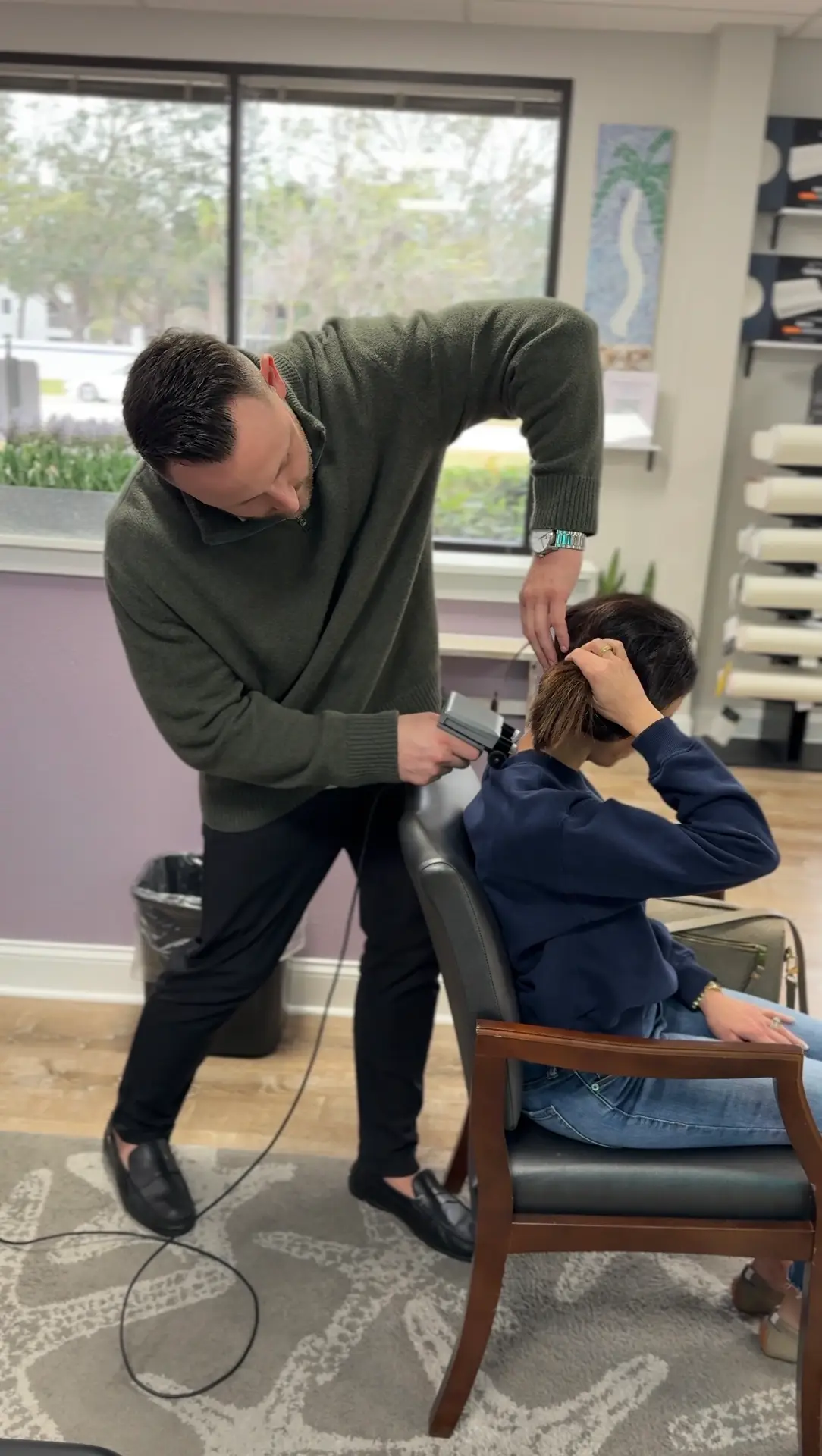
At Lavender Family Chiropractic / NeckWise North Sarasota, care is focused exclusively on the upper cervical spine—not full-spine manipulation, twisting, cracking, or generalized adjustments.
Advanced 3D CBCT Imaging
We use precise 3D CBCT imaging to evaluate the exact alignment of the atlas and axis relative to the skull and brainstem.
Functional Nervous System Scans
These scans assess how well the nervous system is regulating itself, helping us track objective improvements over time.
Gentle, Precise Corrections
NeckWise adjustments are specific, calculated, and gentle. No popping. No twisting. No guessing.
Stability-Based Care
The goal is not frequent adjustments, but long-term stability, allowing the nervous system to heal and self-regulate.
How NeckWise Care Helps With Barometric Pressure Symptoms
By restoring proper upper cervical alignment, the body regains its ability to adapt. NeckWise Care is unlike anything else.
Patients often report:
- Fewer weather-related headaches
- Reduced dizziness and vertigo
- Less ear pressure and fullness
- Decreased tinnitus intensity
- Improved tolerance to storms and pressure changes
- Less base-of-skull pain and tension
Most importantly, they feel more resilient.
Who Is Most Likely to Benefit From Upper Cervical Care?
You may be a strong candidate if:
- Your symptoms worsen before storms
- You feel pressure at the base of your skull
- You have a history of concussions or whiplash
- You experience chronic headaches or migraines
- You have unexplained dizziness or ear symptoms
- You’ve tried multiple treatments without lasting relief
Why Experience and Precision Matter
Upper cervical care is not generic chiropractic. It requires advanced training, imaging, and analysis.
At NeckWise North Sarasota, our doctors focus solely on upper cervical biomechanics and neurological correction. This level of specificity is critical when dealing with complex symptoms triggered by pressure changes.
Top 15 FAQs About Barometric Pressure Symptoms and Upper Cervical Chiropractic Care
1. Can barometric pressure changes really cause headaches and migraines?
Yes. Barometric pressure changes are one of the most common triggers for headaches and migraines, especially in people with an underlying neurological imbalance. When atmospheric pressure drops or rises, the body must rapidly adapt internal pressure, blood flow, and nervous system signaling. If this adaptive system is compromised—most commonly due to an upper cervical misalignment—headaches and migraines can develop or worsen.
2. Why do my headaches start before a storm even arrives?
Many people notice symptoms before the weather changes. That’s because barometric pressure begins shifting hours or days before a storm is visible. Your nervous system detects these changes early. If the brainstem is under stress from an upper cervical misalignment, symptoms like headaches, pressure at the base of the skull, or dizziness may appear well before rain or thunder.
3. Can barometric pressure changes cause dizziness or vertigo?
Absolutely. Dizziness and vertigo are common symptoms during pressure changes, especially in Florida where rapid weather shifts are common. These symptoms often result from disrupted communication between the brainstem, inner ear, and balance centers—areas closely connected to the upper cervical spine.
4. Why do my ears feel full or clogged when the weather changes?
Ear fullness during barometric pressure changes is often neurological, not sinus-related. The brainstem helps regulate middle ear pressure. If upper cervical misalignment interferes with this regulation, the ears may feel blocked, full, or pressurized even when there is no infection or congestion present.
5. Can barometric pressure changes make tinnitus worse?
Yes. Many people experience louder or more frequent ear ringing during weather changes. Pressure fluctuations can irritate the auditory pathways and blood flow near the brainstem. Upper cervical misalignment can amplify this sensitivity, making tinnitus more noticeable during storms or pressure drops.
6. What is pulsatile tinnitus and why does it worsen with pressure changes?
Pulsatile tinnitus is a rhythmic whooshing or pulsing sound that often matches your heartbeat. It is frequently linked to blood flow changes near the brainstem and upper neck. Barometric pressure changes can exaggerate this issue when upper cervical alignment is compromised, affecting vascular regulation.
7. Why do I feel pain and pressure at the base of my skull during weather changes?
Pain and pressure at the base of the skull are classic signs of upper cervical stress. This area is where the skull meets the top vertebrae. During pressure changes, neurological tension increases in this region if the atlas or axis is misaligned, leading to deep, heavy discomfort.
8. Why don’t barometric pressure changes affect everyone the same way?
Because barometric pressure does not directly cause symptoms—it exposes an underlying issue. People with healthy upper cervical alignment and balanced nervous systems adapt easily. Those with misalignment struggle to regulate internal pressure, resulting in symptoms like headaches, dizziness, and ear issues.
9. How does an upper cervical misalignment affect pressure regulation?
Upper cervical misalignment can:
- Irritate the brainstem
- Disrupt autonomic nervous system balance
- Alter cerebrospinal fluid flow
- Affect blood vessel regulation
These disruptions reduce the body’s ability to adapt to pressure changes, making symptoms more likely during weather shifts.
10. Can past injuries cause sensitivity to barometric pressure?
Yes. Concussions, car accidents, whiplash injuries, sports impacts, and even childhood falls can misalign the upper cervical spine. Many people don’t develop symptoms immediately, but years later notice pressure sensitivity, migraines, dizziness, or ear symptoms when the nervous system can no longer compensate.
11. Why don’t medications fix barometric pressure headaches or dizziness?
Medications may temporarily reduce pain or inflammation, but they do not correct neurological interference caused by upper cervical misalignment. Without restoring proper alignment and brainstem communication, the body remains unable to adapt to pressure changes—so symptoms often return.
12. What makes NeckWise upper cervical chiropractic care different?
NeckWise care focuses exclusively on the top two bones of the neck. At Lavender Family Chiropractic / NeckWise North Sarasota, care includes:
- Precise 3D CBCT imaging
- Functional nervous system scans
- Gentle, specific corrections
- No twisting, cracking, or guessing
This precision is essential when dealing with pressure-related neurological symptoms.
13. How long does it take to notice improvement with upper cervical care?
Every case is different. Some patients notice reduced weather sensitivity within weeks, while others experience gradual improvement as stability is restored. The goal of NeckWise care is long-term correction and neurological balance, not temporary symptom relief.
14. Who is a good candidate for upper cervical chiropractic care?
Upper cervical care may be appropriate if you:
- Get headaches or migraines with weather changes
- Experience dizziness or vertigo
- Have ear pressure, tinnitus, or pulsatile tinnitus
- Feel pressure at the base of your skull
- Have a history of head or neck injuries
- Live in Florida and notice symptoms during storms
15. Where can I find an upper cervical chiropractor in Sarasota or North Sarasota?
If you’re searching for an upper cervical chiropractor in Sarasota, North Sarasota, Bradenton, or Lakewood Ranch, Lavender Family Chiropractic / NeckWise North Sarasota specializes in upper cervical care for people affected by barometric pressure changes, headaches, dizziness, and ear symptoms.
Local SEO Optimization: Barometric Pressure Symptoms in Sarasota, Bradenton, and Lakewood Ranch
Living in Sarasota, Bradenton, and Lakewood Ranch, Florida, means frequent weather and barometric pressure changes. Sudden storms, humidity shifts, and pressure drops are common—and for many residents, so are weather-related headaches, dizziness, and ear issues.
People searching for:
- “Headaches when it rains Sarasota”
- “Dizziness before storms Bradenton”
- “Ear pressure weather changes Lakewood Ranch”
- “Upper cervical chiropractor near me”
- “Neck pain and pressure at base of skull Sarasota”
are often dealing with the same underlying issue: upper cervical misalignment affecting neurological adaptation.
At Lavender Family Chiropractic / NeckWise North Sarasota, we help patients throughout Sarasota County and Manatee County understand why weather affects them and how correcting the upper cervical spine can restore stability and resilience.
Whether you’re in North Sarasota, Bradenton, Lakewood Ranch, Palmetto, Parrish, or surrounding areas, our clinic provides specialized upper cervical chiropractic care focused on the root cause—not just managing symptoms.
A Different Way Forward
Living at the mercy of the weather is exhausting. Planning your life around storms, pressure drops, and flare-ups can feel limiting and frustrating.
But when the underlying neurological cause is addressed, the body can finally do what it was designed to do: adapt.
Barometric pressure changes don’t have to control your life. And your symptoms don’t have to be a mystery.
Take the Next Step
If you experience headaches, dizziness, ear pressure, tinnitus, or base-of-skull pain that worsens with weather changes, it may be time to look higher—to the upper cervical spine.
At Lavender Family Chiropractic / NeckWise North Sarasota, our doctors specialize in helping people restore neurological balance so their bodies can adapt confidently to life—and the weather—again.
You don’t have to wait for the next storm to remind you something is wrong. There is a clearer path forward, and it starts at the top.
Schedule a Consultation
If you’re searching for a chiropractor sarasota florida, chiropractor near me, upper cervical chiropractor near me, or you’ve been looking for answers to ear pressure, dizziness, vertigo, headaches, and chronic congestion, we’re here to help.
Lavender Family Chiropractic (NeckWise North Sarasota)
5899 Whitfield Ave Ste 107, Sarasota, FL 34243
www.chiropractorsarasotaflorida.com
(941)243-3729
To learn more about us go to http://www.chiropractorsarasotaflorida.com
We also service Bradenton, Parrish, Ellenton, Ruskin, Venice, Tampa, St. Pete, Osprey, Longboat, Lakewood Ranch, Myakka City.
If you are in Tampa, Land O Lakes, Fort Myers, or Salt Lake City, you can visit my other locations! NeckWise Upper Cervical. Visit, www.neckwise.com
If you are not local, visit www.uccnearme.com to find a doctor in your area
Serving Sarasota, Bradenton, Lakewood Ranch, Parrish, Ellenton, Venice, Osprey, Siesta Key, Longboat Key, Lido Key, Myakka City, Punta Gorda, and St. Petersburg.