
Dysphagia and Upper Cervical Misalignment: Understanding the Neurological Connection and Proven Results in Sarasota Florida and Lakewood Ranch Florida
Dysphagia Introduction: When Swallowing Becomes a Daily Struggle
Dysphagia, the medical term for difficulty swallowing, is far more than an inconvenience. For many people, it affects nutrition, hydration, communication, confidence, and overall quality of life. Swallowing is something most of us take for granted—until it becomes uncomfortable, effortful, or frightening. Food may feel like it gets stuck, liquids may go down the wrong way, or speaking and swallowing may trigger coughing, choking, or throat tightness. While dysphagia is often associated with stroke, neurological disease, or structural problems in the throat, an important and frequently overlooked contributor lies higher up in the body: the upper cervical spine.
At Lavender Family Chiropractic – NeckWise North Sarasota, we see many patients who have spent years chasing symptoms related to swallowing, talking, throat tightness, globus sensation, and voice changes without clear answers. In many cases, the underlying issue is not in the throat itself but in the neurological control centers that govern swallowing. These control centers are housed in the brainstem and are directly influenced by the alignment and stability of the upper cervical spine.
This article explores dysphagia through a neurological lens, explaining how upper cervical misalignment can affect cranial nerves responsible for swallowing and speech, why traditional approaches often miss the root cause, and how precise upper cervical chiropractic care may help restore proper neurological communication and function.
What Is Dysphagia? A Deeper Look
Dysphagia refers to difficulty with any phase of swallowing. Swallowing is not a simple action—it involves more than 30 muscles and multiple cranial nerves working in precise coordination. Dysphagia can occur during:
- The oral phase (chewing and moving food to the back of the mouth)
- The pharyngeal phase (triggering the swallow reflex and protecting the airway)
- The esophageal phase (moving food into the stomach)
Symptoms of dysphagia may include:
- Feeling like food is stuck in the throat
- Difficulty initiating a swallow
- Coughing or choking when eating or drinking
- Hoarseness or voice changes
- Throat tightness or pressure
- Frequent throat clearing
- Aspiration or food entering the airway
- Anxiety around eating or drinking
While dysphagia is often treated as a localized throat or esophageal problem, swallowing is ultimately controlled by the nervous system. That means any disruption to neurological signaling—especially at the brainstem level—can interfere with this vital function.
The Brainstem: The Command Center for Swallowing and Speech
The brainstem sits at the base of the brain and acts as a relay station between the brain and the body. It is responsible for regulating many automatic, life-sustaining functions, including breathing, heart rate, balance, digestion, and swallowing.
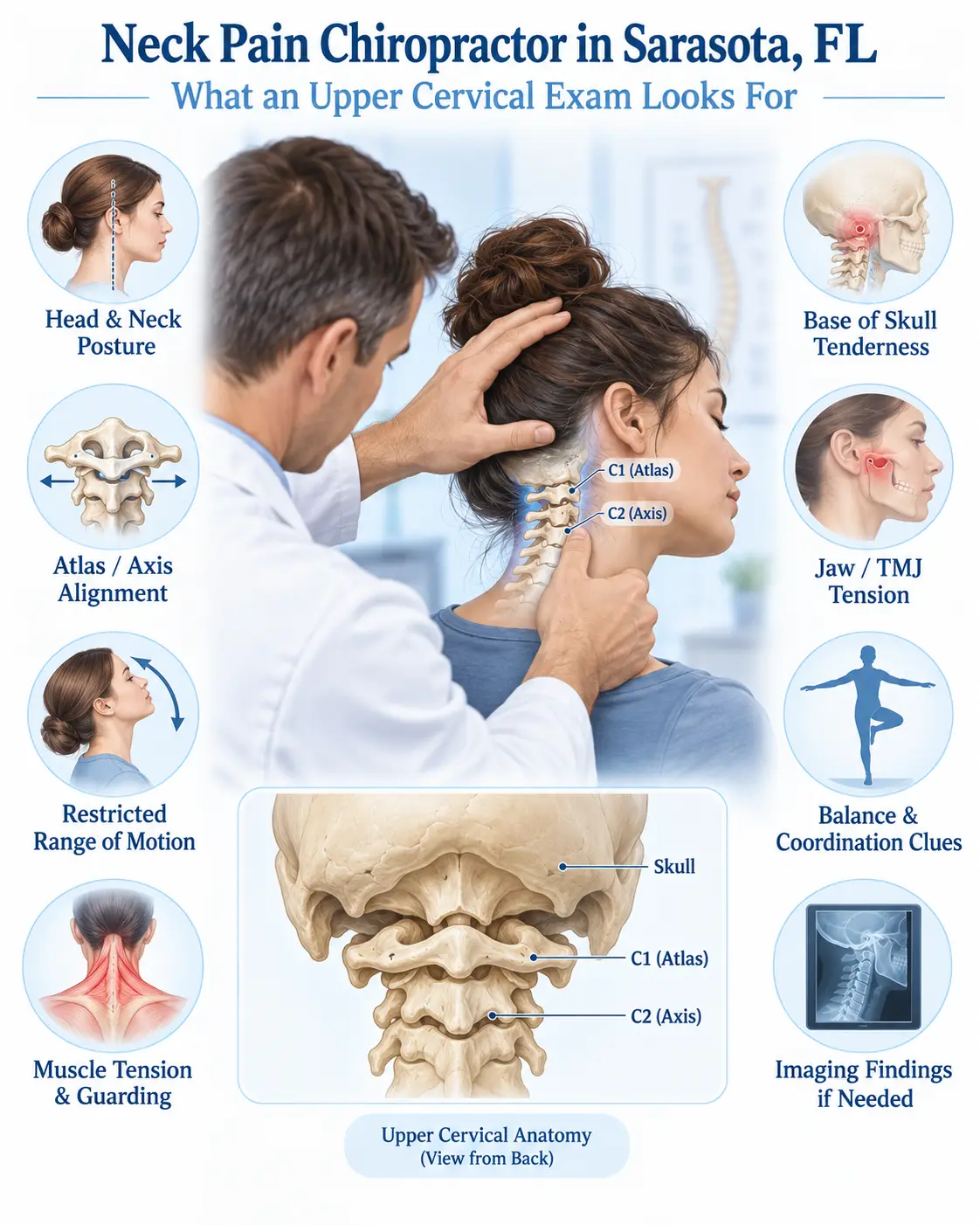
Within the brainstem are nuclei that control the cranial nerves involved in swallowing and speech. These nerves exit the skull through openings at the base of the head and upper neck. Because of this close anatomical relationship, the alignment of the upper cervical spine—particularly the atlas (C1) and axis (C2)—plays a critical role in protecting and supporting proper brainstem and cranial nerve function.
Even subtle misalignments in this region can alter biomechanics, create abnormal tension, and affect neurological signaling. When the brainstem is under stress, the body often expresses symptoms far from the neck, including difficulty swallowing or speaking.
Cranial Nerves Involved in Swallowing and Talking
Several cranial nerves are directly involved in the complex act of swallowing and voice production. Upper cervical misalignment can interfere with these nerves in multiple ways, including mechanical irritation, altered cerebrospinal fluid dynamics, and abnormal muscular tension.
Trigeminal Nerve (Cranial Nerve V)
The trigeminal nerve provides sensation to the face and motor control to muscles involved in chewing. Dysfunction here can affect the oral phase of swallowing, making it difficult to properly chew and prepare food for swallowing.
Facial Nerve (Cranial Nerve VII)
This nerve controls facial expression and contributes to lip closure and coordination during swallowing. Weakness or dysfunction may lead to drooling or difficulty keeping food in the mouth.
Glossopharyngeal Nerve (Cranial Nerve IX)
The glossopharyngeal nerve plays a key role in swallowing and gag reflex. It provides sensory input from the throat and helps trigger the swallow reflex. Irritation or dysfunction can result in delayed swallowing, throat discomfort, or the sensation of something being stuck.
Vagus Nerve (Cranial Nerve X)
The vagus nerve is one of the most important nerves in the body and has extensive influence over swallowing, voice, digestion, and autonomic nervous system balance. It controls muscles of the soft palate, pharynx, and larynx. Vagus nerve dysfunction can lead to hoarseness, voice fatigue, difficulty swallowing, reflux-like symptoms, and globus sensation.
Accessory Nerve (Cranial Nerve XI)
This nerve controls muscles of the neck and shoulders. Dysfunction can alter head and neck posture, further compounding upper cervical stress and neurological interference.
Hypoglossal Nerve (Cranial Nerve XII)
The hypoglossal nerve controls tongue movement, which is essential for speech and the initiation of swallowing. Dysfunction may cause tongue weakness, impaired articulation, and difficulty moving food efficiently.
Because all of these nerves originate in or near the brainstem and exit through the base of the skull, any structural imbalance in the upper cervical spine has the potential to disrupt their function.
How Upper Cervical Misalignment Develops
Upper cervical misalignment often occurs due to trauma or repetitive stress. Common causes include:
- Car accidents and whiplash injuries
- Falls or head injuries
- Sports collisions
- Poor posture and prolonged forward head positioning
- Childhood injuries that were never addressed
- Repetitive strain on the neck
Unlike lower spinal misalignments, upper cervical misalignments may not always cause pain. Many patients with dysphagia-related symptoms report minimal or no neck discomfort, which is why the connection is frequently missed.
When the atlas or axis shifts out of its optimal position, it can change the way the head balances on the spine. This creates abnormal tension in muscles, ligaments, and dura mater surrounding the brainstem and cranial nerves.
Neurological Stress, Inflammation, and Swallowing Dysfunction
Upper cervical misalignment can lead to:
- Abnormal mechanical stress on the brainstem
- Altered blood flow to neurological tissues
- Disrupted cerebrospinal fluid circulation
- Increased sympathetic nervous system activation
- Decreased parasympathetic (vagal) tone
Swallowing requires precise timing and coordination between muscles and nerves. When neurological signaling is compromised, the swallow reflex may be delayed, incomplete, or poorly coordinated. This can result in choking, coughing, or the sensation that swallowing requires conscious effort.
Many patients are told their dysphagia is “functional,” “stress-related,” or idiopathic when imaging of the throat appears normal. In reality, the dysfunction may be neurological rather than structural.
The Connection Between Dysphagia, Voice Changes, and Autonomic Dysfunction
It is common for dysphagia to coexist with symptoms such as:
- Hoarseness or voice weakness
- Chronic throat clearing
- Acid reflux or GERD-like symptoms
- Anxiety or panic during swallowing
- Dizziness or balance issues
- Fatigue and brain fog
These overlapping symptoms often point toward autonomic nervous system imbalance. The vagus nerve, which plays a central role in swallowing and voice, is also the primary parasympathetic nerve of the body. When vagal tone is reduced due to upper cervical stress, multiple systems can be affected simultaneously.
At Lavender Family Chiropractic – NeckWise North Sarasota, we frequently see patients whose swallowing issues improve as nervous system balance is restored through precise upper cervical care.
Why Traditional Approaches Often Fall Short
Conventional dysphagia treatment typically focuses on:
- Swallowing therapy and exercises
- Diet modification
- Acid suppression medications
- Speech therapy
- Endoscopic or radiographic studies
While these approaches can be helpful for symptom management, they often do not address why the neurological control of swallowing is impaired in the first place. If the brainstem and cranial nerves are under constant stress from upper cervical misalignment, progress may be limited or temporary.
Upper cervical chiropractic care offers a complementary, neurological approach that looks upstream at the source of control rather than downstream at the symptoms.
What Is Upper Cervical Chiropractic Care?
Upper cervical chiropractic care is a specialized form of chiropractic that focuses exclusively on the alignment and function of the top two vertebrae in the spine: C1 (atlas) and C2 (axis).
Unlike traditional chiropractic methods that involve twisting, popping, or cracking, upper cervical care uses:
- Detailed neurological and postural analysis
- Advanced imaging such as 3D CBCT when clinically indicated
- Precise measurements unique to each patient
- Gentle, specific adjustments designed to restore alignment
The goal is not to treat symptoms directly but to remove interference to the nervous system so the body can heal and regulate itself more effectively.
The NeckWise Approach at Lavender Family Chiropractic – North Sarasota
At Lavender Family Chiropractic – NeckWise North Sarasota, our doctors specialize in pure upper cervical care. Our approach is designed to be precise, gentle, and individualized.
Every patient undergoes a comprehensive evaluation that may include:
- Detailed health history with a focus on neurological symptoms
- Postural and balance assessment
- Neurological testing
- Advanced imaging to assess upper cervical alignment
When an upper cervical misalignment is identified, a specific correction is delivered using a low-force technique. There is no twisting, yanking, or cracking of the neck.
By restoring proper alignment, we aim to reduce abnormal stress on the brainstem and cranial nerves, allowing neurological communication to normalize over time.
How Upper Cervical Care May Help Dysphagia
When upper cervical alignment is restored and maintained, patients may experience:
- Improved coordination of the swallow reflex
- Reduced throat tightness or globus sensation
- Improved voice strength and clarity
- Decreased coughing or choking episodes
- Better autonomic nervous system balance
- Reduced anxiety associated with swallowing
It is important to note that dysphagia is a complex condition, and results vary depending on the individual. However, by addressing a previously overlooked neurological component, upper cervical care offers hope to patients who have not found relief through conventional approaches.
Real-World Patterns We See in Practice
Many patients with dysphagia report a history of head or neck trauma, sometimes decades earlier. Others notice their symptoms began after a car accident, concussion, or prolonged period of poor posture.
A common pattern includes:
- Normal ENT or GI testing
- Persistent symptoms despite therapy or medication
- Coexisting neurological or autonomic symptoms
- Minimal neck pain despite significant dysfunction
These patterns often point toward an upper cervical contribution that deserves closer evaluation.
Serving North Sarasota and the Surrounding Communities
Lavender Family Chiropractic – NeckWise North Sarasota proudly serves patients from Sarasota, Bradenton, Lakewood Ranch, Parrish, Ellenton, Venice, Osprey, and surrounding areas. Many of our patients travel specifically for our expertise in complex neurological conditions related to the upper cervical spine.
Our mission is to help people get to the root cause of their symptoms and restore confidence in their body’s ability to function and heal.
Top 15 Frequently Asked Questions About Dysphagia and Upper Cervical Care
- Can neck issues really cause swallowing problems?
Yes. Swallowing is neurologically controlled, and upper cervical misalignment can affect the brainstem and cranial nerves involved. - Do I need neck pain to have an upper cervical problem?
No. Many patients have significant neurological symptoms without neck pain. - Is upper cervical chiropractic safe?
When performed by trained upper cervical doctors using precise imaging and analysis, it is considered very gentle and safe. - Will I need my neck cracked or twisted?
No. NeckWise care uses low-force, specific adjustments without twisting or cracking. - Can upper cervical care replace speech therapy?
It is not a replacement but may complement other therapies by addressing neurological interference. - How long does it take to see results?
This varies by individual, severity, and chronicity of the condition. - Can dysphagia caused by anxiety still be neurological?
Yes. Anxiety and swallowing share common neurological pathways involving the brainstem and vagus nerve. - What imaging do you use?
When indicated, advanced imaging such as 3D CBCT is used to assess precise alignment. - Does upper cervical care help with voice changes?
Many patients report improvements in voice quality as neurological function improves. - Is this care appropriate for older adults?
Yes. The gentle nature of upper cervical care makes it suitable for all ages. - Can reflux-like symptoms be related?
Yes. Vagus nerve dysfunction can contribute to reflux and swallowing issues. - Do you work with other providers?
We often co-manage care with speech therapists, ENTs, and other healthcare professionals. - How is this different from regular chiropractic?
Upper cervical care focuses exclusively on C1 and C2 with precise neurological analysis. - What if I’ve had dysphagia for years?
Chronic cases may still benefit from addressing long-standing neurological stress. - How do I know if I’m a candidate?
A comprehensive evaluation at Lavender Family Chiropractic – NeckWise North Sarasota can help determine this.
Final Thoughts: Restoring Confidence in Swallowing and Speech
Dysphagia can be isolating, frustrating, and frightening. When answers are hard to find, it is easy to feel discouraged. Understanding the role of the upper cervical spine and cranial nerves opens the door to a new perspective—one that focuses on neurological function, not just symptoms.
At Lavender Family Chiropractic – NeckWise North Sarasota, we are committed to helping patients uncover hidden contributors to complex conditions like dysphagia. By restoring proper upper cervical alignment, we aim to support the body’s innate ability to heal, regulate, and function as designed.
Expanded Clinical and Neurological Insights Into Dysphagia
To fully understand dysphagia from an upper cervical and neurological perspective, it is important to appreciate just how integrated swallowing is with posture, head positioning, and spinal alignment. Swallowing does not occur in isolation. It is influenced by breathing patterns, head and neck mechanics, autonomic nervous system tone, and real-time sensory feedback from the throat, tongue, and airway. When the upper cervical spine is misaligned, this entire system can become dysregulated.
The atlas and axis vertebrae are uniquely shaped to support the skull and allow for precise head movement. When these vertebrae shift out of optimal alignment, even by millimeters, the body must compensate. Muscles of the neck tighten asymmetrically, the dura mater surrounding the brainstem becomes stressed, and neurological signaling can become distorted. Over time, this chronic stress can manifest as functional swallowing difficulties that are difficult to trace back to their origin.
Dysphagia and Posture: The Forward Head Connection
One commonly overlooked contributor to dysphagia is forward head posture. When the head shifts forward relative to the shoulders, the upper cervical spine is placed under constant mechanical stress. This posture shortens muscles in the front of the neck, alters jaw mechanics, and increases tension around the hyoid bone and larynx.
Forward head posture is strongly associated with upper cervical misalignment. As the head migrates forward, the atlas often compensates by rotating or laterally shifting. This can increase irritation to cranial nerves exiting the skull base, particularly the glossopharyngeal, vagus, and hypoglossal nerves. Patients may notice that swallowing feels more difficult when fatigued, stressed, or sitting at a desk for prolonged periods.
Correcting posture alone is often insufficient if the upper cervical misalignment remains unaddressed. This is why posture exercises may provide temporary relief but fail to resolve dysphagia long term.
The Role of the Hyoid Bone and Upper Cervical Alignment
The hyoid bone is a small, floating bone in the front of the neck that serves as an anchor point for many muscles involved in swallowing and speech. It does not attach directly to other bones, relying instead on muscular and fascial connections that are influenced by head and neck position.
Upper cervical misalignment can change the resting position of the hyoid bone by altering muscle tone and fascial tension. When the hyoid is not functioning optimally, patients may experience throat tightness, difficulty initiating a swallow, or a sensation of restriction during speech. Upper cervical correction can normalize head balance and reduce abnormal muscular pull on the hyoid complex.
Dysphagia Following Concussion and Whiplash
Many patients with unexplained dysphagia have a history of concussion or whiplash injury. Even mild traumatic brain injuries can disrupt the delicate relationship between the skull and upper cervical spine. Whiplash, in particular, commonly injures the ligaments that stabilize C1 and C2.
When these ligaments are compromised, subtle instability or misalignment may persist long after the initial injury. This can place ongoing stress on the brainstem and cranial nerves, leading to delayed or progressive swallowing and voice symptoms. Because imaging of the throat often appears normal, these patients may be told their symptoms are unrelated or anxiety-driven.
At Lavender Family Chiropractic – NeckWise North Sarasota, we routinely see post-concussion patients whose dysphagia improves only after upper cervical alignment is restored and stabilized.
The Autonomic Nervous System and Swallowing Safety
Swallowing safety depends heavily on the autonomic nervous system. The parasympathetic branch, primarily mediated by the vagus nerve, helps regulate smooth muscle activity, airway protection, and digestive readiness. When vagal tone is reduced, swallowing may feel forced, rushed, or uncoordinated.
Upper cervical misalignment is known to bias the nervous system toward sympathetic dominance. This fight-or-flight state is not conducive to safe, efficient swallowing. Patients may report that symptoms worsen during stress, anxiety, or fatigue. Restoring upper cervical alignment can help shift the nervous system back toward balance, supporting safer swallowing patterns.
Why Dysphagia Is Often Labeled Functional
In many medical settings, dysphagia without obvious structural findings is labeled as functional. While this term suggests no identifiable cause, it often simply means the cause lies outside the scope of routine imaging. Functional does not mean imaginary.
Neurological dysfunction, particularly at the brainstem level, may not show up on standard scans. Upper cervical chiropractic care fills this diagnostic gap by evaluating the structural environment of the brainstem and cranial nerves. When this environment is compromised, function suffers.
What Makes NeckWise Care Different
NeckWise care at Lavender Family Chiropractic is not generalized chiropractic. It is a highly focused system of analysis and correction designed to address the unique biomechanics of the upper cervical spine. Each correction is based on precise measurements, not guesswork.
Patients are never adjusted repetitively or unnecessarily. The goal is to help the body hold its correction so neurological function can stabilize over time. This approach is especially important for patients with sensitive neurological symptoms such as dysphagia.
Long-Term Healing and Neurological Adaptation
Neurological healing is not always immediate. As upper cervical alignment is restored, the nervous system begins to adapt. Swallowing patterns may improve gradually as coordination returns and inflammation decreases. Many patients notice secondary improvements in breathing, voice strength, digestion, and overall calmness.
Consistency and stability are key. Maintaining proper upper cervical alignment allows the brainstem to operate in a less stressed environment, giving cranial nerves the opportunity to function optimally.
Integrating Upper Cervical Care With Other Therapies
Upper cervical chiropractic care works best as part of an integrated approach. Speech therapy, nutritional support, and stress management can all play supportive roles. However, addressing neurological interference at the source often enhances the effectiveness of these other interventions.
Our doctors frequently collaborate with other healthcare providers to ensure comprehensive care while staying focused on the structural and neurological foundation.
Hope for Chronic and Complex Cases
Patients who have struggled with dysphagia for years often feel discouraged. When symptoms affect eating, speaking, and social interaction, quality of life suffers. Understanding the upper cervical connection offers a new path forward.
By addressing alignment at the top of the spine, NeckWise care provides a neurological foundation for healing that many patients have never explored.
Final Encouragement
Dysphagia is not always a throat problem. In many cases, it is a neurological coordination issue rooted in brainstem stress and cranial nerve dysfunction. The upper cervical spine plays a central role in this process.
At Lavender Family Chiropractic – NeckWise North Sarasota, our focus is on restoring balance where the brain and body connect. For patients seeking answers beyond symptom management, upper cervical care offers a thoughtful, gentle, and neurologically grounded approach.
Schedule a Consultation
If you’re searching for a chiropractor sarasota florida, chiropractor near me, upper cervical chiropractor near me, or you’ve been looking for answers to ear pressure, dizziness, vertigo, headaches, and chronic congestion, we’re here to help.
Lavender Family Chiropractic (NeckWise North Sarasota)
5899 Whitfield Ave Ste 107, Sarasota, FL 34243
www.chiropractorsarasotaflorida.com
(941)243-3729
To learn more about us go to http://www.chiropractorsarasotaflorida.com
We also service Bradenton, Parrish, Ellenton, Ruskin, Venice, Tampa, St. Pete, Osprey, Longboat, Lakewood Ranch, Myakka City.
If you are in Tampa, Land O Lakes, Fort Myers, or Salt Lake City, you can visit my other locations! NeckWise Upper Cervical. Visit, www.neckwise.com
If you are not local, visit www.uccnearme.com to find a doctor in your area
Serving Sarasota, Bradenton, Lakewood Ranch, Parrish, Ellenton, Venice, Osprey, Siesta Key, Longboat Key, Lido Key, Myakka City, Punta Gorda, and St. Petersburg.