Vestibular Neuritis in Sarasota, Florida: How Upper Cervical Chiropractic Care Helps Patients Recover from the Severe Dizziness That Often Lingers Long After the Virus Is Gone
Vestibular Neuritis: If you’ve ever experienced the sudden onset of severe vertigo — the kind that comes out of nowhere and leaves you on the floor, unable to walk, nauseous, vomiting, and convinced the room is spinning out of control — you may have experienced an episode of vestibular neuritis. And if you’re like many of the patients who eventually find their way to our office in Sarasota, you might also know what comes after an episode of vestibular neuritis: weeks, months, or even years of lingering dizziness, imbalance, and brain fog that nobody seems able to fully resolve.
Vestibular neuritis is one of the most dramatic and frightening forms of vertigo. The acute phase is so severe that many patients end up in the emergency room thinking they’re having a stroke. But what’s even more frustrating is the long tail of recovery — that gray zone where the worst of it has passed, but you still don’t feel right. You still feel off. You still feel like you’re a different person than you were before the virus hit.
Here in Sarasota, Florida, at Lavender Family Chiropractic, located at 5899 Whitfield Avenue, Suite 107 at the corner of University and Whitfield, Dr. Rusty Lavender and Dr. Jacob Temple specialize in helping patients move through the chronic, lingering phase of vestibular neuritis by addressing one of the most overlooked contributors to incomplete recovery: dysfunction in the upper cervical spine. This blog will walk you through exactly what vestibular neuritis is, why so many patients never fully recover, what current research shows, and how upper cervical chiropractic care fits into a complete recovery plan.
This article is part of our larger vertigo resource hub. For the complete picture of how we approach dizziness as a whole, we recommend starting with our main page on vertigo care in Sarasota with Dr. Jacob Temple.
What Is Vestibular Neuritis?
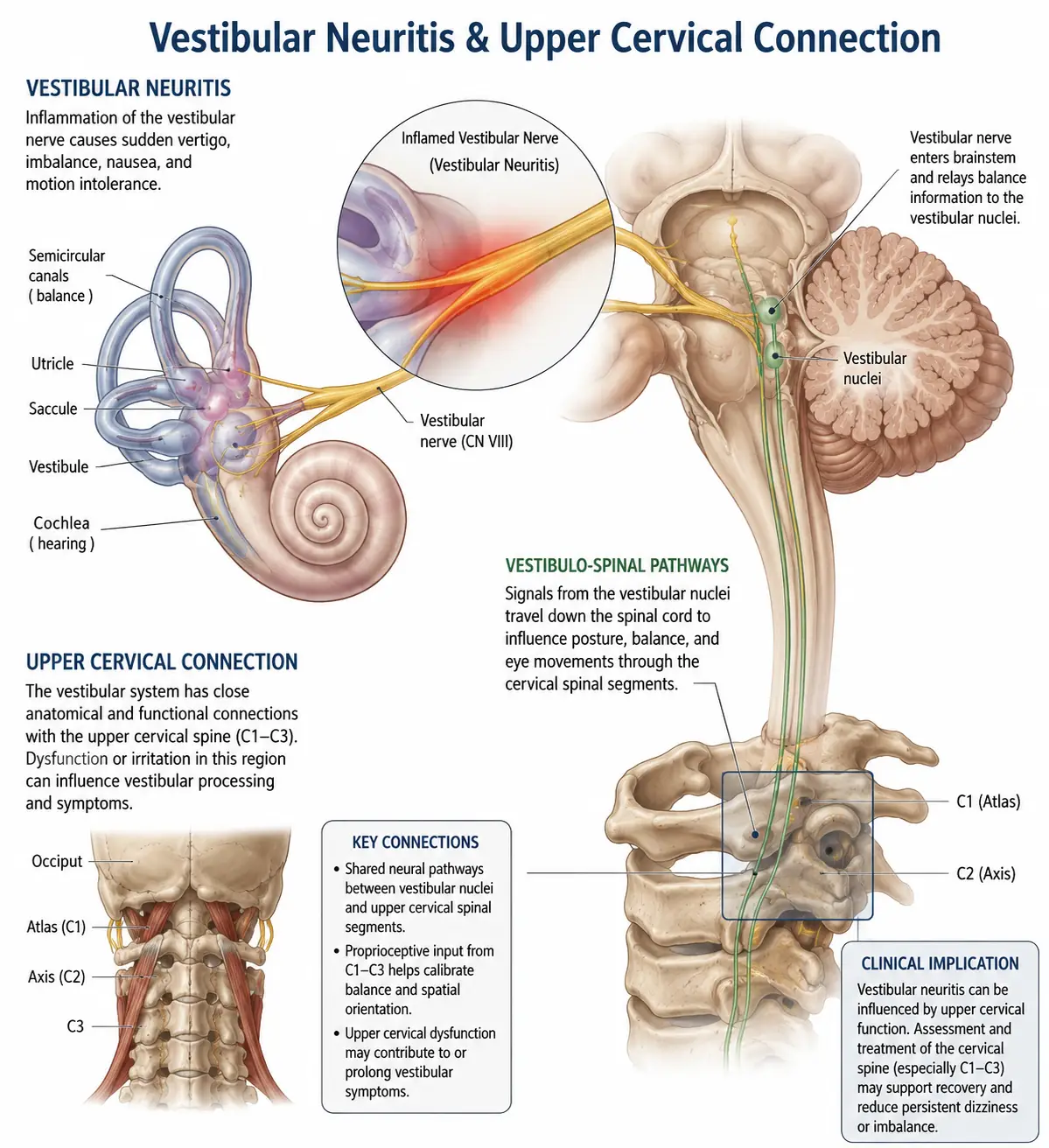
Vestibular neuritis is an inner ear disorder caused by inflammation of the vestibular nerve — the nerve that carries balance and head-position information from the inner ear to the brain. When this nerve becomes inflamed, the signals it sends become scrambled, and the brain receives faulty information about where the head is in space. The result is sudden, intense, prolonged vertigo.
According to current medical literature, vestibular neuritis is most commonly caused by a viral infection — often a reactivation of a herpes-family virus (such as the one responsible for chickenpox or cold sores), or a recent flu, cold, or upper respiratory illness. The virus inflames the vestibular nerve, the inner ear stops transmitting accurate signals, and the patient is hit with a cascade of symptoms.
Common symptoms of acute vestibular neuritis include:
- Sudden, severe vertigo that lasts hours to days
- Intense nausea and vomiting
- Inability to walk, stand, or even sit up without help
- A strong sense that the room is spinning or tilting
- Difficulty focusing the eyes (often with involuntary eye movements called nystagmus)
- Profuse sweating and a sense of impending doom
- Extreme sensitivity to head movement
Unlike its close cousin labyrinthitis, vestibular neuritis does NOT typically involve hearing loss or tinnitus — only balance symptoms. This is one of the key clinical features used to differentiate the two.
The acute phase of vestibular neuritis typically lasts anywhere from 24 hours to several days. After that, the worst symptoms begin to fade as the body’s vestibular compensation kicks in. But here’s where the trouble starts for many patients: vestibular compensation is often incomplete. Studies have shown that a substantial percentage of vestibular neuritis patients never achieve full recovery on their own. They feel “okay” most of the time, but they’re often unconsciously avoiding the movements and activities that trigger their symptoms — which only makes their compensation worse over time.
For these patients, the dizziness becomes chronic. It fluctuates. It comes and goes for years. And conventional treatment — anti-nausea meds, vestibular rehabilitation, and time — sometimes isn’t enough.
How Vestibular Neuritis Affects Your Nervous System and Blood Flow
To understand why so many patients struggle with incomplete recovery from vestibular neuritis, you need to understand how deeply this condition impacts the nervous system — and why the upper cervical spine becomes such a critical part of healing.
Your balance system relies on three primary sensory inputs:
- Vestibular input from the inner ear and vestibular nerve
- Visual input from your eyes
- Proprioceptive input from your joints and muscles, especially in the neck
When vestibular neuritis damages the vestibular nerve, one of those three inputs becomes unreliable — sometimes permanently. Your brain doesn’t get rid of the unreliable input; it tries to recalibrate by leaning more heavily on the other two systems. This process is called vestibular compensation, and it happens almost entirely in the brainstem and cerebellum — the same areas that sit directly adjacent to your upper cervical spine.
That’s why dysfunction in the upper neck becomes so important after a bout of vestibular neuritis. Even if the upper cervical spine wasn’t the original cause of the dizziness, it dramatically affects how well your brain can compensate. If your neck is sending faulty proprioceptive data on top of the now-damaged vestibular input, your brain has two unreliable inputs to work with instead of one. Compensation stalls. The dizziness lingers.
There’s a vascular component too. The vertebral arteries — which supply blood to the brainstem, cerebellum, and inner ear — pass directly through the bones of the upper cervical spine. If those bones are misaligned, or if the surrounding muscles are chronically tight, blood flow to the very areas your brain needs for recovery can be subtly reduced. Less oxygen, less healing capacity, slower compensation.
And then there’s the vagus nerve. The vagus exits the skull right next to the atlas (C1) and helps regulate autonomic balance — heart rate, digestion, blood pressure regulation, and the overall “rest and recover” state of the body. Vagus nerve irritation from upper cervical dysfunction can prolong the brain fog, nausea, fatigue, and lightheadedness that vestibular neuritis patients describe in the months after their acute episode.
In short: vestibular neuritis starts in the inner ear, but its long-term outcome is heavily influenced by what’s happening in the upper neck.
Why the Upper Cervical Spine Matters in Vestibular Neuritis Recovery
A common question we hear from patients is: “If my vestibular neuritis was caused by a virus, why does my neck have anything to do with my recovery?”
The answer comes down to how vestibular compensation actually works.
When the vestibular nerve is damaged, the brain has to rebuild a new sense of balance using the remaining inputs — primarily vision and neck proprioception. The neck proprioceptors that feed this process are concentrated overwhelmingly in the upper cervical spine (C1 through C3). This region has the highest density of mechanoreceptors anywhere in the spine, and it has the most direct neurological connections to the vestibular nuclei and cerebellum in the brainstem.
If the upper neck is functioning well, the brain has excellent backup data to compensate with. Recovery proceeds smoothly.
If the upper neck is dysfunctional — whether from old trauma, postural strain, prior injury, or compensatory tension from the vertigo episode itself — the brain’s “backup system” is also unreliable. Now the brain has to compensate using a damaged vestibular nerve AND a poorly-signaling neck. The result is the chronic, fluctuating, partial recovery we see in so many patients who come to our office months or years after their initial episode.
Here’s the often-missed piece: the act of having vestibular neuritis itself can cause upper cervical dysfunction. During the acute phase, patients lie rigidly still for days to avoid triggering the spinning. They tense their neck and shoulder muscles constantly. They sleep in awkward positions trying to find relief. Many describe being unable to turn their head for a week straight. All of this creates significant tension and joint dysfunction in the upper cervical spine — dysfunction that often outlasts the original viral inflammation by months or years.
This is why so many post-vestibular-neuritis patients say their dizziness “changed” at some point — from spinning to swimming, from rotational to swaying, from short episodes to a constant low-grade off feeling. The original problem evolved into a secondary upper cervical problem that nobody addressed.
Upper Cervical Chiropractic Care for Vestibular Neuritis: What to Expect
At Lavender Family Chiropractic, we approach vestibular neuritis recovery in a precise, measured, and gentle way. Our goal is never to replace any acute medical care you received — it’s to support and complete the recovery process that your body has been trying to finish on its own.
Here’s what your journey looks like at our Sarasota office.
Step One: Comprehensive Consultation
Your first visit begins with a thorough conversation. Dr. Lavender or Dr. Temple will sit with you and learn the full story — when the vestibular neuritis episode happened, how severe it was, what treatments you’ve already tried, what symptoms remain, and how this has impacted your life. Vestibular neuritis recovery is rarely straightforward, and we want every detail. The more we know, the more accurately we can help.
Step Two: 3D CBCT Imaging and Neurological Scanning
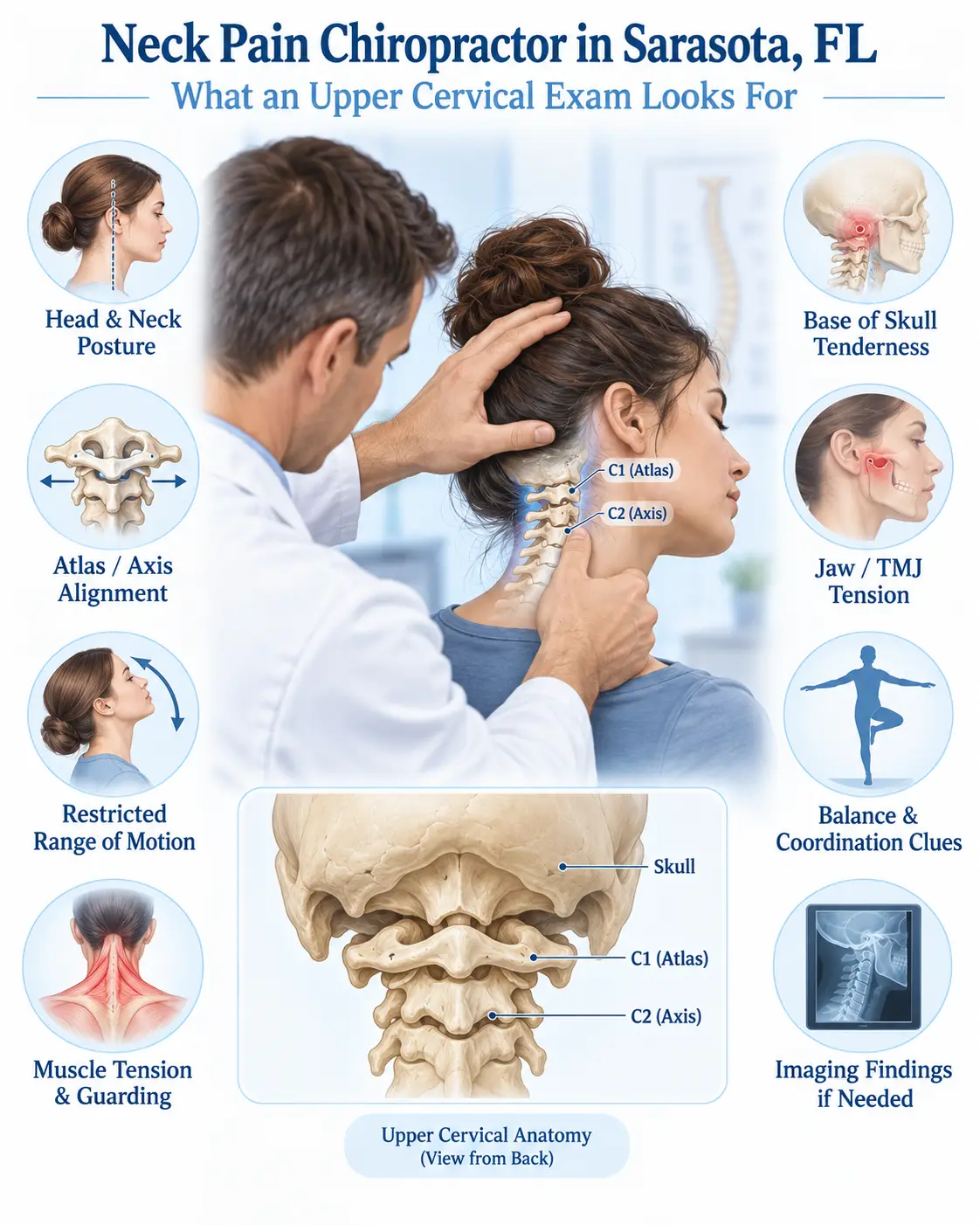
Next, we use 3D CBCT X-ray technology to take precise three-dimensional images of your upper cervical spine. This advanced imaging shows us — down to the millimeter — exactly how your atlas (C1) and axis (C2) are positioned. It also allows us to calculate the precise corrective vector your neck needs.
We pair this with paraspinal infrared thermography, which measures nervous system function along your spine. Thermographic patterns reveal areas of neurological stress and help us monitor how your nervous system is recovering as care progresses.
Step Three: A Gentle, Specific Correction
When you receive your upper cervical correction, you’ll likely be surprised at how gentle it is. There is no twisting, popping, or cracking. We use the Advanced HIO Knee Chest Upper Cervical Technique (AHKC), which delivers a calculated, feather-light adjustment based on your specific imaging.
This precision matters tremendously for vestibular neuritis patients. Many of you are nervous about anything involving your head or neck after what you’ve been through. Our technique is purpose-built to be gentle enough for the most sensitive patients while still being precise enough to make real, measurable change.
Step Four: Monitoring and Stabilizing Your Recovery
The goal of upper cervical care isn’t to adjust you forever. It’s to help your spine hold its corrected position, so your brain can finally finish the vestibular compensation it started. We track your progress visit by visit — your symptoms, your alignment, your nervous system function — and we adjust your care plan as you stabilize.
Most vestibular neuritis patients begin noticing changes within the first few weeks: clearer thinking, less rocking sensation, better tolerance to head movement, improved sleep, and a sense of being more “themselves.” Recovery is gradual but real, and the trajectory is almost always upward once the upper cervical piece is addressed.
Have you been stuck in the long tail of vestibular neuritis recovery? Call us at (941) 243-3729 or book a complimentary consultation online. We’ll help you figure out whether upper cervical care is the missing piece for you.
What the Research Says About Vestibular Neuritis Recovery
The scientific literature on vestibular neuritis has grown substantially in recent years, and a few key findings stand out as relevant to our patients.
A 2024 longitudinal study published in the Journal of Clinical Medicine — which tracked 59 vestibular neuritis patients over multiple years — found that the quality of vestibular compensation, not just the presence of compensation, was the key determinant of long-term recovery. Patients with poor compensation developed chronic unsteadiness, emotional consequences (anxiety, panic, social withdrawal), and significant impacts on professional and recreational functioning.
Research published by leading vestibular physiotherapy groups has shown that the longer treatment is delayed, the longer recovery takes. Neural compensation gains permanence with time and repetition — meaning the patterns the brain builds during recovery become harder to change the longer they’re left alone. This is one of the reasons we encourage post-vestibular-neuritis patients to seek care sooner rather than later.
Studies have also shown that 10 to 15 percent of vestibular neuritis patients develop BPPV (benign paroxysmal positional vertigo) in the affected ear within a few weeks of the original episode — meaning a secondary type of vertigo on top of the original one. Recognizing and treating this overlap is important, and upper cervical correction often supports BPPV resolution as well.
Finally, research consistently confirms that while there is no “cure” for vestibular neuritis itself, the brain has remarkable plasticity. Patients can achieve significant improvement — sometimes complete resolution — even years after the original episode, as long as their overall nervous system function supports it.
This is the gap upper cervical chiropractic care fills. We don’t repair the original nerve damage. We optimize the nervous system environment your brain needs to finish compensating.
Lifestyle Habits That Support Recovery from Vestibular Neuritis
Beyond upper cervical care, daily habits play a huge role in how completely your nervous system can recover. Here’s what we recommend most often to our vestibular neuritis patients.
Move regularly — but gradually. The instinct after vestibular neuritis is to hold still and avoid anything that triggers symptoms. The opposite is what your brain needs. Gentle, progressive head movement and walking are essential for vestibular compensation. Avoidance prolongs the dizziness.
Sleep well. Quality sleep is when the brain does the bulk of its compensation work. Vestibular neuritis patients should prioritize 7–9 hours per night and use a supportive pillow that maintains proper neck alignment. Stomach sleeping is particularly hard on the upper cervical spine and should be avoided.
Stay hydrated. Inner ear fluid balance depends on systemic hydration, and Florida’s heat and humidity make dehydration a daily risk. Aim for at least half your body weight in ounces of water per day. This single habit can meaningfully reduce dizziness episodes.
Address screen and posture habits. Forward head posture during screen use puts enormous strain on the upper cervical spine — exactly the area your brain is leaning on for balance information. Eye-level monitors, periodic posture resets, and limiting prolonged phone scrolling all help.
Manage stress. Stress drives sympathetic nervous system overactivity, increases muscle tension in the neck and shoulders, and amplifies dizziness. Breathing exercises, walking outside, and time away from screens are simple but powerful tools.
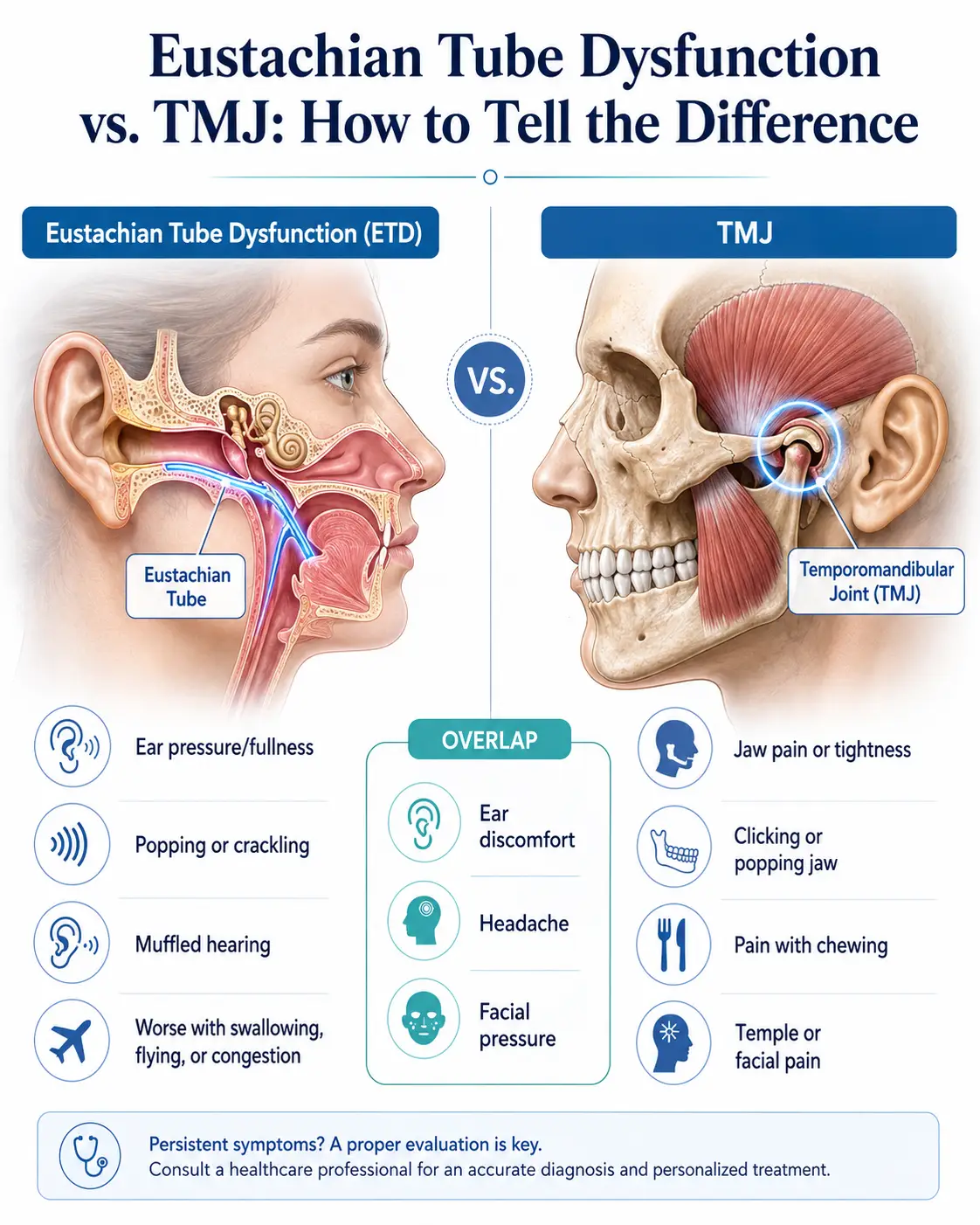
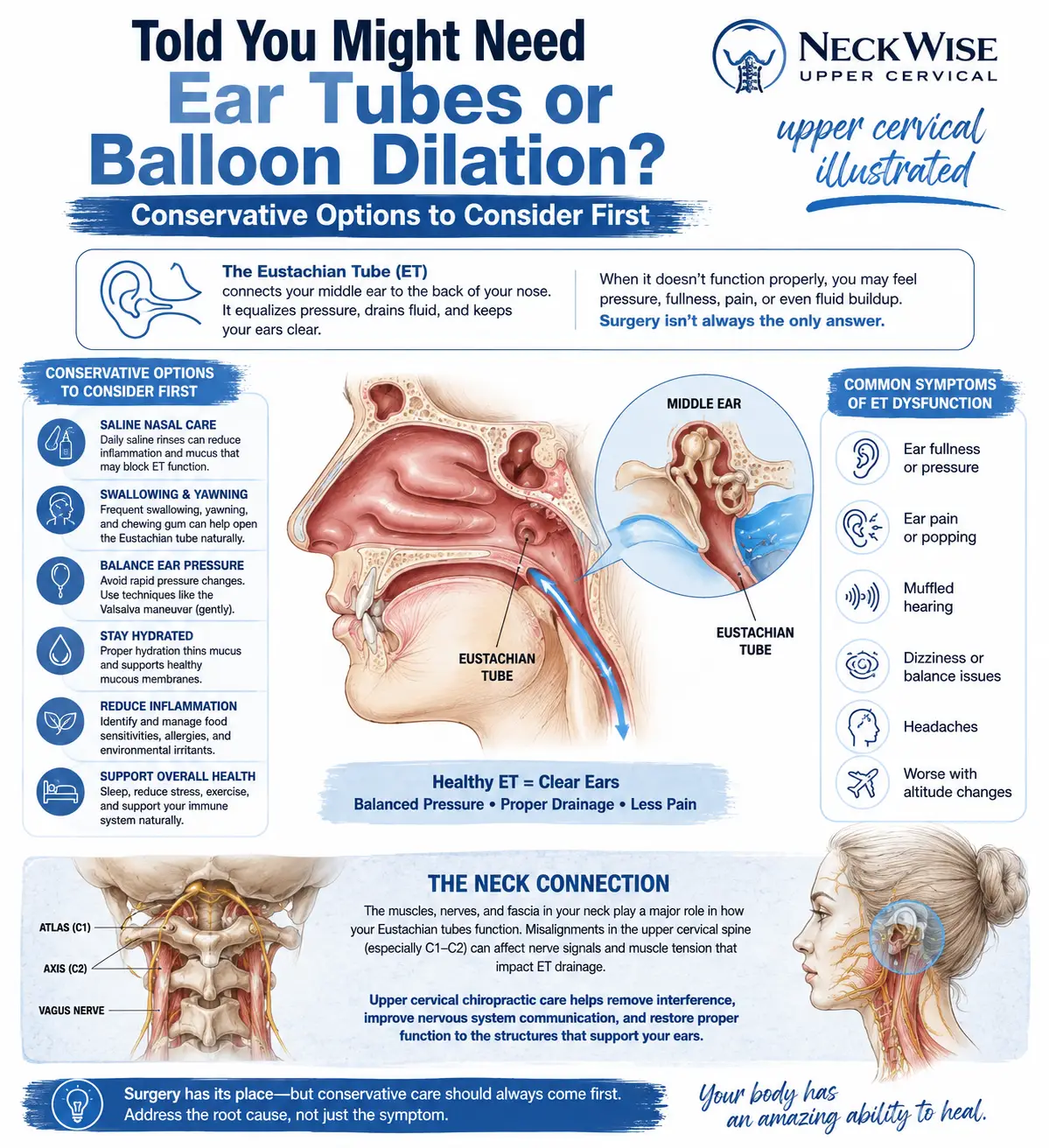
Watch for related conditions. Vestibular neuritis often coexists with other vestibular and post-viral conditions. If you’re also experiencing ear pressure, fullness, or hearing changes, our blog on the orthostatic hypotension and dizziness connection explores how multiple dizziness conditions can overlap and how to think about them together.
Serving Sarasota and Surrounding Areas
Lavender Family Chiropractic is located at 5899 Whitfield Avenue, Suite 107, Sarasota, FL 34243 — right at the corner of University and Whitfield. We’re easy to reach from anywhere in the greater Sarasota region.
We proudly serve patients dealing with vestibular neuritis and other forms of chronic dizziness from across the area, including:
- Sarasota, FL
- Bradenton, FL
- Lakewood Ranch, FL
- Venice, FL
- Osprey, FL
- Parrish, FL
- Ellenton, FL
- Siesta Key, FL
- Longboat Key, FL
- St. Pete, FL
- Tampa, FL
To learn more about the full region we serve, visit our areas we service page. Wherever you’re driving from, we’re set up to help.
Top 15 FAQs About Vestibular Neuritis
What exactly is vestibular neuritis?
Vestibular neuritis is inflammation of the vestibular nerve, the nerve that carries balance information from the inner ear to the brain. It’s usually caused by a viral infection, and it produces sudden, severe vertigo, nausea, and difficulty walking. It does not cause hearing loss — that’s labyrinthitis, a related but distinct condition.
How long does vestibular neuritis last?
The acute phase typically lasts a few days. Most patients improve significantly within two to four weeks as the brain compensates. However, a substantial number of patients experience lingering dizziness for months or even years — especially if vestibular compensation is incomplete.
What’s the difference between vestibular neuritis and labyrinthitis?
Vestibular neuritis affects only the balance portion of the inner ear, so patients experience dizziness without hearing changes. Labyrinthitis affects both the balance and hearing portions, so patients experience dizziness plus hearing loss or tinnitus. The two often respond to similar care approaches.
Why am I still dizzy months after my vestibular neuritis episode?
This usually means your brain’s vestibular compensation is incomplete. Common contributors include unaddressed upper cervical dysfunction, avoidance of head movement, prolonged stress, poor sleep, and dehydration. Addressing the upper neck often makes the biggest single difference for chronic post-vestibular-neuritis patients.
Can vestibular neuritis come back?
True recurrence of vestibular neuritis is rare — studies suggest only about 1.9 percent of cases truly recur. However, many patients experience flare-ups of dizziness that feel like recurrence but are actually decompensation of an incomplete recovery. Restoring proper upper cervical function helps stabilize against these flares.
Is upper cervical care safe after vestibular neuritis?
Yes. Upper cervical chiropractic is one of the gentlest forms of chiropractic care available, with no twisting, popping, or cracking. We use precise imaging-guided corrections that are appropriate even for the most dizziness-sensitive patients.
Will I need vestibular rehab too?
Some patients benefit from combining upper cervical care with vestibular rehabilitation, particularly if their compensation has stalled. Others recover well with upper cervical care alone, especially if the neck was the missing piece. We’ll help you decide what combination makes sense for your case.
How soon after my vestibular neuritis episode should I seek upper cervical care?
The sooner the better. Research shows that the longer dizziness patterns persist, the more permanent they become in the brain. That said, it’s never too late — patients who have been dealing with chronic post-vestibular-neuritis dizziness for years can still see meaningful improvement.
Can vestibular neuritis cause permanent damage?
It can cause permanent damage to the vestibular nerve, but the brain’s compensation typically allows patients to function normally despite that damage. Upper cervical care helps optimize the brain’s ability to compensate, often producing dramatic functional improvement even when underlying nerve damage remains.
Are medications helpful for chronic dizziness after vestibular neuritis?
Medications like meclizine can reduce acute symptoms but tend to delay recovery if used long-term, because they suppress the very signals the brain needs to compensate. Most vestibular specialists recommend tapering off vestibular suppressants as soon as the acute phase passes.
Why does my dizziness get worse with screen use or busy environments?
After vestibular neuritis, your brain often becomes more dependent on visual input for balance. Busy visual environments — screens, scrolling, supermarkets, crowds — overwhelm that compensation and produce dizziness. Restoring neck proprioception through upper cervical care reduces visual dependency.
Can stress make my post-vestibular-neuritis symptoms worse?
Yes. Stress increases sympathetic nervous system activity, tightens the muscles around the upper neck, and amplifies dizziness signals. Stress management is a meaningful part of post-vestibular-neuritis recovery.
Will I be dizzy forever?
The vast majority of patients improve dramatically with the right combination of care, movement, and time. Even patients with multi-year chronic dizziness frequently see significant improvement when the upper cervical component is finally addressed. Vestibular neuritis is not a life sentence.
Is there imaging that can confirm whether I had vestibular neuritis?
There’s no single test that confirms vestibular neuritis on imaging — the diagnosis is clinical. However, imaging (especially MRI) is often used to rule out more serious causes of vertigo like stroke or tumor. Once those are ruled out, vestibular neuritis becomes a diagnosis of pattern recognition.
How do I know if Lavender Family Chiropractic is right for me?
If you’ve had vestibular neuritis and are still experiencing lingering dizziness, brain fog, imbalance, or fatigue months after the original episode — or if traditional vestibular rehab hasn’t fully resolved your symptoms — you’re an excellent candidate for an evaluation with us. Call (941) 243-3729 to schedule a complimentary consultation.
You Don’t Have to Stay Stuck in Long-Term Vestibular Neuritis Recovery
Vestibular neuritis is one of those conditions that’s easy to recover partially from and very hard to recover fully from on your own. Many of our patients tell us they spent months or years feeling like they were “almost back to normal” — but never quite there. That gap, that lingering off-ness, is where upper cervical chiropractic care often makes the biggest difference.
At Lavender Family Chiropractic, Dr. Rusty Lavender and Dr. Jacob Temple have helped many patients across Sarasota finally close that gap and return to themselves. If you’re tired of being told “give it more time,” we’d be glad to help you understand what’s still standing in the way of complete recovery.
📞 Call us today at (941) 243-3729 📅 Or book your complimentary consultation online
You don’t have to live with the leftover dizziness anymore.
Related Articles
- Vertigo Sarasota: Dr. Jake’s #1 Way to Resolve Dizziness
- Orthostatic Hypotension in Sarasota, Florida: How Upper Cervical Chiropractic Care Helps Resolve the Dizziness, Lightheadedness, and Faintness That Drops Your Blood Pressure Every Time You Stand
- TMJ Pain in Sarasota: Why Your Jaw Issues Might Actually Start in Your Neck
By Dr. Rusty Lavender and Dr. Jacob Temple — Lavender Family Chiropractic, Sarasota, FL