Anxiety and the Vagus Nerve in Sarasota, Florida: How Upper Cervical Chiropractic Care at Lavender Family Chiropractic Supports the Autonomic Foundation Beneath Chronic Anxiety
By Dr. Rusty Lavender, D.C. — upper cervical chiropractor, Lavender Family Chiropractic, Sarasota, FL. Reviewed and updated October 2026.
Anxiety and the Vagus Nerve: Your heart pounds when nothing is happening. Your chest feels tight, your breath shallow. Your hands tingle and your stomach churns. Your mind races through worst-case scenarios you cannot turn off. Your sleep is broken, your shoulders are perpetually tense, and your body feels as if it is stuck in a low-grade emergency that never resolves. Maybe these are episodes — discrete waves of panic that hit and pass. Maybe it is constant — a baseline of dread and physical edginess that has become your normal. Maybe both. Whatever the pattern, anxiety is one of the most common, most distressing, and most physically embodied experiences a person can have. And in a country where roughly one in three adults will meet criteria for an anxiety disorder at some point in their lives, you are not alone in this.
To be clear from the first sentence: anxiety is a mental health condition, and proper care for anxiety involves mental health professionals. Therapy — particularly evidence-based approaches like cognitive behavioral therapy — has decades of research support and is genuinely effective. Medication, prescribed and monitored by a psychiatrist or primary care physician, helps many people significantly. If your anxiety is severe, persistent, or affecting your ability to function, please see a mental health professional. If you are in crisis or having thoughts of harming yourself, call or text 988 (the Suicide and Crisis Lifeline) immediately. We are an upper cervical chiropractic practice. We are not therapists, we are not psychiatrists, and we do not treat anxiety disorders as a primary intervention.
What we can offer at Lavender Family Chiropractic in Sarasota, Florida, is something more specific and grounded in actual research: support for the autonomic nervous system and the vagus nerve, the physiological substrate beneath the emotional experience of chronic anxiety. The research on the autonomic component of anxiety — reduced vagal tone, sympathetic dominance, decreased heart rate variability — is robust and mainstream. The neuroanatomical relationship between the upper cervical spine and vagal function is real. For patients with chronic anxiety who are already working with mental health professionals and want to address the physiological underpinnings of their experience as part of a comprehensive approach, upper cervical chiropractic care is one reasonable piece. This guide is for anyone in Sarasota, Bradenton, Lakewood Ranch, or the surrounding areas living with anxiety who wants to understand both the condition and the autonomic mechanisms beneath it — including where upper cervical care honestly fits, and where it does not.
What Anxiety Actually Is- Anxiety and the Vagus Nerve
Anxiety is a normal human emotion. The capacity to feel apprehension, vigilance, and physical activation in response to perceived threat is part of how our nervous systems have kept us safe for hundreds of thousands of years. The problem is not anxiety itself — it is anxiety that becomes excessive, persistent, disproportionate to actual threat, and disruptive to life. When this happens, the experience is no longer adaptive; it has become a disorder.
The recognized anxiety disorders include generalized anxiety disorder (chronic, pervasive worry about many areas of life), panic disorder (recurrent unexpected panic attacks), social anxiety disorder (fear of social evaluation), specific phobias (intense fear of specific objects or situations), agoraphobia (fear of places where escape might be difficult), and others. Related conditions include post-traumatic stress disorder, obsessive-compulsive disorder (now categorized separately but historically grouped with anxiety), and various adjustment-related anxiety presentations.
The symptoms of anxiety are physical as well as mental, and this physical dimension is the part most relevant to the autonomic discussion. According to clinical references on anxiety, the autonomic nervous system, especially the sympathetic nervous system, mediates most of the symptoms, with the amygdala playing an important role in tempering fear and anxiety, and patients with anxiety disorders showing heightened amygdala response to anxiety cues. The racing heart, the shortness of breath, the gastrointestinal upset, the trembling, the sweating, the muscle tension, the difficulty sleeping — these are not in your head. They are products of an overactive sympathetic nervous system, a fight-or-flight response that has activated when it should be quiet.
How common is anxiety? Extremely. According to epidemiological reviews, anxiety disorders are the most frequent mental disorders in the community, with phobias being most common, generalized anxiety disorder prevalence ranging from 3% to 30% in different studies, and substantially higher prevalence in women than men for most anxiety disorders. Lifetime prevalence estimates for any anxiety disorder approach one in three for U.S. adults. This is one of the most common health conditions of any kind, and the burden of suffering, impairment, and downstream health consequences is enormous.
It is also one of the most treatable. Evidence-based psychotherapy (particularly cognitive behavioral therapy, exposure-based therapies, and acceptance and commitment therapy), medication when indicated, and a range of supportive interventions help most people significantly. The first message of this blog is therefore the most important: if you have anxiety, please get evidence-based care from mental health professionals. Everything else, including anything we can offer, is supportive of that foundation, not a substitute for it.
When Anxiety Requires Immediate Attention
Before discussing anything else, we want to be clear about when anxiety symptoms require urgent care. This is not optional reading — it is essential.
If you are having thoughts of harming yourself, suicide, or feel you are in immediate danger: Call or text 988 (the Suicide and Crisis Lifeline) right now. If you prefer to chat online, visit 988lifeline.org. You can also go to the nearest emergency department or call 911. You do not have to be in crisis alone.
If you are having a severe panic attack with chest pain that does not resolve: Severe chest pain, especially with sweating, shortness of breath, arm pain, or jaw pain, can mimic anxiety but can also represent a cardiac event. When in doubt, seek emergency evaluation. Panic attacks and heart attacks can be difficult to distinguish, and missing a cardiac event has serious consequences.
If you are unable to function — to work, care for yourself, eat, sleep, or care for your family: This is severe anxiety and requires prompt professional evaluation. Contact your primary care physician, a psychiatrist, or a mental health crisis service.
If anxiety is fueling substance use to cope: Please reach out for help. Substance use as a coping mechanism for anxiety creates compounding problems and worsens long-term outcomes. SAMHSA’s National Helpline (1-800-662-4357) provides free, confidential, 24/7 referral and information service.
We will not pretend that chiropractic care addresses any of these crisis situations. They require appropriate medical and mental health care, immediately.
The Autonomic Foundation: Why Anxiety Is Also a Physical Condition
The body and the mind are not separate, and nowhere is this more evident than in anxiety. The same nervous system that generates the emotional experience of worry, fear, and dread also generates the racing heart, the tight chest, the shallow breath, and the gastrointestinal upset. Understanding this physiological dimension is essential to understanding both why anxiety feels the way it does and where physical interventions can have a meaningful role.
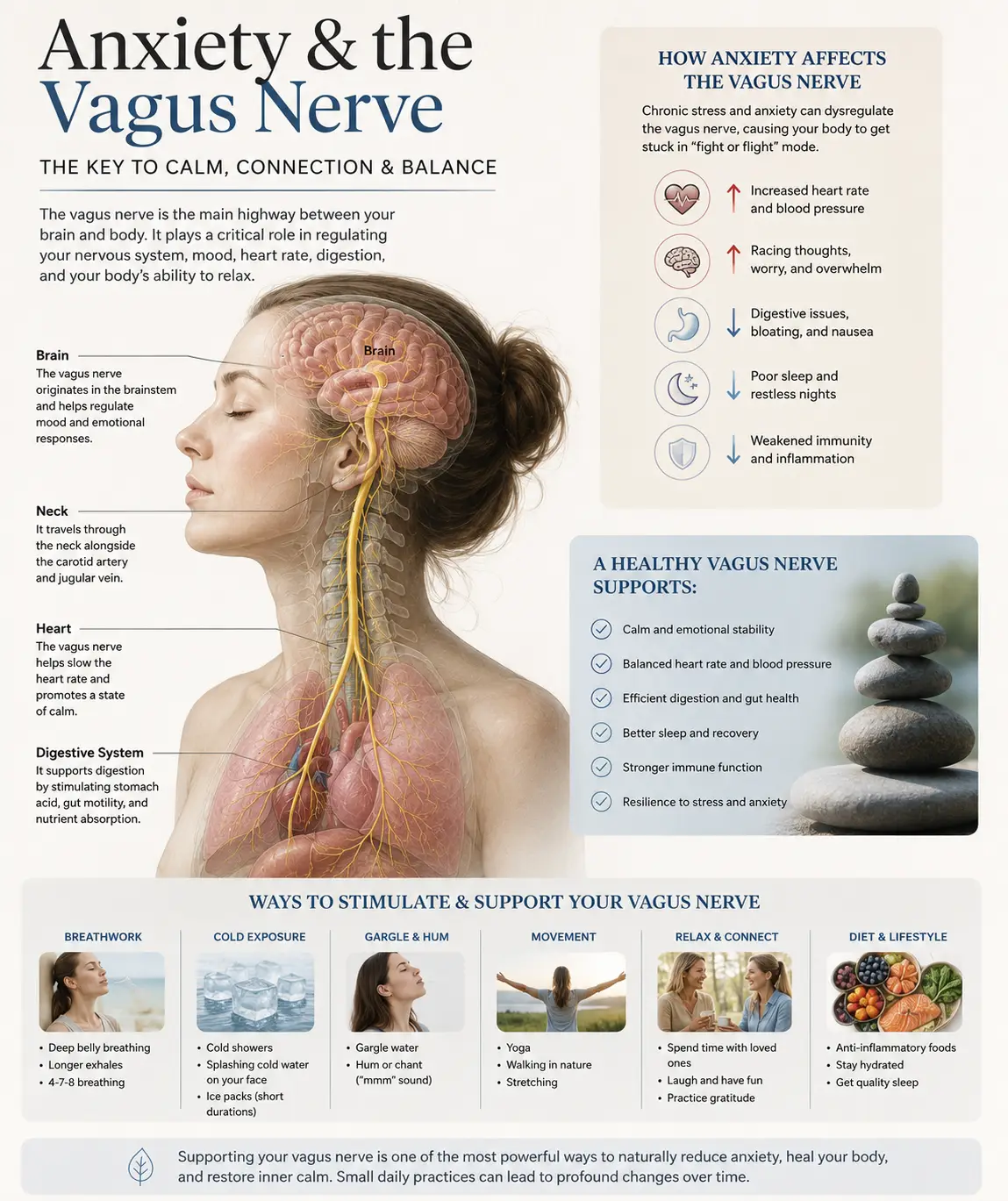
The autonomic nervous system has two main branches that normally work in balance. The sympathetic branch is your “fight or flight” system — it activates when you perceive threat, mobilizing your body for action. It raises heart rate, raises blood pressure, redirects blood flow to muscles, suspends digestion, dilates pupils, and prepares you to respond. The parasympathetic branch, mediated primarily by the vagus nerve, is your “rest and digest” system — it lowers heart rate, supports digestion, promotes recovery, and maintains the calm, restorative state that allows your body and mind to heal and integrate experience.
In chronic anxiety, this balance is disrupted. The sympathetic branch becomes chronically activated; the parasympathetic branch becomes weaker. The result is a body and nervous system stuck in a low-grade emergency state, even when no actual emergency exists.
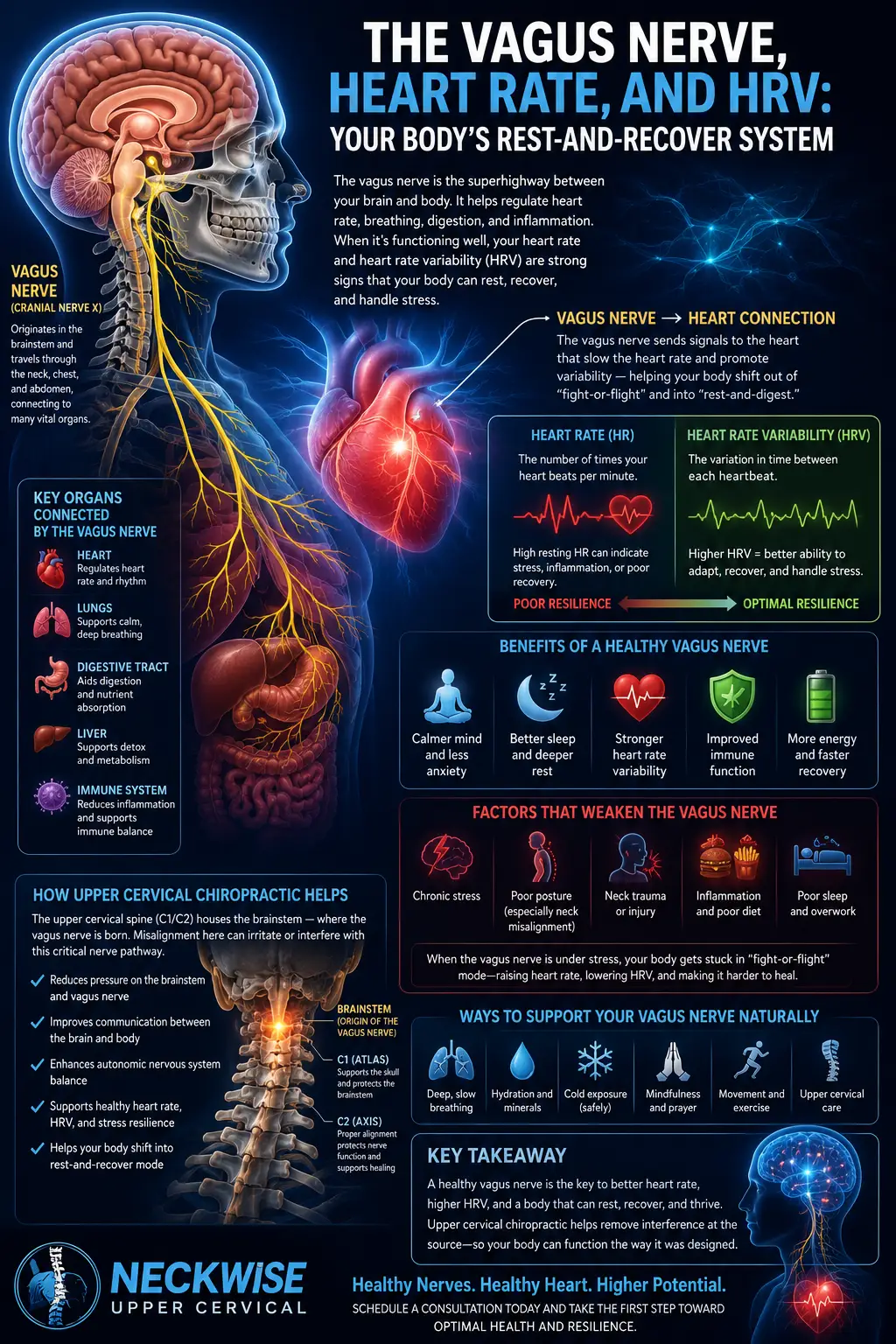
This is not speculation. According to research published in the Journal of Neurophysiology, adults with chronic anxiety show altered sympathetic outflow, demonstrating aberrant sympathetic activation that goes beyond just episodes of acute stress, with implications for cardiovascular risk and long-term health. Heart rate variability — the beat-to-beat variation in heart rate that reflects parasympathetic (vagal) tone — is consistently reduced in patients with chronic anxiety and related conditions. This reduced heart rate variability is itself a marker of autonomic imbalance and is increasingly recognized as both a consequence and a perpetuator of chronic anxiety states.
The connection between autonomic dysregulation and anxiety also extends to other mental health conditions. Research on major depressive disorder, which frequently coexists with anxiety, has documented similar autonomic features: patients with major depressive disorder showed a higher heart rate, reduced heart rate variability, and a diminished vagal tone during resting, standing, and slow-paced breathing, indicating a disbalance of the autonomic nervous system with reduced vagal tone and relative sympathetic hyperactivity. The autonomic dysregulation is not unique to a single diagnostic category — it is a shared feature of conditions involving chronic stress, anxiety, and emotional dysregulation.
This is why chronic anxiety is associated with a wide range of physical health consequences: cardiovascular disease, hypertension, gastrointestinal disorders, immune dysregulation, sleep disorders, and many others. The chronic activation of the sympathetic nervous system and the weakening of vagal anti-inflammatory function takes a real physical toll over time.
The Polyvagal Framework and the Vagus Nerve in Anxiety
Over the past three decades, the work of Dr. Stephen Porges and his polyvagal theory has transformed our understanding of how the autonomic nervous system relates to emotional experience, social engagement, and the recovery from stress and trauma. While the details of polyvagal theory are technical, the core insights are deeply relevant to anxiety.
The polyvagal framework recognizes the vagus nerve as the primary biological substrate for the parasympathetic “rest and digest” state — but also for what Porges calls the “social engagement system,” the capacity to feel safe, connect with others, and remain calm and present. When vagal tone is strong, we have access to this social engagement state. When vagal tone is reduced — as it is in chronic anxiety, PTSD, and many other conditions — we lose access to it, and become stuck in defensive states of sympathetic activation or, in some cases, shutdown.
The therapeutic implication is straightforward: interventions that support vagal function and improve heart rate variability may help shift the autonomic state away from chronic sympathetic dominance toward the parasympathetic, recovery-oriented state. This is the rationale behind the growing field of vagus nerve stimulation as a therapeutic approach.
The research on vagus nerve stimulation for anxiety and related conditions is increasingly substantial. According to a 2025 systematic review of transcutaneous vagal nerve stimulation for trauma- and stressor-related disorders published in BJPsych Open, polyvagal theory and the neurovisceral integration theory emphasize the vagus nerve’s role in managing stress and trauma, providing a neurophysiological basis for evaluating transcutaneous vagal nerve stimulation in treating these disorders, with a meta-analysis demonstrating an association between PTSD symptom severity and respiratory sinus arrhythmia, a known measure of vagal activity. Vagus nerve stimulation has been studied for treatment-resistant depression, with FDA approval for that indication, and is increasingly being studied for anxiety, PTSD, and related conditions.
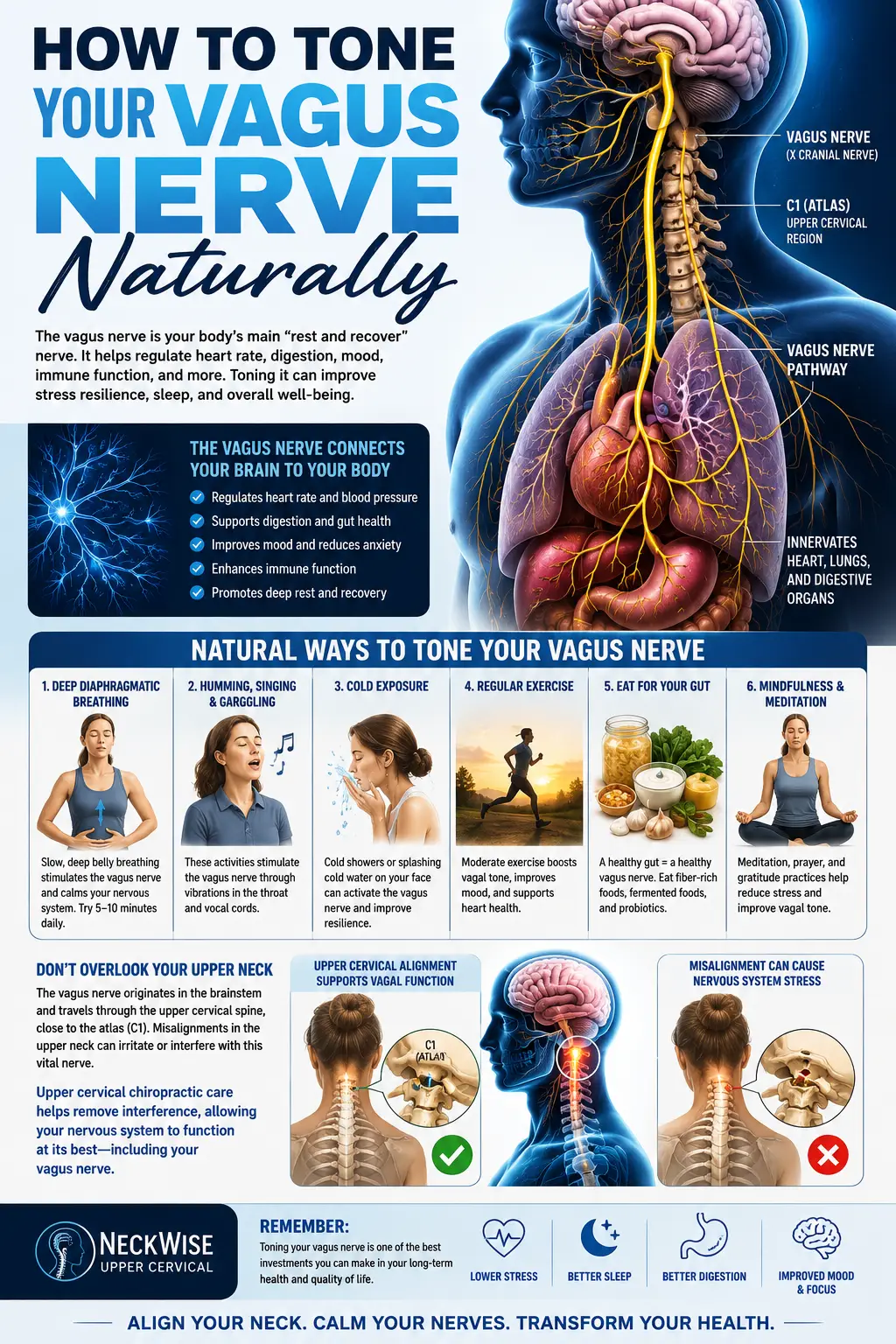
The vagal targeting concept extends beyond electrical stimulation. Practices like slow diaphragmatic breathing with extended exhales, humming, gargling, gentle cold exposure to the face, meditation, and yoga have all been shown to increase vagal tone and heart rate variability. This is why these practices are so commonly recommended for anxiety management — the mechanism is genuine.
The point is this: targeting vagal function in anxiety and related conditions is no longer alternative or fringe medicine. It is mainstream research with FDA-approved treatments in related conditions. The mechanistic foundation is solid.
The Upper Cervical Connection to Vagal Function
This brings us to where upper cervical chiropractic care fits into this picture — and where we have to be very careful and very honest.
The vagus nerve originates in the brainstem at the medulla oblongata and exits the skull through the jugular foramen, immediately adjacent to the atlas (C1). The brainstem itself sits directly behind and below the upper cervical vertebrae. The vagus nerve then descends through the neck, passing close to the upper cervical region, before continuing to innervate the heart, lungs, gastrointestinal tract, and other organs. The structural integrity and positioning of the upper cervical spine is anatomically intertwined with the vagus nerve at its most vulnerable transition from brain to body.
When the upper cervical spine is misaligned, several mechanisms can plausibly influence vagal function. Mechanical factors in the upper cervical region can affect the vagus nerve as it exits the skull. Chronic abnormal sensory input from a misaligned upper cervical spine projects to brainstem autonomic centers, including the nucleus tractus solitarius — the central hub of vagal afferent processing. The postural and muscular consequences of upper cervical misalignment, including chronic suboccipital tension and forward head posture, can affect both vagal nerve tension and overall autonomic balance.
We have addressed this anatomical connection in detail on our vagus nerve dysfunction service page, and the principles apply directly to the autonomic component of anxiety.
Here is where the honesty has to be precise. Upper cervical chiropractic care does not treat anxiety disorders in the way that therapy and medication do. It does not address the cognitive patterns that perpetuate worry, the trauma histories that underlie many anxiety presentations, the genetic and neurobiological factors that predispose someone to anxiety, or the social and life circumstances that contribute to it. It does not replace evidence-based psychotherapy or appropriately prescribed medication.
What upper cervical care may do, for patients with chronic anxiety who have a significant autonomic component, is support the physiological substrate beneath the emotional experience. Improving upper cervical alignment may support vagal function and heart rate variability. Reducing chronic sensory input from a misaligned upper cervical spine may help calm the chronic sympathetic activation that drives so many physical symptoms of anxiety. For patients pursuing a comprehensive, multidisciplinary approach who want to address the physiological dimension alongside their psychological and medical care, addressing the upper cervical contribution to vagal regulation is worth evaluating.
This is the honest framing. Upper cervical care is not anxiety treatment. It is potentially supportive care for the autonomic substrate, alongside the real anxiety treatment that mental health professionals provide.
Why Upper Cervical Care May Support Some Anxiety Patients
At Lavender Family Chiropractic, we use the Knee Chest Upper Cervical technique — a precise, gentle method of correcting atlas and axis misalignments without any twisting, popping, or forceful manipulation. For patients with chronic anxiety pursuing a comprehensive approach that includes addressing the physiological dimension, this approach may offer specific supportive benefits.
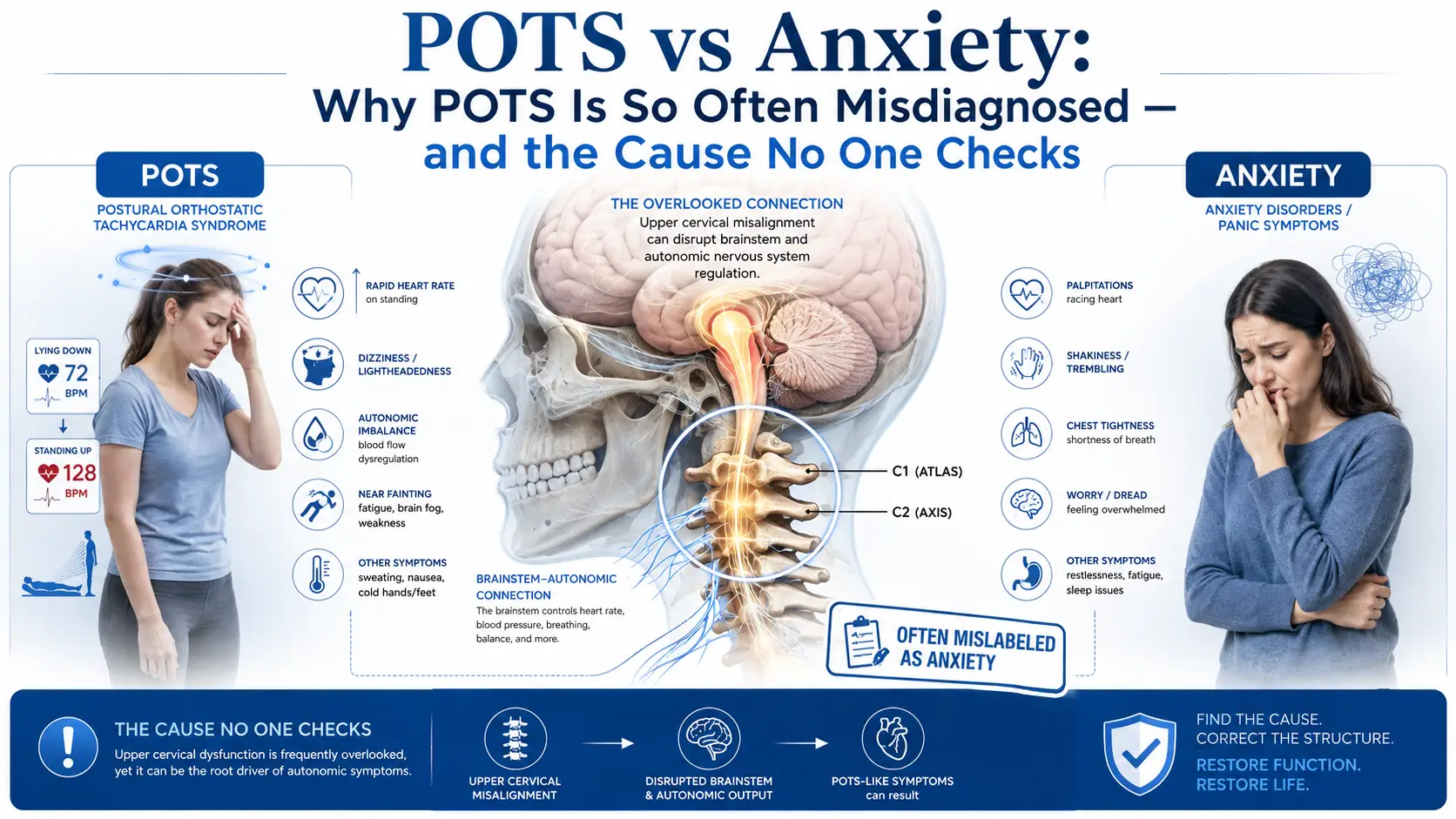
First, by correcting upper cervical misalignment, we address the mechanical and neurological factors that influence vagal function. For patients with reduced vagal tone — which the research has documented in chronic anxiety — supporting vagal function targets a real mechanism. Second, restoring proper upper cervical alignment supports overall autonomic balance, helping reduce the chronic sympathetic dominance that drives so many of the physical symptoms of anxiety. Third, for patients whose anxiety coexists with dysautonomia, POTS, ME/CFS, or other conditions involving autonomic dysfunction, upper cervical care addresses the shared brainstem and vagal mechanisms underlying multiple aspects of their picture.
The gentleness of the Knee Chest technique matters here. Anxious nervous systems can be hypersensitive to physical input, and aggressive manipulation can trigger sympathetic activation that worsens the anxiety state. Our technique avoids forceful manipulation entirely, which makes it appropriate for this patient population. We pace care carefully and watch for the signs that matter most: sleep quality, baseline sense of physical calm, heart rate variability if measured, and overall sense of nervous system regulation.
We need to set honest expectations. Anxiety responds best to evidence-based psychotherapy (especially cognitive behavioral therapy), often combined with medication when appropriate. These are the cornerstone interventions, and they are not optional add-ons but central to good care. Upper cervical chiropractic addresses one specific physiological piece — the autonomic and vagal contribution — within this broader picture. For patients with a strong autonomic and somatic component to their anxiety, this may be a meaningful piece. For patients whose anxiety is predominantly cognitive without significant autonomic features, the value of upper cervical care for anxiety specifically is likely smaller.
We also want to be clear about what we do not do. We do not provide psychotherapy. We do not diagnose anxiety disorders. We do not prescribe or adjust medications. We do not replace your therapist, psychiatrist, or primary care physician. We are not crisis services. If you are in crisis, please reach out to 988 or your mental health provider.
What Care Looks Like at Lavender Family Chiropractic
If you come to our Sarasota office for evaluation related to anxiety, here is what to expect.
Your first visit begins with a thorough consultation. Dr. Lavender or Dr. Temple will sit down with you and carefully review your history — your anxiety patterns, any formal diagnoses, your current mental health care (therapist, psychiatrist, medications), your physical symptom picture (autonomic, sleep, GI, cardiovascular features), comorbid conditions (dysautonomia, POTS, fatigue, autoimmune diseases), any history of head or neck trauma, your overall approach to managing your condition, and your goals for any additional care. We want to know that you have appropriate mental health care in place; if you do not, we will strongly encourage that as a priority before or alongside any chiropractic care.
The examination is adapted for this patient population. We use advanced 3D imaging to assess your upper cervical alignment with precision, autonomic function assessment where appropriate, postural and gait analysis, and a careful neurological examination. We pay particular attention to signs of autonomic dysregulation that suggest a vagal component to your picture.
If the examination reveals upper cervical findings consistent with someone whose anxiety may benefit from addressing the autonomic component, we will explain our recommendations openly — including honest acknowledgment of the limits of what upper cervical care can accomplish. We coordinate with your other providers as appropriate.
Care is delivered through the gentle Knee Chest Upper Cervical technique. We offer customized treatment plans tailored to your specific situation, with honest expectations.
📞 Call (941) 243-3729 to schedule your consultation 📅 Book your consultation online 📍 5899 Whitfield Avenue, Suite 107, Sarasota, FL 34243 — at the corner of University and Whitfield
What the Research Says About Anxiety, Autonomic Dysfunction, and Vagal Targeting
The research connecting anxiety to autonomic dysfunction and vagal function is substantial and growing.
The autonomic foundation of anxiety symptoms is well established. According to clinical references on anxiety, the autonomic nervous system, especially the sympathetic nervous system, mediates most of the symptoms of anxiety, with the amygdala playing an important role and showing heightened response to anxiety cues in patients with anxiety disorders — establishing the central role of the sympathetic nervous system in generating the physical experience of anxiety.
The chronic sympathetic activation in anxiety is documented. According to research published in the Journal of Neurophysiology, adults with chronic anxiety display altered sympathetic outflow, demonstrating aberrant sympathetic activation that extends beyond episodes of acute stress, with implications for cardiovascular disease risk — confirming that the autonomic dysregulation in chronic anxiety is not just situational but a sustained physiological state.
The connection between autonomic dysregulation and overlapping mental health conditions is documented. Research on major depressive disorder, frequently comorbid with anxiety, found that patients with major depressive disorder showed higher heart rate, reduced heart rate variability, and diminished vagal tone during resting, standing, and slow-paced breathing, indicating a disbalance of the autonomic nervous system with reduced vagal tone and relative sympathetic hyperactivity — establishing reduced vagal tone as a common feature across multiple related mental health conditions.
The therapeutic relevance of targeting vagal function is established. A 2025 systematic review in BJPsych Open on transcutaneous vagal nerve stimulation for trauma- and stressor-related disorders documented that polyvagal theory and neurovisceral integration theory emphasize the vagus nerve’s role in managing stress and trauma, with meta-analysis supporting an association between PTSD symptom severity and vagal activity measures — establishing vagal function as a legitimate therapeutic target in anxiety-spectrum conditions.
The epidemiology of anxiety underscores the public health importance. According to epidemiological reviews, anxiety disorders are the most frequent mental disorders in the community, with generalized anxiety disorder prevalence ranging from 3% to 30% in different studies and substantially higher prevalence in women than men for most anxiety disorders — establishing anxiety as one of the most common and important mental health conditions globally.
This body of research establishes that anxiety has a robust autonomic dimension; that chronic anxiety involves sustained sympathetic activation and reduced vagal tone; that vagal targeting is a recognized therapeutic direction in anxiety-spectrum conditions, supported by FDA approval of vagus nerve stimulation for related indications; and that the mechanistic basis for considering upper cervical contribution to vagal function in chronic anxiety is grounded in mainstream research. We are honest, as always, that rigorous clinical trials of upper cervical chiropractic care for anxiety specifically do not yet exist.
Lifestyle Factors That Support Anxiety Management
Because anxiety has such a strong physiological component and because the autonomic nervous system is so responsive to daily inputs, lifestyle factors are central to management for nearly every patient — alongside, never instead of, evidence-based mental health care.
Engage in evidence-based mental health care. Cognitive behavioral therapy, exposure-based therapies, acceptance and commitment therapy, and other evidence-based approaches are genuinely effective. If you are not already in care, this is the most important step. Medication, when prescribed and monitored appropriately, helps many people significantly.
Slow breathing practices. Slow diaphragmatic breathing with extended exhales is one of the most accessible and best-supported interventions for vagal activation. Practices like 4-7-8 breathing, box breathing, or simply slowing your exhales to twice the length of your inhales for several minutes can shift autonomic state.
Regular exercise. Aerobic exercise has substantial research support for anxiety reduction, working through multiple mechanisms including autonomic regulation. Even moderate, regular movement matters. For patients with concurrent dysautonomia, pacing is important.
Sleep regulation. Poor sleep dramatically worsens anxiety, and anxiety dramatically worsens sleep — a vicious cycle. Consistent sleep and wake times, dark cool environment, no screens before bed, and good sleep hygiene support both anxiety management and autonomic regulation.
Caffeine and alcohol moderation. Caffeine directly activates the sympathetic nervous system and can worsen anxiety, especially in sensitive individuals. Alcohol initially calms but disrupts sleep and rebounds into worsened anxiety. Many anxiety patients benefit from reducing or eliminating both.
Anti-inflammatory nutrition. Whole foods, omega-3-rich fish, vegetables, adequate protein. Minimize processed foods and refined sugars. The gut-brain axis is real, and what you eat affects your nervous system.
Time in nature and sunlight. Both have research support for mood and autonomic regulation. Even brief outdoor time matters.
Mindfulness and meditation practices. Substantial research support for reducing anxiety symptoms through multiple mechanisms including vagal activation. Apps like Calm, Headspace, and Insight Timer make these practices accessible.
Social connection. Isolation worsens anxiety; supportive relationships help regulate the nervous system. The “social engagement system” Porges describes is real — connection with safe others activates vagal function.
Other vagal tone practices. Humming, singing, gargling, gentle cold exposure to the face, gentle yoga — all support vagal function.
Limit consumption of anxiety-amplifying content. Constant news, social media, and high-arousal content keeps the sympathetic nervous system activated. Strategic media diet matters.
Build a crisis plan with your providers. Know what to do if symptoms escalate. Have crisis numbers (988 in the United States) saved in your phone. Have a plan for getting to support quickly when needed.
If you found this guide useful, you may also want to read our blogs on dysautonomia, Hashimoto’s thyroiditis, and long COVID, all of which involve autonomic and vagal mechanisms that frequently coexist with anxiety.
Serving Sarasota and the Surrounding Communities
Lavender Family Chiropractic is located in Sarasota, Florida, at 5899 Whitfield Avenue, Suite 107 — at the corner of University and Whitfield. From this central location, we serve patients throughout the region, including Bradenton, Lakewood Ranch, Palmetto, Parrish, Venice, Osprey, Nokomis, Ellenton, Ruskin, Myakka City, North Port, and the greater Tampa Bay area. Patients also travel from St. Pete, Riverview, and Manatee County to receive specialized upper cervical care here.
Anxiety is one of the most common and most distressing experiences a person can have. If you are looking for chiropractic care that honestly understands its place — supporting the physiological substrate beneath your mental health care, never replacing it — we encourage you to reach out.
Top 15 FAQs About Anxiety, the Vagus Nerve, and Upper Cervical Chiropractic Care
1. Is anxiety a real medical condition? Yes, absolutely. Anxiety disorders are recognized medical conditions affecting one in three adults at some point in life. The physical symptoms — racing heart, shortness of breath, GI upset, muscle tension — are products of real physiological changes, not “all in your head.”
2. Can upper cervical chiropractic cure anxiety? No. Anxiety is a mental health condition, and the cornerstones of care are evidence-based psychotherapy (especially cognitive behavioral therapy) and, when appropriate, medication prescribed by a physician. Upper cervical care does not replace these interventions. What it may do is support the autonomic and vagal substrate beneath the emotional experience, as one piece of a comprehensive approach.
3. What is the vagus nerve and why does it matter for anxiety? The vagus nerve is the longest cranial nerve and the primary nerve of the parasympathetic “rest and digest” nervous system. Strong vagal tone is associated with calm, social engagement, and physiological recovery. Reduced vagal tone is documented in chronic anxiety and contributes to the chronic sympathetic activation that drives many anxiety symptoms.
4. What is polyvagal theory? Developed by Dr. Stephen Porges, polyvagal theory describes how the vagus nerve mediates not just parasympathetic function but also social engagement, the capacity to feel safe and connect with others. When vagal tone is reduced, access to this calm social engagement state is impaired, and we become stuck in defensive sympathetic states. The framework has substantially influenced understanding of anxiety and trauma.
5. Is vagus nerve stimulation a recognized treatment for anxiety? Vagus nerve stimulation has FDA approval for treatment-resistant depression and is increasingly being studied for anxiety, PTSD, and related conditions. Transcutaneous vagal nerve stimulation has emerging research support. Targeting vagal function in anxiety-spectrum conditions is now mainstream research.
6. Is upper cervical chiropractic safe for anxiety patients? The Knee Chest Upper Cervical technique is exceptionally gentle, with no twisting or forceful manipulation. It is well-tolerated by sensitive nervous systems. That said, severe anxiety should always be managed primarily by mental health professionals; upper cervical care addresses the physiological component alongside that care.
7. What should I do if I am in a mental health crisis? Call or text 988 (the Suicide and Crisis Lifeline) immediately. You can also go to the nearest emergency department or call 911. Please do not wait. Chiropractic care has no role in mental health crisis situations.
8. Do I still need a therapist or psychiatrist? Yes. Evidence-based psychotherapy and, when appropriate, medication are the cornerstones of anxiety care. Upper cervical chiropractic is at most a supportive piece for the physiological dimension, never a replacement for mental health professionals.
9. Why do I have so many physical symptoms with my anxiety? Because the autonomic nervous system, especially the sympathetic branch, generates these physical symptoms. Chronic activation of the sympathetic nervous system and reduced vagal tone produce the racing heart, the chest tightness, the shortness of breath, the GI upset, and the muscle tension. Your symptoms are real and physiologically explainable.
10. Could my anxiety be connected to my dysautonomia, POTS, or chronic fatigue? Quite possibly. Many patients with anxiety also have conditions involving autonomic dysfunction — dysautonomia, POTS, ME/CFS, MCAS — and the shared mechanism of reduced vagal tone and sympathetic dominance is part of why these conditions cluster together.
11. What lifestyle practices help anxiety the most? Evidence-based psychotherapy, regular exercise, consistent sleep, slow diaphragmatic breathing, mindfulness practices, social connection, time in nature, anti-inflammatory nutrition, and limiting caffeine and alcohol. Most of these work in part through their effects on autonomic and vagal function.
12. Can stress and trauma cause anxiety? Yes. Chronic stress, particularly early-life adversity and traumatic experiences, are well-documented risk factors for anxiety disorders. Trauma-focused therapy can be particularly important for patients whose anxiety has a traumatic origin.
13. How long does it take to see results from upper cervical care? This varies, and we set honest expectations. Some patients with a strong autonomic component to their anxiety notice subtle changes in baseline calm, sleep quality, or sense of physical regulation within weeks. Significant changes typically require continued evidence-based mental health care, and we always frame chiropractic as supportive rather than primary.
14. How will I know if upper cervical care is right for me? The only way to know is a thorough evaluation. We will assess whether your anxiety picture includes significant autonomic and upper cervical components, confirm you have appropriate mental health care, and give you an honest assessment of whether upper cervical care is likely to provide meaningful support.
15. How do I get started? Call our Sarasota office at (941) 243-3729 or book your consultation online. We will review your full history, perform a thorough examination, ensure your mental health care is in place, and give you an honest assessment of how upper cervical care fits into your broader approach.
Take the Next Step
Anxiety affects millions of people, and the suffering it produces is profound — but anxiety is also one of the most treatable conditions in mental health, with substantial evidence-based interventions that genuinely help. The cornerstones of care are evidence-based psychotherapy and, when appropriate, medication. If you are not already engaged with mental health professionals, please consider that as your first step. If you are in crisis, please call 988.
For patients with chronic anxiety who are already engaged in appropriate mental health care and who want to address the autonomic and physiological dimension of their experience as part of a comprehensive approach, upper cervical chiropractic care is worth evaluating. The autonomic component of anxiety is real, the vagal mechanism is well documented in mainstream research, and supporting vagal function targets a meaningful physiological substrate.
If you are in Sarasota, Bradenton, Lakewood Ranch, or anywhere in the surrounding region and you are living with chronic anxiety, Dr. Rusty Lavender and Dr. Jacob Temple at Lavender Family Chiropractic are here to give you an honest assessment of whether the upper cervical and vagal piece fits into your broader care strategy.
📞 Call (941) 243-3729 today to schedule your consultation 📅 Book online here 📍 5899 Whitfield Avenue, Suite 107, Sarasota, FL 34243 — at the corner of University and Whitfield
Related Articles
Related Posts


Get our upper cervical articles first.