Natural Idiopathic Intracranial Hypertension (IIH) Relief in Sarasota Florida: A Root-Cause Approach to Head Pressure, Headaches, and Migraines
By Dr. Rusty Lavender, D.C. — upper cervical chiropractor, Lavender Family Chiropractic, Sarasota, FL. Reviewed and updated October 2026.
Idiopathic Intracranial Hypertension (IIH) is one of the most frustrating and misunderstood conditions affecting people today. If you’ve ever experienced relentless head pressure, pounding headaches, migraines, or a constant feeling like your head is going to explode from the inside out, you know how debilitating it can be. Many people in Sarasota, Bradenton, and Lakewood Ranch are searching for natural IIH relief because traditional approaches often fall short—focusing more on symptom management rather than identifying and correcting the underlying cause.
This guide is designed to give you clarity. We’re going to break down what IIH is, why it creates such intense symptoms, and most importantly, how a structural, neurological approach through upper cervical chiropractic care can help restore proper function and provide natural relief. If you’ve been told to “just manage it” or rely on medications long-term, this will give you a completely different perspective rooted in how the body is actually designed to function.
What Is Idiopathic Intracranial Hypertension (IIH)?
Idiopathic Intracranial Hypertension, often referred to as IIH or pseudotumor cerebri, is a condition where pressure builds up inside the skull without the presence of a tumor or obvious structural lesion. The term “idiopathic” means the cause is unknown, which is why so many patients feel dismissed or confused after receiving the diagnosis.
Inside your skull exists a delicate, dynamic system made up of brain tissue, blood flow, and cerebrospinal fluid (CSF). These components must remain in balance. When that balance is disrupted, pressure rises—and that pressure has nowhere to go.
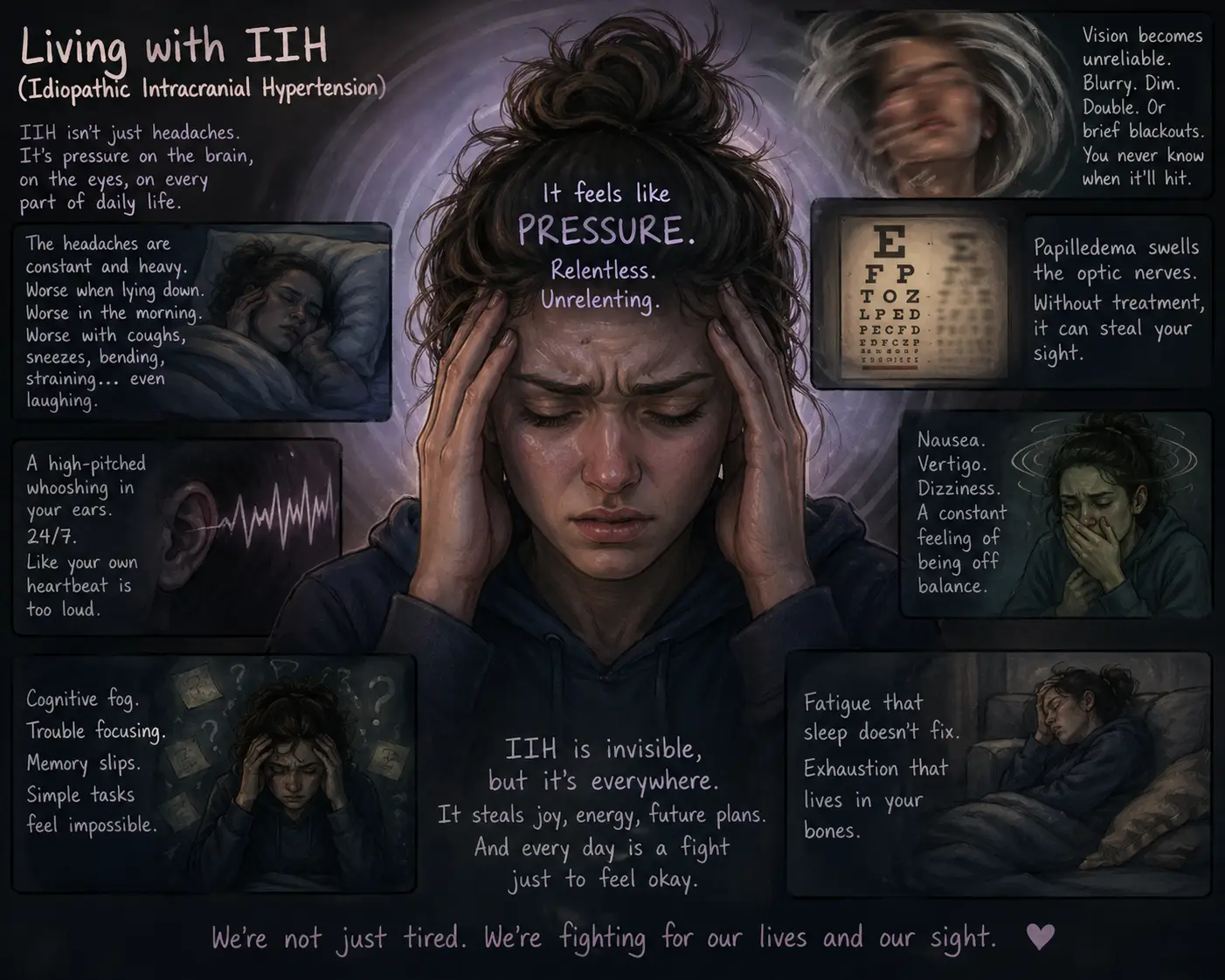
Common symptoms of IIH include:
- Persistent head pressure
- Chronic headaches or migraines
- Blurred vision or visual disturbances
- Pulsatile tinnitus (hearing your heartbeat in your ears)
- Neck pain and stiffness
- Dizziness or imbalance
- Nausea
- Brain fog and difficulty concentrating
For some people, these symptoms are intermittent. For others, they are constant and progressively worsen, interfering with work, relationships, and overall quality of life.
Understanding Pressure Inside the Skull
Your brain is not just sitting in your skull—it is floating in cerebrospinal fluid. This fluid cushions the brain, delivers nutrients, and helps remove metabolic waste. It is constantly being produced and reabsorbed.
Think of it like a closed-loop hydraulic system. If production increases, drainage decreases, or flow becomes restricted, pressure builds.
Now imagine a sink with the faucet running and a partially clogged drain. Over time, the water level rises. That’s essentially what happens with IIH.
But here’s what most people are never told: the issue is often not just about fluid production—it’s about flow, drainage, and structural interference.
The Craniocervical Junction: The Overlooked Choke Point
The craniocervical junction (CCJ) is where your skull meets the top two bones of your neck—the atlas (C1) and axis (C2). This region is one of the most neurologically dense and mechanically important areas in the body.
The brainstem sits here. Major blood vessels pass through here. And critically, this is a primary pathway for cerebrospinal fluid movement and venous blood drainage from the brain.
When this area is functioning properly, fluid flows freely, pressure is regulated, and the nervous system communicates efficiently.
When it is not, it can act like a choke point.
Even a small misalignment can influence:
- CSF circulation dynamics
- Venous outflow from the brain
- Brainstem signaling
- Autonomic nervous system balance
This is where many IIH cases begin to make sense from a structural and neurological perspective.
How Upper Cervical Misalignment Contributes to IIH Symptoms
The atlas (C1) is the most mobile bone in the spine and supports the weight of the head. Because of its design, it is also the most susceptible to misalignment.
Common causes include:
- Past car accidents or whiplash
- Concussions or head injuries
- Poor posture over time
- Repetitive stress
- Sports injuries
When the atlas shifts out of its ideal position, it can create subtle but significant changes in how the brain and body communicate.
This misalignment may:
- Distort the brainstem
- Alter pressure gradients within the skull
- Affect CSF flow and drainage
- Create tension in the dura (the protective covering of the brain and spinal cord)
- Interfere with venous blood return
Over time, these changes can contribute to the buildup of intracranial pressure.
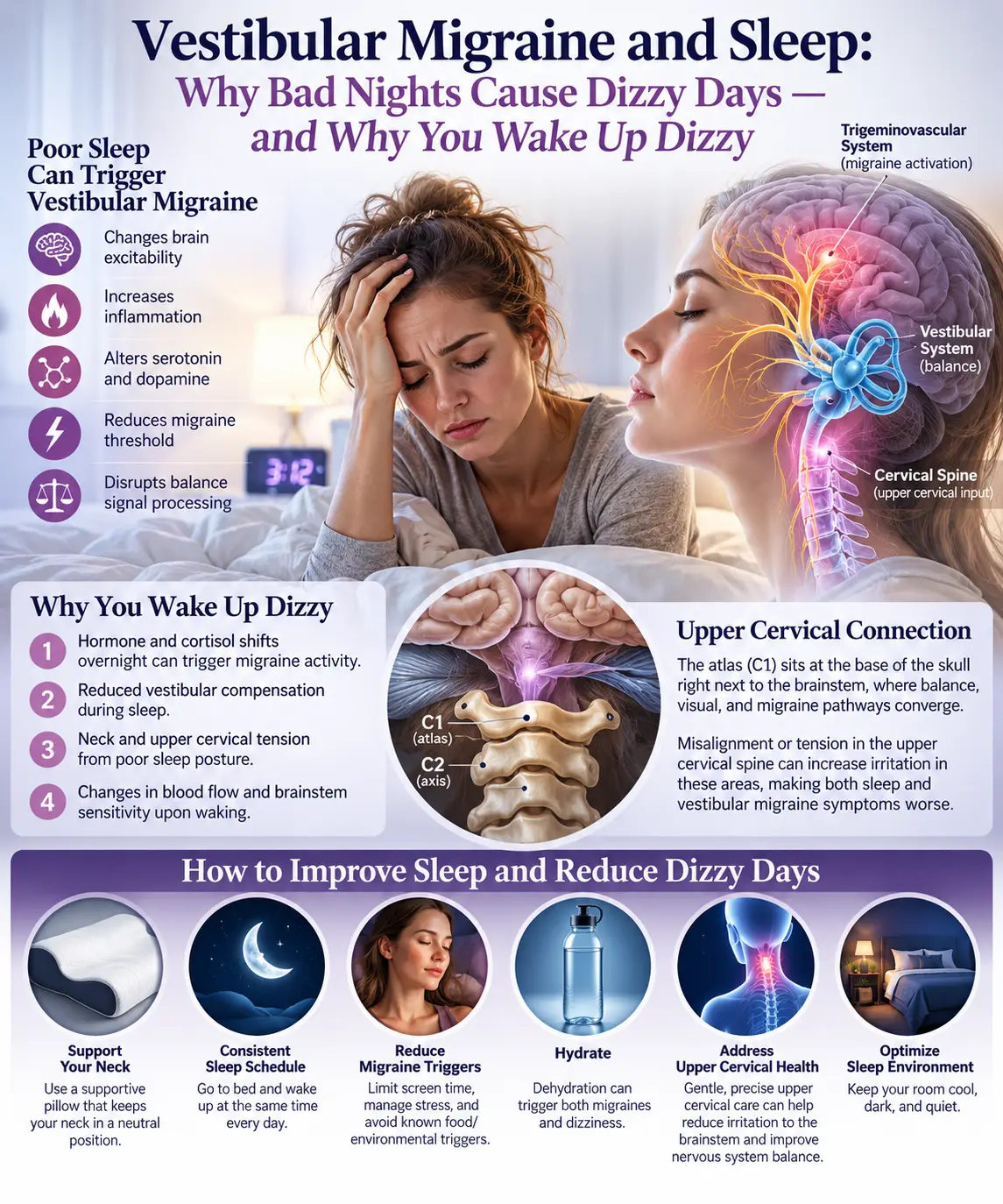
This is why so many people with IIH also experience migraines, dizziness, neck pain, and neurological symptoms that don’t seem to have a clear cause.
What Is Upper Cervical Chiropractic Care?
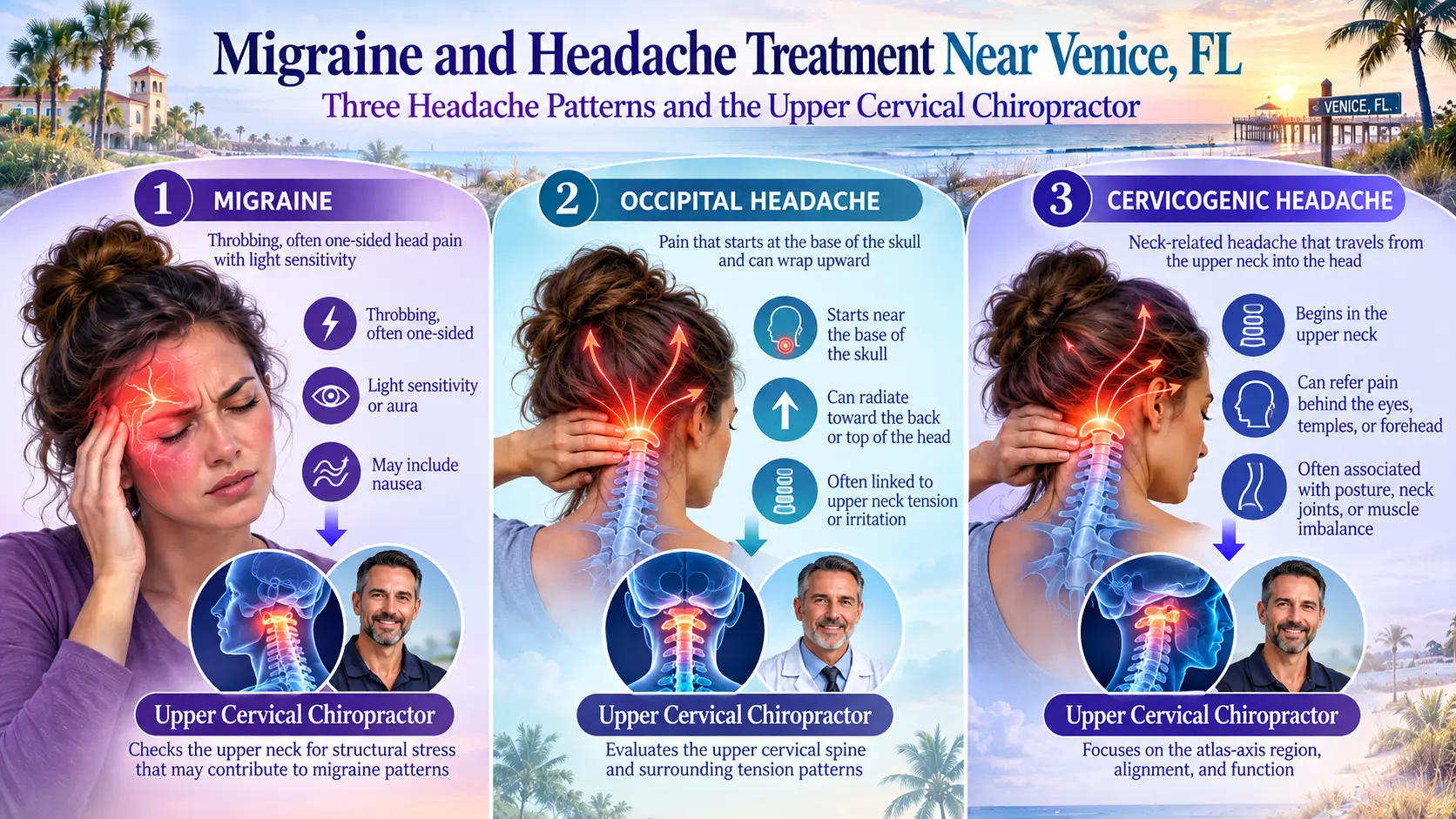
Upper cervical chiropractic care is a highly specialized form of care that focuses exclusively on the top two bones of the neck—the atlas (C1) and axis (C2).
This is not traditional chiropractic. It is precise, data-driven, and neurologically focused.
The goal is simple but powerful:
Restore proper alignment at the top of the spine so the brain and body can function the way they were designed to.
Key components of upper cervical care include:
- Advanced 3D CBCT imaging to identify the exact misalignment
- Precise measurements unique to each patient
- Gentle, specific corrections with no twisting or cracking
- Ongoing monitoring of the nervous system
Unlike traditional approaches that may involve frequent adjustments, upper cervical care aims to create a correction that holds. When the alignment holds, the body has the opportunity to stabilize and heal.
How Upper Cervical Care Supports Natural IIH Relief
Correcting upper cervical misalignment can have a profound effect on how the body regulates pressure and neurological function.
Here’s how:
1. Improved Cerebrospinal Fluid Flow
By restoring alignment at the craniocervical junction, the pathways for CSF circulation open up. This allows for better movement and drainage of fluid, helping reduce pressure buildup.
2. Enhanced Venous Drainage
Blood must exit the brain efficiently to maintain normal pressure. Misalignment can interfere with this process. Correction allows for improved venous outflow.
3. Reduced Brainstem Stress
The brainstem controls many automatic functions, including pressure regulation. When stress is reduced in this area, the body can begin to normalize.
4. Balanced Nervous System Function
The autonomic nervous system becomes more regulated, which can improve symptoms like headaches, dizziness, and brain fog.
5. Decreased Muscular and Dural Tension
Structural correction reduces strain on surrounding tissues, further relieving pressure and discomfort.
This is why many patients begin to notice meaningful improvements—not just in symptoms, but in overall function.
What Makes NeckWise Care Different in Sarasota Florida
At NeckWise care inside Lavender Family Chiropractic, the focus is on precision, personalization, and long-term results.
Every patient undergoes a comprehensive evaluation that includes:
- 3D CBCT imaging to visualize structural alignment
- Functional nervous system scans to assess stress patterns
- Detailed consultation and history
There is no guesswork. Care is customized based on your exact anatomy and neurological presentation.
The adjustments themselves are extremely gentle. There is no cracking, twisting, or aggressive force. Most patients are surprised at how subtle the correction feels.
Yet the impact can be significant.
Patients commonly report:
- Reduced head pressure
- Fewer and less intense migraines
- Improved clarity and focus
- Better balance and less dizziness
- Increased energy levels
Why Many People Stay Stuck with IIH
A major reason people struggle with IIH long-term is because the approach is often limited to symptom management.
Medications may:
- Reduce CSF production
- Manage pain
- Temporarily relieve symptoms
But they do not address structural interference.
If the craniocervical junction is affecting flow and pressure regulation, medication alone will not correct that.
This is why symptoms often return when medications are reduced or stopped.
A structural, neurological approach offers a different path—one focused on restoring normal function rather than masking dysfunction.
Who Should Consider Upper Cervical Care?
You may be a strong candidate if you experience:
- Diagnosed IIH or suspected intracranial pressure issues
- Chronic head pressure
- Migraines or frequent headaches
- Dizziness or vertigo
- Neck pain or stiffness
- History of concussion or whiplash
- Pulsatile tinnitus
Even if you’ve tried multiple treatments without success, this approach may provide answers you haven’t found elsewhere.
What to Expect When Starting Care
The process begins with a detailed evaluation.
If a misalignment is identified, a personalized plan is created to correct and stabilize it.
Early care focuses on allowing the correction to hold and the body to adapt. Over time, visits typically become less frequent as stability improves.
Healing is not always immediate or linear, but many patients begin to notice changes within the first few weeks.
The key is consistency and allowing the body time to respond.
Real Patient Experiences
Patients with IIH-related symptoms often arrive feeling frustrated and exhausted.
They’ve tried medications, seen specialists, and still feel like something is missing.
After beginning upper cervical care, many describe it as finally addressing the root cause.
They often report not just relief, but a sense that their body is functioning more normally again.
A Natural Path Forward for IIH Relief in Sarasota
Your body is designed to regulate pressure, fluid flow, and neurological function.
But it can only do that effectively when the structure supporting it is aligned.
Upper cervical chiropractic care offers a precise, gentle, and effective way to restore that alignment and support natural healing.
If you’re searching for natural IIH relief in Sarasota, Bradenton, or Lakewood Ranch, this may be the missing piece.
Top 15 FAQs About IIH and Upper Cervical Care
1. Can upper cervical care cure IIH?
Upper cervical care does not directly “treat” IIH as a diagnosis. Instead, it focuses on correcting structural misalignments that may be contributing to pressure imbalance, allowing the body to regulate itself more effectively.
2. How long does it take to see results?
Many patients begin noticing changes within the first few weeks, especially with head pressure and headaches. Long-term correction and stability take time and consistency.
3. Are upper cervical adjustments safe?
Yes. Upper cervical care is one of the gentlest forms of chiropractic care. There is no twisting, cracking, or aggressive force.
4. Do you crack or pop the neck?
No. Corrections are extremely precise and gentle, often using minimal force.
5. Will I need to be adjusted every visit?
No. The goal is for your correction to hold. Visits are based on when your body needs it, not a preset schedule of constant adjustments.
6. Can this help with migraines and headaches?
Yes. Many patients with migraines and chronic headaches experience significant improvement when pressure and neurological function normalize.
7. Can upper cervical care help dizziness and vertigo?
Yes. Because the upper neck directly influences the brainstem and vestibular system, correcting misalignment often improves balance and reduces dizziness.
8. Why is CBCT imaging important?
3D CBCT imaging allows for precise visualization of the upper cervical spine so corrections are tailored to your exact anatomy.
9. Does insurance cover upper cervical care?
Our office is out of network with insurance. Many of our patients receive a superbill to submit to their insurance for reimbursement based on their coverage. We offer many different payment options as well as finance options.
10. Can IIH go away naturally?
Some cases improve over time, but addressing structural and neurological contributors increases the likelihood of long-term improvement.
11. Is this approach better than medication?
It is a different approach. Medications manage symptoms, while upper cervical care focuses on restoring function and addressing potential root causes.
12. Can upper cervical care help with vision issues?
Some patients report improvements in visual symptoms as pressure normalizes, though results vary depending on the individual.
13. What if I’ve had symptoms for years?
Chronic cases can still respond well. The body has an incredible ability to heal when interference is removed.
14. Is treatment painful?
No. Most patients feel little to no discomfort during the correction.
15. How do I get started?
The first step is a consultation and evaluation to determine if upper cervical misalignment is contributing to your symptoms.
Internal Resources to Learn More
If you want to better understand how upper cervical chiropractic care works and how it relates to your symptoms, explore these additional resources:
- Learn more about how upper cervical chiropractic helps headaches and migraines: “Why Do I Have Headaches?”
- Explore vertigo and dizziness solutions: “Vertigo Doctor Sarasota”
- Understand neck-related neurological symptoms: “Best Upper Cervical Chiropractor in Sarasota Florida”
- Dive deeper into pressure-related conditions and the brainstem connection: “Head Pressure and the Craniocervical Junction”
These resources expand on the same root-cause philosophy and will help you connect the dots between your symptoms and the upper cervical spine.
Take the Next Step Toward Relief
If you’re tired of living with constant head pressure, migraines, dizziness, or unexplained neurological symptoms, it’s time to look deeper and address the root cause.
At Lavender Family Chiropractic, we specialize in precise upper cervical chiropractic care designed to restore proper brain and nervous system function without drugs or surgery.
Schedule your consultation today to see if you are a candidate for care:
https://intake.chirohd.com/new-patient-scheduling/724/lavender-family-chiropractic
Visit our website:
http://www.chiropractorsarasotaflorida.com
Call our office:
(941)243-3729
We proudly serve patients in Sarasota, Bradenton, Lakewood Ranch, Parrish, Ellenton, Venice, Osprey, Punta Gorda, St. Petersburg, Siesta Key, Longboat Key, Lido Key, and Myakka City.
If you are not local, you can find a trusted upper cervical chiropractor near you at:
www.uccnearme.com
visit my other clinics! www.neckwise.com
Research Article
Check out this article about upper cervical and IIH
Related Posts


Get our upper cervical articles first.
Patients Experience