Natural MS Relief in Sarasota and Lakewood Ranch, Florida: How Upper Cervical Chiropractic Supports the Nervous System and the Healing Process at Lavender Family Chiropractic
By Dr. Rusty Lavender, D.C. — upper cervical chiropractor, Lavender Family Chiropractic, Sarasota, FL. Reviewed and updated October 2026.
Living With Multiple Sclerosis — And Searching for a Different Kind of Answer- Natural MS Relief
Natural MS Relief: Multiple Sclerosis is one of the most life-altering diagnoses a person can receive. For many people living with MS in Sarasota, Lakewood Ranch, Bradenton, and the surrounding communities, the journey has looked something like this: years of unexplained symptoms, a long road to diagnosis, multiple specialists, MRIs, blood work, infusions, and medications — and still, the daily reality of fatigue that no one around you fully understands, numbness that comes and goes, vision changes that scare you, balance problems that make simple tasks feel risky, and a nervous system that no longer feels reliable.
If that is your story, you are not alone, and you are not without options.
At Lavender Family Chiropractic in North Sarasota, our doctors work with patients every day who are looking for something different. Not a replacement for their neurologist. Not a miracle cure. But a thoughtful, root-cause, nervous-system-focused approach that complements the medical care they are already receiving and gives their body its best possible chance to function, adapt, and heal.
This is a long article. It is written for the person who has been searching for real answers — the person who wants to understand what is actually happening inside their body, why the upper neck matters so much for nervous system health, and what a natural, non-invasive approach to supporting the body with MS actually looks like.
We are going to be careful and honest throughout. Upper cervical chiropractic does not cure Multiple Sclerosis. No chiropractor — and no honest healthcare provider of any kind — should ever make that claim. What upper cervical care focuses on is something far more foundational: removing irritation to the brainstem and upper spinal cord so that the central nervous system can communicate with the body more clearly, so that cerebrospinal fluid and blood can flow more freely, and so that the body has every advantage possible as it does the work of healing.
For many of our patients with neurological conditions, that has been the missing piece.
Understanding Multiple Sclerosis: The Nervous System Under Attack
Multiple Sclerosis is, at its core, a disease of the central nervous system. The immune system, for reasons that are still not fully understood, begins attacking the myelin sheath — the protective coating that wraps around nerve fibers in the brain, brainstem, optic nerves, and spinal cord. When that coating is damaged, the electrical signals that travel along those nerves are slowed down, scrambled, or blocked entirely.
That is why MS produces such a wide and unpredictable range of symptoms. The disease does not target one organ. It targets communication itself. Depending on where the demyelination occurs, a person with MS may experience:
- Profound and unrelenting fatigue
- Numbness, tingling, or burning in the arms, legs, hands, or feet
- Muscle weakness and spasticity
- Balance and coordination problems
- Vertigo and dizziness
- Vision changes, including blurred vision, double vision, and optic neuritis
- Cognitive fog, memory problems, and difficulty concentrating
- Bladder and bowel changes
- Heat sensitivity
- Mood changes, anxiety, and depression
- Pain syndromes, including trigeminal neuralgia and neuropathic pain
Many of these symptoms overlap with the conditions our doctors see every day at Lavender Family Chiropractic — vertigo, migraines, trigeminal neuralgia, neuropathy, vagus nerve dysfunction, and chronic neck pain. That is not a coincidence. All of these symptoms share a common thread: they involve the nervous system. And the nervous system is uniquely vulnerable at one specific location in the body — the upper cervical spine.
The Upper Cervical Spine: Where the Brain Becomes the Body
To understand why upper cervical chiropractic care matters so much for people with neurological conditions, you have to understand the anatomy of the upper neck.
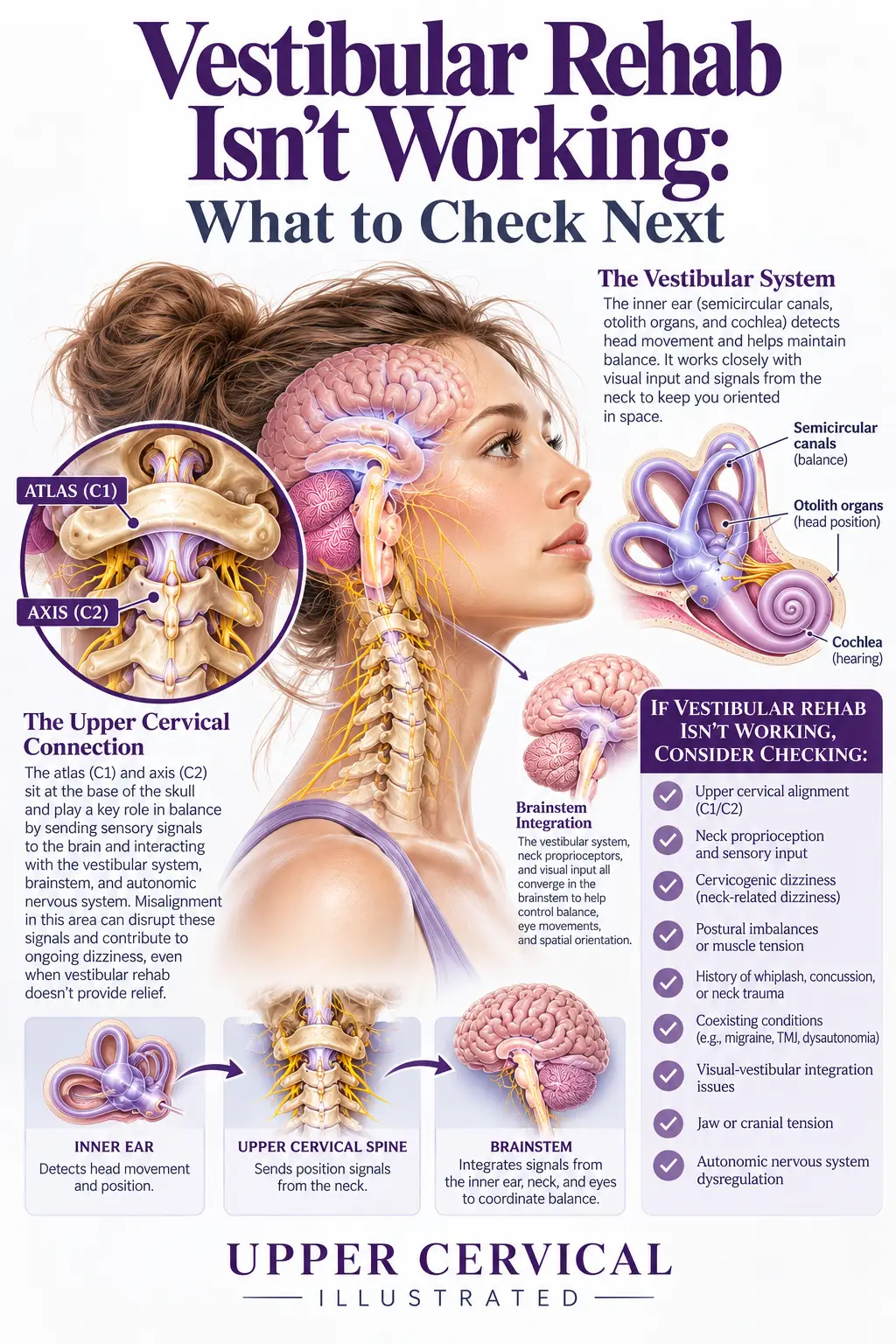
The first vertebra of the spine is called the atlas, or C1. The second is called the axis, or C2. Together, these two bones form the craniocervical junction — the place where the skull, the brainstem, the upper spinal cord, the vertebral arteries, and the cerebrospinal fluid pathways all converge in a remarkably small and remarkably important space.
The atlas is unlike any other vertebra in the spine. It does not have a disc above it or below it. It is shaped like a ring, and it cradles the base of the skull on two small joints. The skull weighs roughly the weight of a bowling ball, and the atlas is the only thing holding it up. When the atlas is in proper alignment, the head balances cleanly over the spine, and the structures inside the craniocervical junction are protected and unrestricted.
When the atlas is misaligned, even by a fraction of a millimeter, the consequences ripple through the entire nervous system.
Inside this small space, the brainstem transitions into the spinal cord. This is the most concentrated bundle of nerve tissue in the human body — every signal traveling from the brain to the body, and from the body back to the brain, must pass through here. Cerebrospinal fluid bathes and nourishes the brain and spinal cord, and its flow is regulated in part by the architecture of the upper neck. Blood travels to the brain through the vertebral arteries, which thread through the bones of the cervical spine. The vagus nerve, the longest cranial nerve and the master regulator of the parasympathetic nervous system, passes through this region as well.
When the atlas shifts out of alignment — from a fall, a car accident, a sports injury, a difficult birth, or even years of cumulative postural strain — it can create irritation in this critical area. That irritation does not always cause neck pain. In fact, many of the patients we see at our Sarasota clinic do not have neck pain as their primary complaint. What they have is a nervous system that is no longer functioning the way it should.
To learn more about the anatomy and reasoning behind this work, our Why Upper Cervical page goes into greater depth on why this region of the spine is so foundational to overall health.
Why the Nervous System Matters So Much in MS
In Multiple Sclerosis, the nervous system is already under stress. The immune system is producing inflammation in places it should not. Communication between the brain and body is being interrupted. The structures that protect and support neurological tissue are working overtime.
The last thing a body in this state needs is additional, unnecessary irritation to the brainstem and upper spinal cord.
This is where upper cervical chiropractic care becomes meaningful. Our doctors are not treating MS. We are not addressing the autoimmune process. We are not making the lesions go away. What we are doing is identifying and correcting a specific structural problem — atlas misalignment — that may be adding mechanical irritation to a nervous system that is already struggling.
When you remove that irritation, the body has a better environment to function within. Cerebrospinal fluid can flow more freely. Blood flow to the brainstem and brain may improve. The vagus nerve, which plays a central role in regulating inflammation and immune balance, can function more optimally. Communication between the brain and body becomes cleaner.
Many of our patients describe the changes they feel in surprisingly similar ways. They report better sleep. More energy. Less brain fog. Improved balance. Fewer flare-ups of secondary symptoms like migraines and vertigo. A general sense that their body is finally working with them instead of against them.
These are not promises. They are observations from real people who have walked this road. Every body is different, and MS is a complex disease that responds differently in every person. What we can promise is a careful, precise, gentle approach that gives your nervous system its best possible chance to function well.
How the Atlas Becomes Misaligned in the First Place
For people with MS, this question is especially important: how does the atlas get misaligned, and could that misalignment have been a contributing factor in the broader picture of nervous system dysfunction?
The truth is, the atlas can shift out of alignment from any significant trauma to the head, neck, or upper body. Common causes include:
- Motor vehicle accidents, even low-speed ones. The whip-like motion of the head during a collision is one of the most reliable ways to create an upper cervical misalignment. Many of our patients did not seek care after their accident because they did not feel injured at the time. Years later, the consequences become apparent. We discuss this further on our Car Accident Chiropractic page.
- Falls, especially falls onto the head, tailbone, or hip. Childhood falls from bicycles, skateboards, and playgrounds are common contributors.
- Sports injuries, particularly from football, hockey, gymnastics, cheerleading, soccer, and any contact sport.
- Difficult births. The forces involved in birth — particularly with forceps, vacuum extraction, or prolonged labor — can be enough to misalign a newborn’s atlas.
- Concussions and head injuries of any kind.
- Sustained postural strain, including years of looking down at phones and computers, sleeping in poor positions, and carrying chronic tension in the neck and shoulders.
Most people with an upper cervical misalignment cannot point to a single cause. It is usually a combination of events that, over years, created a structural pattern the body has been compensating for ever since. By the time symptoms appear, the original cause may be decades in the past.
For someone with MS, this matters. If your atlas has been misaligned for years, your nervous system has been carrying additional stress this entire time — stress that is unrelated to the autoimmune process but that may be amplifying the symptoms you experience. Correcting that misalignment does not undo MS. But it removes one of the variables you can actually do something about.
What Upper Cervical Chiropractic Looks Like at Lavender Family Chiropractic
If you have been to a traditional chiropractor before, you may have an image in your mind of what an adjustment looks like. Twisting. Cracking. Forceful manipulation of the neck and back.
Upper cervical chiropractic is nothing like that.
The technique our doctors use is called knee chest upper cervical chiropractic. It is one of the most gentle, precise, and specific forms of chiropractic care in the world. There is no popping. No twisting. No yanking. No forceful manipulation. The correction is delivered with the patient resting in a knee-chest position, and the contact is so light that many patients are surprised when we tell them the adjustment is complete.
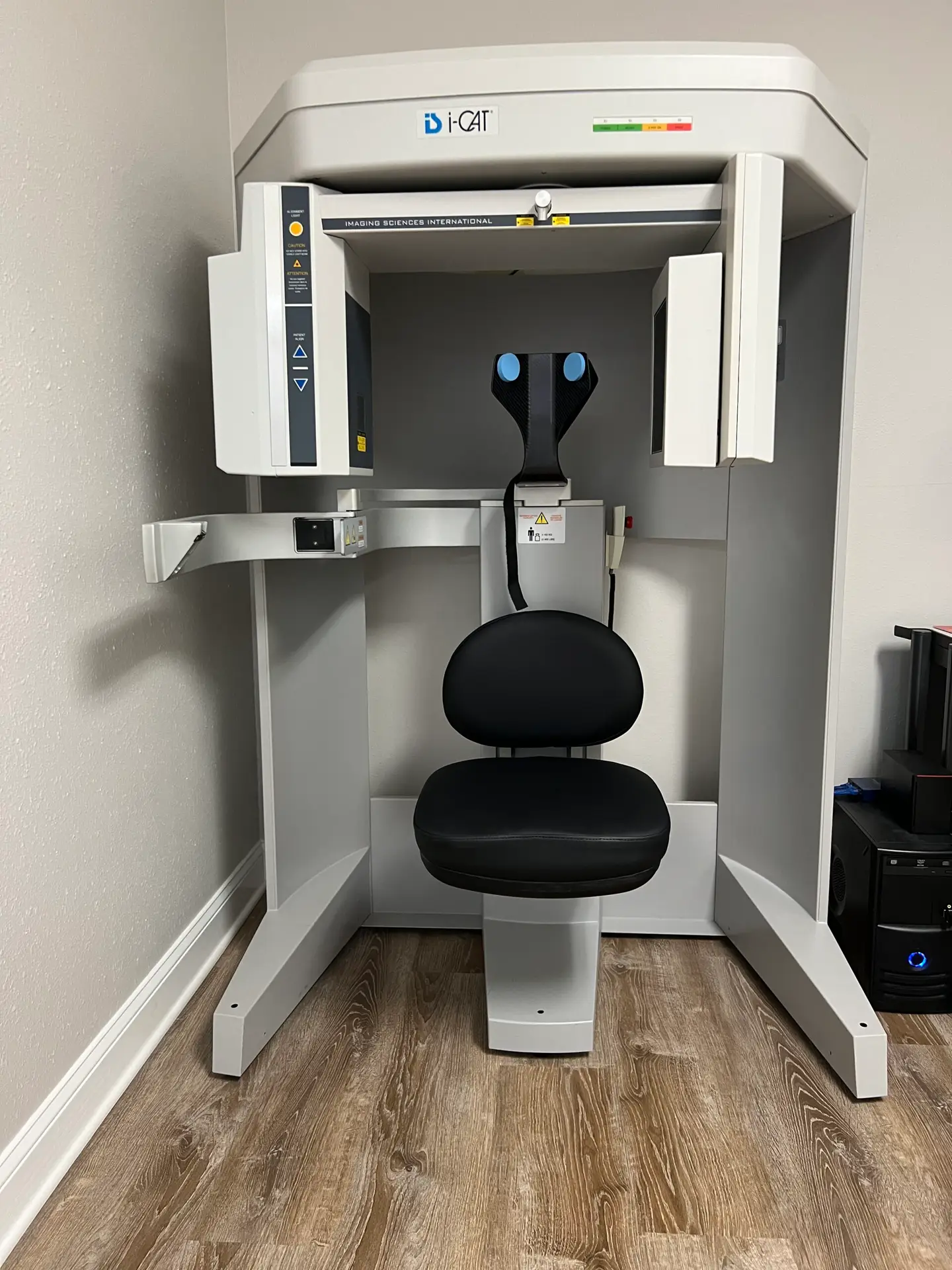
The reason we can use such a gentle approach is because of how much we know before we ever touch the patient. Our process begins with 3D CBCT imaging — a cone beam computed tomography scan that allows us to measure the position of the atlas and surrounding structures down to one one-hundredth of a millimeter. This level of precision is not available with traditional X-rays. It allows our doctors to calculate a specific correction formula tailored to your unique spine.
We also use paraspinal infrared thermography to assess how your nervous system is functioning at every visit. This is a non-invasive scan that measures temperature differentials along the spine, which reflect autonomic nervous system activity. It allows us to track objective change over time — not just how you feel, but how your nervous system is actually functioning.
For someone with MS, this objective tracking is particularly meaningful. MS is a disease where symptoms can fluctuate dramatically from day to day, week to week, and season to season. Heat, stress, illness, and fatigue can all temporarily worsen symptoms in ways that have nothing to do with the underlying disease progression. Having objective measures of nervous system function gives both the patient and the doctor a clearer picture of what is changing structurally, independent of how the patient is feeling on any given day.
Our Customized Treatment Plans are built on this foundation of precision. No two patients receive identical care, because no two patients have identical spines, identical histories, or identical goals.
What to Expect as a New Patient
For anyone considering upper cervical care for the first time — especially someone with a complex condition like MS — knowing what to expect can take a lot of the uncertainty out of the process. Our What To Expect page walks through this in detail, but here is a brief overview.
Your first visit at our North Sarasota clinic begins with a thorough consultation. Our doctors will sit down with you, review your full health history, listen to the timeline of your symptoms, and understand what you have already tried. This is not a five-minute conversation. We want the complete picture — the diagnosis, the medications, the previous treatments, the daily challenges, and the goals you have for your health.
If our doctors believe you are a candidate for care, we will perform a comprehensive examination, including the 3D CBCT imaging and infrared thermography mentioned above. From there, we sit down with you again to review the findings. You will see exactly where your atlas is misaligned, what direction it is shifted, and how that may be impacting your nervous system. There is no guesswork in our office, and there is no pressure. If we do not believe we can help you, we will tell you so directly and refer you to someone who can.
If we move forward with care, your first correction is performed using the precise calculations from your imaging. The corrections themselves are remarkably uneventful — that is by design. We are not muscling your spine into place. We are using physics, leverage, and precision to invite the atlas back to where it belongs.
After the correction, we ask patients to rest for a short period to allow the body to begin integrating the change. We will see you again on follow-up visits to assess how well the correction is holding, monitor your progress, and make additional corrections only when needed. Many of our patients are surprised by how quickly their corrections begin to hold for longer and longer periods of time.
The Cumulative Effect: Why Holding Your Adjustment Matters
One of the most important concepts in upper cervical care — and one that is especially relevant for people with neurological conditions like MS — is the idea of holding your adjustment.
In traditional chiropractic, patients are often adjusted at every visit. The thinking is that more adjustments equal more benefit. In upper cervical care, the philosophy is the opposite. The longer you hold your correction without needing another adjustment, the more your body is healing.
Here is why. When the atlas is in proper alignment, your nervous system can communicate without irritation. The body uses that window of clear communication to do the work of healing — repairing tissues, regulating immune function, balancing the autonomic nervous system, and rebuilding what has been broken down. The longer that window stays open, the more healing accumulates.
For someone with MS, this is profoundly important. You are not looking for short-term symptom relief. You are looking for sustained improvement in nervous system function. That requires holding your correction for as long as possible, and our doctors design every aspect of care around that goal.
This is why we use such precise imaging, such gentle corrections, and such careful follow-up. Every adjustment is designed to last as long as possible, so that your body has the longest possible window to heal.
Conditions That Often Travel With MS — And How We Help
People with Multiple Sclerosis frequently deal with secondary conditions that are not MS itself but that significantly affect quality of life. These are often the symptoms that disrupt daily living the most, and they are often the symptoms that respond best to upper cervical care, because they are more directly tied to mechanical irritation in the upper neck.
Some of the most common conditions we see in patients with neurological complexity include:
- Vertigo — The dizziness and balance problems that many MS patients experience can have multiple sources, and one of them is upper cervical misalignment. The atlas sits directly above the vestibular system, and irritation in this region can produce or worsen vertigo regardless of the underlying neurological condition.
- Migraines and vestibular migraine — Migraines are common in MS, and they often have a strong upper cervical component. Many of our patients with chronic migraines have experienced significant changes after their atlas was corrected.
- POTS and dysautonomia — Postural Orthostatic Tachycardia Syndrome and broader autonomic dysfunction frequently overlap with MS. Because the upper cervical spine is so closely tied to vagus nerve function and autonomic regulation, this is one of the conditions where we see some of our most encouraging results.
- Trigeminal neuralgia and facial pain — Trigeminal neuralgia is significantly more common in people with MS than in the general population. Recent posts on our blog, including our complete guide to natural occipital neuralgia, chronic headaches, and trigeminal neuralgia relief, explore this connection in greater depth.
- Neuropathy — Numbness, tingling, and burning in the hands and feet are common in MS, and while not all neuropathy is upper cervical in origin, the brainstem region plays a central role in how peripheral nerve signals are processed and modulated.
- Vagus nerve dysfunction — The vagus nerve influences nearly every aspect of involuntary bodily function, from heart rate to digestion to immune regulation. When this nerve is irritated at the level of the upper cervical spine, the downstream effects can mimic or amplify many MS symptoms.
- Craniocervical instability — Some MS patients also have underlying connective tissue issues that contribute to instability in the upper neck, and our approach is designed with this in mind.
- Chronic fatigue and brain fog — These are not formal conditions in the same way migraines or vertigo are, but they are some of the most disabling aspects of MS. Many of our patients describe the return of their mental clarity and energy as one of the most meaningful changes they experience under care.
For a more general overview of how a natural, root-cause approach addresses chronic conditions, our blog posts on natural chiropractic care in Sarasota and Lakewood Ranch and natural migraine relief in Sarasota explore these themes in depth and may be helpful reading as you consider your options.
The Lakewood Ranch and Sarasota Connection
Our office is located in North Sarasota at 5899 Whitfield Avenue, just minutes from Lakewood Ranch, Bradenton, University Park, and the surrounding communities. We are intentionally positioned to serve patients across the greater Sarasota–Manatee region, and we see patients who travel from as far as Venice, Port Charlotte, St. Petersburg, and beyond for upper cervical care.
For patients with MS, the location matters more than it might seem at first glance. Travel can be exhausting when you are managing fatigue, heat sensitivity, and unpredictable symptom flares. Having an experienced upper cervical chiropractic team within driving distance — rather than having to travel out of state, as many people do for this kind of specialized care — can make the difference between actually pursuing care and putting it off indefinitely.
Lakewood Ranch in particular has a growing community of patients dealing with neurological conditions. The combination of our area’s high quality of medical care, active retiree population, and overall health-conscious culture means that more and more people are looking for thoughtful, complementary approaches to chronic disease. We are proud to serve this community.
You can learn more about the regions we serve on our Areas We Service page.
A Few Honest Words About Expectations
Expectations should be clear from the start.
Upper cervical chiropractic addresses the upper-neck component that can accompany multiple sclerosis; it does not treat the disease itself. It does not reverse demyelination. It does not stop the autoimmune process. It does not replace your neurologist, your medications, or your medical care. Anyone who tells you otherwise is not telling you the truth.
What upper cervical care does is address one specific structural variable — atlas misalignment — that may be adding unnecessary irritation to a nervous system that is already under significant stress. By correcting that variable, we give your body the cleanest possible environment to function, adapt, and heal within the limits of your overall condition.
For some patients, the changes are dramatic. They report meaningful improvements in fatigue, balance, cognitive clarity, secondary symptoms, and overall quality of life. They feel like themselves again in ways they had not for years.
For others, the changes are more subtle. They notice that flare-ups are less frequent or less severe. They handle stress better. They sleep better. Their secondary conditions improve even if their primary MS symptoms remain.
And for some, the changes are minimal. Every body responds differently, and every case of MS is unique.
What we can promise is this: our doctors will be honest with you at every step. If we do not believe upper cervical care is right for you, we will tell you. If your body is not responding the way we hoped, we will tell you that too. We do not believe in care plans that drag on indefinitely without measurable progress, and we do not believe in selling hope without substance.
Hope, in our office, is built on honesty.
Why Our Doctors Are Committed to This Work
Every one of our doctors at Lavender Family Chiropractic has dedicated their career to upper cervical chiropractic for a reason. This is not a side technique we picked up at a weekend seminar. It is the entire focus of our practice.
Each of our doctors has completed extensive training in the Advanced HIO Knee Chest Upper Cervical Technique. They have spent countless hours studying the anatomy of the craniocervical junction, refining the precision of their corrections, and learning from the patients they have served. Our Meet The Team page introduces each of them and shares their backgrounds.
We do this work because we have seen, firsthand, what happens when the upper cervical spine is corrected and the nervous system is given a clear path to function. We have seen patients who had been dismissed by every specialist they consulted finally find a meaningful path forward. We have seen people get their lives back.
For patients with MS specifically, our role is humble. We are not at the center of your care. Your neurologist is. Your primary care physician is. Your medications, your imaging, and your overall medical management remain the foundation of how you live with this disease. What we offer is something complementary — a precise, nervous-system-focused approach that supports the rest of your care without interfering with it.
What to Do Next If You Are Considering Care
If you have read this far, you are likely someone who has been searching for answers for a long time. You have probably tried things that did not work. You may be skeptical, and you should be. There is a lot of noise in the world of natural health, and people with chronic conditions deserve to be treated with respect and intelligence.
Here is how our process begins.
Every new patient at Lavender Family Chiropractic starts with a consultation. This is a no-pressure conversation between you and one of our doctors. You will share your story. We will listen carefully. We will ask honest questions about your history, your symptoms, your previous care, and your goals. And at the end of that conversation, our doctors will give you their honest assessment of whether upper cervical care is likely to help you.
If we believe you are a candidate, we will walk you through the next steps — the imaging, the examination, the report of findings, and the care plan. If we do not believe you are a candidate, we will tell you so directly and, where possible, point you in the direction of someone who can help.
There is no obligation, no pressure, and no commitment beyond the conversation itself.
You can schedule your consultation below, or you can call our office at (941) 243-3729 to speak with our team directly. Our doors are open to anyone in Sarasota, Lakewood Ranch, Bradenton, and the surrounding communities who is ready to explore a different kind of approach to their nervous system health.
If you want to read more before you reach out, our blog continues to grow with detailed posts on related topics. Head pressure relief in Sarasota and natural relief for idiopathic intracranial hypertension are both worth reading if you experience pressure-related symptoms alongside your MS. You can also explore our full library of patient results to see real stories from real people who have walked into our office searching for hope.
Final Thoughts
Multiple Sclerosis is hard. There is no way to soften that. Living with MS in any form is a daily exercise in resilience, adaptation, and patience.
But living with MS does not mean you have run out of options. It does not mean every avenue has been explored. And it does not mean the only thing left to do is wait for the next infusion, the next medication, or the next flare.
The nervous system is the master system of the body. Everything you experience — every sensation, every movement, every thought, every emotion, every involuntary process that keeps you alive — is mediated through it. When that system is supported structurally, given clear pathways to function, and freed from unnecessary irritation, the body has its best possible chance to do what it was designed to do.
That is the foundation of upper cervical care. That is the work we do at Lavender Family Chiropractic in North Sarasota. And that is the offer we extend to anyone in our community who is ready for a different kind of conversation about their health.
You deserve to be heard. You deserve to be examined thoroughly. You deserve honest answers. You deserve a healthcare team that takes your nervous system as seriously as you do.
Healing starts here. We would be honored to walk this road with you.
Ready to Find Out If We Can Help?
We offer consultations to learn more about you and determine whether upper cervical care is the right fit. There’s no pressure, no commitment — just an honest conversation about your symptoms, your history, and your options.
Schedule your consultation here: https://intake.chirohd.com/new-patient-scheduling/724/lavender-family-chiropractic
Or call us directly: (941) 243-3729
Lavender Family Chiropractic / NeckWise North Sarasota 📍 5899 Whitfield Avenue, Suite 107, Sarasota, FL 34243 🌐 www.chiropractorsarasotaflorida.com 📱 Instagram: @lavenderfamilysrq 🎵 TikTok: @drrustylavender
Proudly serving Sarasota, Bradenton, Lakewood Ranch, Venice, Osprey, Port Charlotte, Parrish, and Palmetto — and helping patients across Southwest Florida finally heal at the root.
If you are in Tampa, Fort Myers, or Salt Lake City, you can visit our other NeckWise locations at www.neckwise.com. If you are not local to any of these, visit www.uccnearme.com to find a doctor in your area.
Your diagnosis does not have to define your life. Your symptoms do not have to dictate your future. The fatigue can ease. The fog can lift. The balance can return. Let’s check your atlas — and see what becomes possible.
Medical disclaimer: This article is for educational purposes only and does not constitute medical advice. Upper cervical chiropractic care is not a treatment or cure for Multiple Sclerosis. If you have been diagnosed with MS, continue working closely with your neurologist and primary care physician. Upper cervical care is intended as a complementary approach focused on structural support of the nervous system and should be considered as part of an overall healthcare plan.
What the Research Says About MS Symptoms and the Upper Neck
Relief in multiple sclerosis has to be discussed carefully. MS is an immune-mediated demyelinating disease of the central nervous system, diagnosed by MRI and clinical criteria, and disease-modifying therapies are what reduce relapses (Reich et al., N Engl J Med 2018). No natural approach replaces them, and research on upper cervical chiropractic for MS is limited to case reports and small studies, with nothing showing a change in relapses, lesions or disability. A UK evidence report that reviewed manual therapies rated the evidence for many non-musculoskeletal conditions as inconclusive or negative (Bronfort et al., Chiropr Osteopat 2010). The relief we can honestly discuss concerns the neck pain, headaches and unsteadiness that so often accompany MS and that have their own evidence base.
For those accompanying symptoms the picture is encouraging. The Ontario clinical practice guideline for neck pain recommends manual therapy, exercise and patient education (Côté et al., Eur Spine J 2016). Spinal manipulation is recommended by an evidence-based guideline for migraine and cervicogenic headache (Bryans et al., J Manipulative Physiol Ther 2011). For unsteadiness with a neck component, a randomized trial of a targeted upper cervical technique reduced dizziness intensity and frequency with benefit lasting 12 weeks (Reid et al., Man Ther 2008). People with MS deserve care that is gentle and precise, so we rely on 3D imaging of the atlas, a correction matched to the images, and re-measurement, and we coordinate every step with your neurologist.
Frequently Asked Questions
Can upper cervical chiropractic help someone living with multiple sclerosis?
We work alongside your neurologist’s care for MS; our focus is the upper cervical spine, where the brainstem passes through the atlas and the brain becomes the body. In MS the nervous system is already under strain, so reducing mechanical interference at that junction matters. We measure that interference with cone-beam CT and paraspinal thermography, correct the alignment gently, and recheck. Many patients notice changes in balance, fatigue, and neck tension, though results vary by person.
Why does the nervous system matter so much in MS?
MS affects the insulation around nerve fibers, so signals between brain and body travel less reliably. Every one of those signals passes through the brainstem and upper spinal cord, which sit inside the ring of the atlas. If the atlas is misaligned, it adds a mechanical stress to a system that already has less margin. Our goal is to remove that stress, and thermography before and after each correction shows us whether the nervous system is regulating more evenly.
How does the atlas become misaligned in the first place?
The atlas is the most mobile vertebra in the spine and is held mainly by ligaments and small muscles, not by a locking joint. Falls, car accidents, sports collisions, childhood tumbles, and years of forward head posture can all shift it. Many MS patients recall an injury years before their diagnosis. We do not guess at the direction of the misalignment; 3D cone-beam CT shows the exact position so the Knee Chest correction can be calculated precisely.
What does a first visit look like for an MS patient coming from Lakewood Ranch or Bradenton?
Your first visit at our Sarasota office, minutes from Lakewood Ranch and Bradenton at University Parkway and Whitfield, includes a thorough history, neurological checks, postural assessment, and paraspinal thermography. If the upper neck is involved, we take cone-beam CT and calculate your correction. The correction itself is low force with no twisting or cracking, and you rest afterward. We coordinate with your neurologist and share imaging on request. Call (941) 243-3729 to schedule an evaluation.
Why does holding my adjustment matter in MS care?
The benefit of an upper cervical correction comes from the atlas staying in its corrected position, not from being adjusted often. When alignment holds, the brainstem and surrounding tissues get a steady period without mechanical interference. We check thermography at every visit, and if the nervous system is regulating well, we leave the atlas alone. Over time, many patients hold longer between corrections. Your plan follows those measurements, not a preset schedule.
Related Posts


Get our upper cervical articles first.