Could Your Cold, Colorless Fingers Be a Neck Problem? Raynaud’s Phenomenon and the Upper Cervical Connection
By Dr. Rusty Lavender, D.C. — upper cervical chiropractor, Lavender Family Chiropractic, Sarasota, FL. Reviewed and updated October 2026.
Our complete guide to upper cervical chiropractic care in Sarasota covers the causes we see, the imaging we use, and what to expect at an evaluation.
Published by Lavender Family Chiropractic | Sarasota, Florida | Upper Cervical Care
Raynaud’s phenomenon: Imagine reaching into your purse on a mild spring morning in Sarasota and feeling your fingers go numb, turn white, then blue — all because the air conditioning kicked on. For people living with Raynaud’s Phenomenon, this is a familiar, frustrating reality. But what if the root cause wasn’t just in your hands — what if it started in your neck?
Raynaud’s is widely recognized as a circulatory condition, one where the small blood vessels in your fingers, toes, and sometimes nose or ears overreact to cold or emotional stress. But what most people — and even many healthcare providers — don’t discuss is the powerful neurological connection between your upper cervical spine and the vascular system that governs blood flow to your extremities. At Lavender Family Chiropractic in Sarasota, Florida, we see patients from across the Gulf Coast region who have struggled for years with Raynaud’s symptoms, often unaware that an atlas or axis misalignment could be driving much of their discomfort.
This blog is for you — whether you’re in Siesta Key, Gulf Gate, Palmer Ranch, or driving in from Osprey or Nokomis. If cold fingers, color-changing extremities, and the relentless cycle of Raynaud’s episodes have become part of your daily life, read on. There is more to this condition than most people have been told, and there is a gentle, non-invasive approach that may offer real, lasting relief.
What Is Raynaud’s Phenomenon?
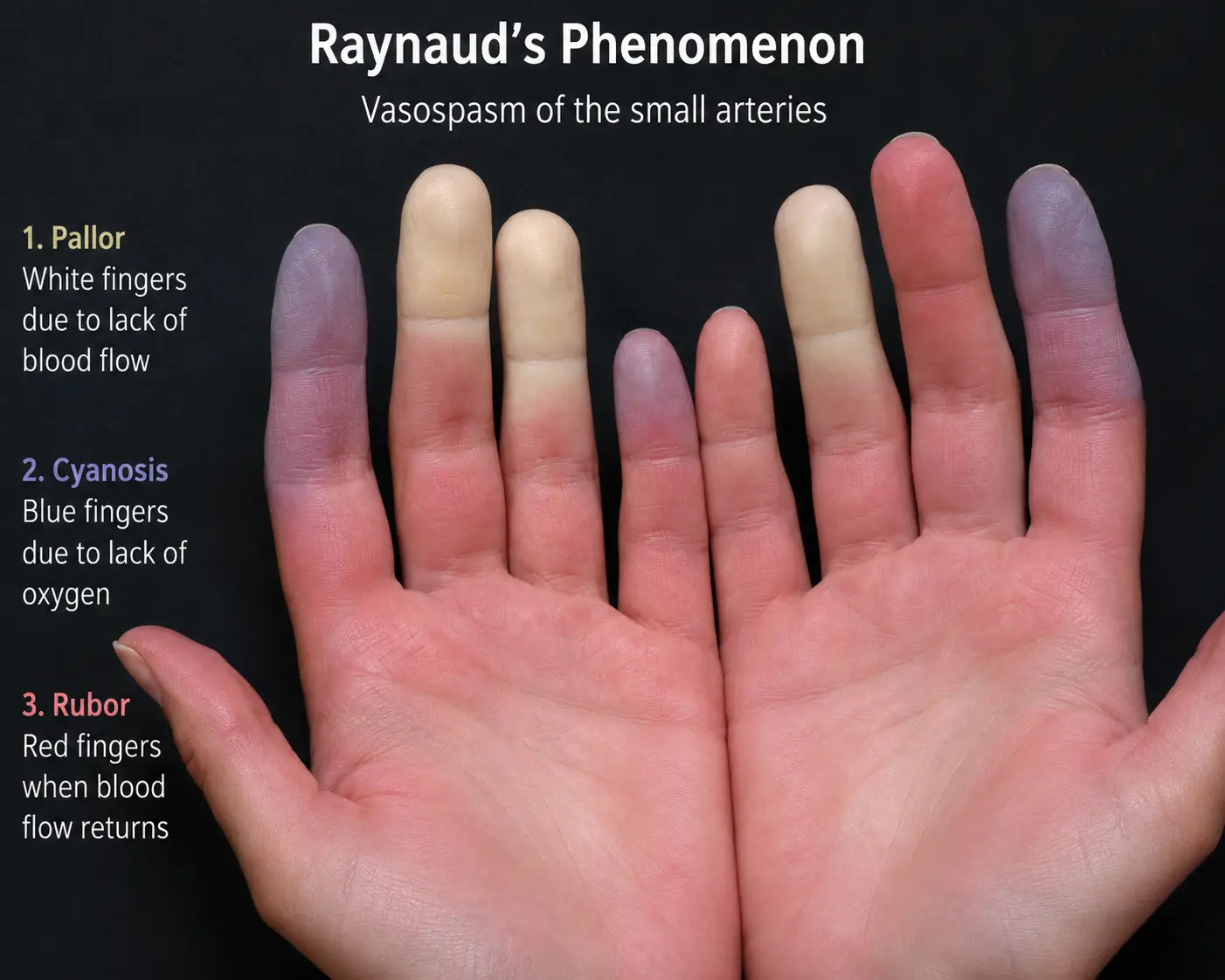
Raynaud’s Phenomenon — sometimes called Raynaud’s Disease or Raynaud’s Syndrome — is a condition characterized by episodes of exaggerated vasoconstriction, which is the narrowing of small blood vessels, typically triggered by cold temperatures or emotional stress. During an episode, affected areas (most commonly the fingers and toes) go through a dramatic color change: white as blood flow is cut off, then blue as oxygen in the remaining blood is depleted, and finally red as blood rushes back in. This three-phase color shift is the hallmark of Raynaud’s, and it can be accompanied by numbness, tingling, pain, and a burning sensation during the recovery phase.
There are two primary forms of the condition. Primary Raynaud’s occurs on its own, without an underlying condition. It tends to be milder and more common, particularly in young women. Secondary Raynaud’s is associated with an underlying health condition — most commonly autoimmune or connective tissue diseases such as lupus, scleroderma, Sjögren’s syndrome, or rheumatoid arthritis. Secondary Raynaud’s is generally more severe and more likely to cause complications.
Even in Florida’s warm climate, Raynaud’s is no small burden. The constant air conditioning in offices, restaurants, and stores across Sarasota, Bradenton, and Venice can be enough to trigger an episode — and many of our patients describe the frustration of carrying fingerless gloves to the grocery store in 85-degree weather. It sounds almost comical until you’ve lived it. Then it’s simply exhausting.
Raynaud’s Is a Nerve and Blood Vessel Condition
To understand why upper cervical chiropractic care can be relevant to Raynaud’s, we need to look at the underlying mechanism of the condition. Raynaud’s is fundamentally a disorder of the autonomic nervous system — specifically the sympathetic nervous system — and its regulation of the blood vessels.
The Sympathetic Nervous System and Vascular Control
Your body’s blood vessels don’t simply open and close at random. They are controlled by the autonomic nervous system, which operates below the level of conscious thought. The sympathetic branch of the autonomic nervous system — responsible for the “fight or flight” response — causes blood vessels to constrict, or narrow. In Raynaud’s, the sympathetic nervous system is hyperreactive, causing an exaggerated vasospasm response to stimuli that wouldn’t affect most people.
In a healthy body, exposure to mild cold or mild stress causes a modest, temporary reduction in blood flow to the extremities as the body prioritizes warming vital organs. In someone with Raynaud’s, this response is dramatically amplified and prolonged, cutting off circulation to the fingers and toes far beyond what is physiologically necessary. The result is those distinctive, painful color changes that define the condition.
What drives this sympathetic hyperreactivity? The answer is complex and multifactorial — but one frequently overlooked piece of the puzzle is the structural state of the upper cervical spine.
The Role of the Vagus Nerve
The vagus nerve — the longest cranial nerve in the body — also plays a crucial role in this equation. Running from the brainstem down through the neck and into the thorax and abdomen, the vagus nerve is a primary conduit of the parasympathetic nervous system, which counterbalances sympathetic activity. When the upper cervical spine is misaligned, it can directly compress or irritate the vagus nerve as it exits the skull, impairing parasympathetic tone. The result is an autonomic imbalance — too much sympathetic “fight or flight,” not enough parasympathetic “rest and restore” — and the blood vessels bear the consequences. To learn more about how vagus nerve disruption connects to a wide range of symptoms, visit our page on Vagus Nerve Dysfunction.
Additionally, the vertebral arteries pass through openings in the cervical vertebrae on their way to supply blood to the brainstem and cerebellum. A misalignment in the upper cervical region can affect the geometry of these passages, potentially influencing blood flow dynamics and contributing to the neurovascular dysfunction seen in conditions like Raynaud’s.
The Upper Neck: Your Body’s Most Critical Junction
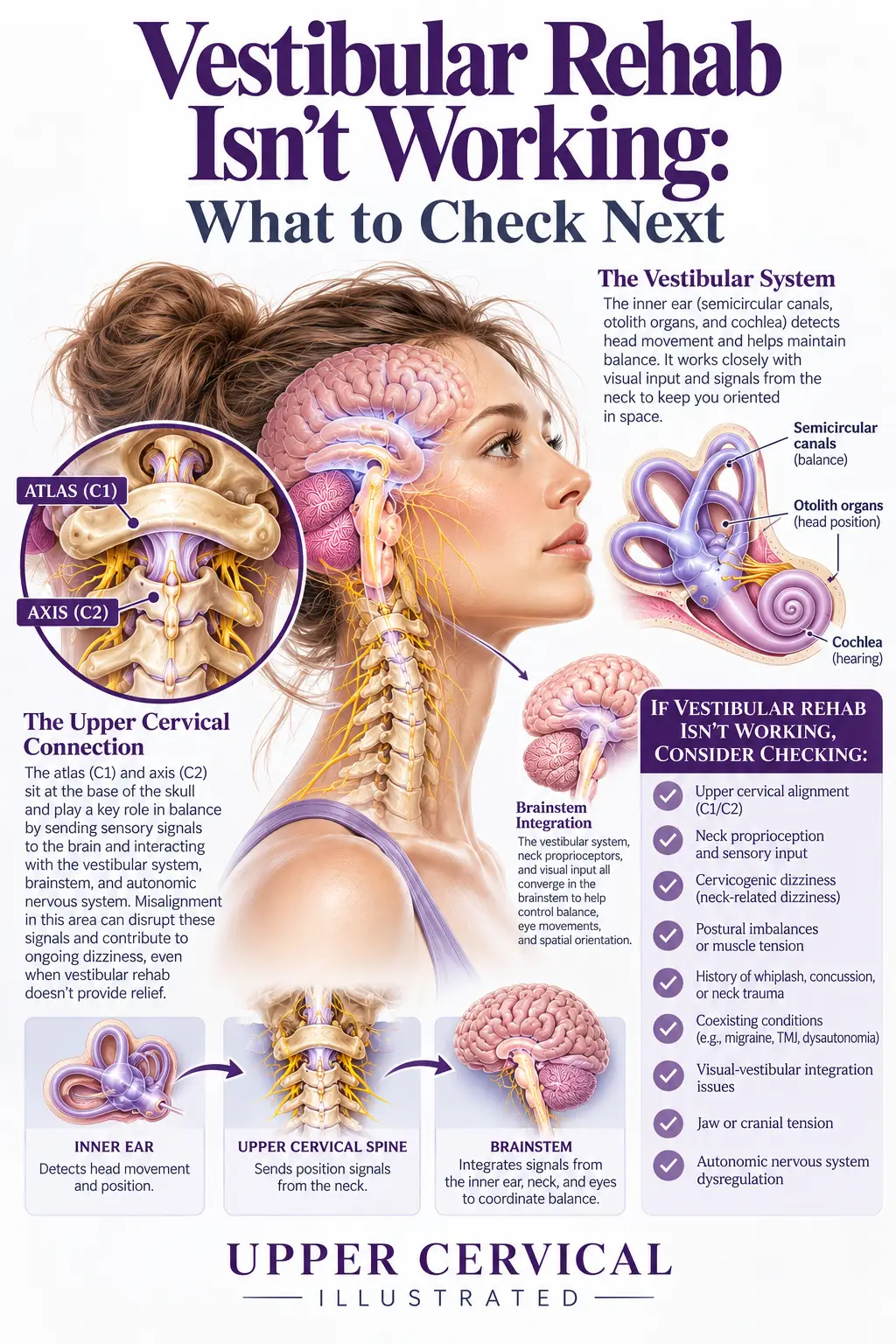
The upper cervical spine — specifically the atlas (C1) and axis (C2) — is unlike any other segment of the spinal column. These two vertebrae have a unique anatomy specifically designed to allow your head to move with extraordinary range of motion. The atlas sits directly beneath the skull and allows for the nodding motion. The axis, beneath it, has a bony peg called the dens or odontoid process that projects up into the atlas, enabling rotation.
This remarkable freedom of movement comes with a trade-off: the upper cervical region is also the most vulnerable to misalignment. Falls, car accidents, sports impacts, birth trauma, repetitive postural stress from technology use, and even sleep position can all shift the atlas and axis out of their optimal alignment. When this happens — a condition upper cervical chiropractors call an upper cervical subluxation — the consequences are not just local neck pain. Because of the brainstem’s proximity, the effects can ripple throughout the entire nervous system.
The brainstem, which occupies the space between the atlas and the base of the skull, is the master controller of countless body functions: heart rate, blood pressure, respiration, digestion, immune regulation — and crucially for Raynaud’s patients — autonomic regulation of blood vessel tone. Even a subtle misalignment at C1 or C2 can create mechanical tension or irritation in this region that disrupts normal autonomic signaling, potentially amplifying the sympathetic hyperreactivity that drives Raynaud’s episodes.
Why Traditional Care Often Misses This
When a patient presents to their primary care physician with Raynaud’s symptoms, the focus is typically on the endpoints — the fingers and toes — rather than on the upstream neurological drivers. Medications such as calcium channel blockers are commonly prescribed to relax and dilate blood vessels, and while these can reduce the frequency and severity of episodes, they don’t address any structural factors that may be contributing to the underlying autonomic dysfunction.
This is not a criticism of conventional medicine — it is simply an illustration of the siloed approach many healthcare systems take. Upper cervical chiropractic care offers a complementary lens: what if the blood vessels in your fingers are misbehaving because the system controlling them is under structural stress? What if freeing that system — by correcting an atlas misalignment with a precise, gentle adjustment — allows the body to regulate its own vascular tone more effectively? To understand the full reasoning behind this approach, we encourage you to explore Why Upper Cervical on our website.
Upper Cervical Chiropractic Care: What Makes It Different
Not all chiropractic care is the same. Upper cervical chiropractic is a specialized discipline that focuses exclusively on the relationship between the top two vertebrae and overall body function. Practitioners who specialize in upper cervical work undergo extensive additional training and typically use precise imaging — including 3D cone beam CT scanning — to assess the exact angle and direction of any misalignment before delivering a correction.
Unlike the audible “cracking” adjustments most people associate with chiropractic care, upper cervical corrections are gentle and highly specific. There is no forceful manipulation of the neck. Instead, the practitioner delivers a precisely calculated, low-force correction to the atlas or axis, allowing the body’s own muscles and ligaments to reposition the vertebrae toward their optimal alignment. Many patients describe little more than a gentle touch during the adjustment itself.
What to Expect at Lavender Family Chiropractic
At Lavender Family Chiropractic in Sarasota, your first visit begins with a thorough health history and consultation. We want to understand the full picture of your health — when your Raynaud’s symptoms began, what triggers them, what other symptoms you may be experiencing, and what prior care you have received. We then conduct a detailed neurological and postural assessment, looking for signs of autonomic dysfunction and upper cervical involvement.
If indicated, we obtain precision imaging of your upper cervical spine — not generic X-rays, but targeted views that allow us to see the exact geometry of your atlas and axis and identify any measurable misalignment. This precision matters enormously, because the correction we deliver is calculated specifically to your anatomy. Every adjustment is based on your images, not a general protocol. You can learn more about exactly what your first visit looks like on our What to Expect page.
After your correction, we allow time for your body to begin the process of neurological reorganization. This is not instantaneous — the nervous system, like any stressed system, takes time to recalibrate. But many patients begin noticing changes in their symptoms within the first few visits, and continued care over weeks and months helps lock in the improvements as muscle memory and soft tissue tension patterns normalize around the corrected position.
We have had patients come to us having lived with Raynaud’s for years, who after a course of upper cervical care find that their episodes are less frequent, less severe, or in some wonderful cases, largely resolve. The body, when the brainstem is free of interference, is a remarkable self-healing system.
Are You Ready to Find Out If This Is the Missing Piece?
If you’ve been managing Raynaud’s symptoms without ever having your upper cervical spine evaluated, we’d love to have that conversation with you. At Lavender Family Chiropractic, we offer a consultation to assess whether upper cervical misalignment could be contributing to your condition. You don’t have to commit to care to come in and learn — we believe in empowering you with real information so you can make the best decision for your health.
Schedule Your consultation at Lavender Family Chiropractic
Evidence and Emerging Research
The scientific understanding of upper cervical chiropractic care and its effects on autonomic function is an emerging and exciting area of research. While large randomized controlled trials specifically targeting Raynaud’s and upper cervical adjustments are still limited, there is a growing body of work connecting spinal manipulation — particularly in the cervical region — with measurable changes in autonomic nervous system function.
Studies using heart rate variability, a widely accepted measure of autonomic balance, have demonstrated that cervical spinal manipulation can shift the autonomic state toward increased parasympathetic activity, effectively reducing the sympathetic dominance that underlies conditions like Raynaud’s. Research published in peer-reviewed chiropractic and neurology journals has shown that atlas corrections can produce downstream changes in brainstem function and autonomic regulation that persist beyond the adjustment itself.
Case studies and patient-reported outcomes from upper cervical practices across the country have documented significant improvements in Raynaud’s symptoms following a course of upper cervical care. While these are individual accounts rather than population-level data, they are consistent with the neuroanatomical rationale described above and with the clinical experience of our team at Lavender Family Chiropractic.
It is important to be honest: upper cervical chiropractic care is not a guaranteed cure for Raynaud’s, and results vary from person to person. The best outcomes tend to occur when care is delivered early in the course of the condition, when measurable atlas misalignment is present on imaging, and when patients commit to the full recommended care plan. For secondary Raynaud’s associated with an underlying autoimmune condition, upper cervical care works best as part of a collaborative, integrative healthcare approach.
Lifestyle Factors That Complement Upper Cervical Care
While upper cervical adjustments address the neurological root of the dysfunction, there are several lifestyle strategies that can support your progress and reduce the frequency of Raynaud’s episodes as your nervous system recalibrates.
Manage cold exposure thoughtfully. Even in Florida, air conditioning can be a significant trigger. Carry a light cardigan or fingerless gloves when you know you’ll be in aggressively cooled environments. Layering is your friend — especially in cars, movie theaters, grocery stores, and offices. Sarasota summers are humid and warm, but indoor environments can feel like a different climate entirely.
Prioritize stress management. Because Raynaud’s is driven in part by sympathetic nervous system hyperreactivity, emotional stress is a known trigger. Practices that activate the parasympathetic nervous system — deep diaphragmatic breathing, mindfulness, gentle yoga, time outdoors — can all reduce the intensity and frequency of episodes. Walking along Siesta Key Beach or spending time at Myakka River State Park are wonderful ways to naturally support your vagal tone right here in the Sarasota area.
Optimize your sleep position. Many patients with upper cervical issues unknowingly aggravate their alignment through poor sleep posture. Sleeping on your back with a supportive cervical pillow, or on your side with a pillow that keeps your head aligned with your spine, reduces unnecessary torque on your atlas and axis through the night. We offer specific guidance on this at Lavender Family Chiropractic based on your individual anatomy.
Stay hydrated and limit caffeine and nicotine. Both caffeine and nicotine are vasoconstrictors — they narrow blood vessels — which can worsen Raynaud’s symptoms. Staying well hydrated helps maintain blood volume and supports circulation throughout the body.
Raynaud’s doesn’t exist in isolation, either. Many of our patients dealing with cold extremities and vascular hypersensitivity also report headaches, head pressure, and nerve-related pain as part of their overall picture. If that resonates with you, our blog on Natural Migraine Relief in Sarasota explores how these neurological threads are often connected and how upper cervical care addresses them at the root.
Serving Sarasota and the Surrounding Gulf Coast
At Lavender Family Chiropractic, we are proud to serve families throughout the Sarasota region and beyond. We see patients from Siesta Key, Palmer Ranch, Gulf Gate Estates, South Gate, Bee Ridge, and Fruitville right here in Sarasota, as well as from neighboring communities including Osprey, Nokomis, Venice, Englewood, Bradenton, Lakewood Ranch, and Longboat Key.
Whether you’re managing Raynaud’s in the heat of a Sarasota summer or dealing with its aggravation from the intense indoor air conditioning that Florida’s climate demands, we understand the unique challenges of living with this condition on the Gulf Coast. Our practice is located at 5899 Whitfield Avenue, Suite 107, Sarasota, FL 34243, and we welcome patients from across the region. You can see the full list of communities we serve on our Areas We Service page.
Many of our patients find us after years of managing symptoms with medication alone, surprised to discover that an upper cervical evaluation — something they’ve never had done — changes their understanding of what has been driving their condition. We love being part of that moment of clarity, and we love being a warm, community-rooted practice right here in Sarasota.
Is Upper Cervical Care Right for You?
If you’re living with Raynaud’s Phenomenon and you haven’t yet had your upper cervical spine evaluated, we believe it is worth the conversation. You don’t have to simply manage symptoms indefinitely. Upper cervical chiropractic care offers a fundamentally different approach: not managing the endpoints of the condition, but supporting the neurological infrastructure that governs how your blood vessels behave.
We have seen patients reclaim mornings without numb fingers, reclaim grocery trips without pre-warming their hands, and reclaim the confidence that comes from knowing their body isn’t going to overreact to every temperature change. We would love to see the same for you.
Schedule Your consultation | (941) 243-3729
What the Research Says About Cold Fingers, Raynaud’s and the Neck
Cold, white or blue fingers that flush red as they warm are the hallmark of Raynaud’s phenomenon, an exaggerated constriction of the digital arteries in response to cold or stress. The primary form is common and benign; the secondary form is linked to connective-tissue disease; and the sympathetic nervous system is involved in the vasospasm (Wigley & Flavahan, N Engl J Med 2016). So could a neck problem be behind it? The honest answer is that no one has tested that properly: research on upper cervical chiropractic for Raynaud’s is limited to case reports, with no controlled trial measuring attacks or finger blood flow after atlas correction. A physician should evaluate new symptoms first, since the secondary form needs its own workup.
The reason the question keeps coming up is the sympathetic nervous system, which runs through the neck and has shown some response to manipulation in small studies. In healthy adults, upper cervical manipulation was associated with heart rate variability changes consistent with a shift toward parasympathetic activity, while lower cervical manipulation did not show the same pattern; the authors called the result preliminary (Win et al., J Chiropr Med 2015). Thoracic manipulation, too, produced measurable heart rate variability changes versus sham in a controlled crossover trial (Budgell & Polus, J Manipulative Physiol Ther 2006). Those findings justify curiosity, not claims. For the neck pain and headaches that often come along, a Cochrane review of 51 trials supports manipulation and mobilization (Gross et al., Cochrane 2015). We image the atlas in 3D, correct to match, and re-measure.
Frequently Asked Questions
What is Raynaud’s phenomenon and how is it connected to the neck?
Raynaud’s is an exaggerated narrowing of the small blood vessels in the fingers or toes in response to cold or stress, turning them white, blue, and then red. The sympathetic nerves that trigger that narrowing travel through the neck, and the centers that regulate them live in the brainstem, which the atlas surrounds. We assess whether an atlas misalignment is disturbing that regulation and measure it with paraspinal thermography and cone-beam CT.
How does the sympathetic nervous system factor into Raynaud’s?
The sympathetic branch of the autonomic nervous system controls vascular tone. In Raynaud’s, it fires too hard in response to cold, clamping vessels down. Sympathetic fibers pass through the atlas region, and the brainstem coordinates the whole response. Paraspinal infrared thermography reads sympathetic activity along the spine, so we can see uneven heat patterns before a correction and compare them afterward. That is how we confirm the nervous system is regulating differently rather than assuming it.
What role does the vagus nerve play in Raynaud’s?
The vagus nerve exits the skull right next to the atlas and carries the parasympathetic signal that balances sympathetic overdrive. When vagal tone is strong, vessels relax more readily after a cold trigger. An atlas misalignment can irritate the tissues around the vagus and skew that balance. Correcting the alignment with the low-force Knee Chest technique is aimed at restoring normal input at that junction, and many patients notice warmer hands as their thermography readings even out.
Should I keep seeing my rheumatologist or physician while doing upper cervical care?
Yes. Secondary Raynaud’s can be linked to autoimmune and vascular conditions that a physician should evaluate, and any medication decisions stay with the prescribing doctor. We work alongside that care and share imaging on request. Our part is specific: determine whether the upper neck is contributing, correct the alignment if it is, and measure the nervous system’s response with thermography at every visit. If the upper neck is not involved, we tell you and refer.
What happens at a Raynaud’s evaluation at Lavender Family Chiropractic in Sarasota?
You will have a detailed history, neurological and postural checks, and paraspinal infrared thermography. If the findings point to the upper neck, we take a 3D cone-beam CT to calculate the exact correction. Your first correction is precise and low force, with no twisting or cracking, followed by rest and a repeat thermography scan. We are at 5899 Whitfield Avenue, minutes from Lakewood Ranch and Bradenton. Call (941) 243-3729 to schedule an evaluation.
Related Articles from Our Blog
Natural Migraine Relief in Sarasota, Florida Migraines and Raynaud’s share a common thread — both are rooted in neurovascular dysregulation and sympathetic nervous system overactivity. This post explores how upper cervical care addresses migraine at its root cause and why so many Sarasota patients have found lasting relief.
Natural Chiropractic Care in Sarasota and Lakewood Ranch: A Root-Cause Approach to Healing If Raynaud’s has you searching for a natural, drug-free path forward, this is a great place to start. We break down what natural chiropractic care actually means, how it differs from conventional symptom management, and why a root-cause approach changes everything.
When Your Head Won’t Stop Hurting: A Complete Guide to Natural Occipital Neuralgia, Chronic Headaches, and Trigeminal Neuralgia Relief Many of our Raynaud’s patients also deal with chronic head and nerve pain. This comprehensive guide explores the connection between upper cervical misalignment and nerve-driven pain conditions — and how addressing the root cause at the atlas brings relief to both.
This blog is for informational purposes only and does not constitute medical advice. Please consult a qualified healthcare provider for diagnosis and treatment of any health condition. Lavender Family Chiropractic | 5899 Whitfield Avenue, Suite 107, Sarasota, FL 34243 | (941) 243-3729
Related Posts


Get our upper cervical articles first.