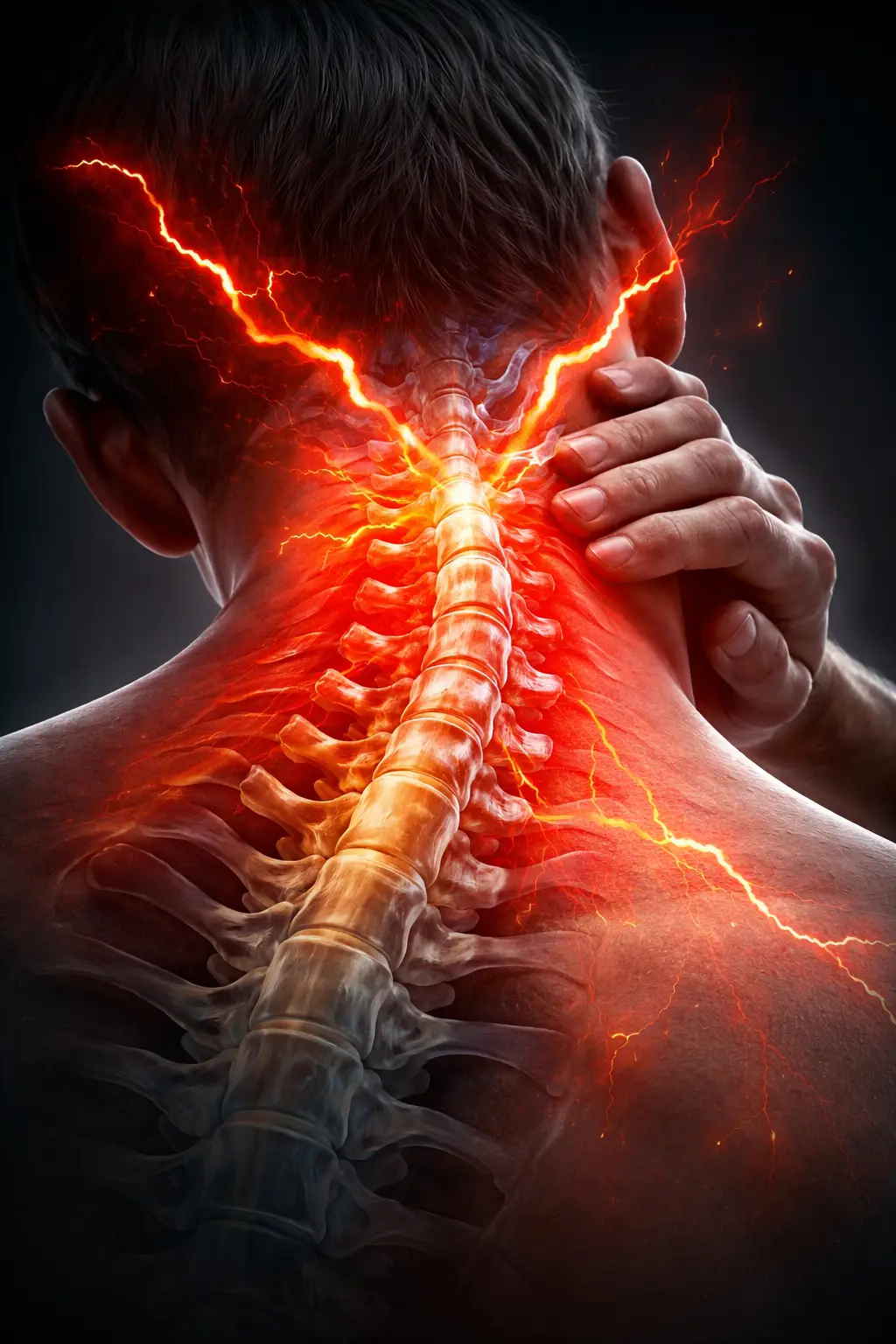
Neck injury: Neck Injuries are far more common than most people realize—and far more influential on overall health than they are often given credit for. Whether the injury came from a car accident, sports impact, fall, poor posture, or years of repetitive stress, damage to the neck can quietly disrupt the nervous system and trigger a cascade of symptoms throughout the body.
Many people struggling with migraines, vertigo, dizziness, neck pain, brain fog, digestive issues, numbness in the hands, balance problems, fatigue, or pressure at the base of the skull never suspect their neck is the root cause. Instead, they are often told their symptoms are unrelated, stress-based, or something they will need to manage long-term with medications.
At Lavender Family Chiropractic / NeckWise North Sarasota, we see something very different every day. We see that neck injuries—especially those affecting the upper cervical spine—often create structural misalignments that interfere with the nervous system’s ability to function and heal. When those misalignments are corrected gently and precisely, the body often begins to resolve symptoms naturally.
Understanding Neck Injury: More Than Just Neck Pain
A neck injury does not have to be severe or dramatic to cause long-term problems. In fact, many of the most disruptive symptoms arise from injuries that were never properly addressed.
Common causes of neck injuries include:
- Car accidents and whiplash
- Sports collisions and falls
- Slips, trips, or sudden jolts
- Repetitive strain from desk work and phone use
- Childhood injuries that were never evaluated
- Poor posture and forward head positioning
The neck houses and protects the upper spinal cord and brainstem, which serve as the main communication highway between the brain and the rest of the body. When a neck injury alters the alignment of the spine—particularly the top two vertebrae—it can disrupt this communication in subtle but powerful ways.
Why the Upper Neck Is So Vulnerable After Injury
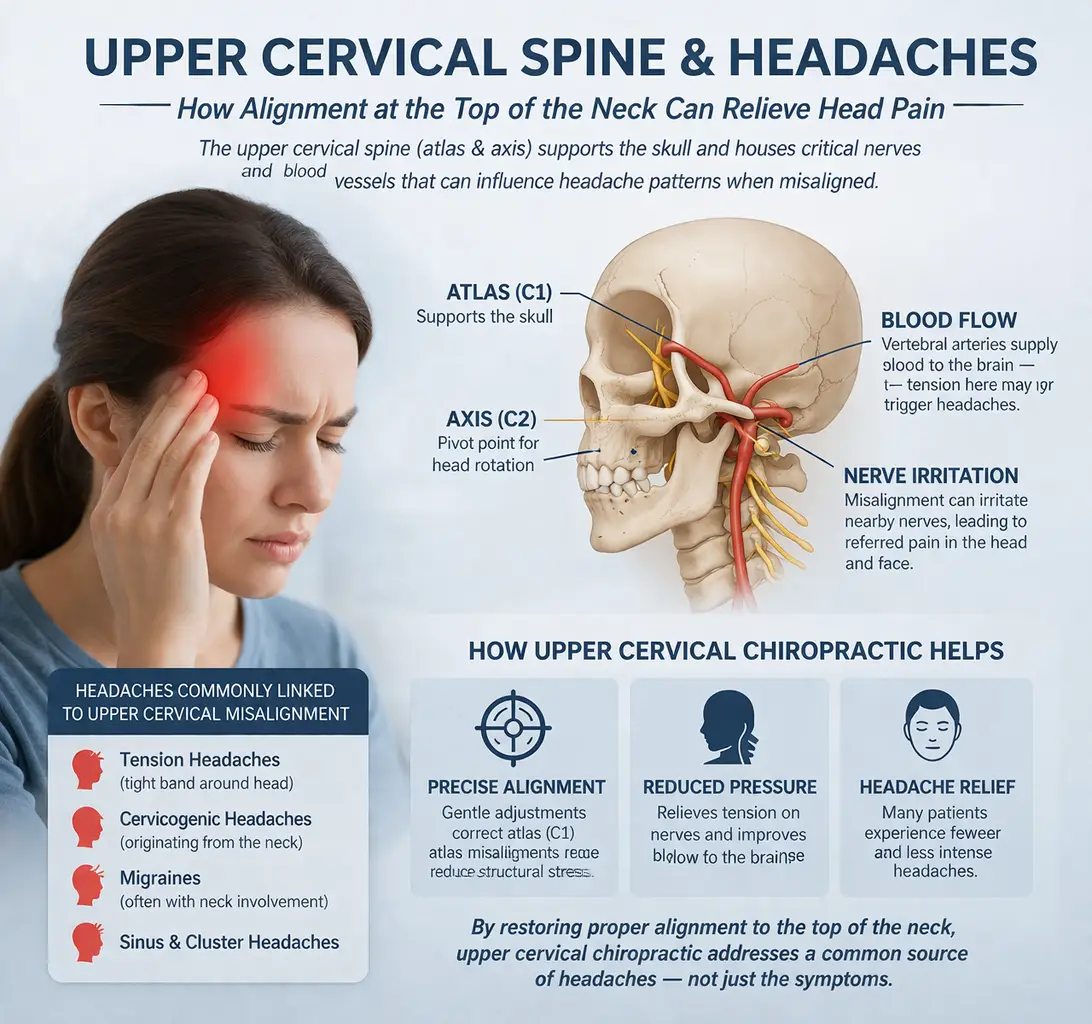
The upper cervical spine consists primarily of the atlas (C1) and axis (C2) vertebrae. These bones are unique in both structure and function.
Key facts about the upper cervical spine:
- The atlas supports the weight of the head (10–12 pounds on average)
- The brainstem passes directly through this region
- There is no disc between C1 and the skull
- It allows for a wide range of motion
- It has the highest concentration of neurological tissue in the spine
Because of this design, even small forces can shift the atlas out of alignment. When a neck injury occurs, the body often tightens muscles unevenly to protect itself. Over time, this compensation can lock the atlas into a misaligned position.
How Neck Injuries Lead to Atlas Misalignment
After a neck injury, the body’s priority is survival and stability—not alignment. Muscles spasm to protect injured tissues, ligaments may stretch or tear, and the head may subtly shift to one side.
When the atlas becomes misaligned:
- The head may tilt slightly
- Muscle tone becomes uneven
- Blood flow and cerebrospinal fluid dynamics can be affected
- Neurological signaling becomes distorted
This misalignment places constant mechanical stress on the brainstem, which controls balance, coordination, digestion, sleep cycles, heart rate, and autonomic nervous system regulation.
Migraines and Chronic Headaches After Neck Injury
Migraines are one of the most common symptoms linked to neck injuries. A misaligned atlas can irritate the brainstem, alter blood flow, and increase tension at the base of the skull—triggering chronic headaches and migraines that do not resolve with medication alone.
Vertigo and Dizziness Linked to Neck Trauma
The upper cervical spine plays a critical role in balance and spatial awareness. When alignment is compromised, communication between the brain, eyes, and inner ear becomes distorted, leading to vertigo, dizziness, and instability.
Brain Fog, Fatigue, and Cognitive Changes
Brain fog often stems from chronic nervous system stress. Upper cervical misalignment keeps the body in a constant fight-or-flight state, reducing mental clarity and energy.
Digestive Issues and Autonomic Nervous System Dysfunction
The vagus nerve originates in the brainstem. When upper cervical alignment is compromised, digestive regulation may suffer, leading to reflux, bloating, constipation, or nausea.
What Is Upper Cervical Chiropractic Care?
Upper cervical chiropractic care is a highly specialized, neurologically focused form of chiropractic that concentrates exclusively on the top two bones of the spine—the atlas (C1) and the axis (C2). These two vertebrae play a uniquely critical role in human health because they support the head, protect the brainstem, and influence how the entire nervous system functions. When a neck injury occurs, this region is often the first to lose proper alignment, even if the injury happened years or decades earlier.
Unlike traditional chiropractic approaches that may involve adjusting multiple areas of the spine with twisting, popping, or high-velocity force, upper cervical chiropractic care is designed to be extremely precise and gentle. The goal is not to create movement, but to restore proper structural alignment so the nervous system can function without interference. Because of the delicate nature of the upper cervical spine and its proximity to the brainstem, precision is essential.
The atlas is the only vertebra in the spine that has no disc above or below it. This allows for greater mobility but also makes it more vulnerable to injury. When the atlas becomes misaligned, the head is no longer balanced evenly on the spine. This imbalance creates abnormal muscle tension, altered posture, and chronic neurological stress. Over time, the body adapts to this misalignment, but that adaptation often shows up as symptoms such as migraines, vertigo, dizziness, neck pain, brain fog, fatigue, digestive issues, numb hands, and autonomic dysfunction.
Upper cervical chiropractic care works by identifying the exact position of the misalignment and delivering a correction that is specific to the individual. At Lavender Family Chiropractic / NeckWise North Sarasota, this process begins with advanced diagnostics, including 3D CBCT imaging. These scans allow us to measure the precise angle and direction of atlas and axis misalignment in three dimensions. This level of detail is critical, especially for patients who have suffered a neck injury, whiplash, concussion, or repetitive trauma.
In addition to structural imaging, upper cervical care incorporates functional nervous system assessments, such as paraspinal infrared thermography. This technology helps us evaluate how the nervous system is responding to stress and whether there is asymmetry in autonomic regulation. When the nervous system is under constant strain from an upper cervical misalignment, these scans often reveal patterns that correlate directly with a patient’s symptoms.
Once the misalignment is clearly identified, a gentle, controlled correction is performed. There is no cracking, twisting, or sudden force applied to the neck. The correction is delivered using a precise vector that is calculated specifically for the patient’s anatomy and injury pattern. Many patients are surprised by how subtle the adjustment feels, especially when compared to traditional chiropractic techniques.
The purpose of an upper cervical adjustment is not to repeatedly move bones, but to help the spine hold its corrected position. When the atlas is properly aligned, the head is balanced, muscle tone begins to normalize, and the nervous system no longer has to compensate for structural imbalance. This allows the brain and body to communicate more efficiently, creating an environment where healing can occur.
One of the most important distinctions of upper cervical chiropractic care is its focus on long-term stability rather than short-term relief. Instead of frequent, repetitive adjustments, care is based on monitoring alignment and nervous system function over time. Adjustments are only given when necessary, based on objective findings rather than symptoms alone. This approach is especially important for patients recovering from neck injuries, as repeated forceful manipulation can sometimes aggravate an already sensitive nervous system.
Upper cervical chiropractic care is particularly effective for individuals whose symptoms began after a neck injury, car accident, sports trauma, fall, or concussion. Even minor injuries can alter upper cervical alignment and create neurological stress that persists for years. By addressing the root structural issue, upper cervical care provides a natural, non-invasive pathway to healing without relying on medications or invasive procedures.
At Lavender Family Chiropractic / NeckWise North Sarasota, upper cervical chiropractic care is the foundation of everything we do. Our focus is on precision, safety, and helping the body restore its natural balance. By correcting upper cervical misalignment and supporting nervous system function, we help patients move out of survival mode and into true healing.
Why Choose Lavender Family Chiropractic / NeckWise North Sarasota
Led by Dr. Rusty Lavender and Dr. Jacob Temple, our clinic is dedicated to identifying and correcting the root cause of chronic symptoms related to neck injury.
Top 15 FAQs About Neck Injury and Upper Cervical Care
- Can a neck injury cause symptoms years later? Yes.
- Do I need pain to have a neck injury? No.
- Is upper cervical care safe? Yes.
- Will my neck be cracked? No.
- How long does care take? Varies by case.
- Can this help migraines? Yes.
- Can it help vertigo? Yes.
- Is insurance accepted? Our office is out of network with insurance. Many patients receive a superbill to submit to their insurance for reimbursement based on their coverage. We offer many different payment options as well as finance options.
- Is this care for children? Yes.
- Can this help post-concussion symptoms? Yes.
- What tests are used? CBCT and nervous system scans.
- Will I need ongoing adjustments? The goal is stability.
- Does this help digestion? Often, yes.
- How is this different from traditional chiropractic? It is highly precise and focused.
- Do you serve patients outside Sarasota? Yes.
Schedule a Consultation
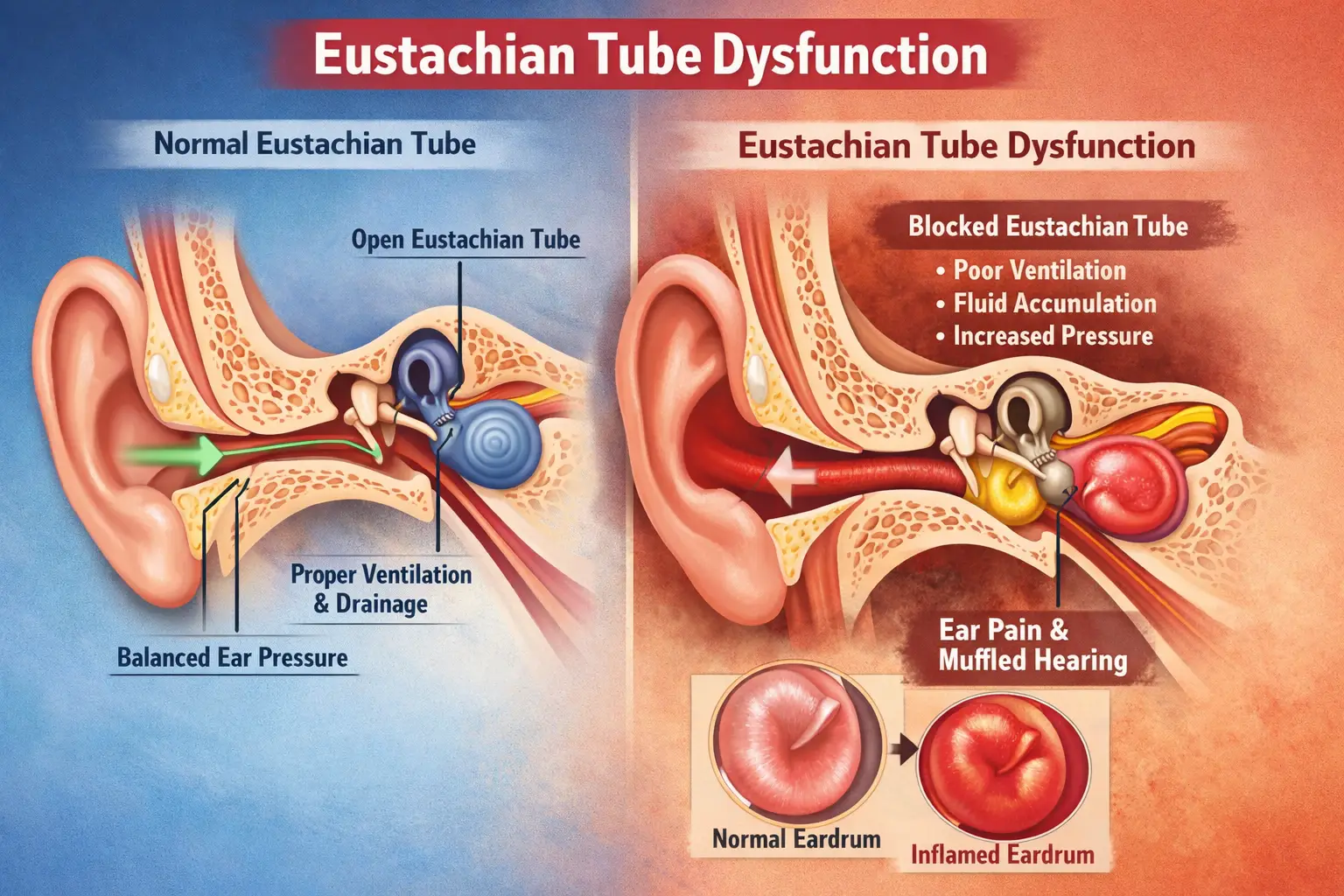
If you’re searching for a chiropractor sarasota florida, chiropractor near me, upper cervical chiropractor near me, or you’ve been looking for answers to ear pressure, dizziness, vertigo, headaches, and chronic congestion, we’re here to help.
Lavender Family Chiropractic (NeckWise North Sarasota)
5899 Whitfield Ave Ste 107, Sarasota, FL 34243
www.chiropractorsarasotaflorida.com
(941)243-3729
To learn more about us go to http://www.chiropractorsarasotaflorida.com
We also service Bradenton, Parrish, Ellenton, Ruskin, Venice, Tampa, St. Pete, Osprey, Longboat, Lakewood Ranch, Myakka City.
If you are in Tampa, Land O Lakes, Fort Myers, or Salt Lake City, you can visit my other locations! NeckWise Upper Cervical. Visit, www.neckwise.com
If you are not local, visit www.uccnearme.com to find a doctor in your area
Serving Sarasota, Bradenton, Lakewood Ranch, Parrish, Ellenton, Venice, Osprey, Siesta Key, Longboat Key, Lido Key, Myakka City, Punta Gorda, and St. Petersburg.