Trigeminal Neuralgia and Multiple Sclerosis: Understanding Secondary TN and Upper Cervical Chiropractic in Sarasota FL
By Dr. Rusty Lavender, D.C. — upper cervical chiropractor, Lavender Family Chiropractic, Sarasota, FL. Reviewed and updated October 2026.
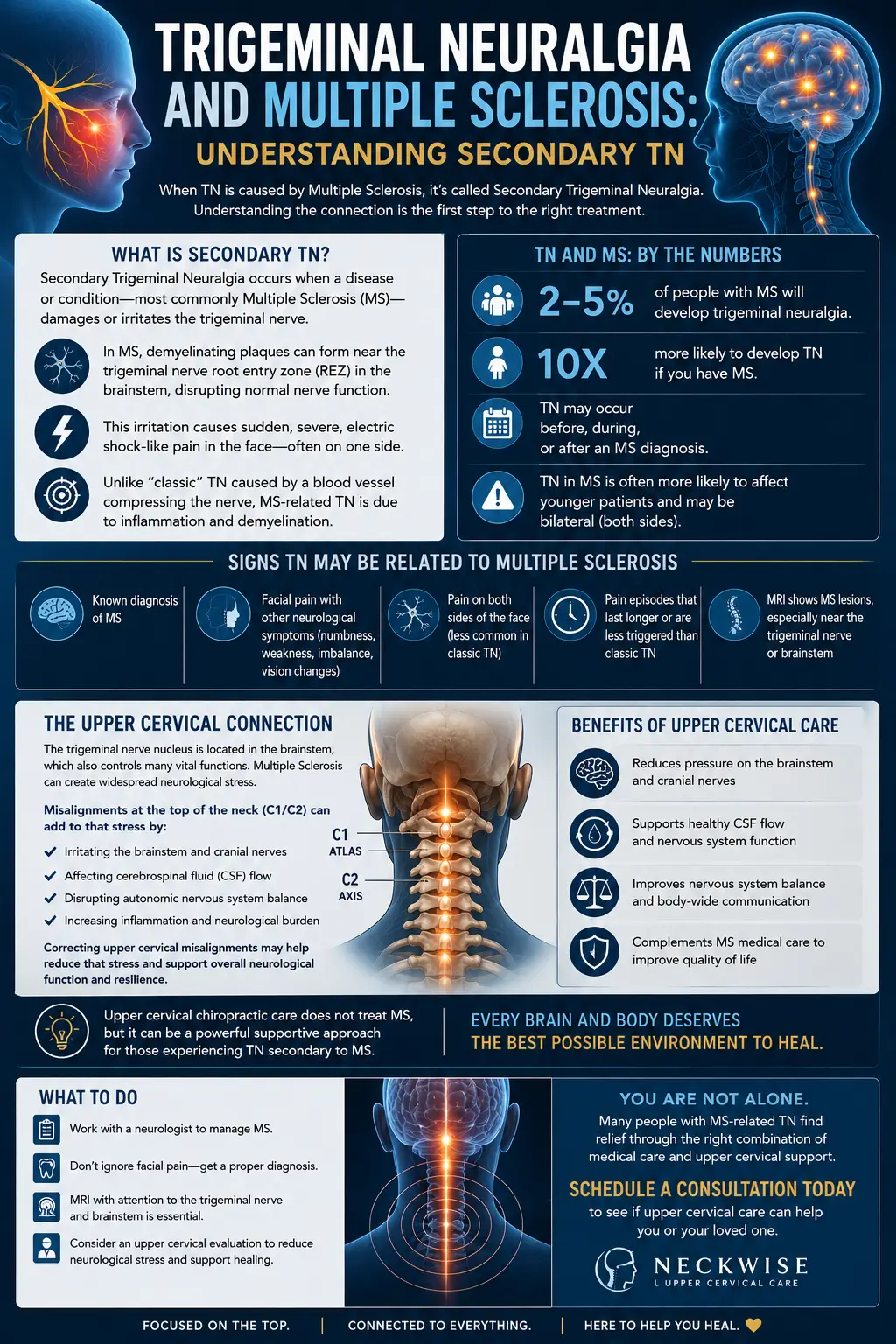
Secondary TN: Few pains are as sharp, sudden, or frightening as trigeminal neuralgia. A gust of wind, a sip of cold water, a light touch while shaving or applying makeup, or even a smile can trigger an electric, stabbing jolt across the cheek, jaw, or forehead. For many people, that pain is a stand-alone problem. But for a smaller group, facial pain that looks and feels like trigeminal neuralgia is actually a signal of something deeper happening in the nervous system — including multiple sclerosis (MS). When trigeminal neuralgia occurs because of another identifiable neurological condition, physicians call it “secondary trigeminal neuralgia.” Understanding that distinction is not academic. It changes what should happen next, who should be involved in your care, and how you and your care team think about your symptoms.
At Lavender Family Chiropractic in Sarasota, Florida, we see people every week who are living with facial pain and searching for answers. Some have a clear diagnosis. Some are newly diagnosed with MS and struggling with facial pain on top of everything else. Some are frightened, exhausted, and unsure who to trust. We want to be honest with you from the very first paragraph: multiple sclerosis is a serious neurological disease that is diagnosed and managed by neurologists, and trigeminal neuralgia connected to MS is a red flag that calls for prompt medical evaluation and imaging. Upper cervical chiropractic care does not treat MS, and it is not a substitute for neurological care. What we can offer is a precise, gentle, low-force approach that may support the upper cervical component of a person’s overall symptom burden — always in coordination with the medical team leading your care.
This article is written to help you understand what secondary trigeminal neuralgia is, how multiple sclerosis can produce it, why it matters so much to get the right workup, and where careful, conservative, coordinated upper cervical attention may thoughtfully fit. Our goal is to inform and empower you, not to make promises. If you take one thing from this page, let it be this: if you have facial pain and any concern about MS, see a neurologist. The rest of this discussion builds on that foundation.
What Is Secondary TN (Trigeminal Neuralgia)?
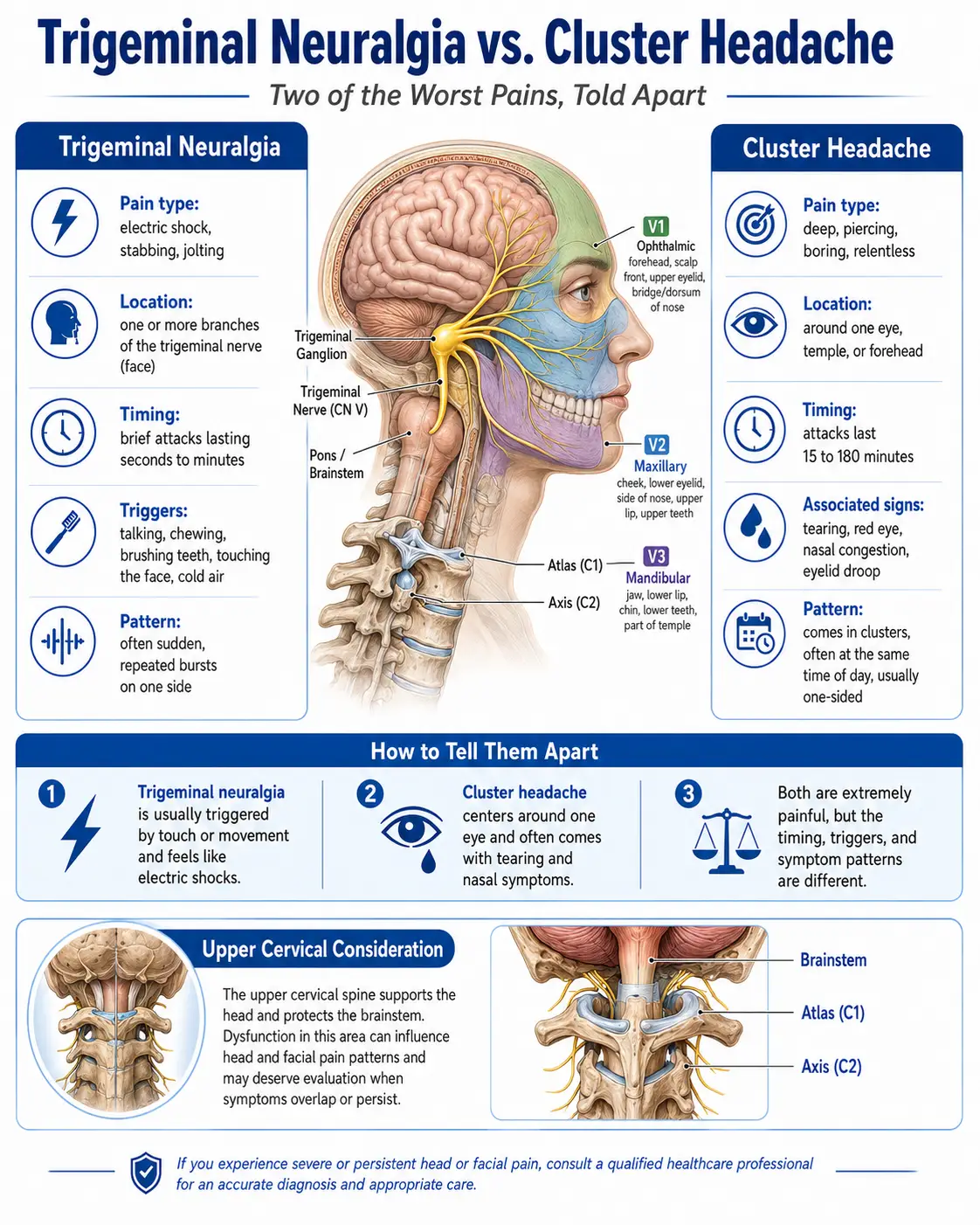
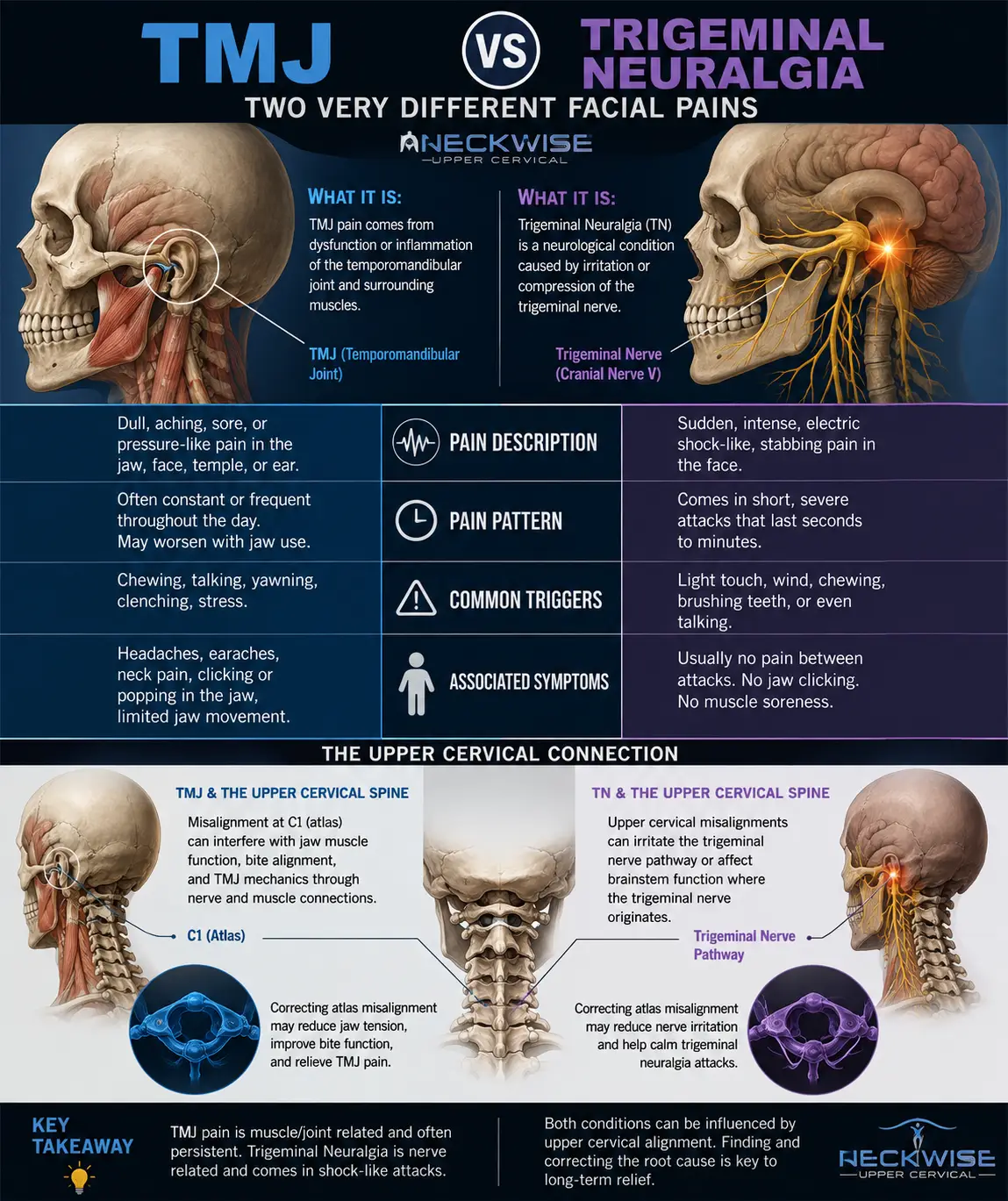
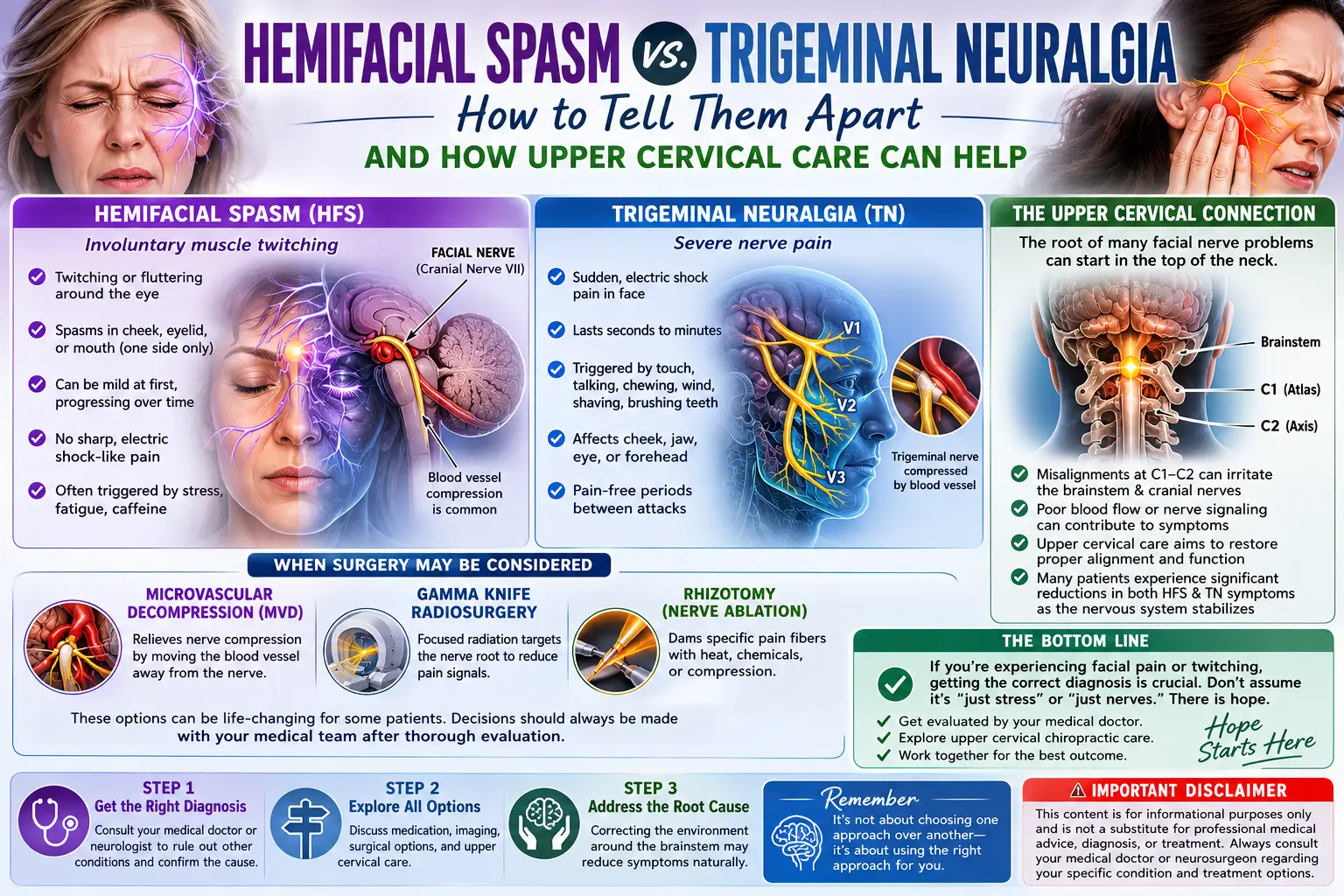
Trigeminal neuralgia (TN) is a chronic pain condition affecting the trigeminal nerve, also known as the fifth cranial nerve. This nerve is responsible for carrying sensation from your face to your brain and for controlling some of the muscles involved in chewing. When it misfires, the result can be brief, intense, electric-shock-like pains — often described as some of the most severe pain a person can experience. According to the clinical reference literature, TN is classically defined by sudden, usually unilateral, severe, stabbing, recurrent pain in the distribution of one or more branches of the trigeminal nerve.
Modern classification systems divide trigeminal neuralgia into three categories, and knowing which one applies to you is central to understanding your situation.
Classical trigeminal neuralgia is the most common form. In classical TN, imaging or surgical findings show that a blood vessel is pressing on the trigeminal nerve where it exits the brainstem, causing enough irritation and eventual demyelination (loss of the nerve’s protective insulating coating) to produce pain. The key feature is that the cause is a neurovascular compression — a vessel physically contacting and distorting the nerve root.
Idiopathic trigeminal neuralgia is diagnosed when a thorough workup, including MRI, does not reveal a clear cause. “Idiopathic” simply means “of unknown origin.” The pain pattern fits trigeminal neuralgia, but no vascular compression and no other identifiable disease process is found to explain it.
Secondary trigeminal neuralgia is the category that concerns us most in this article. Secondary TN means the facial pain is caused by an underlying, identifiable neurological disorder — something other than a simple blood vessel touching the nerve. Causes of secondary TN include tumors along the nerve’s path, structural abnormalities, and, importantly, multiple sclerosis. In secondary TN due to MS, the culprit is a demyelinating lesion — a plaque — affecting the trigeminal pathway inside the brainstem, rather than a vessel pressing on the nerve outside the brainstem.
This distinction matters because secondary trigeminal neuralgia points to a different underlying problem than classical or idiopathic TN. When facial pain that behaves like trigeminal neuralgia is actually being driven by multiple sclerosis, the facial pain is, in a sense, a messenger. It may be one of the ways the disease is announcing itself. Treating only the surface symptom without recognizing and addressing the underlying neurological condition would miss the larger picture. That is exactly why a careful diagnostic process — led by physicians and neurologists — is so essential, and why we always encourage patients with facial pain to make sure that process has happened.
You can learn more about the broader condition, its patterns, and the range of care options on our dedicated trigeminal neuralgia resource page, which serves as the hub for our writing on this topic.
How Multiple Sclerosis Causes Trigeminal Neuralgia
To understand how MS produces trigeminal neuralgia, it helps to understand a little about the disease itself. Multiple sclerosis is an immune-mediated condition in which the body’s own immune system attacks myelin, the fatty insulating sheath that surrounds nerve fibers in the brain and spinal cord. Myelin allows nerve signals to travel quickly and cleanly. When myelin is damaged, patches of scarring — called plaques or lesions — form. In these areas, nerve signals slow down, short-circuit, or cross-talk with neighboring fibers. Depending on where the plaques form, MS can cause an enormous range of symptoms, from vision changes and numbness to weakness, fatigue, and coordination problems.
When a demyelinating plaque forms in a very specific location — along the trigeminal pathway within the brainstem — it can produce the facial pain of trigeminal neuralgia. The trigeminal nerve does not simply float in isolation; it has a root entry zone where it connects to the pons (part of the brainstem), and it has tracts and nuclei that run deep within the brainstem itself. A plaque in the pontine trigeminal root entry zone or along these central trigeminal fibers can disrupt normal signaling in the same way that vascular compression does in classical TN — by producing focal demyelination that generates abnormal, painful nerve impulses. The scientific literature describes demyelination along the trigeminal afferent pathway as a central driver of trigeminal neuralgia, and in MS the source of that demyelination is the disease’s own plaques rather than an external vessel.
Interestingly, research using high-resolution MRI has shown that trigeminal pathway abnormalities in people with MS are more common than symptoms alone would suggest, and that imaging findings do not always line up neatly with whether a person is experiencing facial pain. This tells us that the relationship between plaque location and symptom expression is complex, and it reinforces why imaging and neurological expertise are needed to interpret the full picture. More recent work has proposed that in some MS patients, a pontine demyelinating plaque and neurovascular compression may coexist and act together on the same nerve fibers — a “dual mechanism” — which further underscores how individualized these cases can be.
There are several clues that can make a physician suspect that trigeminal neuralgia is secondary to MS rather than classical or idiopathic. These clues do not diagnose MS on their own, but they raise the index of suspicion:
- Younger age of onset. Classical trigeminal neuralgia most often appears in people over 50. When TN shows up in a younger adult — say, in the 20s, 30s, or 40s — clinicians are more alert to the possibility of an underlying cause like MS.
- Bilateral symptoms. Classical TN is almost always one-sided. Facial pain affecting both sides of the face, or shifting sides over time, is more suggestive of a secondary cause such as MS.
- Additional neurological symptoms. Facial numbness, sensory changes, vision problems, limb weakness, balance issues, or fatigue accompanying the facial pain point toward a broader neurological process.
- Sensory deficits on examination. In classical TN, the facial sensory examination is often normal between attacks. Objective sensory loss can be a signal that something more is going on.
If any of these features are present alongside facial pain, they are strong reasons to pursue a full neurological evaluation. The presence of trigeminal neuralgia can, in some people, actually be an early presenting feature of multiple sclerosis — meaning the facial pain arrives before the diagnosis. That is a powerful reason not to dismiss facial pain and not to treat it in isolation.
Why This Matters: TN in MS Is a Red Flag Requiring Neurological Care
We want to be direct and clear in this section, because it is the most important one on the page. Trigeminal neuralgia in the setting of multiple sclerosis — or facial pain that raises suspicion for MS — is a red flag that mandates neurological workup. This is not a situation to manage on your own, and it is not a situation for any chiropractor, including us, to manage independently. It calls for a physician, a neurologist, and appropriate imaging.
Here is why. Multiple sclerosis is a serious, chronic neurological disease. It is diagnosed through a combination of clinical evaluation, magnetic resonance imaging (MRI) of the brain and spinal cord, and sometimes additional testing such as analysis of cerebrospinal fluid. MRI is central because it can reveal the demyelinating lesions that define the disease and can identify a plaque along the trigeminal pathway that explains secondary TN. Only appropriate medical imaging and neurological assessment can distinguish secondary trigeminal neuralgia from classical or idiopathic forms — and that distinction directly shapes treatment.
Just as importantly, multiple sclerosis itself is managed medically. Neurologists use disease-modifying therapies — medications designed to reduce the frequency and severity of MS relapses and to slow progression of the disease over time. These therapies are a cornerstone of modern MS care, and decisions about them belong firmly in the hands of a neurologist. Facial pain in MS is likewise addressed within a medical framework, often with specific medications used for nerve pain, and sometimes with procedural or surgical options considered in select cases. None of these decisions should be delayed or replaced by conservative care.
So if you are reading this because you have facial pain and you either have MS or wonder whether you might, please hear us clearly: see a neurologist, and do so promptly. If you have not yet had an MRI and a neurological evaluation, that is the priority — ahead of anything else, including a visit to our office. We would rather you get the right medical workup than come to us first. That is what honest, trustworthy care looks like, and it is the standard we hold ourselves to at Lavender Family Chiropractic.
We say this not to frighten you, but to protect you. Getting the correct diagnosis opens the door to the right treatments. It also gives you and your family a clearer understanding of what you are facing and a real plan for the road ahead. Conservative approaches, including gentle upper cervical care, can have a supportive role for some people — but only as one coordinated piece of a plan that is anchored by neurological medicine.
The Trigeminocervical Connection and the Upper Neck
With all of that firmly established, it is fair to ask a reasonable question: is there any relationship between the upper neck and facial pain at all? The answer, from a neuroanatomical standpoint, is that there is a well-recognized connection — and understanding it helps explain where careful, conservative upper cervical attention might fit as a supportive measure for symptom burden.
The relevant concept is the trigeminocervical complex. Deep in the upper spinal cord and lower brainstem, sensory fibers from the trigeminal nerve and sensory fibers from the upper cervical nerves (the nerves of the top of the neck, particularly the C1, C2, and C3 levels) converge and share pathways. This overlap is part of why problems in the upper neck can sometimes be felt as pain in the head and face, and why head and face pain and upper neck tension so often travel together. The nervous system does not always keep a tidy boundary between “neck” input and “face” input at this level; the signals are processed in shared territory.
Because of this convergence, the upper cervical region — the area where your skull meets the top of your spine — is of particular interest in the broader conversation about head and facial pain. The top two vertebrae, the atlas (C1) and axis (C2), sit in an intimate relationship with the brainstem and the structures that pass through and around it. Everyday realities such as postural strain, past trauma, and mechanical tension in this region can contribute to a person’s overall discomfort and to how the nervous system is processing sensation.
It is essential to frame this carefully and honestly. The trigeminocervical connection does not mean that the upper neck causes multiple sclerosis, and it does not mean that addressing the upper neck treats MS or the demyelinating plaque responsible for secondary trigeminal neuralgia. Those are medical matters that belong to neurology, as we have stressed. What the trigeminocervical relationship does suggest is that, in a person whose facial pain is being medically managed, there may be an upper cervical mechanical component contributing to their overall symptom experience — and that a gentle, precise approach to that component could offer supportive value. This is a modest and carefully bounded role, and it is the only role we claim.
You can read more about our specific focus on the top of the neck on our upper cervical chiropractic care page, which explains our philosophy in greater depth.
How Precise Upper Cervical Care Fits at Lavender
At Lavender Family Chiropractic, our entire practice is built around the upper cervical spine, and our approach is deliberately precise and low-force. We are not a “twist and crack” practice. Dr. Rusty Lavender and Dr. Jacob Temple use the Knee Chest Upper Cervical technique, a method centered on a precise, low-force correction rather than high-velocity, forceful twisting of the neck. For someone living with a sensitive nervous system and facial pain, the gentleness of this approach is not a small detail — it is central to how we think about supporting patients thoughtfully and comfortably.
Precision begins with knowing exactly what we are looking at before we ever consider a correction. That is why our process is grounded in objective imaging and measurement:
- 3D CBCT imaging. We use three-dimensional cone-beam computed tomography to see the unique anatomy of your upper cervical spine in detail. Everyone’s atlas and axis are shaped and oriented a little differently, and this imaging allows us to understand your specific structure rather than relying on generic assumptions. Importantly, CBCT of the neck is not a substitute for the brain and spinal cord MRI that your neurologist uses to evaluate MS — these are different tools for different purposes, and we are clear about that distinction.
- Tytron paraspinal infrared thermography. We also use Tytron paraspinal infrared thermography, a non-contact scan that reads patterns of heat along the spine as a window into nervous system function. It is painless, involves no radiation, and gives us an objective way to track patterns over time.
From these findings, we build a customized care plan tailored to your individual anatomy, your history, and — crucially — the context of your medical care. There is no one-size-fits-all protocol here. Every plan is designed around the person in front of us.
Now, the honest and most important part: what this care can and cannot do. Our precise, low-force upper cervical care does not treat multiple sclerosis. It does not cure trigeminal neuralgia. It does not repair demyelinating plaques, and it is not a substitute for neurological care, MRI, disease-modifying therapy, or any medical treatment your neurologist recommends. We will never ask you to choose between our care and your medical care, and we will never suggest that gentle chiropractic can take the place of the medicine that manages your MS. What we offer is bounded and specific: gentle, supportive attention to any upper cervical mechanical component that may be contributing to your overall symptom burden, delivered with precision and coordinated with the physicians leading your care.
Coordination is a genuine value for us, not a slogan. If you are a patient with MS-related facial pain, we want to work alongside your neurologist, not around them. We are glad to communicate about the conservative, supportive role we are playing, and we encourage you to keep your medical team fully informed about everything you are doing. Because we are a cash-pay, out-of-network practice, we also provide superbills you can submit to your insurance for potential reimbursement — more on that in the frequently asked questions below. Our aim is to be one careful, transparent, well-coordinated piece of a plan that always keeps your neurological care at the center.
If facial pain and upper neck tension are part of your daily life and you would like a conservative, gentle perspective to complement your medical care, we would be glad to talk with you about whether our approach might be an appropriate supportive fit for your situation.
To ask a question or schedule a first visit, call Lavender Family Chiropractic at (941) 243-3729, or book online through our new patient scheduling page. Our office is located at 5899 Whitfield Avenue, Suite 107, Sarasota, FL 34243 — at the corner of University and Whitfield, convenient to Sarasota, Bradenton, and Lakewood Ranch. We are always happy to answer questions and to help you understand whether coordinated, supportive upper cervical care makes sense for you.
What the Research Says
We believe in being transparent about the evidence, including its limits. The scientific literature on trigeminal neuralgia in multiple sclerosis describes the mechanism, prevalence, and imaging findings of secondary TN. It does not establish upper cervical chiropractic as a treatment for MS or a cure for trigeminal neuralgia, and we are not presenting it that way. We share these five peer-reviewed and clinical references so that you can read the primary sources for yourself and better understand the condition.
- Laakso SM, et al. Trigeminal neuralgia in multiple sclerosis: Prevalence and association with demyelination. Acta Neurologica Scandinavica, 2020 (PMID 32187387). This Finnish cohort study reported that trigeminal neuralgia was roughly 15 times more common among people with multiple sclerosis than in the general neurological population, and found a demyelinating lesion near the trigeminal ganglion in the majority of assessable cases — evidence linking MS-related TN to demyelination.
- Chen Q, et al. The Molecular Basis and Pathophysiology of Trigeminal Neuralgia. International Journal of Molecular Sciences, 2022 (PMCID PMC8998776). This review examines the underlying mechanisms of trigeminal neuralgia, emphasizing the demyelination hypothesis — including demyelination driven by conditions such as multiple sclerosis — as a central factor in how the trigeminal nerve generates abnormal pain signals.
- Mills RJ, Young CA, Smith ETS. Central trigeminal involvement in multiple sclerosis using high-resolution MRI at 3 T. British Journal of Radiology, 2010 (PMCID PMC3473583). Using high-resolution 3 Tesla MRI in patients with clinically definite MS, this study found trigeminal root entry zone and pontine abnormalities in a substantial proportion of patients, at a higher rate than conventional MRI detects, and noted that imaging changes did not always correspond to facial symptoms.
- Truini A, et al. A dual concurrent mechanism explains trigeminal neuralgia in patients with multiple sclerosis. Neurology, 2016;86(22):2094-2099 (DOI 10.1212/WNL.0000000000002720). This study proposes that trigeminal neuralgia in MS can arise from a combination of a pontine demyelinating plaque and neurovascular compression acting together on the same nerve fibers, highlighting the complex, individualized nature of secondary TN.
- Nagalli S, et al. Trigeminal Neuralgia. StatPearls [Internet], updated 2024 (Bookshelf ID NBK554486, PMID 32119373). This clinical reference chapter provides an overview of trigeminal neuralgia — its classification into classical, idiopathic, and secondary forms, its diagnosis, and its management — including recognition of multiple sclerosis as a cause of secondary TN.
Reading these sources will give you a clearer, evidence-based picture of why the medical workup matters so much and why coordinated, conservative care must stay in its proper, supportive lane.
Living Well with MS-Related Facial Pain: Self-Care
Living with facial pain connected to multiple sclerosis can be physically draining and emotionally heavy. While the medical management of your condition belongs with your neurologist, there are gentle, everyday self-care strategies that many people find helpful for coping with day-to-day comfort. None of these replace medical treatment, and you should always run new strategies by your care team, but they may make hard days a little more manageable.
Identify and gently manage your triggers. Because trigeminal neuralgia attacks can be set off by light touch, cold air, chewing, brushing teeth, or even talking, it can help to keep a simple journal of what precedes your flares. Awareness lets you plan around triggers — for example, shielding your face from wind, using lukewarm water, and choosing softer foods during rough stretches.
Prioritize rest and manage fatigue. Fatigue is one of the most common and disabling symptoms of MS, and pain compounds it. Pacing your activities, protecting your sleep, and giving yourself permission to rest are not luxuries — they are part of managing a neurological condition well.
Support your stress response. Stress does not cause MS or trigeminal neuralgia, but many people notice that high-stress periods make pain harder to tolerate. Gentle practices such as slow breathing, meditation, gentle stretching, and time in nature can support your nervous system’s baseline. Sarasota’s beaches and quiet parks can be a real asset here.
Attend to posture and the upper neck. Because of the trigeminocervical relationship discussed earlier, being mindful of how you hold your head and neck — especially during long stretches at a desk, phone, or steering wheel — may help reduce mechanical tension that adds to overall discomfort. Simple ergonomic adjustments and frequent position changes cost nothing and may help.
Lean on your support system. Chronic facial pain can be isolating. Staying connected with family, friends, MS support communities, and your care team matters. You are not meant to carry this alone.
Keep every member of your care team informed. If you pursue conservative, supportive care of any kind, tell your neurologist. Good coordination is one of the best things you can do for yourself.
For more gentle, practical strategies related to conservative care of the neck and nervous system, you may find our broader writing on nerve pain treatment in Sarasota helpful as a companion read. It offers additional context on how a careful, conservative approach thinks about nerve-related discomfort.
Serving Sarasota and Surrounding Communities
Lavender Family Chiropractic is proud to serve patients from across the Suncoast and beyond. Our office at 5899 Whitfield Avenue, Suite 107, sits at the corner of University and Whitfield, placing us within easy reach of many nearby communities. We regularly welcome patients from:
- Sarasota
- Bradenton
- Lakewood Ranch
- Venice
- Palmer Ranch
- Osprey
- Siesta Key
- Longboat Key
- Lido Key
- University Park
- Parrish
- Ellenton
- Myakka City
- Punta Gorda
- St. Petersburg
Whether you are just down University Parkway in Lakewood Ranch, across the bay in St. Petersburg, or coming up from Venice or Punta Gorda, we aim to make it straightforward to access our precise, gentle upper cervical care. Many of our patients travel a bit of a distance because focused, low-force upper cervical work is a specialized approach. If you are searching for a conservative, coordinated perspective to complement your medical care for facial pain, we would be glad to serve you. You can always reach our office through our contact page with any questions about location, parking, or getting started.
Top 15 Questions
1. What is secondary trigeminal neuralgia? Secondary trigeminal neuralgia is facial pain in the trigeminal nerve’s distribution that is caused by an identifiable underlying neurological condition — such as multiple sclerosis, a tumor, or a structural abnormality — rather than by simple vascular compression (classical TN) or an unknown cause (idiopathic TN).
2. How is trigeminal neuralgia in MS different from the classical form? In classical TN, a blood vessel typically compresses the trigeminal nerve outside the brainstem. In MS-related (secondary) TN, the cause is a demyelinating plaque affecting the trigeminal pathway inside the brainstem. The distinction is made through neurological evaluation and MRI, not by chiropractic examination.
3. Can trigeminal neuralgia be the first sign of MS? Yes, in some people facial pain can appear before other MS symptoms and can be an early presenting feature of the disease. This is one of the biggest reasons that facial pain deserves a thorough neurological workup rather than being treated in isolation.
4. Should I see a neurologist if I have facial pain and possible MS? Yes — urgently. Facial pain that raises any concern for multiple sclerosis is a red flag that calls for prompt evaluation by a neurologist, including MRI. If you have not yet had this workup, it should be your first priority, ahead of any conservative or supportive care.
5. Can chiropractic care cure my trigeminal neuralgia or my MS? No. We want to be completely honest: upper cervical chiropractic care does not cure trigeminal neuralgia and does not treat multiple sclerosis. It does not repair demyelinating plaques and is not a substitute for neurological care or disease-modifying therapy. Our role is gentle, supportive attention to any upper cervical component of your symptom burden, coordinated with your medical team.
6. What can upper cervical care actually offer someone with MS-related facial pain? For some people whose facial pain is being medically managed, there may be an upper cervical mechanical component adding to their overall discomfort. Our precise, low-force approach may offer supportive value for that specific component — nothing more, and always alongside medical care.
7. Is your technique forceful? I have a very sensitive nervous system. No. We use the Knee Chest Upper Cervical technique, which is built around a precise, low-force correction rather than high-velocity, forceful twisting of the neck. Gentleness and precision are central to how we work.
8. Why do you use 3D CBCT imaging and Tytron thermography? These tools let us understand your individual upper cervical anatomy (3D CBCT) and observe patterns of nervous system function along the spine (Tytron paraspinal infrared thermography) objectively. They inform a precise, customized approach — but they are not a substitute for the brain and spinal cord MRI your neurologist uses to evaluate MS.
9. Do you take insurance? We are a cash-pay, out-of-network practice. That means payment is due at the time of service rather than being billed to an insurance company on your behalf. Many patients appreciate the transparency and the focused time this model allows.
10. What is a superbill and how does it work? A superbill is an itemized receipt of the care you received, coded so that you can submit it to your insurance company for potential out-of-network reimbursement. We are glad to provide superbills; whether and how much you are reimbursed depends on your individual plan, so we encourage you to check your out-of-network benefits.
11. How much will care cost? Because every person’s situation is different, we build customized care plans rather than applying a single rigid protocol. We will discuss the specifics of your plan and its associated costs clearly and up front, so you can make an informed decision before proceeding.
12. Will you coordinate with my neurologist? Yes, and we consider this important. We want to work alongside your neurologist and medical team, not around them. Keeping everyone informed helps ensure your medical care stays at the center where it belongs.
13. I’m younger and have facial pain on both sides. Does that mean anything? Younger age of onset and bilateral facial pain are among the clues that can raise a physician’s suspicion for a secondary cause such as MS. They do not diagnose anything on their own, but they are strong reasons to make sure you have had a full neurological evaluation and MRI.
14. Can I do upper cervical care instead of my MS medication? No — please do not. Disease-modifying therapy and other medical treatments for MS are managed by your neurologist and are a cornerstone of caring for the disease. Conservative, supportive care is never a replacement for medical treatment, and we would never ask you to make that trade.
15. How do I get started with your office? You can call us at (941) 243-3729 or book online through our new patient scheduling page. We will talk with you about your situation, make sure your medical workup is on track, and help you understand whether coordinated, supportive upper cervical care is an appropriate fit for you.
Closing
Trigeminal neuralgia connected to multiple sclerosis is one of the more misunderstood forms of facial pain — and one of the most important to understand correctly. When facial pain is secondary to MS, it is a signal that deserves prompt, expert medical attention. The path forward begins with a neurologist, an MRI, and a clear diagnosis. From there, medical management of the disease and its symptoms takes the lead, and disease-modifying therapy and other medical treatments remain firmly in your neurologist’s hands.
Within that framework, there may be a modest, supportive role for precise, gentle upper cervical care — attention to any upper neck component of your overall symptom burden, delivered with a low-force technique and coordinated with your medical team. At Lavender Family Chiropractic, that is the role we claim, the only role we claim, and the standard of honesty we hold ourselves to. We will always encourage you toward the medical care you need, and we will always be transparent about what conservative care can and cannot do.
If you live with facial pain and upper neck tension and would like a careful, conservative, coordinated perspective to complement your medical care, we would be honored to talk with you. Call Lavender Family Chiropractic at (941) 243-3729, or book your visit through our new patient scheduling page. You will find us at 5899 Whitfield Avenue, Suite 107, Sarasota, FL 34243 — at the corner of University and Whitfield, serving Sarasota, Bradenton, Lakewood Ranch, and the surrounding communities. We look forward to helping you find clarity and comfort, one careful step at a time.
Related Articles


Get our upper cervical articles first.
Patients Experience