Trigeminal Neuralgia vs. Cluster Headache: Two of the Worst Pains, Told Apart — and the Cervical Link Behind the Face
By Dr. Rusty Lavender, D.C. — upper cervical chiropractor, Lavender Family Chiropractic, Sarasota, FL. Reviewed and updated October 2026.
Trigeminal neuralgia and cluster headache are two of the most severe pains recognized in all of medicine, and both demand a neurologist, imaging, and real medical treatment — that part is not negotiable. But here is the piece that too often goes unexamined: deep in the brainstem, the nerves of your upper neck feed into the exact same pain-processing region as the trigeminal nerve behind both conditions. When someone in Sarasota, Lakewood Ranch, or Bradenton has been through the medical workup and still senses that the top of their neck is tangled up in their face pain, they are usually right — and the upper cervical spine is the one contributing area no one thought to evaluate.
Let me be direct from the first line, because these two conditions are serious and I will not blur that: this article does not claim upper cervical care treats trigeminal neuralgia or cluster headache. It does not. What I want to do is help you tell these two devastating conditions apart in plain, honest language, point you firmly toward the medical evaluation they require, and explain the real anatomical reason the upper neck keeps coming up in conversations about facial and head pain — as a contributing cervical component worth evaluating alongside proper medical care, never as a substitute for it.
This article is for general educational purposes only and is not a substitute for professional medical advice, diagnosis, or treatment. Trigeminal neuralgia and cluster headache are serious neurological conditions requiring evaluation and management by a qualified physician.
Why These Two Get Confused
At first glance you might wonder how anyone could mix up these conditions. One is a stabbing pain in the face; the other is a boring, burning pain around the eye. But in the real world, the confusion is understandable — and getting it wrong costs people months or years.
Both conditions cause severe, one-sided pain in the head and face. Both tend to involve the territory served by the trigeminal nerve — the large nerve responsible for sensation across most of the face. Both can come and go in bouts, with pain-free stretches between. And both are relatively uncommon, which means many primary-care clinicians simply have not encountered many cases. When a person walks into a clinic in Sarasota or Bradenton describing “terrible one-sided face pain,” it takes careful history-taking to sort out which condition is actually at play.
The stakes of getting it right are high. The medications that help trigeminal neuralgia are not the same as the medications that help cluster headache. The imaging priorities differ. Even the timing and pattern of attacks point in different directions. So let us slow down and look at each one carefully.
Trigeminal Neuralgia: The Electric Shock in the Face
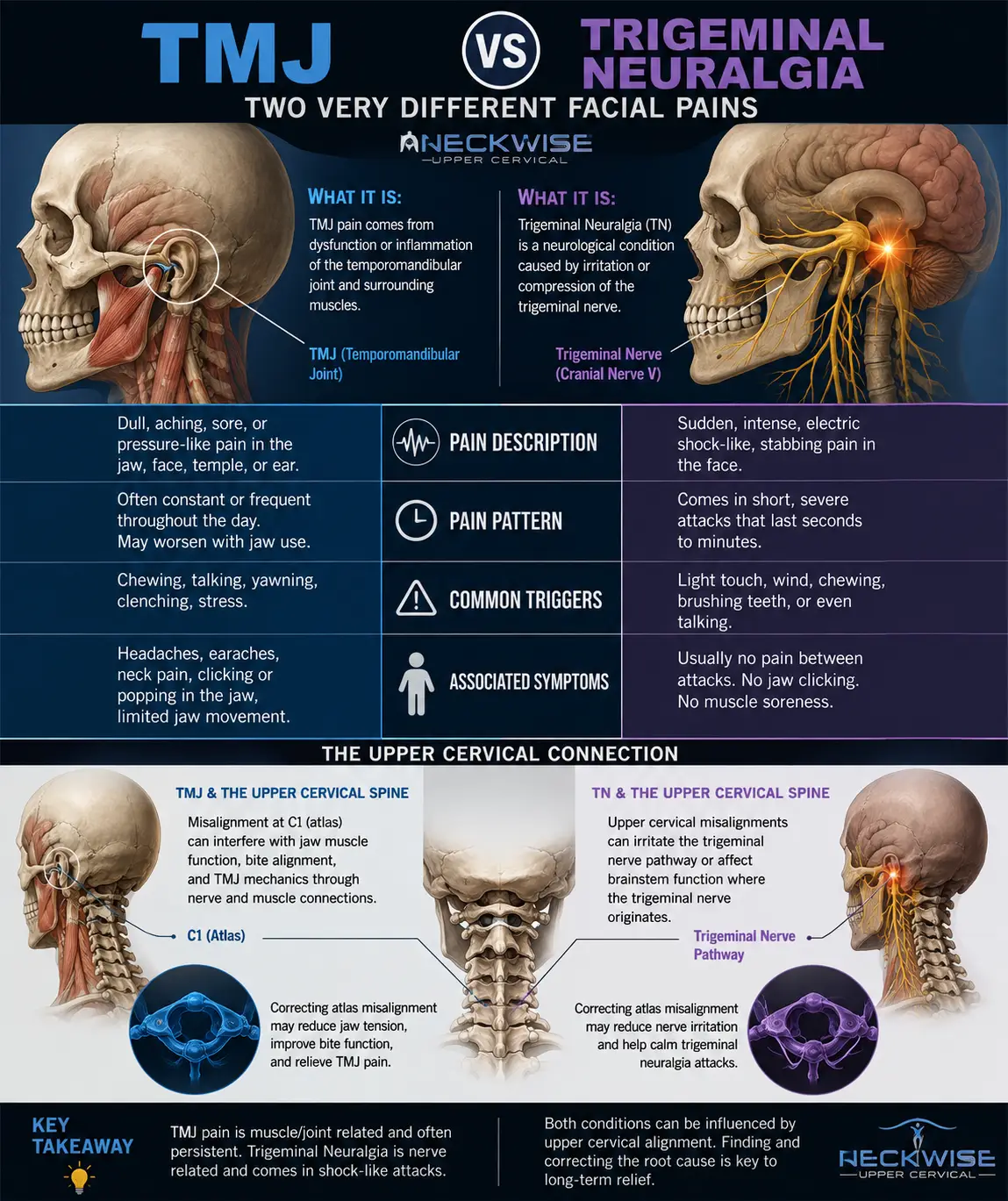
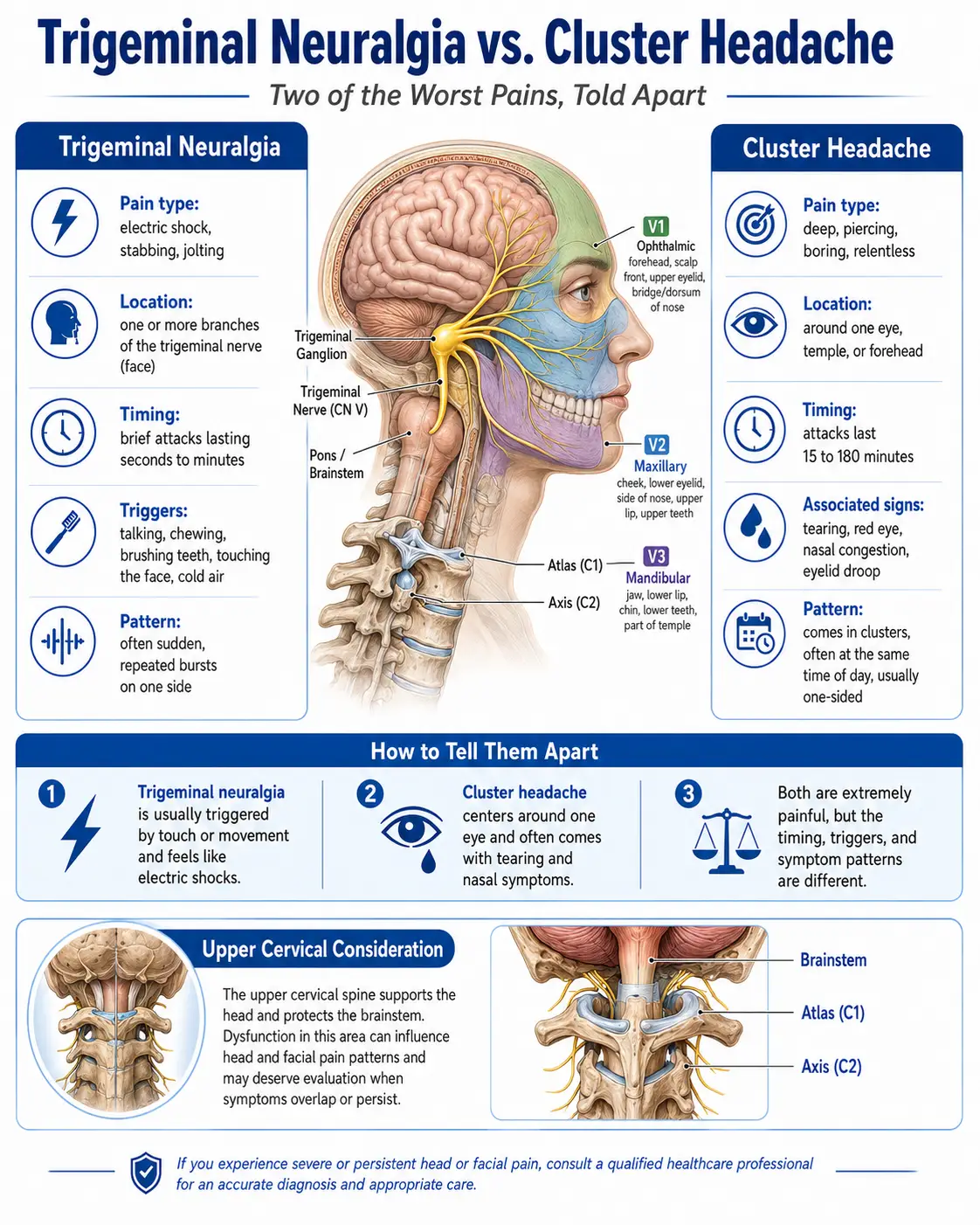
Trigeminal neuralgia, often abbreviated TN, is defined by a very particular kind of pain. People describe it as sudden, electric, shooting, or stabbing — like a jolt of electricity or a knife strike across the cheek, jaw, or around the eye. The pain is typically brief. A single jolt might last a fraction of a second to a couple of minutes, though attacks can come in rapid volleys, one after another.
What makes trigeminal neuralgia so distinctive, and so cruel, is its triggers. The pain is often set off by light, ordinary touch to the face: brushing your teeth, shaving, applying makeup, feeling a breeze on your cheek, chewing, or even talking and smiling. There are usually specific “trigger zones” where the lightest contact can unleash an attack. Because eating and speaking can provoke the pain, some people with severe trigeminal neuralgia begin avoiding food and social contact, which takes a serious toll on both physical and emotional health.
The pain is almost always one-sided, and it most commonly affects the middle and lower portions of the face — the cheek and jaw — though it can involve the area around the eye and forehead. Between attacks, many people feel completely normal, which makes the condition feel unpredictable and menacing: relief, and then, without warning, another jolt.
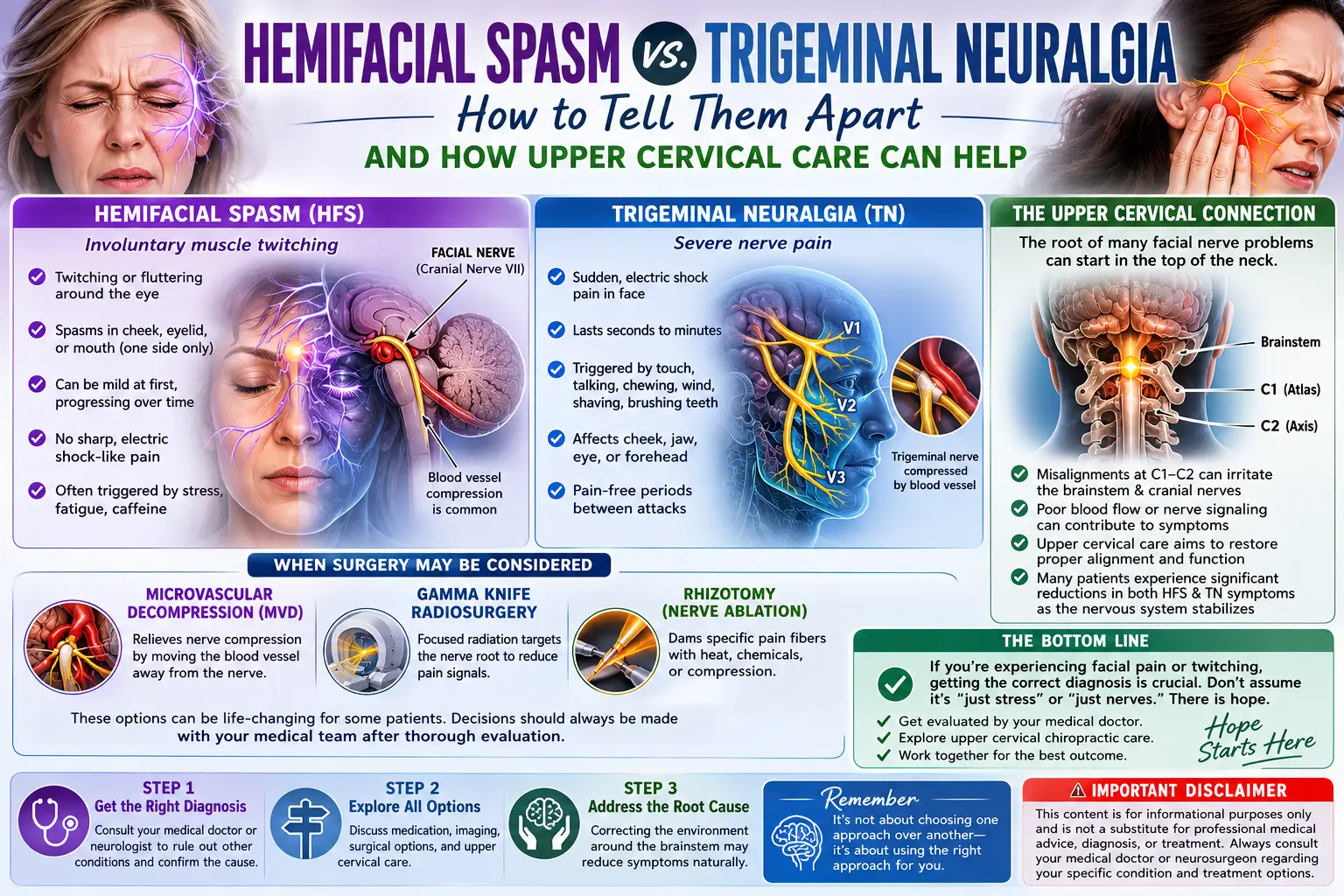
Trigeminal neuralgia is thought to arise, in many classic cases, from irritation of the trigeminal nerve where it exits the brainstem, frequently due to a nearby blood vessel pressing on and pulsing against the nerve. Over time this contact is believed to wear on the nerve’s protective covering, making it hypersensitive and prone to firing off pain signals in response to minor stimulation. This mechanism is why a modern approach to diagnosis, as outlined in a widely cited review in Cephalalgia, places such emphasis on careful evaluation and imaging: the goal is both to confirm the diagnosis and to identify what may be driving it.
Importantly, trigeminal neuralgia can also be “secondary” — caused by an underlying condition such as multiple sclerosis or, less commonly, a tumor pressing on the nerve. This is a major reason why an MRI is considered an essential part of the workup. A newer classification and diagnostic grading system, published in Neurology by Cruccu and colleagues, formally distinguishes classical trigeminal neuralgia (with vessel contact), secondary trigeminal neuralgia (from an identifiable disease), and idiopathic trigeminal neuralgia (no clear cause found). Sorting a patient into the right category shapes everything that follows — and it is a physician’s job, not something to guess at from a website.
How Trigeminal Neuralgia Is Managed
The first-line medical treatment for trigeminal neuralgia is not a typical painkiller. Ordinary pain relievers usually do little. Instead, the mainstay is an anti-seizure medication called carbamazepine, which calms the overexcitable nerve firing that drives the pain. A closely related medication, oxcarbazepine, is often used as well. A practical clinical guide in Practical Neurology describes these agents as the cornerstone of initial treatment, with other medications and, in selected cases, surgical options considered when medications are not tolerated or stop working.
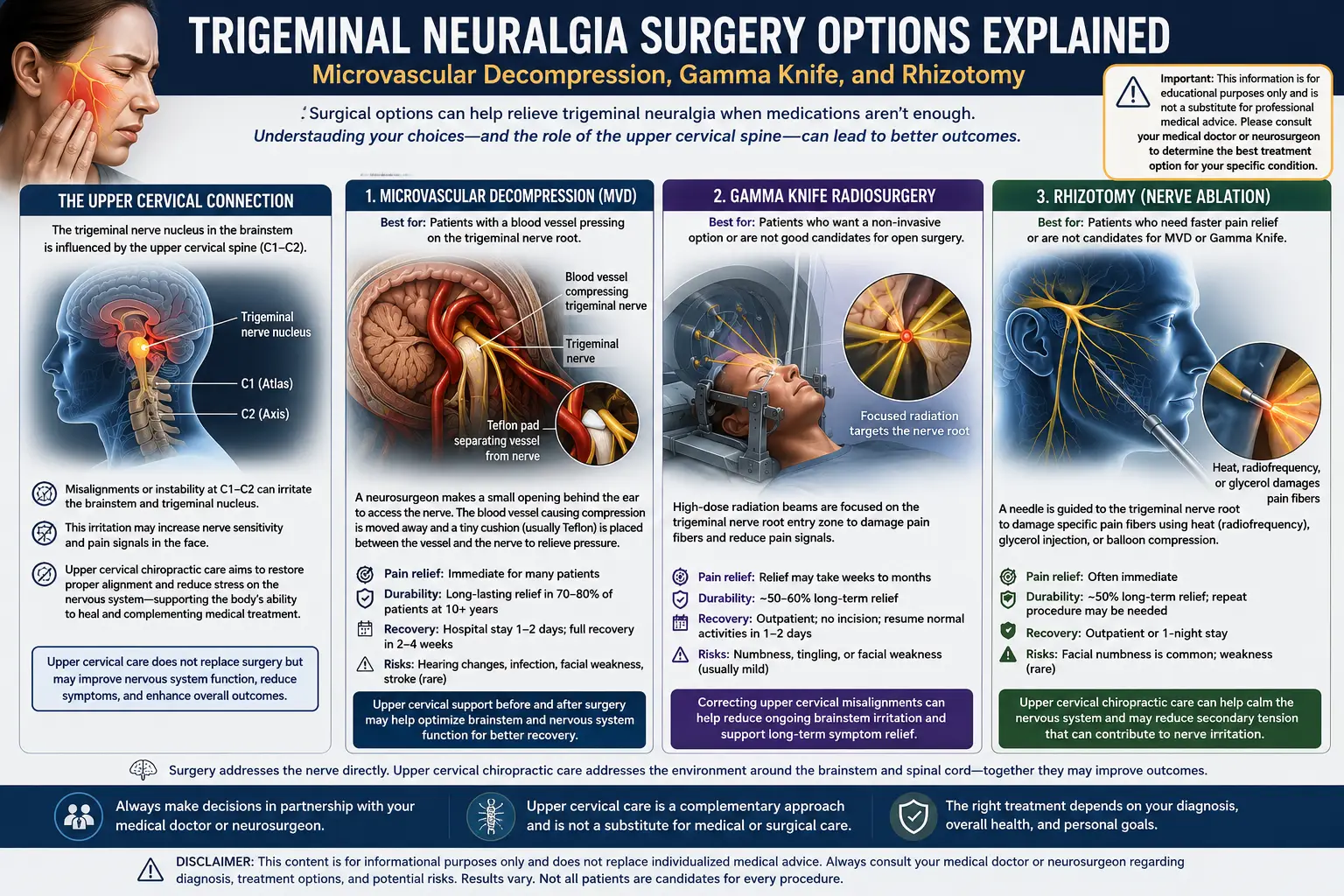
Surgical approaches exist for people who do not respond adequately to medication. One of the better-known procedures, microvascular decompression, aims to relieve the pressure of a blood vessel on the nerve. Other targeted procedures interrupt pain signaling in different ways. These are decisions made together with a neurologist and, often, a neurosurgeon, based on the individual’s situation, imaging findings, and response to medication.
The essential point: trigeminal neuralgia is a neurological diagnosis with established medical treatments, and getting on the right medication early can make an enormous difference. If you suspect trigeminal neuralgia, the path forward runs through a physician who can confirm the diagnosis and, crucially, order imaging to rule out secondary causes.
Cluster Headache: The Clockwork Storm Around One Eye
Cluster headache is a completely different beast. Where trigeminal neuralgia is a series of brief electric jolts, cluster headache is a sustained, savage assault. The pain is severe — often described as boring, burning, piercing, or like a hot poker driven behind or around one eye. It is strictly one-sided, centered on the eye, temple, or forehead. Cluster headache has earned the grim nickname “suicide headache” because of how relentless the attacks can feel; it is never “just a bad headache.”
A cluster attack does not last seconds. It builds and stays. Untreated, an individual attack typically runs anywhere from about 15 minutes to 3 hours. The attacks come in “clusters” — bouts lasting weeks to months, during which a person may experience one or several attacks per day, often at strikingly predictable times. Many people are woken from sleep at the same hour each night. The condition has a haunting punctuality.
What truly sets cluster headache apart are the accompanying features on the same side as the pain. During an attack, the eye on the affected side often becomes red and watery. The nostril on that side may run or feel congested. The eyelid may droop or swell, and the forehead and face may sweat. These are called autonomic features, and they are the fingerprint of this condition. This is why cluster headache belongs to a family of disorders known as the trigeminal autonomic cephalalgias — headaches that combine trigeminal pain with these automatic nervous-system responses.
There is one more telltale sign. During a cluster attack, most people cannot keep still. Whereas someone with a migraine typically wants to lie down in a dark, quiet room, a person in the grip of a cluster attack is often restless and agitated — pacing, rocking, holding their head, unable to find any position that helps. This restlessness is so characteristic that clinicians specifically ask about it.
The underlying biology of cluster headache is complex and still being unraveled, but research points to involvement of deep brain structures, including the hypothalamus — which helps explain the striking clockwork timing — along with activation of the trigeminal nerve and its connections to the autonomic nervous system. A landmark review by Goadsby in Lancet Neurology laid out much of the modern understanding of cluster headache as a trigeminal autonomic cephalalgia, tying together the trigeminal pain pathways and the autonomic features that define the condition.
How Cluster Headache Is Managed
Cluster headache management has two aims: stopping individual attacks quickly and preventing attacks during a bout.
For stopping an attack in progress, two approaches stand out. The first is high-flow oxygen delivered through a mask, which can relieve an attack for many people within minutes. The second is fast-acting triptan medications, typically given by injection or nasal spray rather than as a tablet, because attacks come on and peak too quickly for a slow-dissolving pill to help. These are acute, or “abortive,” treatments.
For prevention during a bout, verapamil — a medication originally developed for heart and blood-pressure conditions — is a common first choice, sometimes alongside a short course of other agents used to break a stubborn cycle. The goal is to reduce the frequency and severity of attacks until the bout runs its course.
Just as with trigeminal neuralgia, the message is clear: cluster headache is a neurological condition with specific, effective medical treatments — but they are specific. High-flow oxygen and injectable triptans are not things a person stumbles into on their own. They require a diagnosis and a prescription from a physician who recognizes the condition. Too many people with cluster headache go years before receiving the right treatment. Recognizing the pattern is the first step toward getting help.
Telling Them Apart: A Side-by-Side Look
Let me lay the two conditions next to each other, because seeing the contrast makes the distinctions click.
Duration of pain. Trigeminal neuralgia comes in brief jolts — seconds to a couple of minutes, often in volleys. Cluster headache attacks are sustained, lasting roughly 15 to 180 minutes.
Quality of pain. Trigeminal neuralgia is electric, stabbing, shock-like. Cluster headache is boring, burning, piercing — a deep, continuous agony.
Location. Trigeminal neuralgia most often strikes the cheek and jaw, though it can reach the eye and forehead. Cluster headache centers firmly around one eye, the temple, or the forehead.
Triggers. Trigeminal neuralgia is famously provoked by light touch, chewing, talking, shaving, or a breeze on the face, with specific trigger zones. Cluster headache is not typically set off by touching the face; during a bout, alcohol is a well-known trigger for some people, and attacks often follow a daily and seasonal rhythm.
Autonomic features. One of the sharpest dividing lines. Cluster headache prominently features a red, watering eye, a running or stuffy nostril, a drooping eyelid, and facial sweating on the affected side. Classic trigeminal neuralgia generally does not carry these prominent autonomic features.
Behavior during an attack. People with cluster headache are restless and agitated, often pacing. People with trigeminal neuralgia tend to freeze, holding perfectly still and avoiding any movement or touch that might set off another jolt.
Timing pattern. Cluster headache is notorious for clockwork regularity — attacks at the same time each day, waking people from sleep, clustering into bouts over weeks. Trigeminal neuralgia is less tied to the clock, though it too can have periods of remission and relapse.
No single feature is absolute, and the human body enjoys blurring neat categories. In rare situations, the two conditions have even been described together in the same person. A case report in Postgraduate Medicine documented an uncommon association of cluster headache with trigeminal neuralgia, a reminder that overlapping presentations occur and that careful clinical judgment — not a checklist alone — is what ultimately sorts things out. This is exactly why self-diagnosis is not enough, and why a neurologist’s assessment is so valuable.
The Trigeminocervical Connection: The Cervical Component Behind Face Pain
Now I want to be very direct about my own field, because you deserve honesty rather than overpromising.
Trigeminal neuralgia and cluster headache are neurological disorders. Upper cervical chiropractic care addresses the upper-neck component that can accompany either one; the diagnosis itself belongs with your neurologist. Anyone who tells you otherwise is not being straight with you. These conditions need proper medical diagnosis, MRI where indicated, and physician-led management, and nothing in this section should be read as a reason to delay or replace that.
With that firmly established, there is a real, well-documented anatomical reason the upper neck keeps coming up in conversations about facial and head pain — and it is worth understanding. Deep in the upper spinal cord and lower brainstem, sensory information from the trigeminal nerve — the nerve behind both of these conditions — converges with sensory input from the upper cervical spine, roughly the top three segments of the neck (C1 through C3). Neuroscientists call this shared region the trigeminocervical complex. Because these nerve signals pool together in the same neural neighborhood, the nervous system can sometimes have difficulty distinguishing precisely where a signal originated. This convergence is well established in the study of head and face pain, and it is one reason problems in the upper neck and problems in the face can feel related — and why irritation arising in the upper cervical spine can amplify or feed into pain the brain ultimately experiences in the face.
Here is the honest, careful framing for how a practice like ours thinks about this. The idea is emphatically not that adjusting the neck treats trigeminal neuralgia or cluster headache. The idea is that, for some people, the upper cervical spine may be a contributing cervical component to the overall picture — one input among several — and that evaluating and, where appropriate, gently supporting that region is worth evaluating within a plan that is led by a neurologist. It is a complement to medical care, never a substitute for it, and always pursued in coordination with the physician managing the underlying condition. When the medical workup is complete and someone still feels the top of their neck is involved, that trigeminocervical convergence is the concrete reason their instinct deserves a look — not dismissal.
How We Approach the Upper Cervical Spine
At Lavender Family Chiropractic, our focus is the upper cervical spine, and our methods are built around precision and gentleness rather than force. Our care is precise, gentle, and low-force — with no twisting, cracking, or popping.
To understand each person’s individual anatomy, we use 3D cone-beam CT (CBCT) imaging, which lets us see the specific structure of the upper neck in detail rather than guessing. We also use paraspinal infrared thermography, a non-invasive way of assessing patterns along the spine. Our correction method is the Knee Chest Upper Cervical technique, a low-force approach designed to make a small, specific contact rather than a forceful, twisting manipulation of the neck.
I share these details not because imaging and technique treat trigeminal neuralgia or cluster headache — they do not — but so you understand exactly what our care involves and can weigh it honestly as a possible supportive piece of a larger, physician-led plan. If you are living with one of these conditions, your neurologist is the quarterback. We are, at most, one member of a supporting cast focused on a possible cervical contributor, and we are glad to communicate and coordinate with your medical team.
Red Flags: When to Seek Urgent Care Now
Because both of these conditions involve severe head and face pain, it is critical to know the warning signs that mean something potentially dangerous could be going on. Head pain has many causes, and while most are not emergencies, some are. Please do not wait to be seen — seek urgent or emergency medical care — if you experience any of the following:
- The first or worst headache of your life, especially if it comes on suddenly and explosively, like a thunderclap.
- A new headache after age 50, particularly if you have not had headaches like this before.
- Neurological deficits accompanying the pain: weakness or numbness in the face, arm, or leg; difficulty speaking; confusion; vision loss or double vision; loss of balance or coordination.
- Fever, stiff neck, or a rash along with the headache, which can signal infection.
- Headache following a head injury, or one that steadily worsens over days.
- Headache with a change in alertness, seizures, or a persistent change in personality or behavior.
These red flags are not meant to frighten you. They are meant to protect you. Even if you strongly suspect you have trigeminal neuralgia or cluster headache, a sudden change in your usual pattern — or any of the features above — deserves prompt medical evaluation to rule out something more serious. When in doubt, get checked out.
What the Research Says
Reading the medical literature on these two conditions leaves a few consistent impressions.
First, accurate diagnosis is the foundation of everything. The modern classification and diagnostic grading of trigeminal neuralgia, detailed by Cruccu and colleagues in Neurology, reflects how much precision matters — distinguishing classical, secondary, and idiopathic forms changes the workup and the plan. The emphasis on MRI to identify or exclude secondary causes, echoed across the Cephalalgia review by Maarbjerg and colleagues, underscores that trigeminal neuralgia is not a diagnosis to make casually or to leave uninvestigated.
Second, the treatments that work are condition-specific. For trigeminal neuralgia, the Practical Neurology guide by Lambru and colleagues reinforces that anti-seizure medications such as carbamazepine — not ordinary painkillers — are the starting point, with surgical options reserved for selected cases. For cluster headache, Goadsby’s Lancet Neurology review frames the condition within the trigeminal autonomic cephalalgias and points to the involvement of deep brain structures, helping explain both the autonomic features and the clockwork timing that guide recognition and, in turn, appropriate acute and preventive treatment.
Third, the conditions are distinct, but nature does not always respect our categories. The Postgraduate Medicine case report describing cluster headache alongside trigeminal neuralgia is a useful reminder that overlap can happen, and that careful, individualized clinical assessment remains irreplaceable.
What you will not find in this literature is evidence that either condition is made to disappear by chiropractic care, and I would be doing you a disservice to suggest otherwise. The research supports medical diagnosis and medical management as the core of care. The trigeminocervical convergence that underlies a supportive upper cervical perspective is a real anatomical phenomenon — a genuine reason to evaluate the neck as a contributing component — but it is a rationale for a thoughtful, coordinated evaluation of the neck. Honesty on this point is not a weakness; it is the whole basis of trust.
Top Questions
Is trigeminal neuralgia the same as a really bad migraine? No. Migraine is its own distinct condition, usually involving a throbbing headache lasting hours, often with nausea, light sensitivity, and a desire to rest quietly. Trigeminal neuralgia is characterized by brief, electric-shock facial pains triggered by light touch, chewing, or wind. They are managed very differently, which is another reason accurate diagnosis matters.
Can cluster headache damage my eye since it causes redness and tearing? The red, watering eye, drooping eyelid, and nasal congestion during a cluster attack are autonomic features — automatic nervous-system responses on the pain side — rather than signs of direct eye injury. That said, any new or unexplained eye symptoms should always be evaluated by a physician to be sure nothing else is going on.
Why do I need an MRI if my symptoms clearly fit trigeminal neuralgia? Because trigeminal neuralgia can sometimes be secondary — caused by an underlying condition such as multiple sclerosis or a tumor pressing on the nerve. Imaging helps confirm the diagnosis and rule out these secondary causes. It is a standard and essential part of a thorough evaluation, and it is not optional.
Are the medications for these conditions addictive painkillers? Generally, no. Trigeminal neuralgia is typically managed with anti-seizure medications like carbamazepine, which calm overactive nerve firing. Cluster headache is treated acutely with high-flow oxygen and fast-acting triptans and prevented with medications such as verapamil. These are not opioid painkillers, and in fact ordinary painkillers tend to work poorly for both conditions.
Can chiropractic care treat trigeminal neuralgia or cluster headache? No. Both are neurological conditions that require medical diagnosis and management, including MRI where indicated. Upper cervical chiropractic care is not a treatment for either. Because of the anatomical convergence between upper-neck and trigeminal sensory input, some people consider gentle upper cervical care as a way to address a possible cervical component — but only in coordination with the neurologist managing the underlying condition, never as a replacement for medical care.
Why does the upper neck come up at all if it doesn’t treat these conditions? Because of the trigeminocervical complex: the sensory nerves of the top three cervical segments converge with the trigeminal nerve in the brainstem. That shared wiring means an upper cervical problem can plausibly amplify or contribute to head and face pain. Evaluating that region is about addressing a contributing component within a physician-led plan — not about treating the neurological disorder itself.
How do I know which condition I have? You may have a strong suspicion based on the patterns described here, but the honest answer is that you should not diagnose yourself. The overlap between conditions, the possibility of secondary causes, and the specificity of treatments all mean a neurologist’s evaluation is essential. Use what you have learned here to describe your symptoms clearly, and let a physician confirm the diagnosis.
When should I go to the emergency room? Seek urgent care immediately for the first or worst headache of your life, a sudden thunderclap headache, new neurological symptoms such as weakness, numbness, trouble speaking, or vision changes, a new headache after age 50, or a headache with fever and stiff neck. When something feels different or alarming, do not wait.
A Compassionate Path Forward
If you have read this far, there is a good chance you or someone you love is living with pain most people simply cannot imagine. I want you to know two things. First, what you are experiencing is real, and it is taken seriously by the clinicians who understand these conditions. Second, there are effective, condition-specific medical treatments available, and getting the right diagnosis is the doorway to them.
Please make a neurological evaluation your priority. Whether the answer turns out to be trigeminal neuralgia, cluster headache, or something else entirely, a proper diagnosis — with the right imaging — is what opens the door to relief. Ordinary painkillers and guesswork are not the path. The path is a physician who can examine you, order the right imaging, and match you with treatments designed for your specific condition.
Where a practice like ours fits is modest and honest. If, alongside your medical care, you are curious about whether a contributing cervical component in your upper neck might be part of your broader picture, we are happy to talk with you about it — coordinated with your neurologist, and never as a substitute for the medical management these conditions require. Our care is precise, gentle, and low-force, with no twisting, cracking, or popping, and we believe in being straightforward about what it can and cannot do.
Serving Sarasota, Lakewood Ranch & Bradenton
Lavender Family Chiropractic, home of NeckWise North Sarasota, proudly serves Sarasota, Lakewood Ranch, Bradenton, and the surrounding Gulf Coast communities. Our office is located at 5899 Whitfield Avenue, Suite 107, Sarasota, FL 34243.
If you are living with severe facial or head pain, your first and most important step is a neurologist who can diagnose you and order the imaging you need. If you would then like to learn more about our upper cervical approach and whether a contributing cervical component is worth evaluating alongside your medical treatment, we invite you to reach out for a consultation with our doctors. Whether you are in Sarasota, Lakewood Ranch, or Bradenton, call us at (941) 243-3729 to schedule a time to talk. We will listen carefully, answer your questions honestly, and always encourage you to keep your neurologist at the center of your care.
You do not have to navigate these conditions alone, and you do not have to accept the wrong answers. Understanding the difference between trigeminal neuralgia and cluster headache is a meaningful first step. Getting a proper diagnosis is the next one.
Lavender Family Chiropractic (NeckWise North Sarasota) 5899 Whitfield Avenue, Suite 107 Sarasota, FL 34243(941) 243-3729
This article is for general educational purposes only and is not a substitute for professional medical advice, diagnosis, or treatment. Trigeminal neuralgia and cluster headache are serious neurological conditions that require evaluation and management by a qualified physician. Always seek the advice of your physician or other qualified health provider with any questions you may have regarding a medical condition, and seek urgent care for any warning signs described above.
Related Articles
Related Posts



Get our upper cervical articles first.
Patients Experience