Vertebrobasilar Insufficiency (VBI) in Sarasota, Florida: How Gentle Upper Cervical Chiropractic Care Helps Patients Manage the Dizziness, Visual Disturbances, and Imbalance That Come from Reduced Blood Flow to the Brainstem
By Dr. Rusty Lavender, D.C. — upper cervical chiropractor, Lavender Family Chiropractic, Sarasota, FL. Reviewed and updated October 2026.
Vertebrobasilar Insufficiency: If you’ve been experiencing dizziness that comes on when you turn your head, look up, or hold your neck in certain positions — especially if it’s paired with visual disturbances, sudden imbalance, slurred speech, or brief episodes where you feel like you might pass out — there’s a condition you should know about: Vertebrobasilar Insufficiency, or VBI.
VBI is one of the few dizziness-related conditions that needs to be taken seriously not just for symptom relief, but for safety. It involves reduced blood flow to the back of the brain — the brainstem, cerebellum, occipital lobes, and inner ear — and it can be a warning sign for more serious vascular events including transient ischemic attacks (TIAs) and stroke. That’s not meant to scare you. It’s meant to help you understand why VBI deserves a careful, thorough, evidence-based approach.
Here at Lavender Family Chiropractic in Sarasota, located at 5899 Whitfield Avenue, Suite 107 at the corner of University and Whitfield, Dr. Rusty Lavender and Dr. Jacob Temple specialize in upper cervical chiropractic care — one of the gentlest, most precise approaches to spinal care available, and one of the safest options for patients with vascular sensitivity. This blog will walk you through exactly what VBI is, why blood flow through the upper neck matters so much, what current research shows, and how upper cervical chiropractic care can play a supportive role in a comprehensive VBI management plan.
Important: If you suspect VBI, your first step should always be a thorough medical workup with your physician — including imaging of the vertebrobasilar circulation when indicated. Upper cervical chiropractic care is a complementary approach for appropriate patients, not a replacement for vascular evaluation and medical management.
This article is part of our broader vertigo resource hub. For the full picture of how we approach dizziness as a whole, we recommend starting with our main page on vertigo care in Sarasota with Dr. Jacob Temple.
What Is Vertebrobasilar Insufficiency (VBI)?
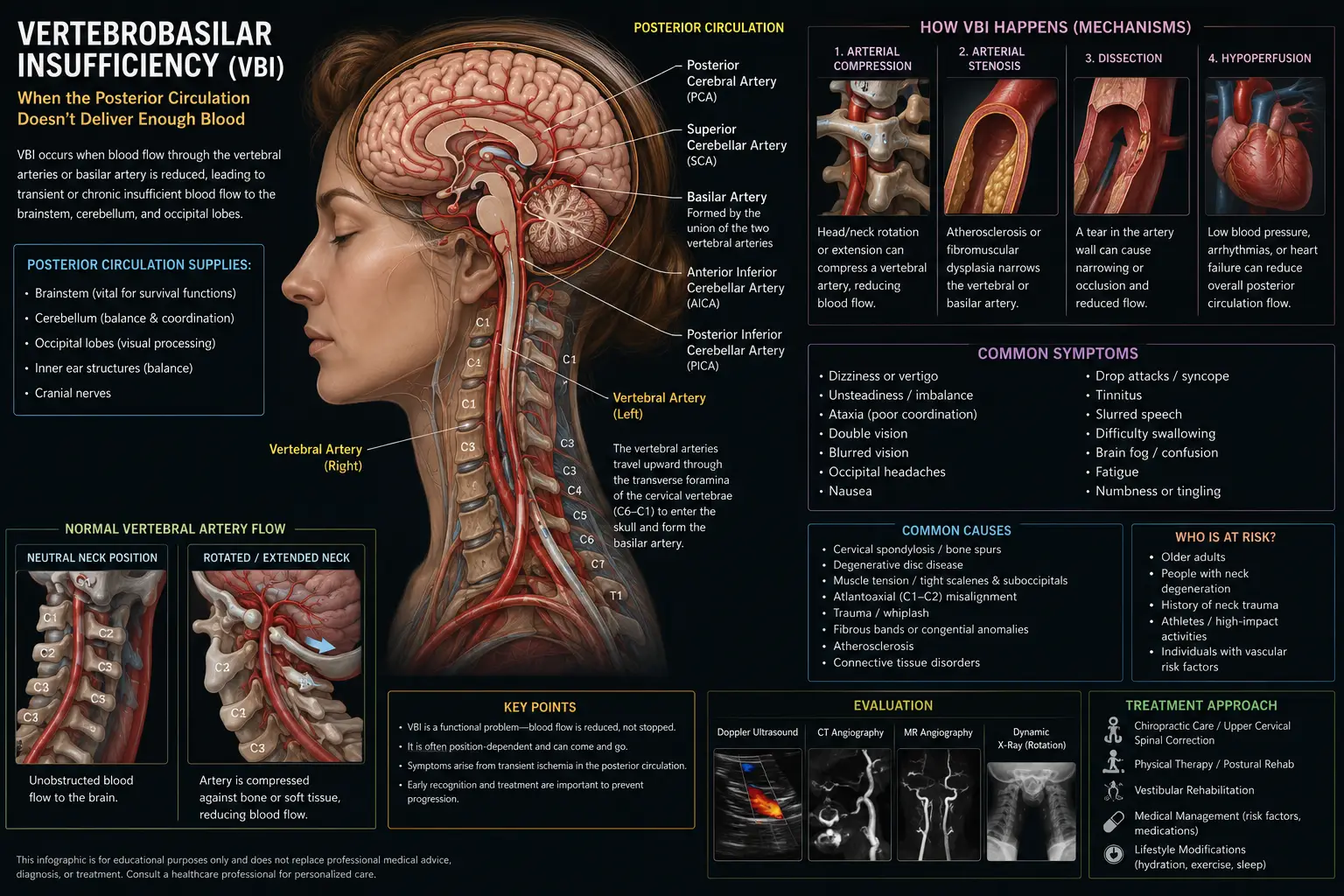
Vertebrobasilar insufficiency is a condition in which blood flow through the vertebrobasilar system — the two vertebral arteries and the basilar artery they form — becomes reduced or temporarily disrupted. This system supplies the posterior circulation of the brain, including the brainstem, cerebellum, midbrain, thalamus, occipital lobes, and inner ear structures. When blood flow to these areas drops, neurological symptoms follow.
According to current literature, VBI most commonly results from one of several mechanisms:
Atherosclerotic VBI: The most common form. Plaque buildup in the vertebral or basilar arteries narrows the vessels and reduces blood flow. Risk factors mirror those of atherosclerosis generally — high blood pressure, high cholesterol, smoking, diabetes, family history, and age.
Rotational or Positional VBI: Also called “Bow Hunter’s syndrome” or “head turning syncope.” Blood flow drops when the head is turned, extended, or held in certain positions, often due to mechanical compression of a vertebral artery by bony structures, muscles, or osteophytes in the neck. A 1997 Lancet case report famously documented a 42-year-old woman who suffered a VBI stroke during a hair salon shampoo because of prolonged neck extension.
Embolic VBI: Caused by small clots traveling into the posterior circulation from elsewhere in the body.
Structural or Congenital VBI: Caused by anatomical anomalies of the arteries, such as hypoplasia (an underdeveloped vessel) or kinking.
Common symptoms of VBI include the classic “5 D’s” plus several other signs:
- Dizziness (often with head turning or specific neck positions)
- Diplopia (double vision)
- Dysarthria (slurred speech)
- Dysphagia (trouble swallowing)
- Drop attacks (sudden falls without loss of consciousness)
- Vertigo and imbalance
- Visual disturbances, including loss of vision in one area of the visual field
- Numbness or tingling in the face or extremities
- Weakness on one side
- Nausea and vomiting
- Headache, often at the back of the head
- Tinnitus or sudden hearing changes
- Confusion or memory disruption during episodes
A 2025 systematic review published in the Journal of Osteopathic Medicine confirmed that VBI symptoms extend well beyond Coman’s classic 5 D’s, with a wider symptom set than was historically taught. The review emphasized the importance of careful clinical screening before any manual therapy, because patients with VBI are at higher risk for vascular events.
VBI most often affects older adults — particularly those with cardiovascular risk factors — but it can occur in younger patients, especially when caused by positional compression, prior neck trauma, or congenital vessel anomalies. Symptoms can be transient (lasting seconds to minutes, similar to a TIA) or persistent. Severe cases can lead to stroke. Some more information can be found here on this pubmed article.
How the Vertebrobasilar System Works and Why It’s So Vulnerable
To understand why VBI is such an important condition — and why the upper cervical spine plays such a critical role — you need to understand the anatomy involved.
The vertebral arteries are a pair of arteries that originate from the subclavian arteries in the upper chest. They ascend through small bony openings (the transverse foramina) in the cervical vertebrae, traveling up through the bones of the neck on each side. After passing through the transverse foramen of the atlas (C1), they make a sharp turn and pass through the suboccipital region before entering the skull through the foramen magnum at the base of the skull. Inside the skull, they merge to form the basilar artery, which then supplies the posterior brain structures.
What makes this system unique — and uniquely vulnerable — is that the vertebral arteries travel through the bones of the neck. They are intimately related to the cervical vertebrae, particularly C1 and C2. This anatomical relationship has important implications:
1. The arteries bend and stretch with head movement. Every time you turn, tilt, or extend your neck, the vertebral arteries accommodate the movement. In healthy vessels with normal flow reserve, this is no problem. In vessels with reduced flow capacity, head positioning becomes clinically significant.
2. Bony or muscular structures can compress them. Osteophytes (bone spurs), disc herniations, muscle hypertrophy, or upper cervical misalignment can mechanically compress the vertebral arteries — especially during head movement.
3. The upper cervical region is the most vulnerable segment. The point where the vertebral artery exits C1 and curves toward the skull is one of the most mechanically stressed segments of the entire arterial tree. Tension, misalignment, or repeated motion in this area can produce real changes in blood flow.
4. The arteries supply the very systems that govern balance. The brainstem, cerebellum, and inner ear all depend on vertebrobasilar circulation. Reduced flow produces the exact symptoms patients describe — dizziness, imbalance, visual disturbance, nausea, and brain fog.
For VBI patients, all of this means that anything that affects the upper cervical region affects vertebrobasilar function. Posture, prior injury, joint dysfunction, muscular tension, and the way care providers handle the neck all matter enormously. This is precisely why forceful or twisting chiropractic manipulation is generally NOT appropriate for patients with vascular sensitivity — and why precise, gentle upper cervical correction is one of the safest and most appropriate approaches for these patients.
Why the Upper Cervical Spine Matters in VBI
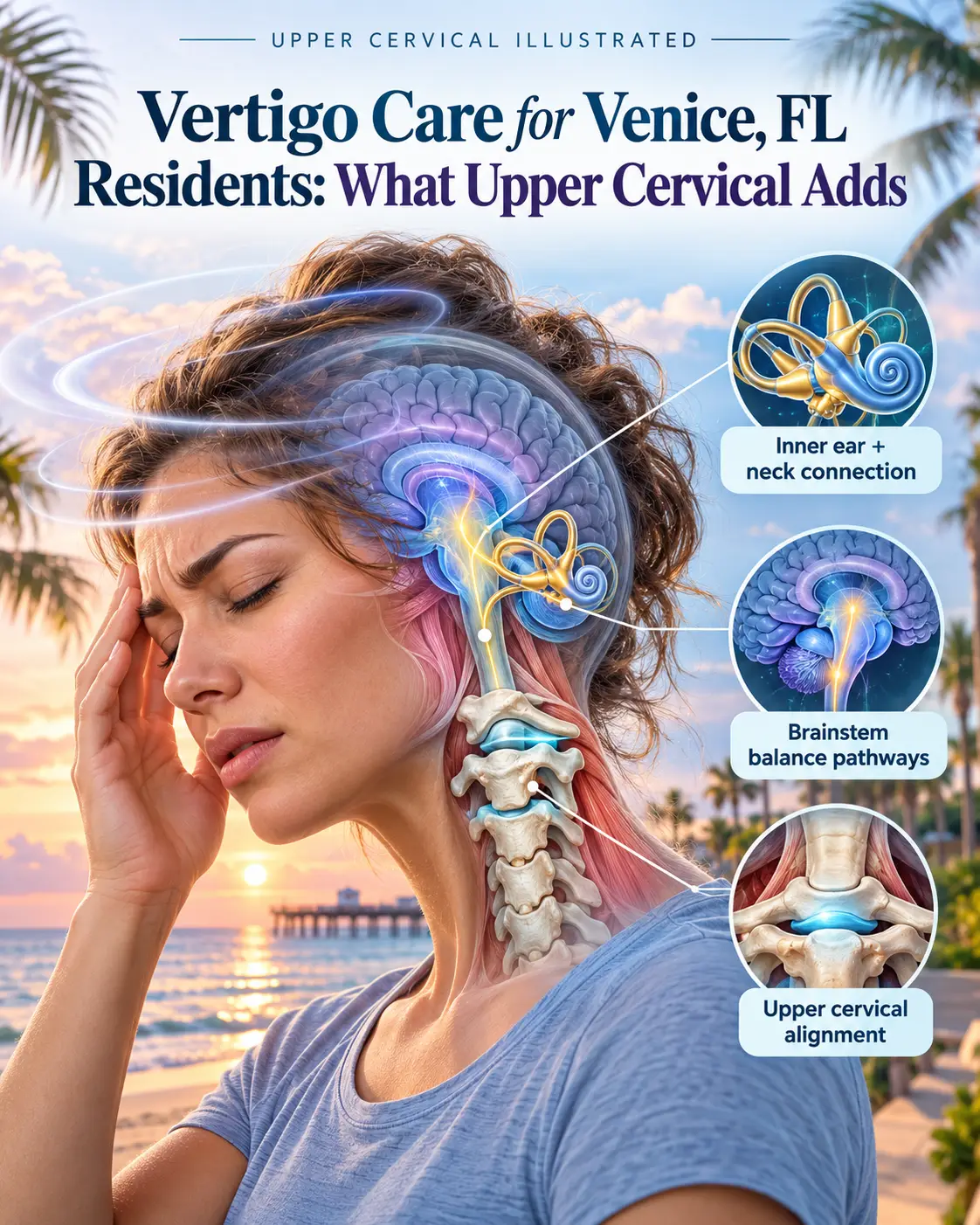
The upper cervical spine — C1 (atlas) and C2 (axis) — is the most clinically significant region of the spine when it comes to vertebrobasilar circulation. Several factors converge here:
Mechanical relationship with the vertebral arteries. The vertebral arteries make their sharpest turns through and around C1 and C2. Misalignment in this region can subtly alter the geometry of the artery, reduce flow reserve, or create increased mechanical strain during head movement.
Muscular tension in the suboccipital region. The deep suboccipital muscles attach to the upper cervical vertebrae and skull. Chronic tension here — common in patients with postural stress, prior whiplash, or long-standing neck dysfunction — can affect both the artery and the autonomic nerves that regulate vascular tone.
Proprioceptive input to the brainstem. Even when blood flow is the primary issue, faulty proprioceptive signaling from the upper neck adds to the patient’s experience of dizziness, imbalance, and visual disturbance. Cleaning up that input gives the brainstem a more accurate picture of body position.
Autonomic and vagal regulation. The vagus nerve and sympathetic chain — both critical to vascular regulation — pass through and around the upper cervical region. Restoring upper cervical function supports healthier autonomic tone, which in turn supports more stable blood flow regulation.
Here’s the critical clinical point: how the upper cervical spine is treated matters as much as whether it’s treated.Forceful manipulation, neck cracking, and aggressive techniques can be dangerous for patients with vascular sensitivity. Gentle, precise, imaging-guided correction is fundamentally different. There is no twisting, no popping, no high-velocity thrust. The correction is calculated, light, and specific.
This is why we believe upper cervical chiropractic care — done correctly — is one of the most appropriate manual therapy approaches available for patients with VBI or vascular risk. It addresses the mechanical, neurological, and proprioceptive components of the condition without subjecting the arteries to additional mechanical stress.
Upper Cervical Chiropractic Care for VBI: What to Expect
At Lavender Family Chiropractic, our approach to VBI patients is built around three principles: thorough evaluation, precision, and gentleness. We collaborate with your physician rather than replace them, and we always defer to medical management for the vascular components of your condition.
Here’s what your journey looks like at our Sarasota office.
Step One: Comprehensive Consultation and Screening
Your first visit starts with a detailed conversation. Dr. Lavender or Dr. Temple will sit down with you and learn the full story — when symptoms began, what triggers them, your medical history, your medications, prior imaging, and what other providers have told you. We pay particular attention to red flags for active vascular instability and will refer you back to your physician immediately if anything suggests urgent medical evaluation is needed.
Patients with confirmed or suspected severe vertebral artery stenosis, recent TIAs, or unstable vascular disease require medical management first. Once you are medically stable and cleared for complementary care, we can help support the mechanical and neurological components of your condition.
Step Two: 3D CBCT Imaging and Neurological Scanning
Next, we use 3D CBCT X-ray technology to take precise, three-dimensional images of your upper cervical spine. This advanced imaging shows us — down to the millimeter — exactly how your atlas (C1) and axis (C2) are positioned. For VBI patients especially, this precision matters: we are not guessing at alignment, and we are not applying generic adjustments.
We pair this with paraspinal infrared thermography to assess nervous system function along your spine. This shows us how your autonomic nervous system is handling stress along your spine, which is particularly relevant for VBI patients because of the autonomic component of vascular regulation.
Step Three: A Gentle, Specific Correction — No Twisting or Cracking
When you receive your upper cervical correction, you’ll likely be surprised at how gentle it is. There is no twisting, popping, cracking, or high-velocity thrust. We use the Advanced HIO Knee Chest Upper Cervical Technique (AHKC), one of the gentlest and most precise methods of upper cervical correction available.
This is the type of care most appropriate for vascular-sensitive patients. The correction is calculated from your imaging, delivered with feather-light pressure, and produces no mechanical stress on the vertebral arteries.
Step Four: Monitoring and Stabilizing Your Care
The goal of upper cervical care isn’t to adjust you repeatedly forever. The goal is to help your spine hold its corrected position so the upper cervical region stops contributing to your symptoms. We track your progress visit by visit and adjust your care plan as you stabilize. For VBI patients, we also stay in communication with your medical team to ensure your overall care is aligned.
Many VBI patients begin noticing improvements in dizziness with head positioning, reduced suboccipital tension, better postural balance, and less day-to-day imbalance within the first few weeks of care. Recovery is gradual and individualized — but the trajectory is positive when the upper cervical piece is addressed alongside appropriate medical management.
Has your physician told you that VBI may be contributing to your dizziness? Call us at (941) 243-3729 or book a consultation online. We’ll review your case carefully and let you know whether upper cervical care is an appropriate fit.
What the Research Says About VBI
The medical literature on VBI has grown substantially in recent years, especially as imaging technology has improved diagnostic accuracy. Here are some of the most relevant findings.
A 2025 systematic review published in the Journal of Osteopathic Medicine examined the signs and symptoms of VBI secondary to atherosclerosis. The authors concluded that VBI presents with a wider symptom set than the classic Coman’s 5 D’s, and emphasized that careful clinical differentiation is essential before applying any manual therapy. The review specifically noted that the presence of VBI directly affects which manual therapy approaches are safe and appropriate.
A 2025 StatPearls update confirmed that VBI exhibits a characteristic symptom constellation including nausea, vertigo, nystagmus, cerebellar signs (ataxia and dysmetria), cranial nerve deficits, dysphagia, dysarthria, and occipital symptoms. The authors emphasized the importance of differentiating VBI from related conditions like subclavian steal syndrome, which can present with similar symptoms.
Research published through the EyeWiki resource confirmed the well-documented relationship between prolonged neck extension and VBI stroke risk, with the canonical 1997 Lancet case report highlighting how even routine activities can become dangerous in patients with compromised vertebrobasilar flow.
Current literature also consistently distinguishes between four major mechanisms of VBI — atherosclerotic (most common), rotational/positional (mechanical), embolic, and structural/congenital. Treatment is tailored to the mechanism. Medical management typically includes blood pressure control, cholesterol management, antiplatelet therapy, and lifestyle modification. For positional VBI in particular, addressing the mechanical contribution — including upper cervical alignment — can be clinically meaningful.
The takeaway: VBI is a serious condition that deserves serious evaluation, and the upper cervical spine is one of the most clinically relevant regions in patients with vascular dizziness. Gentle, precise upper cervical care — done by a clinician trained specifically in this approach — is among the safest manual therapy options for these patients.
Lifestyle Habits That Support VBI Management
Beyond upper cervical care and medical management, daily habits play a critical role in managing VBI and reducing risk. Here’s what we recommend most often to our patients.
Manage cardiovascular risk factors aggressively. Atherosclerosis is the single most common cause of VBI, and the same factors that drive atherosclerosis elsewhere drive it here. Blood pressure control, cholesterol management, blood sugar regulation, smoking cessation, and weight management are all essential.
Avoid prolonged or extreme neck positions. This is particularly important for positional VBI. Avoid prolonged neck extension (looking up for long periods), aggressive head turning, and any position that reproduces your dizziness. The classic example is the hair salon shampoo position — sustained extension that can compromise flow in vulnerable arteries.
Hydrate consistently. Dehydration thickens the blood and reduces flow reserve, making vascular symptoms worse. Florida’s heat and humidity make daily hydration especially important. Aim for at least half your body weight in ounces of water per day, more during summer months.
Move regularly. Cardiovascular exercise improves overall vascular health and reduces atherosclerotic progression. Walking, swimming, and other low-impact activities are excellent. If exercise reproduces your symptoms, talk to your physician about safer alternatives.
Sleep well. Quality sleep supports vascular health, autonomic regulation, and overall nervous system function. Use a supportive pillow that maintains proper upper cervical alignment. Avoid stomach sleeping, which forces sustained neck rotation.
Watch your posture during phone and computer use. Forward head posture creates chronic strain on the upper cervical spine — exactly the region most relevant to vertebrobasilar function. Keep screens at eye level and take regular posture resets.
Avoid forceful neck manipulation. This is a critical point for VBI patients. Aggressive chiropractic adjustments, neck cracking, deep tissue work directed at the upper neck, and certain stretches can be dangerous. Gentle, precise care is appropriate. Forceful care is not.
Be aware of related dizziness conditions. VBI often coexists with other forms of dizziness — cervicogenic dizziness, vestibular conditions, and post-concussion symptoms. For a deeper look at the broader landscape of dizziness conditions and why upper cervical care matters for so many of them, our blog on our #1 recommendation to fix vertigo is a useful companion read.
Serving Sarasota and Surrounding Areas
Lavender Family Chiropractic is located at 5899 Whitfield Avenue, Suite 107, Sarasota, FL 34243 — right at the corner of University and Whitfield. We are easy to reach from anywhere in the greater Sarasota region.
We proudly serve patients dealing with VBI, dizziness, and other balance disorders from across the area, including:
- Sarasota, FL
- Bradenton, FL
- Lakewood Ranch, FL
- Venice, FL
- Osprey, FL
- Parrish, FL
- Ellenton, FL
- Siesta Key, FL
- Longboat Key, FL
- St. Pete, FL
- Tampa, FL
To learn more about the full region we serve, visit our areas we service page. Wherever you’re driving from, we’re set up to help.
Top 15 FAQs About VBI
What is VBI in simple terms?
VBI is a condition in which blood flow to the back of the brain is reduced. The back of the brain controls balance, vision, coordination, swallowing, and other essential functions. When blood flow drops — even briefly — these systems can malfunction, producing dizziness, visual disturbances, slurred speech, drop attacks, and other neurological symptoms.
Is VBI dangerous?
VBI can be a warning sign for stroke or transient ischemic attack (TIA), so it’s a condition that deserves careful medical evaluation. Many patients with VBI have only minor symptoms that respond well to medical management and lifestyle changes. Severe cases require more aggressive intervention and ongoing monitoring.
What causes VBI?
The most common cause is atherosclerosis — plaque buildup that narrows the vertebral or basilar arteries. Other causes include mechanical compression (from osteophytes, herniated discs, or muscle hypertrophy), small clots (emboli), and congenital anatomical anomalies of the arteries.
What are the classic symptoms of VBI?
The traditional symptoms are known as the “5 D’s”: dizziness, diplopia (double vision), dysarthria (slurred speech), dysphagia (trouble swallowing), and drop attacks. Modern research confirms a wider symptom set including vertigo, imbalance, visual disturbances, numbness, weakness, nausea, headache, tinnitus, and confusion.
How is VBI diagnosed?
VBI is diagnosed through a combination of clinical history, neurological examination, and imaging — including CT or MR angiography to visualize the vertebral and basilar arteries. Your physician may also order ultrasound studies, blood tests, and cardiovascular workup to identify contributing factors.
Is upper cervical care safe for VBI patients?
When done correctly, yes — but the technique matters enormously. Forceful, twisting chiropractic adjustments are NOT appropriate for patients with vascular sensitivity. Gentle, precise, imaging-guided upper cervical correction (with no twisting or cracking) is fundamentally different and is one of the safest manual therapy approaches available for these patients. We always recommend a thorough medical workup first.
Can chiropractic adjustments cause stroke?
Forceful neck manipulation has been associated with rare cases of vertebral artery dissection and stroke, particularly in patients with pre-existing vascular vulnerability. This is why we do not use forceful or twisting techniques. The upper cervical approach used at Lavender Family Chiropractic involves no twisting, popping, or high-velocity thrust.
Will upper cervical care fix my VBI?
Upper cervical care does not directly treat the vascular component of VBI — that’s the role of your medical team. What upper cervical care can do is address the mechanical and neurological contributors to your symptoms: faulty proprioceptive signaling, suboccipital tension, postural strain, and autonomic dysregulation. It is a complementary approach, not a substitute for medical care.
How quickly will I see improvement?
Most VBI patients who are appropriate candidates for upper cervical care begin noticing improvements in positional dizziness, suboccipital tension, and overall balance within the first few weeks. Improvements in vascular-related symptoms depend heavily on overall medical management.
Can VBI go away on its own?
Mild atherosclerotic VBI sometimes stabilizes with aggressive lifestyle and medical management. Mechanical or positional VBI can improve when the underlying mechanical contributor is addressed. Severe atherosclerotic VBI usually requires ongoing medical management and sometimes procedural intervention.
What red flags should send me to the ER?
Sudden severe headache, sudden visual loss or double vision, slurred speech, facial drooping, weakness on one side, difficulty walking that comes on suddenly, fainting, or loss of consciousness — any of these symptoms warrant immediate emergency evaluation. They could indicate a stroke or TIA.
Should I avoid certain neck positions if I have VBI?
Yes. Prolonged neck extension (looking up for long periods), aggressive head turning, and positions that reproduce your dizziness should be avoided. The hair salon shampoo position is a classic example. Be cautious with yoga inversions, certain massage techniques, and any activity that holds your neck in extreme positions.
Does aging make VBI more likely?
Yes. Atherosclerosis develops over time, and the cumulative effect of cardiovascular risk factors is the most common driver of VBI. This is why VBI is most common in adults over 50, particularly those with high blood pressure, high cholesterol, diabetes, or a smoking history.
Are there medications that help with VBI?
Your physician may prescribe antiplatelet medications (such as aspirin), blood pressure medications, cholesterol-lowering drugs (statins), and other treatments aimed at improving vascular health and reducing stroke risk. Medications targeting symptoms (such as anti-vertigo medications) can also be helpful in some cases.
How do I know if Lavender Family Chiropractic is right for me?
If you have been medically evaluated for VBI and your physician has cleared you for complementary care, you may be an excellent candidate for upper cervical evaluation. If your dizziness is positional, if you have a history of neck trauma, or if you suspect mechanical contributors to your symptoms, our approach may help. Call (941) 243-3729 to schedule a consultation.
Our complete guide to dizziness treatment in Sarasota covers the difference between dizziness and vertigo, the upper neck’s role in balance, and how we evaluate it.
You Don’t Have to Manage VBI Alone
VBI is a serious condition — but it’s also a manageable one for most patients, especially when medical care is paired with the right complementary support. Many of our patients describe feeling caught between worry about their vascular health and frustration with persistent dizziness that nobody seems able to fully resolve. We understand that gap, and we’re committed to helping fill it carefully and responsibly.
At Lavender Family Chiropractic, Dr. Rusty Lavender and Dr. Jacob Temple have built our practice around the gentlest, most precise approach to upper cervical care available — the type of care most appropriate for patients with vascular sensitivity. We collaborate with your medical team rather than work around them. Our goal is to help you live more confidently and comfortably while supporting the work your physicians are doing.
📞 Call us today at (941) 243-3729 📅 Or book your consultation online
Let’s see if we can help you feel steadier.
Related Articles
Related Posts


Get our upper cervical articles first.
Patients Experience