
Top 10 FAQs About Post Concussion Syndrome
By Dr. Rusty Lavender, D.C. — upper cervical chiropractor, Lavender Family Chiropractic, Sarasota, FL. Reviewed and updated September 2026.
This article is educational and is not a substitute for medical care. A concussion should be evaluated by a physician first. If you have any of the emergency signs listed below, go to the emergency department.
Post Concussion Syndrome an Introduction
Post Concussion Syndrome—mild traumatic brain injuries (mTBIs) often dismissed as temporary—can cast a long shadow over your life when symptoms linger. While we normally anticipate recovery within two to four weeks, Post‑Concussion Syndrome (PCS) emerges when headaches, dizziness, cognitive fog, and other issues refuse to resolve on schedule. Persistent symptoms affect a meaningful minority of concussion sufferers — commonly cited figures run from 10% to 30% depending on the population and the definition used — and can persist for months or even years, disrupting work, school, family life, and emotional well‑being.
Lavender Family Chiropractic, an upper cervical chiropractic practice in Sarasota, understands the frustration of walking through daily life wearing invisible burdens. We specialize in pinpointing and correcting minute misalignments in your upper cervical spine—often an overlooked contributor to prolonged concussion symptoms. Using 3D CBCT imaging, paraspinal thermography, and gentle, precise corrections, we aim not just to mask symptoms, but to address the structural and neurological disturbances at the top of the neck that can keep PCS going. We do this alongside your physician or neurologist, not instead of them.
In this expanded guide, we delve deep into the ten most frequently asked questions about PCS. You will learn:
- The medical and biomechanical basis of PCS
- The full spectrum of lingering symptoms and why they persist
- How upper cervical misalignments can exacerbate brain and nerve dysfunction
- Why early, targeted upper cervical evaluation makes sense
- What to expect at your first evaluation and during corrective care
- How long care typically takes—and how to maintain results
- Integrative strategies combining vestibular, cognitive, nutritional, and manual therapies
- What the research says — and where it stops
- Practical tips on navigating insurance, scheduling, and lifestyle adaptations
Whether you experienced a car accident whiplash, a sports collision, or a simple fall, PCS does not have to define your future. By equipping yourself with knowledge and seeking the right care, you can give yourself the best chance at recovery, minimize long‑term risks, and reclaim your vitality. Let’s begin by exploring what exactly PCS entails and why it can become such a stubborn condition.
1. What Is Post‑Concussion Syndrome?
Definition & Diagnostic Criteria: Post‑Concussion Syndrome is diagnosed when concussion symptoms—typically expected to resolve within two to four weeks—linger past the expected recovery window. The 2022 Amsterdam international consensus on concussion uses the term “persisting symptoms after concussion” for symptoms lasting beyond four weeks; older criteria (the DSM-IV definition of PCS) required three months. Whichever label your doctor uses, the symptoms cluster in four categories:
- Cognitive: Memory disturbances, slowed processing speed, difficulty concentrating.
- Emotional/Affective: Depression, anxiety, irritability.
- Physical: Headache, dizziness, light/noise sensitivity.
- Sleep: Insomnia, fragmented sleep, hypersomnia.
The ICD-10 definition of PCS requires a history of head trauma plus at least three symptoms from these groups. What matters more than the label is that the symptoms have outlasted the injury that caused them.
Underlying Mechanisms: Modern research attributes PCS to several interacting pathophysiologies:
- Neurometabolic Cascade: Impact‑induced ionic fluxes and glucose deficits temporarily starve neurons of energy.
- Axonal Shearing: Microscopic stretching or tearing of white‑matter tracts disrupts signal transmission.
- Autonomic Dysregulation: Imbalance between sympathetic and parasympathetic systems impairs heart rate, digestion, and stress response. A systematic review of concussion and the autonomic nervous system concluded that autonomic dysfunction is one of several factors that can contribute to persisting symptoms.
- Cerebrovascular Compromise: Altered blood flow dynamics in the brain can contribute to chronic headaches and cognitive slowing.
- Cervical Spine Dysfunction: The same forces that concuss the brain also whip the neck. Whiplash forces during a concussion can jar the atlas (C1) and axis (C2) vertebrae, irritating the upper cervical joints and nerves and, in our clinical view, disturbing blood and CSF dynamics at the craniocervical junction. A review in The Physician and Sportsmedicine on the role of the cervical spine in post-concussion syndrome makes the case that the neck is a frequently missed contributor.
Clinical Implications: Understanding PCS as more than “just a headache” underscores the necessity of a multidisciplinary treatment plan. Focusing exclusively on painkillers or rest risks overlooking biomechanical and neurological contributors—leading to treatment-resistant symptom clusters.
2. What Symptoms Should I Expect with PCS?
While every PCS patient experiences a unique symptom profile, the following are the most prevalent complaints:
2.1 Headaches
- Tension‑type: Steady, band‑like pressure around the head.
- Migraine‑like: Throbbing pain, light/sound sensitivity, aura in some cases.
- Cervicogenic: Radiating from neck muscles and upper cervical joints. Our headache guide explains how to tell these apart.
2.2 Vestibular Disturbances (Vertigo & Dizziness)
- Vertigo: The illusion of spinning—often triggered by head movement or positional changes.
- Disequilibrium: Unsteadiness or feeling off‑balance while walking. We cover this in depth in post-concussion vertigo.
2.3 Cognitive & Psychological Issues
- Brain Fog: Difficulty finding words, slowed thinking, trouble multitasking.
- Short‑Term Memory Loss: Forgetting recent conversations or daily tasks.
- Mood Disorders: Heightened anxiety, unexplained irritability, depression.
2.4 Autonomic & Sleep Dysfunctions
- Fatigue: Extreme tiredness unrelieved by rest or sleep.
- Sleep Disturbances: Insomnia, frequent awakenings, or excessive sleeping.
- Heart Rate Variability (HRV) Issues: Palpitations, exercise intolerance. Some people develop a POTS-like picture after a concussion; see our POTS page.
2.5 Neck & Musculoskeletal Pain
- Neck Pain/Whiplash: Stiffness, muscle spasms, tenderness in the upper cervical region.
- Shoulder & Upper Back Tension: Compensatory muscle guarding and poor posture.
Symptom Triggers: Screen time, bright lights, loud noises, physical exertion, stress, and weather changes can all provoke flare‑ups. Tracking triggers with a symptom diary helps tailor treatment protocols and lifestyle adjustments.
Why symptoms alone can’t tell you the source. A study of 128 patients with symptoms lasting more than three weeks — titled, aptly, “Brain or strain?” — found that symptom lists could not reliably distinguish a physiologic (brain-based) post-concussion disorder from a cervical/vestibular one. Headache, dizziness, and fog can come from either. That’s why the neck has to be examined, not assumed.
3. How Long Do PCS Symptoms Typically Last?
Statistical Outlook (commonly cited figures; exact numbers vary by study and population):
- 80–90% Recovery by 3 months in uncomplicated concussions.
- 10–20% Develop persistent symptoms, with symptoms lasting 6–12 months or longer.
- A smaller group continues to have significant impairment after one year. In one longitudinal study of 110 people with established PCS, only 27% had fully recovered at follow-up, most of them within the first year — a sobering reminder that the persistent group needs active management, not more waiting.
Risk Factors for Prolonged PCS:
- Prior Concussion History: Repetitive mTBIs lead to cumulative brain trauma.
- Severity of Initial Injury: Loss of consciousness (>30 minutes) or amnesia indicates more substantial damage.
- Age & Sex: Older adults and females may have slower recovery courses.
- Pre‑Existing Conditions: Migraines, depression, ADHD, or vestibular disorders predispose to persisting symptoms.
- Cervical Injury: Unaddressed whiplash contributes to ongoing headaches and dizziness.
Early Intervention Benefits: In a randomized controlled trial of people with persistent dizziness, neck pain, or headache after a sport concussion, those who received combined cervical spine and vestibular treatment were nearly four times more likely to be medically cleared within eight weeks than those who got rest and general advice — 73% versus 7%. The 2022 international consensus now recommends cervicovestibular rehabilitation for exactly this group. Our reading of that evidence: the neck should be evaluated early, before compensatory muscle patterns and avoidance habits set in. Starting an upper cervical evaluation within the first weeks of injury lets us measure the neck while the picture is still simple.
Chronic PCS: For patients still symptomatic past one year, functional neuroimaging often reveals lingering white matter changes. Even after neural healing plateaus, correcting mechanical stressors—especially in the upper cervical region—can, in our experience, unlock late‑stage symptom improvements. No trial has tested upper cervical chiropractic in chronic PCS specifically; we present it as a layer to evaluate, not a promise.
4. Why Do Some People Experience Lingering PCS Symptoms?
PCS persistence reflects a combination of unresolved biomechanical, neurological, and metabolic disruptions. A useful framework from a 2015 review in Brain Injury sorts post-concussion disorders into three overlapping types — physiological, vestibulo-ocular, and cervicogenic — each with a different treatment direction. The sections below map onto that framework.
4.1 Upper Cervical Subluxation
Whiplash‐related trauma can displace the atlas (C1) and axis (C2), irritating nearby nerves and the joints that feed position-sense to the brainstem. In our clinical model this can:
- Affect vertebral artery blood flow to the brainstem. (A study of people with loss of the normal neck curve found reduced vertebral artery hemodynamics — one line of evidence that neck alignment and brainstem blood supply are related.)
- Impair cerebrospinal fluid (CSF) circulation around the craniocervical junction.
- Trigger muscle spasms and postural distortions that feed back into neck pain and headaches.
4.2 Autonomic Nervous System (ANS) Imbalance
Concussion can shift the balance toward sympathetic overactivity (“fight or flight”), manifesting as:
- Chronic fatigue (parasympathetic underfunction).
- Heart rate and blood pressure irregularities.
- Poor digestion and gut motility issues.
The brainstem centers that regulate these functions sit directly beside the atlas and axis — the anatomy behind our page on vagus nerve dysfunction.
4.3 Neural Network Dysregulation
Diffuse axonal injury disrupts connectivity between cortical and subcortical regions, leading to:
- Cognitive processing delays (slower reaction times).
- Mood lability due to prefrontal–amygdala disconnection.
4.4 Vestibulo‐Ocular & Visual Disorientation
Microtrauma to inner ear hair cells or their neural pathways can produce persistent vertigo and visual motion intolerance.
4.5 Psychological & Behavioral Factors
Fear of re‑injury, hypervigilance, and sleep deprivation can create a feedback loop, intensifying subjective symptom perception.
Interplay of Factors: A subtle cervical misalignment can perpetuate autonomic and vascular dysregulation, which in turn impedes neural healing—creating a self‐sustaining cycle. Breaking this cycle requires a multifaceted approach that addresses both structure and function.
5. How Can Upper Cervical Chiropractic Care Help PCS Symptoms?
Upper cervical chiropractic focuses exclusively on aligning the atlas and axis—the two top vertebrae that cradle the skull and protect the brainstem. The significance of precision at this junction cannot be overstated. In our clinical model:
- Neurological Restoration: Realignment relieves mechanical stress at the craniocervical junction, allowing more normal nerve signaling to and from the brain.
- Vascular & CSF Flow: Correct positioning of C1 and C2 supports vertebral artery flow and cerebrospinal fluid circulation, which we believe contributes to fewer headaches and clearer thinking in many patients.
- Muscle & Joint Regulation: Gentle corrections interrupt chronic protective muscle spasms, restoring natural cervical range of motion and alleviating cervicogenic headaches. This is the best-supported piece: neck-driven headache responds to skilled manual care in randomized trials.
5.1 Lavender Family Chiropractic’s Comprehensive Protocol
- 3D CBCT Imaging: Low‑dose, high‑resolution scans pinpoint misalignments with sub‑millimeter accuracy. This allows us to plan corrections tailored specifically to your anatomy.
- Paraspinal Infrared Thermography: Temperature differentials along the spine map autonomic imbalance, guiding both the decision to adjust and our lifestyle recommendations.
- Hand-Delivered, Low-Force Corrections: Using the Knee Chest upper cervical technique, we deliver a precise, calculated correction to the atlas or axis—no popping, twisting, or cracking.
- Stabilization & Rehab: Post‑correction rehabilitative exercises and postural retraining help the correction hold. We coach patients on ergonomic setups for work, sleep, and daily activities.
5.2 Clinical Outcomes & Patient Successes
- Headache Reduction: Fewer and milder headaches are the change PCS patients most often report to us in the first weeks of care.
- Improved Balance: Patients frequently describe steadier walking and less visual motion sensitivity as the correction holds.
- Enhanced Cognition: Patients commonly note sharper focus and faster recall during follow‑up visits.
These are patient reports from our practice, not published outcome data, and individual results vary. By addressing misalignment at the craniocervical junction, upper cervical chiropractic aims to remove one structural obstacle so the body’s own repair processes can do more—one unifying piece of a PCS plan, not a replacement for the rest of it.
6. Is Upper Cervical Chiropractic Safe After a Concussion?
Safety is paramount when treating individuals with brain injuries. Upper cervical chiropractic is well suited to post‑concussion care because:
- Gentle Force Application: Corrections are low-force and calculated in advance from CBCT data, never improvised at the table.
- Customized Protocols: No two care plans are identical; visit frequency and correction parameters are individualized according to patient tolerance and scan feedback.
- Clinician Expertise: Our doctors are trained in upper cervical technique and in recognizing the red flags and contraindications that mean you need medical care first.
- Ongoing Monitoring: We reassess thermography, pain levels, and neurological signs before each session. Any adverse reaction prompts immediate protocol modification.
Clinical Evidence: The largest prospective safety study of upper cervical chiropractic — 1,090 patients across 83 practices — found that mild, short-lived reactions (soreness, temporary symptom flare) were fairly common, intense reactions were rare (about 5%), and the participating chiropractors reported no serious adverse events across more than five million career upper cervical adjustments. Neck pain, headache, and disability scores improved significantly over the study. That study was not specific to concussion patients, and we say so. Separately, a large population study found no excess risk of vertebrobasilar stroke after chiropractic visits compared with primary-care visits — the association seen in both is explained by people with early dissection symptoms seeking care. Upper cervical corrections avoid the rotation and thrust involved in conventional neck manipulation. We screen every concussion patient for signs of vascular injury and refer out when anything is uncertain.
7. What Should I Expect During an Upper Cervical Evaluation?
Your initial consultation at Lavender Family Chiropractic is a multi‑step process designed for thoroughness and comfort:
- Detailed History Intake: We review your concussion event timeline, symptom chronology, prior imaging, medications, and lifestyle factors.
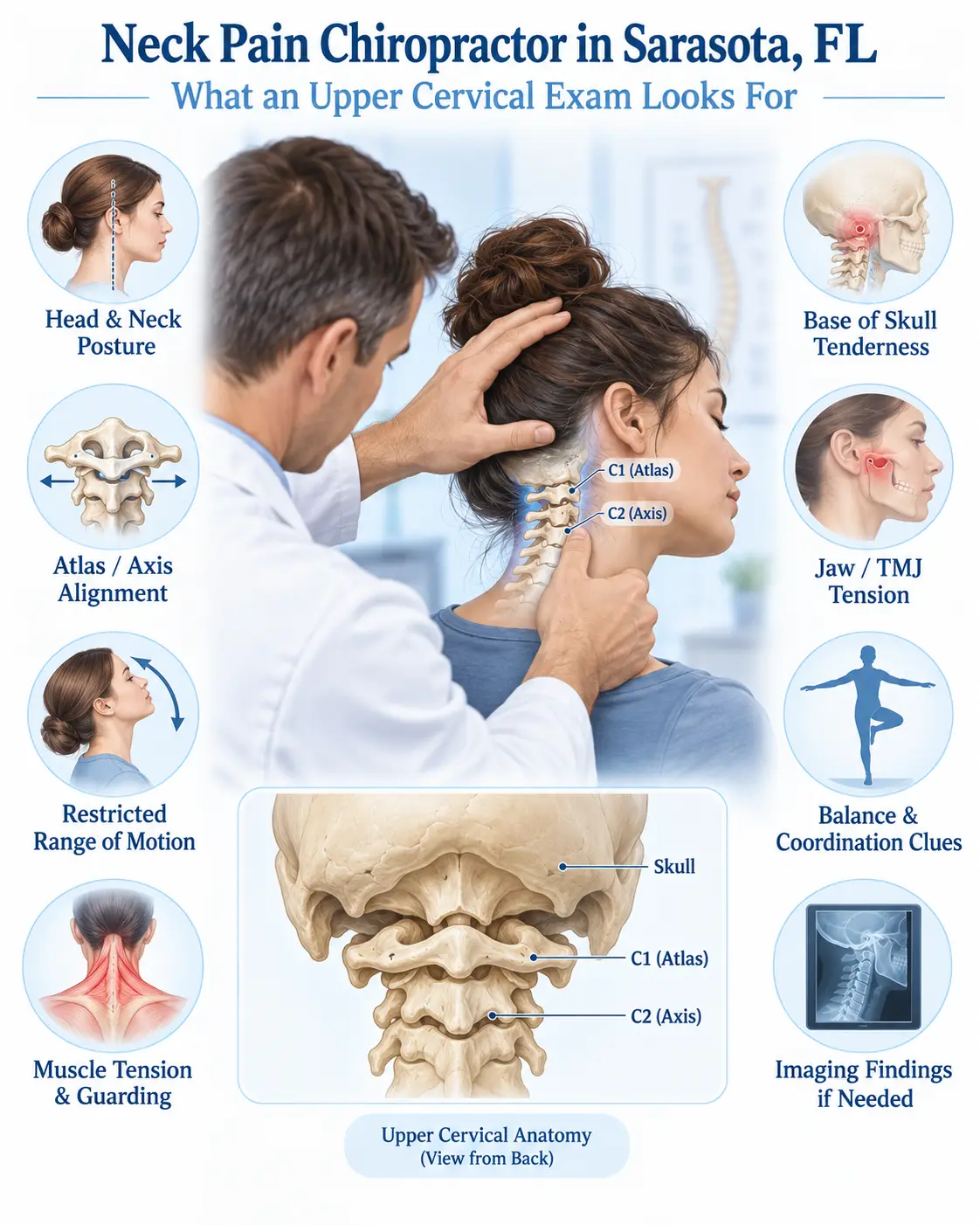
- Postural & Gait Analysis: Subtle head tilts, shoulder height differences, and gait deviations often indicate compensatory patterns from upper cervical misalignment.
- Orthopedic & Neurological Screening: Range of motion tests, reflex checks, cranial nerve assessments, and blood pressure/heart rate monitoring establish baseline function.
- 3D CBCT Scan: A low‑radiation scan (under 30 seconds) generates a 3D model of your C0–C3 region, so we can measure rotational and translational misalignments precisely.
- Thermography Scan: Non‑invasive infrared readings along the spine map sympathetic/parasympathetic balance.
Report & Plan: After analysis, your clinician presents an easy‑to‑understand report, including 3D visualizations of misalignments and thermography readings. We then outline a personalized care plan—session frequency, adjunct therapies (e.g., vestibular rehab), and at‑home exercises.
Patient Comfort: Our office environment is calm and supportive, with heating pads, ergonomic chairs, and options for music or meditation during scans and corrections. Safety and patient empowerment are our guiding principles.
8. How Many Sessions Will I Need?
While individual needs vary, most PCS patients follow a two‑phase care model. The schedule below is typical; yours is set by your imaging and thermography findings, not a template:
8.1 Corrective Phase (First 4–6 Weeks)
- Weeks 1–2: Up to 3 visits per week. Focus on restoring baseline alignment and reducing acute symptoms.
- Weeks 3–4: 2 visits per week. Reinforce corrections, progress vestibular and postural exercises.
- Weeks 5–6: 1 visit per week. Monitor symptom resolution; transition toward stabilization.
8.2 Stabilization & Maintenance Phase
- Months 2–3: Visits every 10–14 days to ensure alignment holds and address any residual imbalances.
- Long‑Term Maintenance: Monthly or bi‑monthly visits once symptoms have settled, to catch a lost correction early and support ongoing neural health.
Factors Affecting Duration:
- Severity and chronicity of PCS
- Patient age, overall health, and healing capacity
- Adherence to at‑home exercises and lifestyle recommendations
- Presence of co‑treatments (vestibular therapy, cognitive rehab)
Progress Tracking: We use symptom questionnaires, balance assessments, and repeat thermography at key milestones (weeks 4 and 8) to quantify improvement. Many patients report fewer headache days within the first month of care; results vary, and we’ll tell you honestly if the neck doesn’t appear to be your driver.
9. Can I Combine Upper Cervical Care with Other Therapies?
Integrative care yields the best outcomes in PCS, and the research agrees: the Amsterdam consensus recommends targeted rehabilitation for the specific systems involved rather than rest alone, and a randomized trial found that early, sub-symptom-threshold aerobic exercise shortened recovery in adolescents. We routinely collaborate with:
- Vestibular Rehabilitation Therapists: Customized balance exercises, habituation drills, and gaze stabilization techniques address dizziness and spatial disorientation.
- Neuropsychologists: Cognitive drills and coping strategies for memory, focus, and emotional resilience.
- Nutritionists & Functional Medicine Doctors: Anti‑inflammatory diets (Mediterranean, low‑gluten), targeted supplementation (omega‑3s, magnesium, B vitamins) to support neural repair.
- Massage Therapists & Physical Therapists: Myofascial release, trigger point work, and strengthening protocols for cervico‑thoracic musculature.
- Vision Specialists: Therapeutic lenses, eye‑tracking exercises, and vision therapy for vestibulo‑ocular coordination.
- Your Physician or Neurologist: Medical clearance, imaging when indicated, and management of the physiological side of PCS come first. We coordinate with them, not around them.
Coordinated Care Plans: At Lavender Family Chiropractic, we serve as your structural hub—synchronizing treatments, sharing progress notes, and adjusting timelines based on collective feedback. This unified approach minimizes redundant testing and keeps everyone working from the same picture.
10. How Soon Should I Seek Upper Cervical Care?
Ideal Window: Within 7–14 days post‑concussion or whiplash injury, once your physician has cleared you for it. Early evaluation prevents chronic compensatory patterns:
- Scar tissue formation around cervical ligaments
- Entrenched muscle guarding
- Persistent autonomic imbalance
Late‑Stage Intervention: Even if you’re months or years out from your injury, realigning the upper cervical spine can interrupt longstanding symptom cycles. Many “chronic PCS” patients tell us their most significant progress came after finally having the neck evaluated—for example, a teacher in her forties who regained clear mental focus and stopped having daily headaches over eight weeks of care. That is one patient’s experience, shared with permission; it is not a guarantee of yours.
Warning Signs: Seek prompt evaluation if you experience any of the following beyond two weeks:
- Daily headaches or migraines
- Frequent dizziness or falls
- Ongoing neck pain/stiffness
- Memory lapses affecting work or school
- Emotional lability impacting relationships
Immediate Steps: While arranging your chiropractic evaluation:
- Limit screen time and bright lights.
- Practice gentle neck isometrics and controlled breathing.
- Keep a symptom diary noting triggers and relief patterns.
- Ensure adequate hydration and anti‑inflammatory nutrition.
When Concussion Symptoms Are an Emergency
Most lingering concussion symptoms are not dangerous. Some are. Go to the emergency department or call 911 if you have: a headache that is suddenly severe or steadily worsening; repeated vomiting; a seizure; one pupil larger than the other; slurred speech, weakness, or numbness on one side; increasing confusion, drowsiness, or inability to wake fully; loss of consciousness after the initial injury; or new severe neck pain with dizziness, double vision, or trouble swallowing (possible artery injury). These need imaging and a physician tonight, not a chiropractor next week. We check for every one of these before we touch anyone.
Seeing a Chiropractor After a Concussion in Sarasota: What We Check
People search for a “concussion chiropractor” for a simple reason: the medical workup came back clear, they were told to rest, and they still don’t feel right. Here is exactly what an upper cervical evaluation adds that the standard concussion workup doesn’t.
The neck, measured. A CT or MRI of the brain does not measure the position of the atlas and axis relative to the skull. Our 3D CBCT does, in three planes, so a correction can be calculated rather than guessed.
The autonomic picture, tracked. Thermography gives an objective, repeatable read on sympathetic activity along the spine — a way to see whether the nervous system is settling between visits rather than relying on symptom scores alone.
The distinction that matters. Using the physiological / vestibulo-ocular / cervicogenic framework, we look specifically for the cervicogenic signs — headache that starts at the base of the skull, dizziness that changes with neck position, tenderness at C1–C2, a head tilt, and abnormal upper-neck motion on imaging. If those aren’t there, we say so and point you toward the right specialist.
What we don’t do. We don’t treat the concussion itself; the brain heals on its own timeline. We don’t replace vestibular therapy, neurology, or neuropsychology. We don’t twist, crack, or use high-velocity manipulation on a recently injured neck. And we don’t promise outcomes — we measure, correct, re-measure, and tell you what we see.
If your injury came from a crash, our car accident chiropractic page covers PIP timelines and how whiplash and concussion overlap. If dizziness is your main symptom, start with post-concussion vertigo. If one injury seems to have set off several conditions at once, read the post-trauma cascade.
What the Research Says — and Where It Stops
The strongest evidence for the neck’s role in persistent concussion symptoms comes from physiotherapy trials, not chiropractic ones, and we think you should know that. The Schneider randomized trial showed that treating the cervical spine and vestibular system together got athletes with persistent symptoms back to sport far faster than rest and advice. The Ellis classification established cervicogenic post-concussion disorder as a recognized category with its own treatment direction. “Brain or strain?” showed that you cannot tell the neck-driven cases from the brain-driven cases by symptoms alone. And the trigeminocervical convergence — the merging of upper-neck nerves with the trigeminal system in the brainstem — explains why an injured upper neck is felt as head, face, and ear symptoms. A 12-month study of whiplash patients found most reported ongoing dizziness tied to neck function.
Where it stops: there are no randomized trials of upper cervical chiropractic for post-concussion syndrome. What we offer is a precise, low-force way of evaluating and correcting the same region those trials treated, with imaging the trials didn’t have. That is a reasonable thing to try when the neck is implicated — it is not a proven treatment for PCS, and any practice that tells you otherwise is ahead of the evidence.
Common Questions
Should I see a chiropractor after a concussion? After a physician has evaluated you — yes, if you have neck pain, headaches that start at the base of the skull, or dizziness that changes with neck position. Those are the signs the neck is involved. Choose one who images the upper neck before correcting it and who doesn’t use twisting or high-velocity manipulation.
Can the neck cause concussion symptoms if my MRI was normal? Yes. A brain MRI looks at the brain; it doesn’t measure the alignment or motion of the top two vertebrae. Normal brain imaging with persistent symptoms is the classic picture of the cervicogenic type.
How soon after a concussion can I be adjusted? Once you’ve been medically cleared and the emergency signs above have been ruled out — typically within the first one to two weeks. The evaluation itself can happen sooner than the first correction.
Is upper cervical care covered after a car accident? In Florida, PIP auto coverage can apply to chiropractic care when you’re seen within 14 days of the crash. See our car accident page for the specifics.
Do you treat the concussion itself? No. We evaluate and correct the upper neck, which the concussion injured at the same time as the brain. The brain’s healing, and the medical side of your recovery, stay with your physician.
Conclusion
Post concussion syndrome (PCS) can linger for weeks, months, or even years after the initial head trauma, causing persistent headaches, dizziness, brain fog, neck pain, and more. At Lavender Family Chiropractic in Sarasota, Florida, we specialize in upper cervical chiropractic care—a precise, gentle approach that targets the top two vertebrae of the spine (the atlas and axis) to support proper nervous system function and help you reclaim your health.
Understanding Post Concussion Syndrome When the head experiences a sudden jolt or impact, the brain can shift within the skull, stretching or shearing delicate neural tissues and disrupting cerebrospinal fluid flow. Even a mild concussion may leave tiny misalignments in the upper cervical spine, which houses the brainstem and crucial nerve pathways. These misalignments can perpetuate inflammation, restrict blood flow, and interfere with nerve signals that regulate balance, cognition, and pain perception—key factors in PCS symptoms.
Why Upper Cervical Chiropractic? Traditional chiropractic often involves full-spine adjustments with twisting or “cracking” motions. While effective for many conditions, these methods may not address the subtle misalignments at the top of the neck that contribute specifically to PCS. Upper cervical chiropractic focuses exclusively on the atlas (C1) and axis (C2), using gentle, low-force corrections that realign these vertebrae without pain or popping. By correcting even the smallest misalignment—sometimes as little as a fraction of a millimeter—we aim to remove interference in the nervous system, allowing the body to heal itself more efficiently.
State‑of‑the‑Art Assessment Tools At Lavender Family Chiropractic, we pair our upper cervical technique with advanced diagnostic technology:
- 3D CBCT Scans: Our cone‑beam computed tomography provides three‑dimensional, high‑resolution images of your cervical spine. Unlike traditional X‑rays, 3D CBCT reveals the exact position of each vertebra in relation to the skull and spinal column, enabling pinpoint accuracy in assessment.
- Paraspinal Thermography: Using non‑invasive infrared thermography, we map nervous-system activity along the neck. These scans highlight areas of dysfunction or stress that correspond to your PCS symptoms, guiding targeted care.
By combining these objective measurements with a thorough neurological exam and detailed patient history, we craft a fully individualized care plan tailored to the structural contributors to your post‑concussion challenges.
The Adjustment Process Once misalignments are precisely measured, our upper cervical chiropractors deliver a gentle, hands‑on correction. You’ll lie comfortably on our specialized adjustment table while minimal pressure is applied to the atlas or axis to encourage it back into proper alignment. These corrections:
- Do not involve twisting, cracking, or popping noises
- Are virtually pain‑free and suitable for patients of all ages
- Require only a light, calculated hand contact
Typically, initial visits involve two to three corrections in the first week to stabilize the correction and reduce neurological stress. As the nervous system settles, correction frequency decreases, and many PCS sufferers report meaningful relief within the first several weeks.
Benefits for Post Concussion Syndrome Upper cervical care at Lavender Family Chiropractic addresses the neck’s contribution to PCS by:
- Supporting Cerebrospinal Fluid Flow: Proper alignment reduces mechanical stress at the craniocervical junction, which we believe helps fluid circulation and the clearing of metabolic waste from the brain.
- Supporting Blood Flow: Realignment eases tension on the vertebral arteries, supporting oxygen delivery to brain tissues.
- Reducing Neurological Interference: With upper-neck joints and nerves no longer irritated, communication between the brain and body becomes more efficient, lessening dizziness, balance issues, and sensory disturbances.
- Supporting Self‑Healing: By removing a structural roadblock, your body’s innate repair mechanisms can address residual damage from the concussion more effectively.
Patient Experience at Lavender Family Chiropractic From the moment you walk through our doors in Sarasota, you’ll feel supported by a team dedicated to gentle, precise care. We take time to explain every scan result, correction technique, and home‑care recommendation—whether it’s posture exercises, hydration strategies, or specific neurological rehabilitation drills. Our goal is not only symptom relief but also long‑term resilience, empowering you to return to work, sports, and daily life with confidence.
Conclusion Post concussion syndrome doesn’t have to define your life. With upper cervical chiropractic at Lavender Family Chiropractic, Sarasota residents gain access to a gentle, measured path toward neurological recovery. By combining 3D CBCT imaging, paraspinal thermography, and precise atlas/axis corrections, we address the hidden misalignments that may be contributing to your PCS symptoms. If you or a loved one are struggling with lingering headaches, dizziness, brain fog, or neck pain after a concussion, contact Lavender Family Chiropractic today to schedule your comprehensive upper cervical evaluation and begin the journey back to health.
Take the Next Step:
- Schedule Your Comprehensive Evaluation: Call (941) 243-3729 or book online.
- Connect on Social: Follow us on Facebook and Instagram for patient stories, research updates, and wellness events in Sarasota.
Don’t let PCS control your life. With focused upper cervical chiropractic care working alongside your medical team, you can address the piece of your recovery the standard workup leaves out. Lavender Family Chiropractic is here to guide you on the path to lasting recovery.
For the full picture of how we work, see how upper cervical chiropractic care works and what to expect at your first visit.
Schedule With Us!
Lavender Family Chiropractic in Sarasota, Florida offers complimentary consultations to learn more about you. Schedule your consultation here.
We also serve Bradenton, Parrish, Ellenton, Ruskin, Venice, Tampa, St. Pete, Osprey, Longboat Key, Lakewood Ranch, and Myakka City.