
Natural Asthma Treatment: How Upper Cervical Chiropractic Care at Lavender Family Chiropractic Neckwise Can Help You Breathe Freely Again
By Dr. Rusty Lavender, D.C. — upper cervical chiropractor, Lavender Family Chiropractic, Sarasota, FL. Reviewed and updated October 2026.
Our complete guide to upper cervical chiropractic care in Sarasota explains what the top two vertebrae control, how we measure them with 3D imaging, and what a correction feels like.
Natural Asthma Treatment: If you or someone you love has ever felt the terrifying tightness of an asthma attack — that desperate, hungry pull for air that just won’t come — you already know that asthma is far more than a “breathing problem.” It’s a whole-body, whole-life experience. It dictates which stairs you avoid, which seasons you dread, which hobbies you give up, and how often you reach for the rescue inhaler tucked into your pocket, your purse, or your child’s backpack.
For the millions of Americans living with asthma, the conventional path is well worn: bronchodilators, corticosteroid inhalers, leukotriene modifiers, and eventually biologics for the most stubborn cases. These medications are lifesaving, and we are not here to tell you to throw them away. But many families come into our office in North Sarasota at Lavender Family Chiropractic Neckwise with a different question hanging in the air:
“Is there a way to address what’s actually causing my asthma — not just the symptoms?”
The answer, for a remarkable number of people, is yes. And it often begins in a place you might never expect — at the top of your spine, where your skull meets your neck.
This blog will walk you through what asthma actually is at a neurological level, why the upper cervical spine is so critical to respiratory function, how the gentle, precise approach of upper cervical chiropractic care works, and what you can expect when you walk through our doors at Lavender Family Chiropractic Neckwise in North Sarasota.
Asthma: What’s Really Happening in Your Body and natural asthma treatment
Before we talk about how chiropractic care can help asthma, we need to back up and look honestly at what asthma is — and what it isn’t.
Asthma is traditionally described as a chronic inflammatory disease of the airways. During an asthma episode, three things happen more or less at once:
- The smooth muscle surrounding your bronchial tubes (the airways in your lungs) contracts and tightens — this is called bronchoconstriction.
- The lining of those airways becomes inflamed and swollen.
- Mucus production ramps up, further narrowing the already restricted passageways.
The result is the classic asthma triad: wheezing, coughing, and shortness of breath, often with a terrible feeling of chest tightness.
Conventional medicine focuses primarily on suppressing these three downstream effects. Rescue inhalers like albuterol relax the bronchial smooth muscle. Steroid inhalers reduce inflammation. Antihistamines and leukotriene blockers blunt the immune response. These tools manage symptoms — sometimes brilliantly — but they don’t ask the deeper question.
Why is the body doing this in the first place?
Why are the muscles around your airways contracting? Why is your immune system overreacting to harmless triggers like pollen, dust, or cold air? Why is your respiratory system stuck in a hyper-reactive state?
The answer, more often than most people realize, lies in the nervous system — and specifically, in how well your brain and body are communicating.
The Nervous System Connection: Why Your Brainstem Controls Your Breathing
Here’s something that surprises most patients on their first visit to Lavender Family Chiropractic Neckwise: your lungs don’t decide when to breathe. Your brainstem does.
Tucked at the base of your skull, just inside the bone you can feel right at the top of your neck, sits a structure called the brainstem. The brainstem houses your respiratory control centers — the medulla oblongata and the pons. These tiny, ancient regions of your brain orchestrate every breath you take, every change in heart rate, every shift in blood pressure, and every modulation of your immune response.
Two specific networks within the brainstem run the show for breathing:
- The dorsal respiratory group, which drives the rhythm of inhalation
- The ventral respiratory group, which controls forceful breathing during exertion or stress
These centers communicate with your lungs primarily through one extraordinary cranial nerve: the vagus nerve. The vagus is the longest cranial nerve in the body, and it is the master regulator of what’s called the parasympathetic nervous system — your “rest, digest, and heal” mode.
Here’s where asthma gets interesting from a chiropractic perspective.
The vagus nerve sends parasympathetic fibers to the smooth muscle of your bronchial airways. When the vagus is working properly, these signals help regulate airway tone in a balanced way. But when the vagus nerve is overstimulated, dysregulated, or sending faulty signals, it can cause exactly the kind of bronchoconstriction we see in asthma.
In other words, a nervous system that is stuck in a state of dysfunction — particularly at the level of the brainstem and upper cervical spine — can directly drive asthma symptoms.
This is not fringe theory. The vagal-bronchial connection is well established in mainstream physiology textbooks. What conventional medicine often misses is the mechanical and structural factors that can interfere with the brainstem and vagus nerve in the first place.
That’s where upper cervical chiropractic care enters the picture.
The Critical Junction: Where Your Spine Meets Your Skull
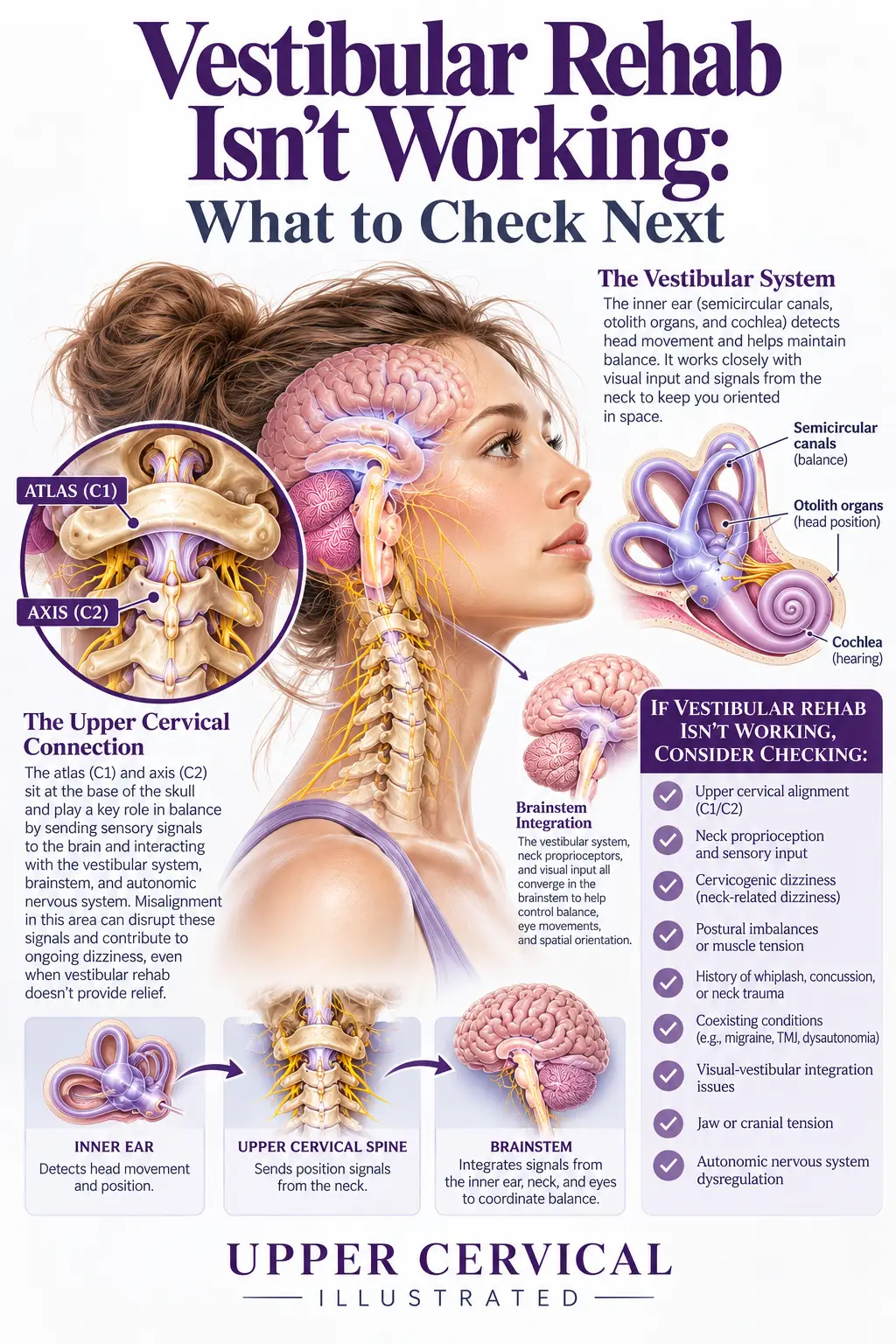
The top two bones of your spine are called the atlas (C1) and the axis (C2). These two vertebrae are unlike any others in your body. They don’t have intervertebral discs between them. They are designed for an enormous range of motion — your atlas is what allows you to nod “yes,” and your axis allows you to shake your head “no.” Together, they cradle the brainstem and protect the most neurologically dense region of your entire spinal column.
The atlas, in particular, is remarkable. It’s a small ring of bone that literally supports the weight of your skull (about 10–12 pounds) on a surface area roughly the size of a fingertip. It is a marvel of biological engineering — but it’s also extremely vulnerable to misalignment.
When the atlas shifts even a fraction of a millimeter out of its ideal position — what we call an upper cervical subluxation — several serious things can happen:
- The brainstem can be physically irritated or compressed
- Cerebrospinal fluid flow between the brain and spine can be disrupted
- Blood flow to and from the brain can be altered
- The vagus nerve, which exits the skull right next to this region, can be compromised
- Postural muscles throughout the spine can pull asymmetrically, creating cascading tension
For someone with asthma, this is not a small detail. An upper cervical subluxation can directly impair the very neurological structures that control your breathing.
This is why, at Lavender Family Chiropractic Neckwise in North Sarasota, we focus so much of our attention on this critical junction. Correcting the upper cervical spine isn’t just about neck pain or headaches — although those often resolve too. It’s about restoring the integrity of the master communication pathway between your brain and your body.
What Causes Upper Cervical Subluxations?
Patients often ask us, “How did my atlas get out of alignment in the first place?” The answer, depending on the person, can be one of dozens of possibilities — but the most common culprits include:
Birth trauma. This is one many parents don’t realize. The forces applied to a baby’s neck during a difficult delivery — particularly with vacuum extraction, forceps, or even a so-called “normal” delivery with significant pulling — can introduce upper cervical misalignment from day one. This is one reason we see asthma so frequently in children whose symptoms started early in life.
Falls and accidents. A childhood tumble off a bicycle, a slip on a wet floor, a fall from a tree, a sports injury — any of these can shift the upper cervical spine. The misalignment may not produce immediate symptoms, but it can simmer for years before manifesting as health problems.
Whiplash and motor vehicle accidents. Even low-speed collisions can transmit enough force through the neck to misalign the atlas.
Repetitive postural stress. Hours hunched over phones, computers, and tablets place chronic asymmetric stress on the upper cervical region. The “tech neck” epidemic is contributing to a rise in neurological dysfunction across all age groups.
Emotional and chemical stress. Yes — stress, poor sleep, dehydration, and inflammatory diets can all contribute to muscle tension patterns that perpetuate upper cervical misalignment.
For many of our asthma patients, especially children, the precipitating event was something the parents had long forgotten about — or never even saw happen.
How Upper Cervical Chiropractic Care Works (And Why It’s Different)
If you’ve experienced traditional chiropractic care — the kind with the dramatic twisting, popping, and cracking — you might be picturing something very different from what we actually do at Lavender Family Chiropractic Neckwise.
Upper cervical chiropractic is a specialized branch of chiropractic that focuses exclusively on the precise correction of the atlas and axis. It is gentle, low-force, and highly specific. There is no twisting of the neck. There are no aggressive manipulations. In many cases, the adjustment is so subtle that patients ask, “Did you even do anything?”
Yes. We did. And the results often speak for themselves.
Here’s what makes the upper cervical approach distinct:
1. Precision over force
Traditional chiropractic adjustments often deliver a generalized force across multiple vertebrae. Upper cervical care identifies the exact vector — the specific direction, angle, and magnitude — by which your atlas has shifted, and applies a corrective input matched precisely to that misalignment. The amount of force used is often less than what you’d use to test a ripe peach.
2. Objective measurement
Before we ever adjust a patient at our North Sarasota office, we perform a thorough analysis. This includes postural assessment, thermographic scanning to map nervous system function, leg-length checks, and often precise upper cervical X-rays to mathematically calculate the misalignment. This isn’t guesswork. It’s neurological engineering.
3. Holding adjustments
When the body holds an upper cervical correction — meaning the atlas stays in its corrected position rather than slipping back — healing accelerates. We don’t adjust the same area over and over. We adjust when the analysis shows the body needs it, and we leave it alone when it’s holding. This is why upper cervical patients are often adjusted less frequentlythan in traditional chiropractic care, not more.
4. Addressing root cause, not symptoms
We’re not chasing your asthma. We’re not chasing your headaches. We’re not chasing your back pain. We are restoring the integrity of your nervous system. When the master controller is working properly, the body has a remarkable capacity to heal itself.
The Neurology Behind Asthma Recovery: A Deeper Look
Let’s get into the specific mechanisms — because this is where it gets fascinating.
The vagus nerve and bronchial tone
As we discussed earlier, the vagus nerve regulates the smooth muscle of your bronchial airways. When the upper cervical spine is misaligned, two things can happen to the vagus:
- Mechanical irritation. The vagus exits the skull through the jugular foramen, very close to the atlas-axis region. Misalignment here can produce subtle but ongoing irritation.
- Dysregulation of vagal tone. Even without direct compression, an irritated brainstem can send dysregulated signals down the vagus. This can produce excessive parasympathetic outflow to the bronchi — meaning the smooth muscle gets too much of the “constrict” signal, contributing to chronic bronchospasm.
When upper cervical correction restores normal communication, vagal tone often re-balances. Patients report that their airways feel “open” in a way they may not have experienced in years.
The sympathetic nervous system and inflammation
It’s not just the parasympathetic side. The sympathetic nervous system — your “fight or flight” system — also plays a major role in airway regulation and immune response. The sympathetic chain runs along the entire spine, but it’s deeply influenced by upper cervical input.
Chronic upper cervical dysfunction can lock the body into a state of low-grade sympathetic activation — what we sometimes call a stuck-on stress response. In this state:
- Cortisol regulation becomes erratic
- Immune function shifts toward inflammatory dominance
- Airway hyper-reactivity increases
- Sleep quality (essential for immune regulation) deteriorates
Restoring upper cervical alignment helps reset the autonomic balance between sympathetic and parasympathetic activity. This is sometimes called restoring autonomic homeostasis, and it has profound effects on conditions like asthma, allergies, anxiety, and digestive disorders.
The cerebrospinal fluid factor
There’s another piece of the puzzle that mainstream medicine is only beginning to appreciate: cerebrospinal fluid (CSF) flow.
CSF is the clear liquid that bathes your brain and spinal cord. It delivers nutrients, removes metabolic waste, and helps regulate neurological function. The upper cervical region is a critical bottleneck for CSF flow. An atlas misalignment can produce subtle but significant disruptions in CSF dynamics — and chronic CSF stasis has been associated with widespread neurological dysfunction, including dysregulation of the brainstem respiratory centers.
When the upper cervical spine is corrected, CSF flow normalizes. The brain and brainstem receive the nourishment and detoxification they need. And the body’s master systems — including respiration — often begin to recalibrate.
The HPA axis and stress response
The hypothalamic-pituitary-adrenal (HPA) axis is your body’s primary stress response system. It’s also intimately connected to immune function and respiratory regulation. Chronic upper cervical dysfunction has been linked to HPA axis dysregulation, which in turn contributes to the inflammation and immune hyperreactivity seen in asthma.
By restoring nervous system integrity, upper cervical care often supports a healthier stress response — which supports a healthier respiratory system.
Real-World Results: What Patients Experience
We want to be clear: chiropractic care does not “cure” asthma in the way an antibiotic cures a bacterial infection. There is no magic bullet, and any practitioner who promises one is misleading you. What we observe at Lavender Family Chiropractic Neckwise — and what is increasingly documented in the chiropractic research literature — is that many patients with asthma experience meaningful, sometimes dramatic, improvements in their symptoms when their nervous system is functioning properly.
The kinds of changes we commonly see in asthma patients receiving upper cervical care include:
- Reduced frequency of asthma attacks
- Decreased reliance on rescue inhalers
- Less reactivity to environmental triggers
- Improved sleep (a huge factor for asthma)
- Better exercise tolerance
- Reduced reliance on daily controller medications (always under physician supervision)
- Fewer respiratory infections
- Overall improvement in energy, mood, and quality of life
For children especially, the improvements can be life-changing. Parents tell us their kids are running, playing sports, sleeping through the night, and laughing without coughing for the first time in memory.
We never advise patients to stop their medications without consulting their prescribing physician. But we do see that as the nervous system heals, many patients are able to work with their doctors to gradually reduce their medication burden.
What to Expect at Lavender Family Chiropractic Neckwise in North Sarasota
If you’re considering upper cervical care for asthma — for yourself, your child, or someone you love — here’s what your experience at our North Sarasota practice typically looks like.
The initial consultation
Your first visit is unlike a typical doctor’s appointment. We sit down with you and listen — really listen — to your story. When did your asthma start? What triggers it? What treatments have you tried? What other health issues do you have? What life events preceded the onset of your symptoms?
This conversation is not a formality. It often reveals patterns and connections that inform our entire approach.
The neurological examination
Next, we perform a comprehensive neurological and structural assessment. This may include:
- Postural analysis from multiple angles
- Range of motion testing
- Thermographic scanning of the spine to identify areas of nervous system stress
- Neurological reflex testing
- Leg-length analysis
- Precision upper cervical X-rays (when indicated) to mathematically calculate misalignment vectors
Our goal is to understand exactly what’s happening in your nervous system before we make a single adjustment.
The report of findings
We then sit down with you a second time to walk through everything we’ve found. We show you your scans, explain what they mean, and lay out a customized care plan based on your specific neurology. You’ll never be left wondering what’s going on or why we’re recommending what we’re recommending.
The adjustment
When it’s time for your first adjustment, you’ll find it shockingly gentle. We position you carefully on a specialized table, deliver a precise correction to the atlas, and let your body do the rest. Many patients describe feeling immediately lighter, calmer, and clearer-headed. Sometimes the changes are immediate. Sometimes they unfold over weeks. Healing is a process.
Ongoing care
We monitor your progress with regular re-scans and reassessments. As your body holds its corrections better and better, the frequency of your visits typically decreases. The goal isn’t to keep you coming forever — it’s to restore your nervous system and help you maintain that integrity for life.
Why North Sarasota Families Choose Lavender Family Chiropractic Neckwise
Our practice is built on a few core principles that we believe set us apart:
We treat people, not symptoms. Whether you’re coming in for asthma, migraines, anxiety, digestive issues, or chronic pain, we are looking at your whole nervous system and asking what your body needs to heal.
We are family-focused. We see patients from newborns to grandparents. We love working with kids, and we have specific protocols for pediatric care that are gentle, safe, and effective.
We believe in education. You will leave our office understanding your body better than you ever have. We don’t just adjust you — we teach you.
We are committed to results. If we don’t believe upper cervical care can help you, we’ll tell you. We’d rather refer you to the right provider than waste your time and money.
We’re part of the North Sarasota community. We live here, we raise our families here, and we are deeply invested in helping our neighbors live healthier, fuller lives.
Lifestyle Factors That Support Asthma Recovery
Upper cervical care is powerful, but it works best when paired with supportive lifestyle choices. Here are the natural strategies we discuss with our asthma patients:
Nutrition
Inflammation in the diet equals inflammation in the airways. We encourage patients to focus on:
- Whole, unprocessed foods
- Anti-inflammatory omega-3 fatty acids (wild-caught fish, flax, walnuts)
- Plenty of colorful vegetables for antioxidants
- Reducing processed sugars, industrial seed oils, and food additives
- Identifying personal food sensitivities (often dairy, gluten, or eggs in asthma patients)
Hydration
Mucous membrane function depends on hydration. Many asthma patients are chronically under-hydrated. Aim for half your body weight in ounces of clean water per day, more if you exercise.
Sleep
The brain and immune system regenerate during deep sleep. Most adults need 7–9 hours; children often need more. Quality matters as much as quantity.
Movement
Gentle, regular exercise improves lung capacity and supports nervous system regulation. We often recommend yoga, swimming, and walking for asthma patients. (Pro tip: swimming in a non-chlorinated pool or the ocean is especially gentle on the airways.)
Breath training
Specific breathing exercises like the Buteyko method and diaphragmatic breathing have been shown to help asthma patients reduce symptoms and medication use.
Stress management
Stress is a major asthma trigger. Mindfulness, prayer, time in nature, and supportive relationships all help calibrate the nervous system in ways that reinforce the work we do in our office.
Environmental factors
Reducing exposure to dust, mold, pet dander, smoke, and chemical irritants in your home and workplace can dramatically reduce asthma triggers. We can offer specific recommendations during your visits.
What the Research Says About Asthma and Chiropractic Care
Asthma is a chronic inflammatory airway disease, and inhaled medication prescribed by a physician is the evidence-based treatment that keeps airways open and prevents attacks. Chiropractic care for asthma has been tested rigorously, and the result should be stated plainly. In a randomized trial of children with asthma, one group received real chiropractic manipulation and the other a simulated version; both groups improved in symptoms and quality of life, but active manipulation gave no added benefit over simulated manipulation on lung function (Balon et al., N Engl J Med 1998). A UK evidence report later rated the evidence for manual therapy in asthma as inconclusive or negative (Bronfort et al., Chiropr Osteopat 2010). We do not present upper cervical care as an asthma treatment, natural or otherwise, and no one should reduce medication because of it.
The improvement both groups felt in that trial points to something worth noting: people with asthma often carry tight, overworked neck and shoulder muscles from labored breathing, and attention to the neck feels good even when the lungs are unchanged. For that neck component the evidence is solid. A Cochrane review of 51 trials found cervical manipulation and mobilization produce meaningful short-term improvements in neck pain and function (Gross et al., Cochrane 2015), and the Ontario clinical practice guideline recommends manual therapy, exercise and patient education for neck pain (Côté et al., Eur Spine J 2016). That is the part we take on, with 3D imaging of the atlas, a correction matched to the images, and re-measurement, while your pulmonologist or pediatrician manages the asthma.
Frequently Asked Questions
Is upper cervical chiropractic safe for children with asthma?
Yes. In fact, children often respond extraordinarily well. The adjustments are extremely gentle — even more so for pediatric patients — and we have specific protocols designed for kids of all ages, including infants. Many of our most dramatic asthma success stories are with children.
Will I have to stop my asthma medication?
Absolutely not — at least not without the guidance of your prescribing physician. We work alongside your medical team. As your nervous system heals, you and your doctor may decide together to gradually reduce certain medications, but this is always a medical decision made with your physician.
How long until I see results?
Every body is different. Some patients notice changes within days. Others require weeks to months. The duration and severity of your asthma, your overall health, and your lifestyle all factor in. We’ll talk about realistic expectations during your initial consultation.
Is upper cervical care covered by insurance?
This varies by plan. Our team will be happy to verify your benefits during your initial intake.
What if I’ve already tried chiropractic care before and it didn’t help?
Upper cervical chiropractic is fundamentally different from traditional chiropractic care. Many patients who didn’t respond to general adjusting respond beautifully to the specificity and gentleness of upper cervical work. We’d encourage you to give it a chance.
Do I have to keep coming forever?
No. The goal of upper cervical care is to restore your nervous system function and teach your body to hold its corrections. Most patients move into a maintenance phase where visits are infrequent — perhaps once every few weeks or even monthly — to support long-term health.
Take the Next Step Toward Breathing Freely
If you’re tired of being held hostage by your asthma — tired of the inhaler, tired of the limitations, tired of wondering if there’s a better way — we want you to know that there is hope. Your body is designed to heal. Your nervous system is the master healer. And when we restore communication at the upper cervical spine, remarkable things can happen.
At Lavender Family Chiropractic Neckwise in North Sarasota, we have the privilege of walking alongside families every day who are reclaiming their health, reclaiming their breath, and reclaiming their lives. We would be honored to do the same for you.
We invite you to schedule a consultation. There’s no obligation — just a conversation about your health, your goals, and whether upper cervical care might be a good fit for you or your loved one.
Your breath is too precious to leave to chance. Let’s restore it — naturally, gently, and at the root.
Related Articles from Our Blog
We invite you to explore these related articles on our website to deepen your understanding of how upper cervical care can support your health:
Related Blogs
1. Allergies: Resolved With Upper Cervical Chiropractic Care
Learn how upper cervical chiropractic care may help improve nervous system function and reduce stress on the body that can contribute to chronic allergies, sinus congestion, and inflammatory responses.
2. Integrative Care in Sarasota: ENT and Upper Cervical Care
This blog discusses the connection between upper cervical spine alignment, sinus drainage, ear pressure, dizziness, and chronic ENT-related symptoms that are often associated with allergies and respiratory irritation.
3. Why Is My Ear Clogged? Understanding Upper Cervical Chiropractic
Explore how upper cervical misalignments may contribute to Eustachian tube dysfunction, ear fullness, sinus pressure, and allergy-related congestion symptoms.
Schedule Your Consultation at Lavender Family Chiropractic Neckwise
Located conveniently in North Sarasota, Florida, Lavender Family Chiropractic Neckwise is here to serve you and your family. Whether you’re battling asthma, supporting a child’s health, or simply seeking to optimize your nervous system, we welcome the chance to meet you.
Ready to Find Out If We Can Help?
We offer consultations to learn more about you and determine whether upper cervical care is the right fit. There’s no pressure, no commitment — just an honest conversation about your symptoms, your history, and your options.
Schedule your consultation here: https://intake.chirohd.com/new-patient-scheduling/724/lavender-family-chiropractic
Or call us directly: (941) 243-3729
Lavender Family Chiropractic / NeckWise North Sarasota 📍 5899 Whitfield Avenue, Suite 107, Sarasota, FL 34243 🌐 www.chiropractorsarasotaflorida.com 📱 Instagram: @lavenderfamilysrq 🎵 TikTok: @drrustylavender
Proudly serving Sarasota, Bradenton, Lakewood Ranch, Venice, Osprey, Port Charlotte, Parrish, and Palmetto — and helping patients across Southwest Florida finally heal at the root.
If you are in Tampa, Fort Myers, or Salt Lake City, you can visit our other NeckWise locations at www.neckwise.com. If you are not local to any of these, visit www.uccnearme.com to find a doctor in your area.
Your concussion does not have to define your life. Your symptoms do not have to be permanent. The fog can lift. The headaches can stop. The dizziness can fade. Let’s check your atlas — and see what becomes possible.
Disclaimer: The information in this article is for educational purposes only and is not intended as medical advice. Always consult with your physician before making changes to your asthma treatment plan. Upper cervical chiropractic care is a complement to, not a replacement for, appropriate medical care.
Related Posts


Get our upper cervical articles first.