
Migraines: How to Resolve Migraines and Headaches without Drugs or Surgery
By Dr. Rusty Lavender, D.C. — upper cervical chiropractor, Lavender Family Chiropractic, Sarasota, FL. Reviewed and updated October 2026.
Our complete guide to migraine care in Sarasota covers the causes we see, the imaging we use, and what to expect at an evaluation.
Migraines can be debilitating, affecting millions worldwide and often disrupting daily life with their intensity and frequency. While many treatment options are available, upper cervical chiropractic care has emerged as a compelling approach for managing and alleviating migraine symptoms. This blog post explores the connection between upper cervical chiropractic care and migraines, providing an in-depth look at how this specialized form of chiropractic care can be beneficial.
Table of Contents
What Are Migraines?
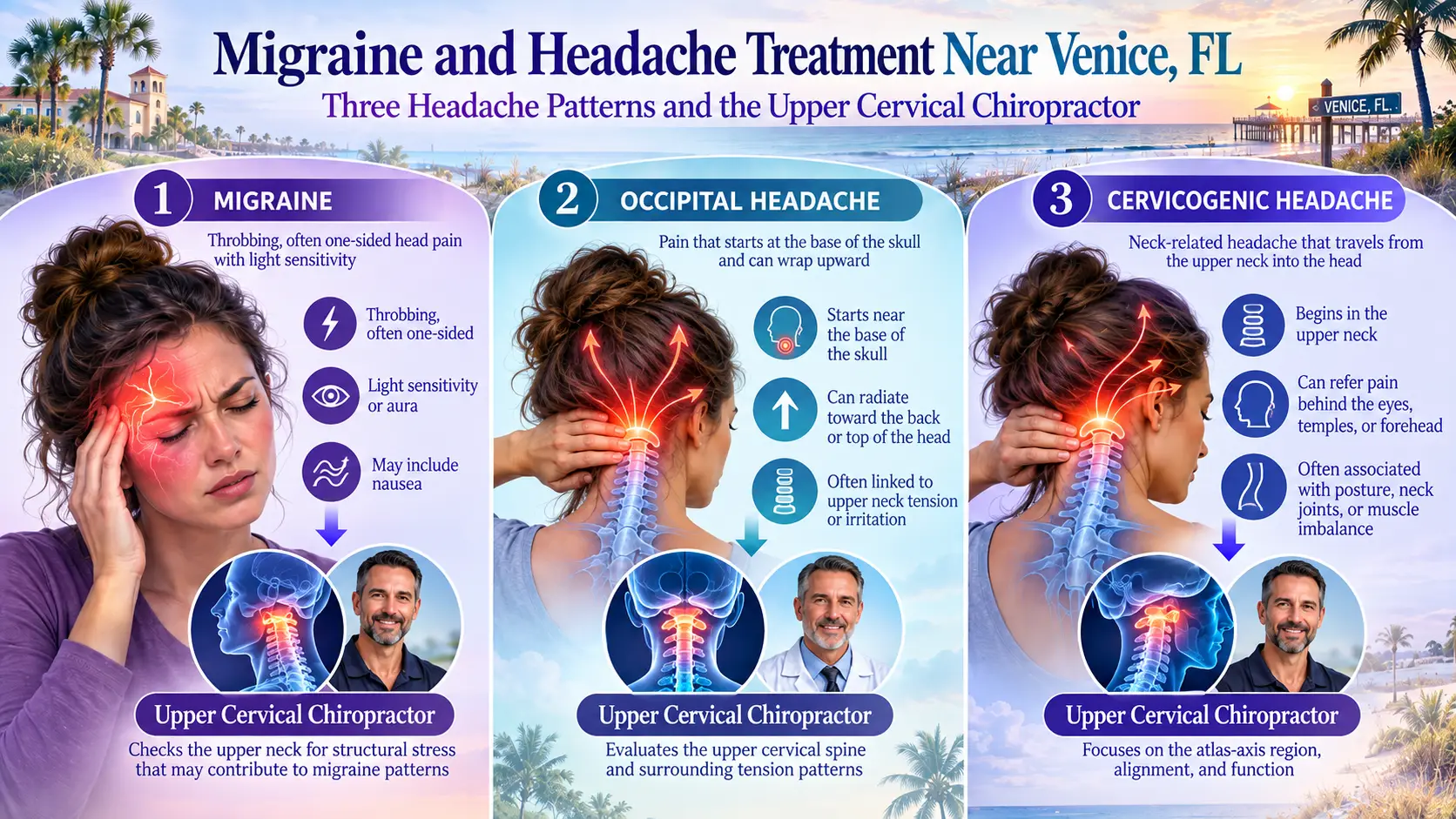
Migraines are more than just severe headaches. They are a neurological condition characterized by recurrent episodes of intense, throbbing pain, often accompanied by nausea, vomiting, and sensitivity to light and sound. The exact cause is not entirely understood, but they are thought to involve complex interactions between genetic, environmental, and neurological factors.
The Role of the Upper Cervical Spine
The upper cervical spine refers to the top two vertebrae in the neck, the atlas (C1) and the axis (C2). These vertebrae are crucial for several reasons:
- Structural Support: The atlas supports the skull and allows for the range of motion in the neck.
- Nervous System Function: These vertebrae protect the spinal cord and the brainstem, areas that are critical for transmitting nerve signals throughout the body.
- Blood Flow: Proper alignment of the upper cervical spine is important for ensuring optimal blood flow to the brain, which can affect migraine symptoms.
Upper Cervical Chiropractic Care Explained
Upper cervical chiropractic care is a specialized form of chiropractic treatment that focuses on the alignment and function of the atlas and axis vertebrae. This approach is distinct from general chiropractic care in that it emphasizes precise adjustments to these upper vertebrae to restore proper alignment and function.
Key Principles of Upper Cervical Chiropractic Care:
- Precision Adjustments: Unlike traditional chiropractic care, which may involve a range of spinal adjustments, upper cervical care utilizes highly specific and gentle adjustments to the atlas and axis vertebrae.
- Spinal Alignment: The primary goal is to correct misalignments in the upper cervical spine that may be affecting the nervous system.
- Holistic Approach: This care method often integrates a holistic approach to overall health, considering how spinal health impacts the entire body.
How Upper Cervical Chiropractic Care Helps Migraines
- Restoring Proper Alignment:
- Nervous System Function: Misalignments in the upper cervical spine can interfere with the nervous system’s ability to function properly. By correcting these misalignments, upper cervical chiropractic care helps restore normal nerve function and communication between the brain and the rest of the body.
- Reduction of Nerve Irritation: Proper alignment can reduce irritation to the nerves that might be contributing to migraine symptoms.
- Improving Blood Flow:
- Enhanced Circulation: Misalignments in the upper cervical spine can affect blood flow to the brain. By addressing these issues, upper cervical chiropractic care helps improve blood circulation, which can alleviate migraine symptoms.
- Reducing Vascular Contributions: Migraines often involve vascular changes, and improving cervical spine alignment may help mitigate these changes.
- Balancing the Nervous System:
- Autonomic Nervous System: The autonomic nervous system, which controls involuntary bodily functions, can be affected by upper cervical misalignments. Proper alignment helps balance the autonomic nervous system, potentially reducing the frequency and intensity of migraines.
- Stress Reduction: Misalignments can contribute to physical stress, which may trigger migraines. By correcting these misalignments, upper cervical chiropractic care helps reduce overall stress levels.
- Improving Range of Motion:
- Neck Mobility: Migraines can sometimes be triggered or exacerbated by restricted neck mobility. Upper cervical chiropractic care can help restore normal range of motion in the neck, potentially reducing the likelihood of migraine attacks.
Evidence Supporting Upper Cervical Chiropractic Care for Migraines
Several studies and patient testimonials support the effectiveness of upper cervical chiropractic care for managing migraines:
- Clinical Studies:
- A study published in the Journal of Manipulative and Physiological Therapeutics found that patients receiving upper cervical chiropractic adjustments experienced significant reductions in the frequency and severity of migraines.
- Research in the Journal of Chiropractic Medicine indicated that upper cervical chiropractic care led to improvements in migraine symptoms in a majority of participants.
- Patient Testimonials:
- Many patients report significant relief from symptoms after undergoing upper cervical chiropractic care. These testimonials often highlight reductions in the frequency and intensity of migraines and improvements in overall quality of life.
What to Expect During Upper Cervical Chiropractic Care
If you’re considering upper cervical chiropractic care, here’s what you can expect:
- Initial Consultation:
- Health History: The chiropractor will take a detailed health history, including information about your symptoms, frequency, and any previous treatments.
- Examination: A thorough examination will be conducted, including a detailed assessment of your upper cervical spine.
- Diagnostic Imaging:
- X-Rays or MRI: Diagnostic imaging may be used to evaluate the alignment of the atlas and axis vertebrae and identify any misalignments.
- Treatment Plan:
- Customized Approach: Based on your examination and diagnostic findings, the chiropractor will develop a customized treatment plan that may include specific adjustments to the upper cervical spine.
- Follow-Up Care: Regular follow-up appointments will be scheduled to monitor progress and make any necessary adjustments to the treatment plan.
- Lifestyle and Wellness Recommendations:
- Holistic Care: In addition to adjustments, the chiropractor may provide recommendations for lifestyle changes, such as stress management techniques and exercises to support spinal health.
Potential Benefits of Upper Cervical Chiropractic Care
- Pain Relief:
- Migraine Reduction: Many patients experience significant reductions in symptom frequency and intensity.
- Improved Comfort: Alleviation of associated symptoms such as neck pain and tension.
- Enhanced Quality of Life:
- Increased Functionality: Reduced migraines lead to improved daily functioning and overall quality of life.
- Better Sleep: Improved spinal alignment can contribute to better sleep quality.
- Complementary Approach:
- Integration with Other Therapies: Upper cervical chiropractic care can be used in conjunction with other treatments and therapies for a comprehensive approach to migraine management.
Potential Considerations and Precautions
While upper cervical chiropractic care can be highly effective. It’s important to consider the following:
- Consultation with a Healthcare Provider:
- Medical Evaluation: Always consult with a healthcare provider before starting any new treatment, especially if you have underlying health conditions or if you’re currently receiving other treatments for migraines.
- Individual Variability:
- Response to Treatment: Responses to upper cervical chiropractic care can vary. What works for one person may not work for another, so it’s important to monitor progress and make adjustments as needed.
- Complementary Approach:
- Holistic Care: Upper cervical chiropractic care is one component of a comprehensive approach to migraine management. It should be considered alongside other treatments and lifestyle changes for optimal results.
Conclusion
Upper cervical chiropractic care offers a promising approach for managing and alleviating symptoms. By focusing on the alignment and function of the upper cervical spine, this specialized form of chiropractic care addresses key factors that can contribute to migraine symptoms, including nervous system function, blood flow, and overall spinal health.
If you’re struggling with migraines and seeking alternative or complementary treatment options, upper cervical chiropractic care may be worth exploring. As with any treatment, it’s important to work closely with your healthcare provider to develop a personalized approach that meets your specific needs and goals. With its emphasis on precision and holistic care, upper cervical chiropractic care has the potential to make a significant difference in your journey towards migraine relief and improved quality of life.
Our full guide to migraine treatment in Sarasota covers types, triggers, and how we evaluate the neck’s role.
What the Research Says About Drug-Free Migraine Care
Migraine starts in the nervous system. Current reviews describe it as a disorder of sensory processing in the brain, with the trigeminovascular system and the brainstem driving attacks (Goadsby et al., Physiol Rev 2017). Medication remains the mainstay of conventional care, and for many people it is appropriate. The question patients ask us is whether anything outside the pharmacy has real evidence. One answer comes from a three-armed randomized trial in which chiropractic spinal manipulation reduced migraine days from baseline, with the reduction sustained at follow-up; the sham and control groups also improved, however, so the trial could not establish a specific effect of manipulation beyond sham (Chaibi et al., Eur J Neurol 2017). That honest result is worth knowing before anyone promises you a drug-free fix.
Older and more positive evidence also exists. A randomized trial of 127 people with migraine found significant improvement in attack frequency, duration and medication use in the group receiving chiropractic spinal manipulation compared with controls (Tuchin et al., J Manipulative Physiol Ther 2000). Safety matters for anyone choosing a non-drug route, and the largest prospective study of upper cervical chiropractic, following 1,090 patients across 83 offices, reported high patient-rated improvement and satisfaction, with reactions mostly mild and short-lived and no serious adverse event (Eriksen et al., BMC Musculoskelet Disord 2011). Our upper cervical approach builds on that record with 3D imaging of the atlas, a correction tailored to what those images show, and repeat measurements, so that any progress against the neck component of migraine is tracked objectively.
Frequently Asked Questions
Why does the upper neck matter in migraines?
Sensory nerves from the upper three cervical segments converge with the trigeminal nerve in the brainstem, forming the trigeminocervical complex, which is the region that generates head pain. When the atlas is misaligned, irritation from the upper neck feeds into that complex and lowers the threshold for a migraine. Upper cervical care corrects the atlas with a precise, low-force Knee Chest adjustment and uses thermography to measure whether the nervous system is calming.
How does upper cervical care help migraines without medication?
We do not treat the migraine directly; we correct the structural input coming from the upper neck. Using 3D cone-beam CT we measure the position of the atlas and axis, then deliver a specific correction with no twisting or cracking. Thermography before and after each visit shows how the nervous system is responding. Many patients notice fewer and less intense episodes as their alignment holds, and their neurologist stays in charge of any medication decisions.
What is a migraine evaluation like at your Sarasota office?
We review your migraine history, triggers, and any injuries such as whiplash or concussion. A neurological and postural exam follows, and if the findings point to the upper neck we take a CBCT scan and a baseline thermography reading. From that we calculate your correction. Serious causes of headache should be ruled out by a physician, and we coordinate with neurologists and share imaging on request. Call (941) 243-3729 to schedule an evaluation.
Can neck injuries from years ago still be driving migraines today?
Yes. The atlas can shift during a car accident, fall, or sports injury and remain misaligned for years without obvious neck pain. The nervous system adapts, but the irritation at the trigeminocervical complex continues. Many migraine patients in our office trace their symptoms back to an event they had forgotten. Imaging shows us the current position of the atlas regardless of when the injury happened, and the correction is based on that measurement.
How many visits do migraine patients from Lakewood Ranch typically need?
Care plans are individual and there are no preset packages. Early visits are closer together while the correction stabilizes, then they spread out as thermography shows the nervous system holding steady. Results vary by person. Our office at the corner of University Parkway and Whitfield Avenue is minutes from Lakewood Ranch, Bradenton, and University Park, which makes the early phase of care convenient for patients coming from those areas.
Schedule With Us!
Lavender Family Chiropractic offers consultations to learn more about you. Click the link below!
https://intake.chirohd.com/new-patient-scheduling/724/lavender-family-chiropractic
Related Posts



Get our upper cervical articles first.
Patients Experience