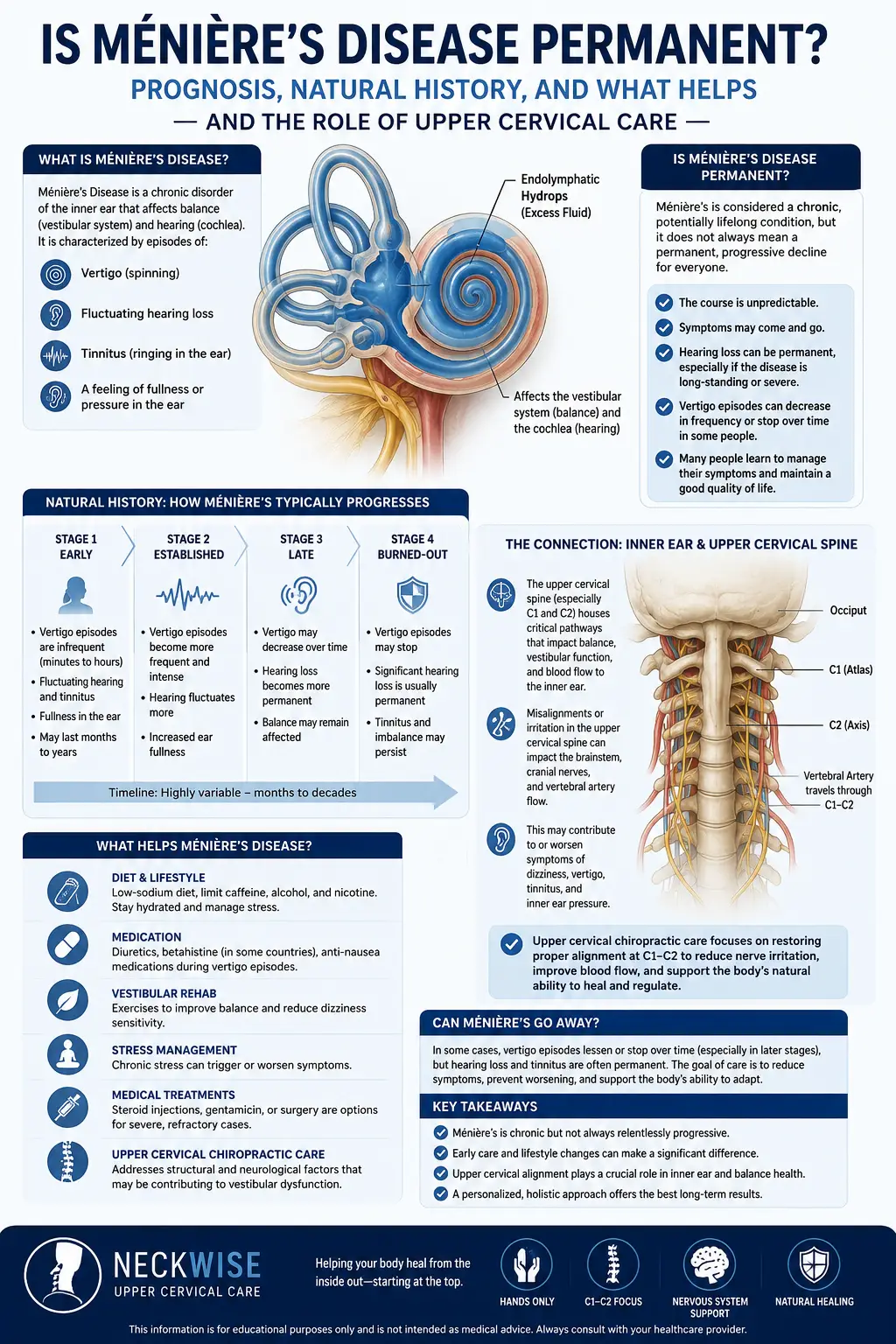
Is Meniere’s Disease Permanent? Prognosis, Natural History — and the Driver No One Checked
By Dr. Rusty Lavender, D.C. — upper cervical chiropractor, Lavender Family Chiropractic, Sarasota, FL. Reviewed and updated October 2026.
If you’ve been diagnosed with Meniere’s disease, one question sits heavier than all the others: is this permanent? You deserve an honest answer, not a slogan — and the honest answer has two sides. The good news, well documented across decades of research, is that the most frightening feature, the violent spinning vertigo, tends to fade for most people over several years. The harder news is that hearing loss and tinnitus can become lasting. But there’s a third side almost no one tells you about, and it explains why so many people feel unsteady long after the attacks quiet down: as your inner ear does less of the balancing, your brain leans harder on the one balance input a standard Meniere’s workup never examines — the upper cervical spine, the atlas (C1) and axis (C2) just beneath your skull. If that structure is misaligned, it can drive the residual dizziness that lingers. It is the one place nobody checked, and it is worth evaluating.
This article walks through what’s known about the long-term course of Meniere’s disease, what the research actually shows, the management options that help people live well, and where careful, gentle upper cervical chiropractic care fits — as a genuine, overlooked piece of a coordinated plan, never a replacement for the medical care that anchors your treatment. We serve patients across Sarasota, Lakewood Ranch, and Bradenton, and this is the piece we see missed again and again.
This article is educational and not a substitute for medical advice. Meniere’s disease should be diagnosed and managed by a qualified physician.
What Meniere’s Disease Actually Is
Meniere’s is a disorder of the inner ear, which houses two closely related systems: the cochlea (hearing) and the vestibular system (balance and your sense of where your head is in space). In Meniere’s, a problem develops with the fluid (endolymph) inside these delicate structures — a buildup called endolymphatic hydrops, thought to disturb the normal signaling of both hearing and balance. The exact mechanisms are still debated, and several factors — genetic predisposition, immune activity, circulation, fluid regulation — likely combine differently from person to person.
Clinically, Meniere’s is defined by a recognizable cluster:
- Episodic vertigo: Spontaneous attacks of spinning, typically lasting from about 20 minutes to several hours, often with nausea and vomiting.
- Fluctuating hearing loss: Hearing, usually in one ear, that rises and falls, especially in the lower frequencies early on. Over time it may decline more lastingly.
- Tinnitus: A ringing, roaring, buzzing, or hissing sound in the affected ear.
- Aural fullness: A sensation of pressure or fullness, as if the ear needs to “pop.”
Meniere’s most often affects one ear, though a portion of patients develop symptoms in both. It commonly begins between ages 40 and 60. Because these symptoms overlap with many other conditions — vestibular migraine, BPPV, and neck-related dizziness — an accurate diagnosis from a qualified physician is essential before anyone assumes they know what’s driving the problem. And that “neck-related dizziness” is not a footnote; as you’ll see, it’s a driver worth taking seriously.
The Central Question: Is It Permanent?
When people ask whether Meniere’s is permanent, they’re usually asking two questions at once. Separate them.
Question one: Will I keep having vertigo attacks forever? For most people, the honest and encouraging answer is probably not at the intensity you’re experiencing now. Meniere’s has a natural history — a typical arc over time. Early on, vertigo attacks are often the dominant, most disruptive feature. But as the years pass, many patients find the attacks become less frequent, less violent, or both. In a substantial portion, the vertigo eventually settles into long periods of quiet or stops altogether — sometimes described as the disease “burning out.” It doesn’t happen for everyone, or on a predictable schedule, but it’s a genuine, well-documented pattern.
Question two: Will my hearing and tinnitus recover? Here the answer is more sobering. While vertigo often improves, hearing loss and tinnitus can move in the opposite direction. Early on, hearing may fluctuate — dropping around attacks, then recovering. But as the disease matures, hearing loss in the affected ear can become more permanent, and tinnitus and fullness may persist even after vertigo has faded. This is why protecting and monitoring your hearing early matters so much.
So the most accurate summary: Meniere’s is chronic, but it is not static. The frightening acute attacks frequently diminish over roughly five to ten years, while the quieter but lasting effects on hearing may become permanent. That combination — real improvement in the most disabling symptom paired with possible lasting hearing changes — is the realistic middle ground between false despair and false promises. But notice what this arc doesn’t explain: the steady, low-grade unsteadiness that so many people carry long after the spinning stops. That’s the part the inner-ear story leaves hanging, and it’s where the upper neck enters.
The Natural History of Meniere’s Disease Over Time
Understanding the natural history — how a disease typically evolves over many years — is genuinely reassuring, because it reframes today’s suffering as one chapter rather than the whole book.
The Early Phase
In the first months to years, Meniere’s is often at its most volatile. Vertigo attacks may cluster, separated by calmer stretches. Hearing fluctuates noticeably, and many describe this stage as the most emotionally exhausting because of its unpredictability. If you’re in this phase, know that this is often the stormiest stretch, not a preview of every year to come. It’s also the ideal time to have the upper cervical spine evaluated — before years of guarding and bracing add a second layer to the problem.
The Middle Phase
Over subsequent years, a shift frequently occurs. The vertigo attacks, while they may still happen, often become less frequent and less severe — from every few weeks to a few times a year, then perhaps rarely. Meanwhile, hearing loss may stabilize at a lower level, and tinnitus or fullness may become steadier companions. Balance between attacks can feel slightly “off” even when full vertigo isn’t present, partly because the inner ear’s balance function has been altered — and partly because the rest of the balance system is now working harder to compensate.
The Later Phase
Many years in, a large share of people reach a relatively stable state in which spontaneous vertigo is infrequent or has stopped. What remains is often a more constant, milder sense of imbalance, along with whatever hearing loss and tinnitus have settled in. This is the “burnout” stage — genuinely good news on the vertigo front, with the trade-off of more established hearing changes. And crucially, that lingering imbalance is not just the ear. It reflects a balance system that now depends heavily on its other inputs — vision and the upper neck — to keep you upright.
Importantly, roughly a third of people experience spontaneous remission of their vertigo — the attacks stop without any specific treatment being credited. This is one of the most hopeful facts about Meniere’s, and one of the most humbling for anyone trying to treat it, because the disease’s natural tendency toward quieting can make almost any intervention lookeffective. That’s precisely why careful research and honest interpretation matter, and why no responsible provider should claim to have made your Meniere’s go away.
Where the Neck Fits In — the Overlooked Driver
Because balance is a team effort inside the body, understanding how the neck participates explains why so many people with inner-ear disorders also carry a neck-related layer of dizziness that never gets addressed.
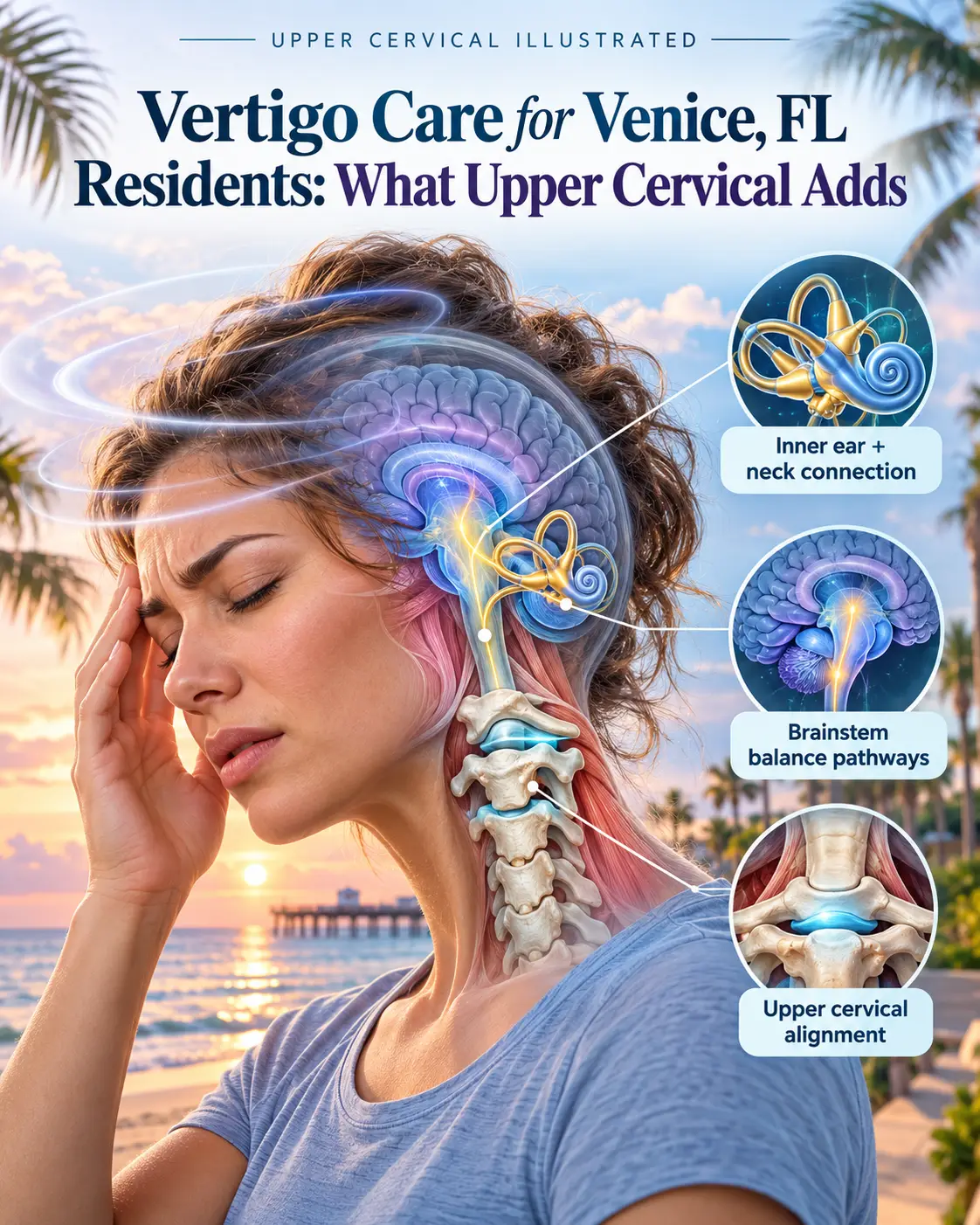
Your brain maintains balance by blending three streams: signals from the inner ear (vestibular system), signals from the eyes (vision), and signals from the proprioceptors in your muscles and joints — especially the richly innervated joints of the upper neck. When all three agree, you feel stable. When they disagree, you feel dizzy, foggy, or unsteady. The upper cervical spine — the atlas and axis, the top two vertebrae just beneath the skull — is one of the densest sources of that position information in your entire body, feeding directly into the same brainstem centers that process your inner-ear signals. These two vertebrae also carry the full weight of your head, held largely by ligaments rather than interlocking bone, which makes them both highly mobile and highly vulnerable to being knocked out of alignment.
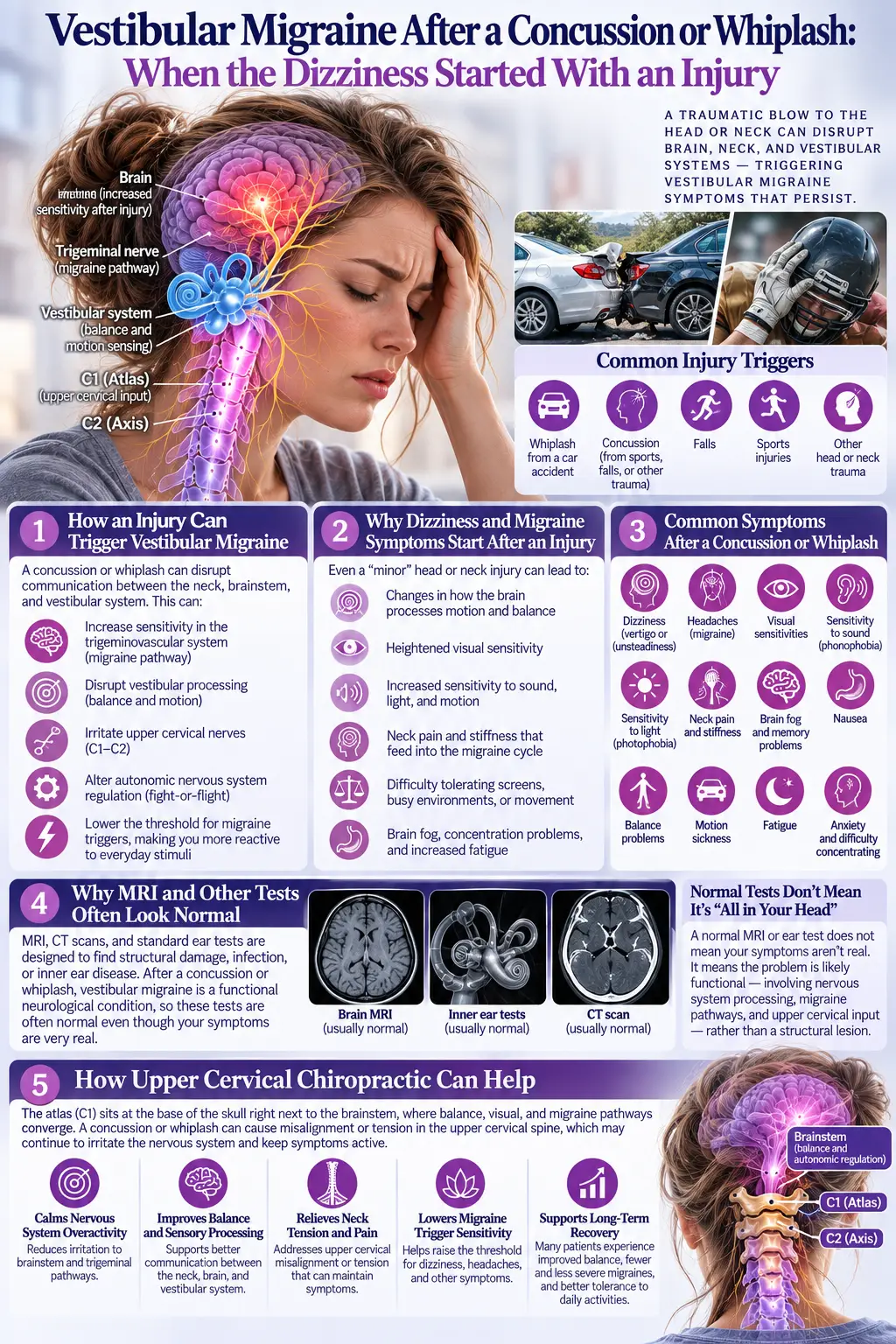
Meniere’s disrupts the inner-ear input. But many people with Meniere’s also have neck tension, old whiplash injuries from a car accident, a past concussion, poor posture, or upper cervical joint dysfunction that disrupts the neck’s input to balance. When someone spends years bracing against vertigo, guarding their head and neck during attacks, and living with chronic stress, it’s not surprising the neck’s contribution becomes part of the problem. The neck isn’t causing the Meniere’s — but it may be a second, separate, and entirely overlooked driver of imbalance layered on top of it. And in the later stages, when the inner ear does less of the work, that neck-based driver can dominate what you actually feel day to day.
This is where careful upper cervical chiropractic care plays a genuine role — and I want to be precise and compliant about its boundaries. There is no evidence that upper cervical chiropractic care cures Meniere’s disease, and it should never be presented that way. The inner-ear fluid dynamics of Meniere’s are not something an adjustment can be expected to fix. What careful upper cervical care can reasonably aim to do is address a coexisting cervicogenic component of dizziness — the neck-based part of the balance picture — so the total load of imbalance and unsteadiness a person carries may be reduced. For many people, quieting one of the three balance inputs helps them cope far better with the disruption still coming from the inner ear. That’s a defensible goal, offered as one part of a coordinated plan alongside your ENT and medical team, and it targets exactly the driver the standard workup never checked.
How Upper Cervical Care Is Approached at Our Practice
At Lavender Family Chiropractic (NeckWise North Sarasota), serving Sarasota, Lakewood Ranch, and Bradenton, the approach to the upper cervical spine is deliberately precise and gentle. We begin with careful assessment rather than assumptions:
- 3D CBCT (cone-beam computed tomography) imaging lets us see the specific anatomy and alignment of the upper cervical region in three dimensions.
- Paraspinal infrared thermography helps us monitor patterns of nervous-system-related changes alongside the spine.
These tools help us decide whether an upper cervical issue is even present and worth addressing. When care is appropriate, we use the Knee Chest Upper Cervical technique, a low-force method. The correction is precise, gentle, and low-force — there is no twisting, cracking, or popping of the neck. For people already dealing with the disorientation of Meniere’s, a gentle approach is a clinical necessity, not a preference. The aim is to support the neck’s contribution to balance as carefully as possible while your medical team manages the disease itself.
If, after assessment, we don’t find a neck component we can reasonably help, the honest answer is to tell you so and keep your care focused where it belongs. Upper cervical care complements medical management; it never replaces it.
Medical and Lifestyle Management: What Actually Helps
Because Meniere’s is chronic, the practical goal for most people is not to chase a cure but to reduce attack frequency and severity, protect hearing, and preserve quality of life. Management is typically layered, starting with the least invasive options. Your ENT guides these decisions; here’s the landscape.
Dietary and Lifestyle Measures
- Reducing dietary salt. A lower-sodium diet is one of the most commonly recommended strategies, aiming to stabilize inner-ear fluid balance. Many are advised to spread sodium evenly through the day and avoid large salty spikes.
- Limiting caffeine and alcohol. Both can affect fluid balance and, for some, seem to provoke symptoms.
- Managing stress. Stress and fatigue are frequently reported triggers. And because stress also tightens the neck and shoulders — loading that already-vulnerable upper cervical region — stress management can help on more than one front.
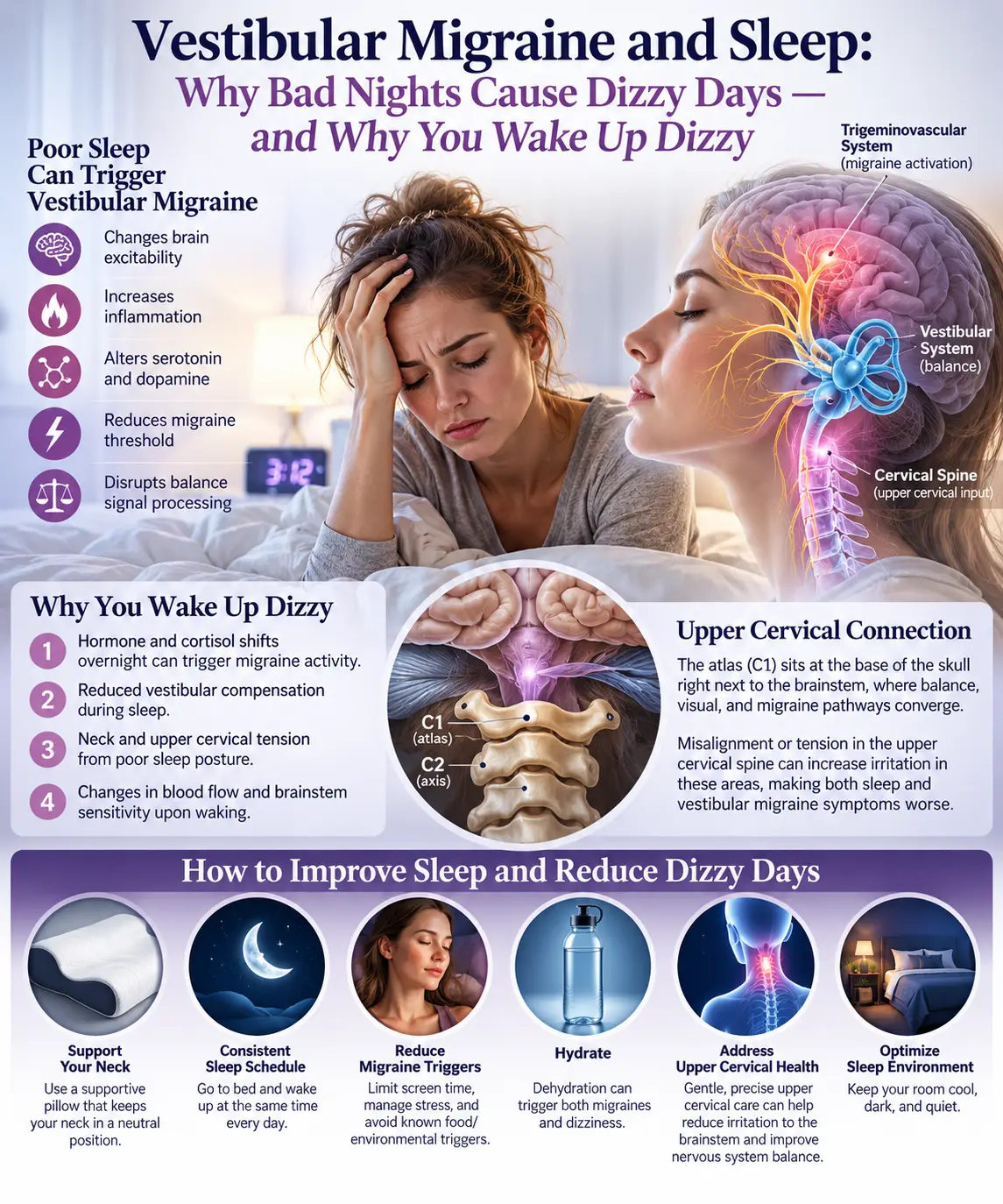
- Regular sleep and hydration. Steady routines tend to reduce flares.
- Identifying personal triggers. A simple symptom diary — noting food, sleep, stress, weather, and neck pain or headaches around attacks — can reveal patterns unique to you.
These measures won’t cure the condition, but for many people they reduce how often and how hard the attacks hit.
Medications
When lifestyle measures aren’t enough, physicians may add medication. Diuretics (water pills) are sometimes used to regulate fluid. During acute attacks, medications that calm vertigo and nausea provide relief. All of these are decisions for your prescribing physician, tailored to your history.
Procedures and Devices
For people whose attacks remain frequent and disabling despite conservative care, ENTs can offer more involved options — from injections into the middle ear, to pressure-pulse devices, to various surgical procedures for the most severe, treatment-resistant cases. These are stepwise choices, generally reserved for when simpler measures haven’t provided enough relief, with careful discussion of risks and benefits.
Vestibular Rehabilitation and Balance Work
Because Meniere’s alters balance function over time, vestibular rehabilitation therapy can be extremely valuable, especially between attacks and in the later “burned-out” phase when constant low-grade unsteadiness may remain. These exercises help the brain recalibrate and lean more effectively on vision and proprioception to compensate for the altered inner ear. Notice what that means: rehab works by strengthening the brain’s use of the same neck-based proprioceptive input we evaluate. Addressing a neck-based (cervicogenic) driver, when present, complements rehab by cleaning up one of the balance system’s input signals rather than leaving it distorted.
Hearing Care
Because hearing loss can become permanent, don’t neglect it. Regular audiograms let you and your ENT track changes. If hearing loss becomes significant, hearing aids or other devices make a real difference in daily life. Protecting and supporting hearing is a core part of living well with Meniere’s, not an afterthought.
Living Well With a Chronic Condition
There’s an emotional dimension the medical summaries miss. Living with unpredictable vertigo chips away at confidence — people stop driving, cancel plans, avoid crowded spaces for fear of an attack. Anxiety and low mood are common, understandable responses to a condition that steals your sense of a stable world. Acknowledging this is part of a complete picture of care.
The encouraging news, threaded throughout the natural history, is that most people find a livable equilibrium. As attacks become less frequent and management takes hold, life tends to open back up. Support groups, counseling, and simply understanding what’s happening in your body all reduce the fear that magnifies suffering. Knowledge itself is a form of treatment — and part of that knowledge is recognizing that when unsteadiness lingers after the spinning stops, it may be pointing at a driver in your neck that no one has yet measured.
Red Flags: When to Seek Prompt Medical Attention
Meniere’s shares symptoms with other conditions, some urgent. Never assume new or unusual symptoms are “just Meniere’s.” Seek prompt medical evaluation — and in serious cases, emergency care — if you experience any of the following:
- Sudden hearing loss, especially if rapid or severe, which can be a medical emergency requiring urgent treatment.
- A severe “worst-ever” headache, or vertigo with a headache unlike any before.
- Double vision, trouble speaking, slurred speech, or difficulty swallowing.
- Weakness, numbness, or tingling in the face, arm, or leg, particularly on one side.
- Loss of coordination, trouble walking, or fainting.
- A severe, unrelenting headache with fever or a stiff neck.
- Vertigo that is new, dramatically different, or accompanied by any of the above neurological signs.
These can signal conditions unrelated to Meniere’s — including stroke — that require immediate attention. When in doubt, get evaluated. A responsible chiropractor, like any responsible clinician, will always direct you to appropriate medical or emergency care when red flags appear, rather than trying to manage them.
Top Questions
Is Meniere’s disease permanent? Meniere’s is considered a chronic condition, so in that sense it’s a long-term diagnosis. But the experience usually changes over time. The vertigo attacks — the most disabling feature — often become less frequent and less severe over roughly five to ten years, and a meaningful share of people see them quiet down or stop on their own. Hearing loss and tinnitus, however, can become permanent. So it’s more accurate to say Meniere’s is chronic but evolving, rather than simply “permanent” in every respect.
Will my vertigo attacks ever stop? For many people, yes — or at least they diminish greatly. The natural history shows a tendency for vertigo to decline as years pass, and roughly a third of patients experience spontaneous remission without a specific treatment being responsible. There’s no guaranteed timeline, but the overall trend for vertigo is generally toward improvement.
Will my hearing come back? Early on, hearing often fluctuates and may partly recover between attacks. Over time, though, hearing loss in the affected ear can become more permanent. This is why regular hearing tests and early attention to hearing protection and support (including hearing aids when appropriate) are so important.
Does the “burnout” of Meniere’s mean I’ll be completely fine? Not exactly. “Burnout” usually refers to the vertigo becoming infrequent or stopping, which is a real relief. But a milder, more constant sense of imbalance may remain, along with whatever hearing loss and tinnitus have settled in. Vestibular rehabilitation and, where relevant, addressing a neck-based balance driver can help you function well in this phase — the upper neck being the input the standard workup usually never checked.
Can upper cervical chiropractic care cure my Meniere’s disease? No. There is no evidence that upper cervical chiropractic care cures Meniere’s disease, and any provider promising that is overreaching. What careful upper cervical care may do is address a separate, coexisting source of dizziness that comes from the neck (cervicogenic dizziness), when present. That can reduce the total amount of imbalance some people feel. It’s offered as one part of a coordinated plan alongside your ENT and medical team — a complement to medical care, never a replacement.
How would I know if my neck is driving my dizziness? That takes assessment. We use tools such as 3D CBCT imaging and paraspinal infrared thermography to evaluate the upper cervical spine, along with a careful history and examination. Cervicogenic dizziness is identified in part by considering and ruling out other causes, so this evaluation happens in cooperation with your medical diagnosis. If we don’t find a neck component we can reasonably help, we’ll tell you so.
Is the chiropractic adjustment going to be forceful or scary? No. The Knee Chest Upper Cervical technique is precise, gentle, and low-force, with no twisting, cracking, or popping. For someone already coping with dizziness, a gentle approach matters and is central to how we work.
What can I do right now to feel better? Work closely with your ENT; consider conservative measures like reducing dietary salt, limiting caffeine and alcohol, managing stress, and keeping steady sleep and hydration. Keep a symptom diary to spot your triggers. Ask about vestibular rehabilitation, especially for lingering imbalance. Stay on top of hearing evaluations. And if unsteadiness persists — particularly after any head or neck trauma — have your neck evaluated as a likely additional driver.
What the Research Says
The patterns above are supported by long-term studies that followed Meniere’s patients over years and decades.
A landmark long-term follow-up study, the long-term course of Menière’s disease revisited by Huppert and colleagues, reviewed the natural history and reinforced a central theme: the frequency of vertigo attacks tends to decline substantially the longer a person has the disease. Time itself is associated with fewer spinning episodes for many patients, even as hearing-related symptoms follow a different, more persistent trajectory.
A separate follow-up study, the outcome of patients with Ménière’s disease, examined how patients fared over time and echoed a broadly favorable picture for vertigo control in a large share of people — whether through natural quieting, conservative management, or medical treatment. Most patients ultimately achieve reasonable control of their most disabling symptom, even though the hearing outcome is less forgiving.
More recent work, an analysis of changes in symptom pattern in Meniere’s disease by duration published in Frontiers in Neurology in 2024, looked specifically at how the symptom profile shifts with how long someone has had the disease. Consistent with the natural-history model, it describes an evolution in which the acute vertigo component tends to become less prominent as auditory symptoms take on a relatively larger role — which helps explain why two people with the “same” diagnosis can describe very different day-to-day experiences.
The remaining two sources speak to a driver too often ignored: dizziness that originates from the neck. A comprehensive review of cervicogenic dizziness examines how dysfunction in the upper (cervical) spine can generate or amplify feelings of dizziness, unsteadiness, and disorientation. Cervicogenic dizziness is understood as a distinct clinical entity — a diagnosis reached in part by considering and excluding other causes — in which abnormal sensory input from the neck disturbs the body’s sense of balance. Complementing this, a narrative review of proprioceptive cervicogenic dizziness published in the Journal of Clinical Medicine in 2022 details the mechanism: the upper cervical spine is densely populated with position-sensing receptors (proprioceptors) that feed the brain constant information about head and neck position. When that stream becomes distorted — through injury, muscle tension, or joint dysfunction — it can conflict with signals from the inner ear and eyes, producing dizziness or imbalance.
Two points deserve emphasis. First, cervicogenic dizziness is a separate condition from Meniere’s; it’s not a hidden explanation for Meniere’s, and treating the neck does not treat the inner ear. Second, precisely because both problems produce overlapping sensations of imbalance, they can coexist in the same person — and when they do, addressing a neck component may reduce the total burden of dizziness without altering the underlying Meniere’s disease itself. That distinction is the frame for upper cervical care: attention to a real, overlooked driver that the standard workup never measured.
Putting It All Together
If you take one message from this article, let it be this: a diagnosis of Meniere’s disease is not a sentence to endless, unchanging suffering. The condition is chronic, but its most frightening feature — the vertigo — tends to ease over the years for most people, and stops entirely for a significant share. What often lingers is hearing loss and tinnitus, which is why protecting your hearing early matters so much, and a milder ongoing sense of imbalance — which is exactly where rehabilitation and gentle attention to the neck can help.
Good care for Meniere’s is coordinated care. Your ENT anchors the medical management. Lifestyle strategies give you daily tools. Vestibular rehabilitation retrains your balance system. And, when a neck-based driver of dizziness is present, careful, low-force upper cervical chiropractic care can serve as one supportive piece — reducing the neck’s contribution to imbalance without ever pretending to fix the inner-ear disease itself. Honesty about what each piece can and can’t do is what makes the whole plan trustworthy. For many people across Sarasota, Lakewood Ranch, and Bradenton, the upper neck is the piece that finally got checked.
Serving Sarasota, Lakewood Ranch & Bradenton
Lavender Family Chiropractic (NeckWise North Sarasota) proudly serves patients throughout Sarasota, Lakewood Ranch, Bradenton, Palmetto, University Park, Whitfield, and the surrounding Gulf Coast communities. If you’re living with Meniere’s disease and wondering whether a neck-based driver may be adding to your dizziness — especially if your unsteadiness has outlasted the attacks, or followed a whiplash, concussion, or fall — we’d be glad to talk with you and help you understand whether careful upper cervical assessment fits your broader plan, always in coordination with your medical care, never in place of it.
Schedule a consultation with our doctors to have your questions answered and learn whether gentle upper cervical care may be an appropriate part of your coordinated approach. Patients across Sarasota, Lakewood Ranch, and Bradenton are welcome.
Lavender Family Chiropractic (NeckWise North Sarasota) 5899 Whitfield Avenue, Suite 107 Sarasota, FL 34243 Phone: (941) 243-3729
This article is for educational purposes only and is not a substitute for professional medical advice, diagnosis, or treatment. Upper cervical chiropractic care complements, and does not replace, the care of your physician or ENT specialist. Always seek the advice of a qualified health provider with any questions about a medical condition, and seek emergency care for any red-flag symptoms.
Related Articles

Get our upper cervical articles first.
Patients Experience