
What Are the Top 3 Causes of Headaches and How Upper Cervical Chiropractic at Lavender Family Chiropractic Can Help
By Dr. Rusty Lavender, D.C. — upper cervical chiropractor, Lavender Family Chiropractic, Sarasota, FL. Reviewed and updated October 2026.
Our complete guide to headache care in Sarasota covers the causes we see, the imaging we use, and what to expect at an evaluation.
What are the top 3 causes of headaches? Headaches are one of the most common ailments people experience. Whether it’s a mild tension headache after a long day at work or a debilitating migraine that leaves you in bed for hours, headaches can significantly impact your quality of life. While many people turn to over-the-counter medications for relief, these only address the symptoms rather than the root cause of the problem.
At Lavender Family Chiropractic in Sarasota, we specialize in upper cervical chiropractic care, a natural and holistic approach that can help resolve headaches and migraines at their source. In this in-depth guide, we’ll explore the top three causes of headaches and explain how upper cervical chiropractic care can provide long-term relief.
The Top 3 Causes of Headaches
1. Cervical Spine Misalignment
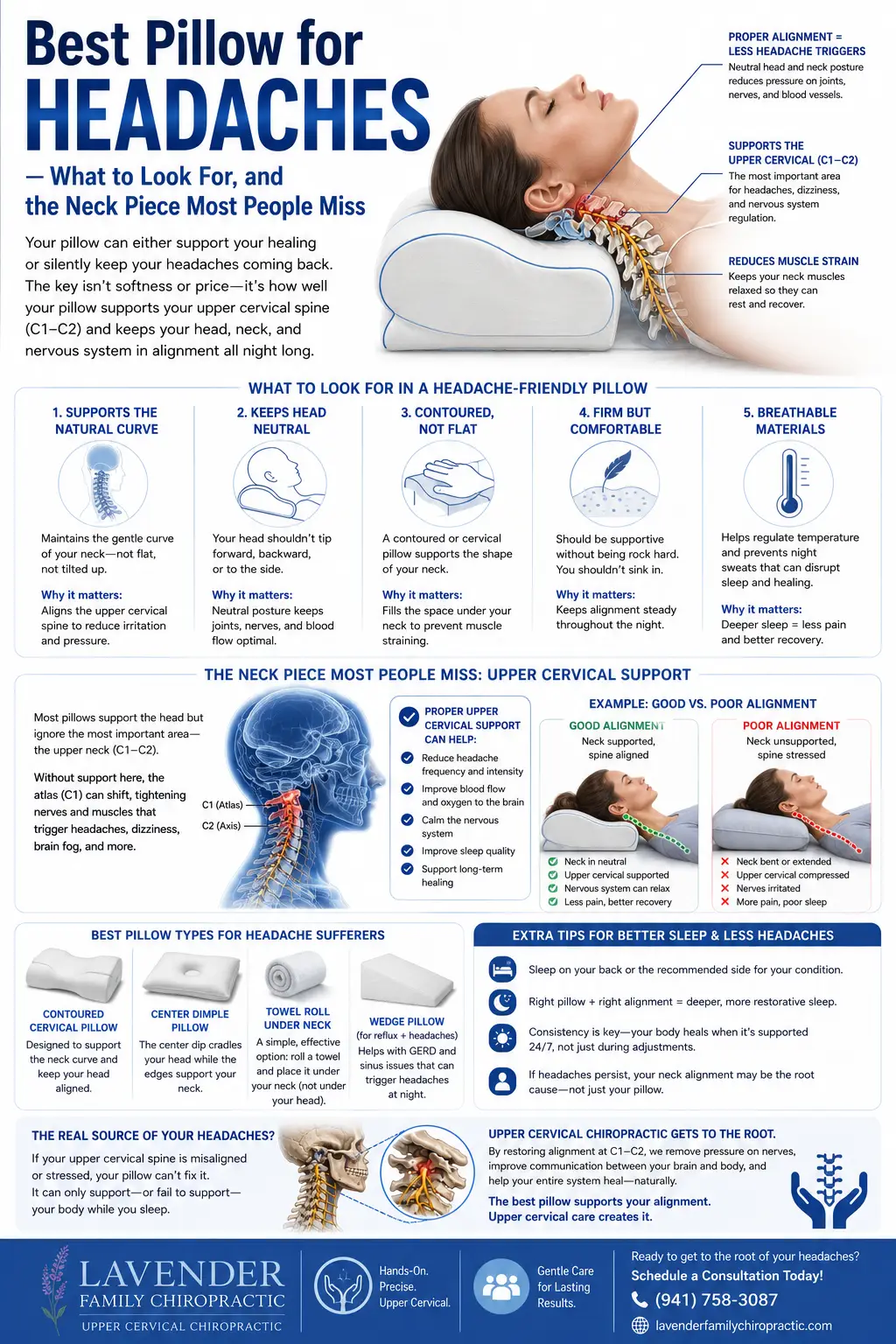
One of the most overlooked yet significant causes of headaches is misalignment in the cervical spine, particularly in the upper neck region. The upper cervical spine consists of the atlas (C1) and axis (C2) vertebrae, which support the head and protect the brainstem.
When these vertebrae are out of alignment, they can cause a cascade of issues, including:
- Increased muscle tension in the neck and shoulders
- Impaired blood flow to the brain
- Nerve irritation that can trigger pain signals
Misalignments in the upper cervical spine often result from poor posture, past injuries (such as whiplash), or prolonged stress. Many people who suffer from chronic headaches, including migraines, find that upper cervical chiropractic adjustments help to realign the spine and reduce headache frequency and severity.
How Cervical Misalignment Leads to Chronic Headaches
The nervous system is responsible for transmitting pain signals, and when there is interference due to cervical misalignment, these signals become amplified. Additionally, the restriction of cerebrospinal fluid flow can lead to increased intracranial pressure, exacerbating migraine symptoms. Many people don’t realize that even minor misalignments can contribute to chronic headaches over time.
Upper cervical chiropractic care works by restoring the proper alignment of the spine, which in turn relieves pressure on the nervous system and reduces the likelihood of headaches occurring. By addressing the root cause of the issue rather than masking symptoms, patients can experience long-term relief.
2. Stress and Muscle Tension
Stress is a major contributor to headaches, particularly tension headaches. When you experience stress, your body responds by tightening muscles, especially around the neck, shoulders, and scalp. This tension can lead to persistent headaches that worsen over time.
Common stress-related headache triggers include:
- Work pressure and deadlines
- Emotional stress from relationships or financial concerns
- Poor posture due to prolonged sitting
How Stress Affects the Body and Triggers Headaches
Stress triggers the release of cortisol, the body’s primary stress hormone. Elevated cortisol levels contribute to inflammation, which can worsen headache symptoms. Additionally, stress-induced muscle tension can limit blood flow to the brain, creating an environment where headaches become frequent.
Since muscle tension is often linked to poor spinal alignment, chiropractic adjustments at Lavender Family Chiropractic can help alleviate tension and promote relaxation. By restoring proper posture and spinal health, upper cervical chiropractic care reduces the muscular strain that contributes to stress-induced headaches.
3. Nervous System Dysfunction and Blood Flow Issues
Another critical cause of headaches is dysfunction in the nervous system. The brain and spinal cord communicate through the nervous system, and any interference can disrupt normal function. When the upper cervical spine is misaligned, it can put pressure on the brainstem and affect nerve signals, leading to headaches and migraines.
Additionally, misalignments can impact blood flow to the brain, reducing oxygen and nutrient supply. This can trigger migraine attacks and other types of headaches. Studies have shown that correcting cervical spine misalignment improves blood circulation and relieves nervous system interference, helping people experience fewer and less severe headaches.
The Role of Blood Flow in Headache Occurrence
The brain relies on a steady supply of oxygen-rich blood. When blood vessels are constricted due to tension or misalignment, the risk of headaches increases. Certain types of migraines are linked to vascular constriction, making proper blood flow essential for headache prevention.
Upper cervical adjustments not only relieve pressure on nerves but also optimize circulation, helping patients experience long-term headache relief without the need for medication.
How Upper Cervical Chiropractic at Lavender Family Chiropractic Can Help
Lavender Family Chiropractic in Sarasota specializes in upper cervical chiropractic care, which focuses on the alignment of the top vertebrae in the spine. Unlike traditional chiropractic adjustments, which may involve cracking or twisting, upper cervical adjustments are gentle, precise, and highly effective for addressing the root causes of headaches.
Benefits of Upper Cervical Chiropractic for Headaches:
- Restores Proper Alignment: Correcting misalignments in the upper cervical spine reduces nerve irritation and relieves pressure on the brainstem, leading to fewer headaches.
- Improves Blood Flow: Better circulation means more oxygen and nutrients reach the brain, reducing the likelihood of migraine attacks.
- Relieves Muscle Tension: By aligning the spine, muscle imbalances and tension decrease, helping to prevent stress-related headaches.
- Supports the Nervous System: A properly functioning nervous system reduces the risk of chronic pain and enhances overall well-being.
What to Expect During an Upper Cervical Chiropractic Visit
At Lavender Family Chiropractic, we take a thorough and personalized approach to headache relief. Your visit will typically include:
- Comprehensive Consultation – We discuss your headache history, lifestyle factors, and any previous injuries.
- Advanced Imaging and Examination – We use precise diagnostic tools such as digital X-rays to assess the alignment of your upper cervical spine.
- Gentle Adjustments – Our specialized techniques gently correct misalignments without forceful twisting or cracking.
- Ongoing Care and Education – We provide lifestyle recommendations, posture corrections, and exercises to maintain optimal spinal health.
Real Patient Success Stories
Many of our patients at Lavender Family Chiropractic have experienced life-changing relief from chronic headaches and migraines. Here’s what some of them have to say:
- “After years of struggling with migraines, I finally found relief with upper cervical care. I no longer need daily pain medications, and my headaches have significantly reduced.”
- “I was skeptical at first, but after just a few adjustments, my tension headaches disappeared. I feel better, sleep better, and have more energy.”
Take Control of Your Headache Relief
If you suffer from chronic headaches or migraines, it’s time to explore a natural, drug-free solution. At Lavender Family Chiropractic in Sarasota, we are committed to helping you achieve lasting relief through precise upper cervical chiropractic care.
Don’t let headaches control your life any longer. Schedule a consultation today and take the first step toward a healthier, pain-free future! For every headache type we evaluate and how the upper neck is involved, see our guide to headache treatment in Sarasota.
For more information, visit Lavender Family Chiropractic or call us to book an appointment. We’re here to help you find relief and improve your quality of life.
Schedule With Us!
Lavender Family Chiropractic offers consultations to learn more about you. Click the link below!
https://intake.chirohd.com/new-patient-scheduling/724/lavender-family-chiropractic
Table of Contents
What the Research Says About the Most Common Headache Causes
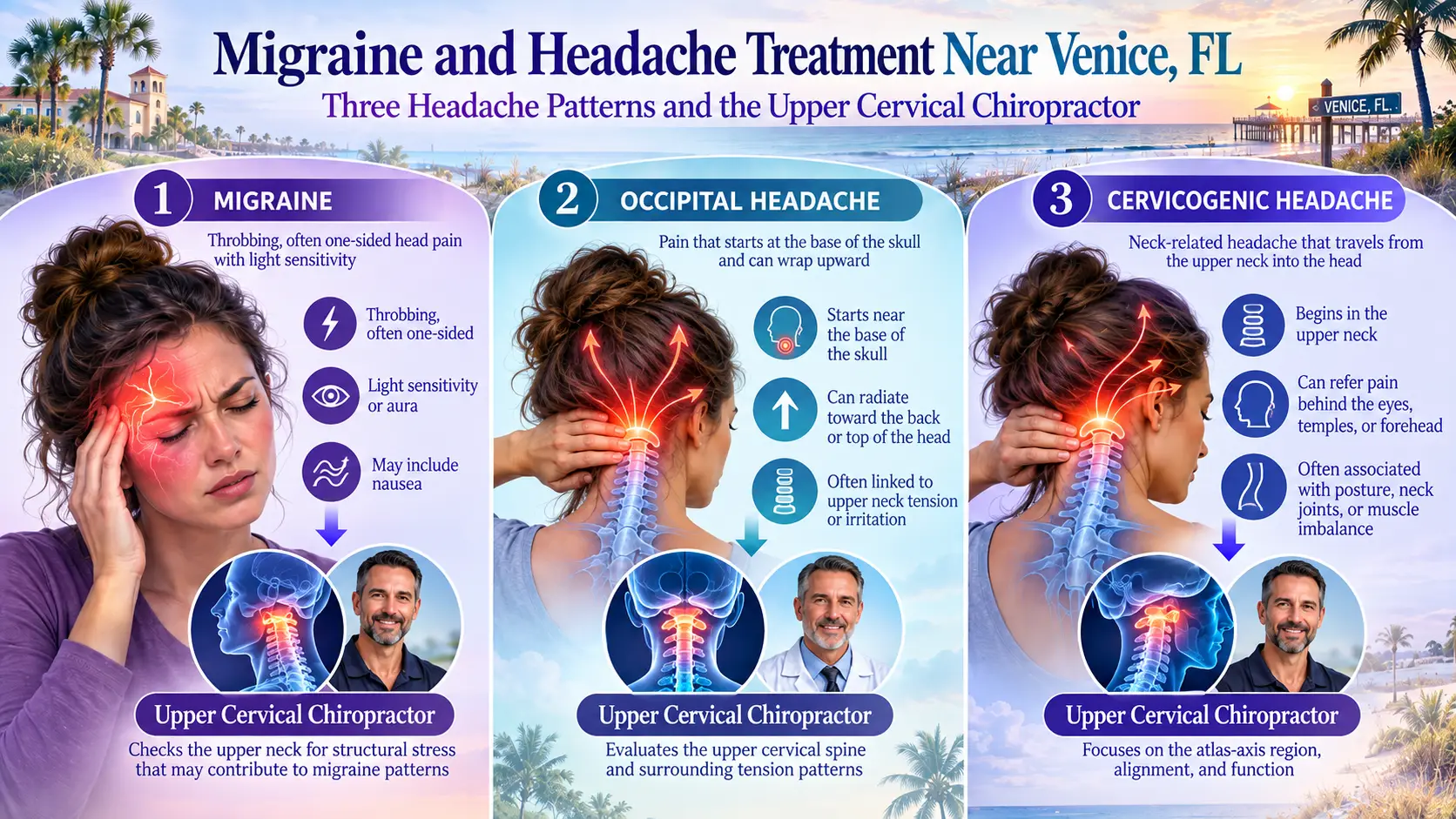
Three headache types account for most of what walks into a clinic. Migraine affects over a billion people worldwide and is a leading cause of disability in people under 50 (Ashina, N Engl J Med 2020). Tension-type headache is linked to the muscles and posture of the neck; patients with episodic tension-type headache show more active trigger points, less neck mobility and greater forward head posture than controls (Fernández-de-las-Peñas et al., Headache 2007). The third, cervicogenic headache, is pain referred from the upper neck itself, through the convergence of C1 to C3 input on the trigeminocervical complex, and is confirmed with diagnostic blocks (Bogduk & Govind, Lancet Neurol 2009). Notice the common thread: in two of the three, and arguably all three, the neck is directly involved.
That thread shows up in the treatment research. A systematic review found that for headaches associated with neck pain, manual therapy, exercise and multimodal care show benefit, with evidence varying by headache type (Varatharajan et al., Eur Spine J 2016). For cervicogenic headache, a randomized dose-response trial found 18 manipulation visits over six weeks gave about three fewer headache days per month than light massage, maintained at one year (Haas et al., Spine J 2018). Whatever your headache type, the neck is worth examining rather than assuming. Our upper cervical approach is to take 3D imaging of the atlas, correct it in a way matched to those images, and re-measure, so that if the top of the neck is a contributor it is identified and addressed rather than left in the background.
Frequently Asked Questions
How does a cervical spine misalignment cause headaches?
The upper neck feeds the trigeminocervical complex in the brainstem, the region that generates most headache pain. When the atlas shifts, it sends a constant irritating signal into that complex, and the head sits off center so the neck muscles strain to compensate. Upper cervical care corrects the alignment with a precise, low-force adjustment calculated from 3D CBCT imaging, and thermography before and after shows how the nervous system responds to the correction.
Is stress really a cause of headaches or just a trigger?
Stress tightens the neck and shoulder muscles and raises sympathetic tone, and sympathetic fibers pass directly through the atlas. In a well-aligned neck, that tension passes. In a misaligned one, the nervous system is already irritated, so stress pushes it over the threshold into pain. Correcting the atlas raises that threshold, and many patients notice the same stressful week no longer produces the same headache. We confirm the change with thermography at each visit.
What does blood flow have to do with headaches?
The vertebral arteries pass through the atlas on their way to the brainstem and the back of the brain. A shift in atlas position can affect that flow and the sympathetic regulation of blood vessels, which is one reason headaches often come with pressure, visual disturbance, or a throbbing quality. Correcting the alignment addresses that mechanical factor at its source. Serious vascular causes should be ruled out by a physician, and we coordinate with neurologists.
Do all three causes come back to the upper neck?
Often they overlap, and the atlas is the common thread. Misalignment irritates the trigeminocervical complex, lowers tolerance for stress, and affects the vessels and nerves passing through the upper neck. That is why we start every headache evaluation with 3D CBCT imaging of the atlas and axis and a thermography scan of nervous system regulation. If the upper neck is involved, we correct it and measure the response. If it is not, we say so and refer.
Do you see headache patients from Bradenton, Lakewood Ranch, and Venice?
Yes. Our Sarasota office at 5899 Whitfield Avenue, Suite 107, is at the corner of University Parkway and Whitfield, minutes from Lakewood Ranch, Bradenton, and University Park, and about 30 minutes from Venice. Many patients arrive after years of managing headaches with medication, and medication decisions stay with their prescribing doctor. We add a precise look at the upper neck and a correction confirmed by measurement. Call (941) 243-3729 to schedule an evaluation.
Related Posts


Get our upper cervical articles first.
Patients Experience