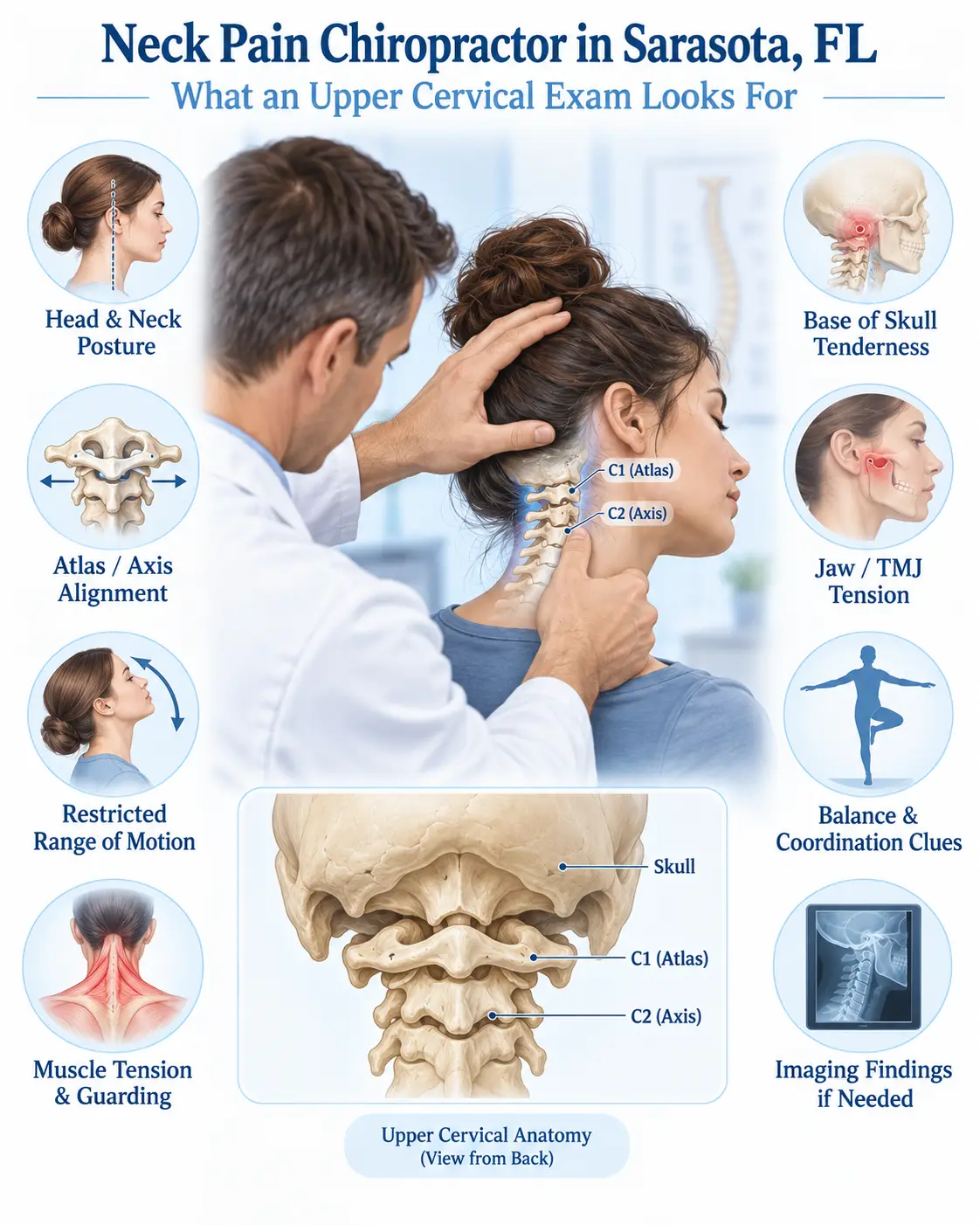

Neck Injuries in Car Accidents: How Upper Cervical Care at Lavender Family Chiropractic in Sarasota Can Help You Recover
By Dr. Rusty Lavender, D.C. — upper cervical chiropractor, Lavender Family Chiropractic, Sarasota, FL. Reviewed and updated October 2026.
Our complete guide to car accident chiropractic care in Sarasota covers whiplash, the symptoms that show up weeks later, and how we evaluate the upper neck after a crash.
Neck injuries in Car accidents are among the leading causes of neck injuries in the United States. Even a low-speed collision can generate enough force to damage delicate structures in the cervical spine, resulting in pain, stiffness, headaches, and long-term dysfunction. If you’ve been involved in a wreck, understanding your rights under personal injury (PI) auto insurance and seeking timely, specialized care can make the difference between chronic pain and complete recovery. In this comprehensive blog post, we explore:
- The mechanics of neck injuries in car accidents
- Common injury types and their symptoms
- How PI auto insurance works to cover chiropractic care
- The science behind upper cervical chiropractic for whiplash
- Why Lavender Family Chiropractic in Sarasota is uniquely equipped to treat your neck trauma
- What to expect during treatment—3D CBCT scans, nervous system assessments, and gentle adjustments
- The top 15 FAQs about car accident–related neck injuries, answered
Whether you’re searching for a “chiropractor for car accident in Sarasota” or simply looking to understand your treatment options, this guide will provide actionable insights to help you heal at the root cause and get back to living pain-free.
Understanding Neck Injuries in Car Accidents
When two vehicles collide—even at speeds as low as 10–15 miles per hour—the rapid acceleration and deceleration forces transmitted through the body can subject the cervical spine to extreme stress. The head, weighing approximately 10–12 pounds, suddenly whips forward and then back (or vice versa), stretching and compressing the muscles, ligaments, discs, and joints of the neck. This phenomenon, commonly called “whiplash,” is more than just a sprain—it’s a complex mechanical injury that often involves:
- Ligament sprains: Overstretching can tear the ligaments that stabilize the vertebrae.
- Muscle strains: The anterior and posterior neck muscles can be torn or fatigued.
- Facet joint injuries: The small joints between vertebrae can subluxate or become inflamed.
- Intervertebral disc damage: Bulges or herniations may impinge on nerves.
- Nerve root irritation: Pinched nerves can cause radiating pain, numbness, or tingling.
Although people often feel “fine” immediately after a collision, many develop symptoms hours or days later. That’s why it’s crucial to get a professional evaluation—even if your neck feels okay at first.
Common Types of Neck Injuries
Car accident–related neck injuries can vary widely based on the collision’s direction, speed, and the individual’s health status. Some of the most frequently seen conditions include:
- Whiplash-Associated Disorders (WAD)
- Graded I–IV based on severity (muscle strain to fracture).
- Symptoms include neck pain, stiffness, headache, and reduced range of motion.
- Cervical Disc Herniation
- Displacement of disc material can press on spinal nerves.
- Commonly presents with radicular arm pain, weakness, or numbness.
- Facet Syndrome
- Inflammation or injury of the facet joints causes localized pain and muscle guarding.
- May lead to referred pain patterns in the shoulders or upper back.
- Cervical Sprains and Strains
- Overstretching of ligaments and muscles results in pain and limited mobility.
- Often co-occurs with whiplash.
- Cervical Radiculopathy
- Nerve root compression from herniated discs or bone spurs.
- Manifests as shooting pain, tingling, or weakness down the arm.
- Vertebral Fractures and Dislocations
- Less common in low-impact crashes, more likely in high-speed collisions.
- Require immediate emergency care.
Despite variations, all these injuries share one thing: they disrupt normal biomechanics and nerve function in the neck. Without proper diagnosis and targeted care, they can lead to chronic pain, headaches, dizziness, and even cognitive issues.
Signs & Symptoms to Watch For
Although pain is the most obvious sign of neck injury, a variety of other symptoms can indicate underlying cervical spine trauma:
- Neck stiffness and reduced range of motion (turning, bending)
- Headaches that start at the base of the skull and radiate forward
- Shoulder or upper back pain due to referred muscle tension
- Numbness, tingling, or weakness in the arms or hands
- Dizziness, balance issues, or vertigo from cervical proprioceptive disruption
- Jaw pain or TMJ dysfunction caused by altered neck mechanics
- Cognitive fog, difficulty concentrating when the brainstem is affected
- Facial Pain caused by an irritated trigeminal nerve in the neck
It’s important to note that symptoms can have delayed onset—sometimes developing days or even weeks after the initial crash. Insurance carriers may argue that delayed symptoms aren’t crash-related, so prompt documentation of your condition is crucial for both treatment success and insurance claims.
The Role of PI Auto Insurance in Covering Treatment
If you’ve been injured in a car accident through no fault of your own, Florida’s Personal Injury Protection (PIP) auto insurance provides up to $10,000 in medical benefits and 80% of lost wages, regardless of who was at fault. Here’s how it works:
- Immediate Coverage
- PIP funds are available immediately to cover emergency care, diagnostic tests, and ongoing treatment.
- No-Fault System
- You don’t need to establish liability to access benefits, expediting care.
- Medical Providers
- Both MDs and licensed chiropractors (including upper cervical specialists) can bill PIP.
- Documentation Requirements
- Diagnoses, treatment notes, and objective findings (e.g., range of motion, imaging) must be clearly recorded.
- Limitation on Ancillary Services
- Some services may require pre-authorization or referral; your chiropractor can guide you through the process.
Working with Lavender Family Chiropractic ensures that your treatment is both clinically effective and properly documented for PI auto insurance submissions. Our team collaborates with your adjuster to verify coverage and minimize delays, so you can focus on recovery rather than paperwork.
Why Upper Cervical Care Is Effective for Whiplash and Neck Trauma
Upper cervical chiropractic focuses on the C1 (atlas) and C2 (axis) vertebrae—the two topmost bones in the neck, which play an outsize role in head movement and brainstem function. Here’s why it’s particularly suited for car accident injuries:
- Precision Corrections
- Gentle, targeted adjustments restore proper alignment without twisting, popping, or cracking.
- Neurological Impact
- Misalignments at C1/C2 can irritate the brainstem and upper cervical nerves, leading to headaches, dizziness, and neurologic deficits.
- Structural Stability
- Proper alignment reduces compensatory stress on lower cervical segments, preventing cascade injuries.
- Enhanced Healing
- By normalizing cerebrospinal fluid flow and nerve transmission, upper cervical care supports natural tissue repair.
- Long-Term Results
- Patients often report sustained improvement in pain levels, range of motion, and quality of life compared to generic neck treatments.
Research shows that upper cervical adjustments can significantly decrease pain and improve function in whiplash patients. By focusing on the root cause—structural misalignment at the top of the spine—this approach addresses both symptoms and underlying pathology.
Lavender Family Chiropractic’s Approach in Sarasota
At Lavender Family Chiropractic, we specialize in upper cervical care tailored to car accident victims. Our Sarasota clinic features:
- 3D CBCT Imaging
- Cone Beam Computed Tomography provides high-resolution, 3-dimensional views of the cervical spine.
- Identifies misalignments, joint integrity, and subtle asymmetries that 2D X-rays miss.
- Functional Nervous System Scans
- Surface EMG and thermographic assessments evaluate muscular tension and autonomic regulation.
- Offers objective metrics to track progress over time.
- Customized Care Plans
- We develop individual protocols combining upper cervical adjustments, soft tissue modalities, and rehabilitative exercises.
- Frequency and duration of visits are based on injury severity, imaging findings, and patient goals.
- PI Insurance Liaison
- Our administrative team handles PIP claims, billing, and documentation to streamline your experience.
- We provide clear estimates of out-of-pocket costs and benefit limits upfront.
- Patient Education
- You’ll learn self-care strategies—postural retraining, ergonomics, and home exercises—to reinforce your adjustments.
- Empowering you to maintain neck health long after treatment ends.
Our clinic’s mission is to restore spinal integrity and nervous system function, so you can return to work, hobbies, and family life without fear of recurring neck pain.
What to Expect During Your First Visit
Your initial consultation at Lavender Family Chiropractic is designed to be thorough yet comfortable:
- Detailed History Intake
- We’ll review the mechanics of your collision, symptom timeline, and any prior neck issues.
- Physical Examination
- Range of motion tests, orthopedic and neurologic assessments, and palpation of cervical structures.
- 3D CBCT Scan
- Non-invasive imaging to capture accurate structural data in under 30 seconds.
- Functional Scanning
- Surface EMG to measure muscle activity and temperature asymmetries indicating autonomic imbalance.
- Report of Findings
- We’ll sit down with you to explain imaging results, discuss the nature of your injury, and outline your personalized care plan.
- First Adjustment
- If appropriate, a gentle upper cervical correction to begin restoring alignment.
- Insurance and Scheduling
- Clear overview of PIP benefits, treatment frequency, and expected outcomes.
By the end of your first visit, you’ll have a comprehensive understanding of your injury, a roadmap for recovery, and the confidence that you’re in expert hands.
Benefits of Early Chiropractic Intervention
Delaying treatment after a car accident can allow secondary issues to develop:
- Chronic Pain Syndromes
- Untreated ligament or disc injuries can lead to persistent inflammation and central sensitization.
- Reduced Range of Motion
- Scar tissue formation and muscle guarding restrict neck mobility, making rehabilitation longer and harder.
- Compensatory Postural Changes
- The body may shift weight-bearing patterns, causing headaches, shoulder pain, and jaw dysfunction.
- Degenerative Changes
- Accelerated arthritis in cervical joints due to ongoing biomechanical stress.
In contrast, early upper cervical intervention can:
- Minimize inflammation and promote optimal healing environments.
- Prevent maladaptive movement patterns and muscle imbalances.
- Preserve normal joint mechanics and nerve function.
- Accelerate your return to daily activities, work duties, and recreational pursuits.
Remember: insurance deadlines for documenting causation can be tight. Seeing a chiropractor within days of your accident not only aids recovery but also bolsters your PIP claim.
Integrating 3D CBCT and Nervous System Scans
Lavender Family Chiropractic sets itself apart by combining advanced diagnostics:
- 3D CBCT (Cone Beam CT)
- Offers 360° views of bone structures with sub-millimeter accuracy.
- Detects minute misalignments, joint surface changes, and atypical anatomy.
- Surface EMG (sEMG)
- Non-invasive sensors measure electrical activity of paraspinal muscles.
- Identifies areas of hypertonicity or atrophy.
- Thermography
- Infrared imaging to map skin temperature differences, reflecting autonomic nervous system balance.
- Highlights nerve irritation zones correlating with structural findings.
- Progress Tracking
- Baseline scans at intake, mid-treatment, and discharge allow for objective outcome measurement.
- Patients can visually see their structural improvements and reduced muscle tension.
This data-driven approach ensures that every adjustment is precise, justified, and tailored to your evolving needs.
Top 15 FAQs About Neck Injuries from Car Accidents
- What causes whiplash in a car accident?
Whiplash occurs when the head is rapidly jerked back and forth, overstretching neck ligaments and muscles. The sudden acceleration-deceleration forces damage soft tissues and can irritate joint capsules. Early diagnosis is key to preventing chronic pain and stiffness. - How soon should I see a chiropractor after a car crash?
You should ideally schedule an evaluation within 72 hours. Early care helps reduce inflammation, prevent scar tissue formation, and ensures your PIP auto insurance documentation supports causation and treatment coverage. - Will my PI auto insurance cover chiropractic care?
Yes. Florida’s PIP provides up to $10,000 per person for medical treatment, including licensed chiropractic services. Coverage applies regardless of fault, but proper documentation and timely billing are required. - What is upper cervical chiropractic?
Upper cervical chiropractic focuses on precise, gentle adjustments of the atlas (C1) and axis (C2) vertebrae. By correcting misalignments in these key segments, practitioners restore normal nerve communication and joint function. - Can chiropractic help with disc herniation?
Yes. By improving spinal alignment and reducing mechanical stress, chiropractic care can alleviate disc pressure, decrease inflammation, and support natural healing mechanisms for bulges or herniations. - Is chiropractic safe after a neck injury?
When performed by a trained upper cervical chiropractor, adjustments are extremely gentle and tailored to your anatomy, minimizing risk. Comprehensive imaging and assessments guide every treatment step. - How many visits will I need?
Injury severity varies, but most car accident patients start with 2–3 visits per week for the first month, tapering as symptoms improve. Your chiropractor will adjust the plan based on progress and imaging results. - Will I experience pain during adjustments?
Upper cervical adjustments are gentle and typically pain-free. Some patients report a light pressure sensation or immediate relief as joint function normalizes. - What diagnostic tests are used?
Lavender Family Chiropractic uses 3D CBCT scans, surface EMG, thermography, and thorough physical exams to pinpoint misalignments, muscle imbalances, and nerve irritation areas. - Can chiropractic reduce headaches after whiplash?
Yes. Misalignments at C1/C2 can irritate the trigeminocervical complex, causing cervicogenic headaches. Correcting these misalignments often leads to significant reduction in headache frequency and intensity. - Do I need X-rays or MRIs?
While 3D CBCT provides excellent bony detail, additional MRI imaging may be recommended if soft tissue damage (e.g., disc tears) needs further evaluation. - How does chiropractic compare to medications?
Chiropractic addresses the root cause—structural misalignment—rather than merely masking symptoms. Many patients reduce or eliminate pain medications as function and alignment improve. - Will treatment affect my car accident claim?
Properly documented treatment supports your claim by demonstrating ongoing need for care directly related to the crash. Missed appointments or lack of records can weaken your case. - Can children and seniors receive care?
Yes. Upper cervical care is adaptable for all ages, with customized force levels and techniques suitable for pediatric, adult, and geriatric patients. - What if I have no pain initially?
Asymptomatic injuries can still progress into chronic conditions. Getting checked ensures early detection of hidden damage and prevents future complications.
Deep Dive: The Role of Upper Cervical Chiropractic Care in Neck Injury Recovery
While traditional chiropractic approaches address the spine broadly, upper cervical chiropractic care zeroes in on the top two vertebrae (the atlas C1 and axis C2) where misalignments can have disproportionately large effects on neurological function and musculoskeletal balance. For individuals suffering neck injuries—particularly those sustained in car accidents—this precise, gentle approach delivers powerful therapeutic benefits. In this extended section, we will explore:
- The unique biomechanics of the upper cervical spine
- How C1/C2 misalignments exacerbate neck injury symptoms
- The assessment tools and diagnostic protocols used at Lavender Family Chiropractic
- The gentle adjustment techniques employed
- Post-adjustment rehabilitation and home care strategies
- Evidence and patient outcomes: what the research and our clinic data show
- Integrating upper cervical care into a comprehensive recovery plan
1. Biomechanics of the Upper Cervical Spine
The atlas (C1) and axis (C2) form a specialized joint complex that supports the heavy load of the skull while permitting a remarkable range of motion:
- Atlas (C1):
- Shaped like a ring, it cradles the base of the skull, bearing the full weight of the head (~10–12 lbs).
- No vertebral body; instead designed for rotation and nodding movements.
- Axis (C2):
- Features the odontoid process (“dens”) that projects upward into the atlas, serving as a pivot for head rotation.
- Provides stability while enabling roughly 50% of the head’s total rotation.
Key Biomechanical Roles:
- Neurological Conduit: The spinal cord transitions into the brainstem at the foramen magnum, directly above C1. Any misalignment here can impinge critical neural pathways controlling balance, proprioception, and autonomic function.
- Cerebrospinal Fluid (CSF) Flow: Proper motion at C1/C2 promotes the rhythmic “pumping” of CSF, aiding nutrient delivery and waste removal for the central nervous system.
- Load Distribution: When C1/C2 are misaligned, compensatory stresses shift to lower cervical vertebrae (C3–C7), accelerating wear on discs, facet joints, and ligaments.
After a whiplash event or direct neck trauma from a car accident, these delicate structures can move out of optimal alignment by fractions of a millimeter—enough to trigger a cascade of symptoms, from stiffness and pain to headaches, dizziness, and even cognitive fog.
2. How Upper Cervical Misalignments Exacerbate Neck Injury Symptoms
Following a collision, the forces exerted on the cervical spine can:
- Distort Joint Position: C1 may shift laterally or rotate, tightening the alar and transverse ligaments and causing joint capsule inflammation.
- Impair Proprioception: Misaligned upper vertebrae send faulty position-sense signals from cervical mechanoreceptors to the cerebellum, leading to balance issues and vertigo.
- Disrupt Autonomic Function: Compression at the C1/C2 region can irritate the sympathetic and parasympathetic pathways coursing through the brainstem, resulting in headaches, visual disturbances, and even gastrointestinal upset.
- Alter Muscle Tone: Imbalances in upper cervical joint position provoke chronic hypertonicity in suboccipital muscles, trapezius, and sternocleidomastoid, exacerbating neck stiffness and referred pain to the shoulders and head.
Without correction, these biomechanical disruptions perpetuate a vicious cycle: pain leads to muscle splinting, which leads to further misalignment, aggravating nerve irritation and prolonging recovery.
3. Assessment Protocols at Lavender Family Chiropractic
At our Sarasota clinic, precise diagnosis is the cornerstone of effective upper cervical care. We combine cutting-edge imaging with functional assessments to map each patient’s unique cervical profile:
- 3D CBCT Imaging:
- Provides sub-millimeter resolution of bony anatomy in three planes.
- Quantifies the degree of atlas rotation, lateral tilt, and anterior/posterior shift.
- Surface EMG Analysis:
- Non-invasive electrodes capture muscle activity patterns across cervical levels.
- Identifies asymmetries in deep (rotatores, multifidus) and superficial (trapezius, levator scapulae) musculature.
- Infrared Thermography:
- Maps cutaneous temperature differentials along paraspinal muscles.
- Highlights autonomic dysregulation zones correlating with misalignments.
- Range of Motion and Orthopedic Testing:
- Goniometric measurements for flexion, extension, lateral bending, and rotation.
- Provocative tests (Spurling’s, Valsalva, cervical distraction) to rule out radiculopathy or myelopathy.
- Clinical Correlation:
- Detailed symptom history—onset, progression, and provoking/relieving factors.
- Prior imaging (X-rays, MRI) review to integrate data.
This multi-modal workup ensures that every adjustment recommendation is grounded in objective findings and tailored to correct the specific vectors of misalignment affecting C1/C2.
4. Gentle Upper Cervical Adjustment Techniques
Unlike full-spine manipulations that often involve twisting or “cracking,” upper cervical corrections rely on minimal force precisely directed at the atlas or axis to restore natural alignment:
- Toggle Recoil Technique:
- Practitioner applies a quick, low-amplitude thrust to the lateral aspect of C1, engaging the joint in its neutral position.
- Relies on Newton’s second law: a short, sharp impulse with minimal patient discomfort.
- Blair or Orthospinology Method:
- Uses radiographic measurements from CBCT to plot exact vector angles.
- Customizes instrument or hand-delivered adjustments to the specific misalignment pattern.
- Grostic Procedure:
- Focuses on the inferior articular process of C2, leveraging precise contact points and body leverage.
- Fine-tunes rotational subluxations with sub-threshold forces.
Key benefits of these techniques:
- Patient Comfort: No intense twisting or popping—especially important for those with acute pain or fear of manipulation post-accident.
- High Specificity: Targets only the misaligned vertebra, reducing strain on surrounding tissues.
- Sustained Realignment: Proper vector application can hold corrections longer, reducing the need for frequent visits over the long term.
5. Post-Adjustment Rehabilitation and Home Care
Maximizing the benefits of upper cervical corrections involves a comprehensive regimen of rehabilitation and self-care:
- Postural Retraining:
- Exercises to strengthen deep cervical flexors (longus colli, longus capitis) and scapular stabilizers (rhomboids, serratus anterior).
- Ergonomic guidance on workstation setup to maintain neutral cervical posture.
- Therapeutic Modalities:
- Cold laser therapy and low-level light therapy to accelerate tissue repair and reduce inflammation.
- Myofascial release techniques targeting suboccipital and cervical fascia.
- Home Exercise Program (HEP):
- Daily gentle range of motion drills (chin tucks, lateral bends, rotations).
- Isometric neck strengthening with light resistance.
- Balance and proprioceptive training (e.g., head nods on a foam cushion).
- Lifestyle Modifications:
- Sleep posture optimization—recommendation of cervical supportive pillows to preserve alignment overnight.
- Hydration and anti-inflammatory nutrition (omega-3 rich foods, turmeric, ginger) to support healing.
- Monitoring and Progression:
- Scheduled re-scans (surface EMG, thermography) every 4–6 weeks to document neuromuscular improvements.
- Adjustment intervals extended as stability is maintained, transitioning from acute care (2–3×/week) to maintenance (1×/month).
Through this integrative approach, patients not only recover from their acute neck injuries but also build resilience against future episodes by strengthening the entire cervico-cranial junction.
6.What the Research Says About Whiplash and Recovery
Here is what the evidence does and does not show.
Whiplash is common. Studies place the annual incidence of people seeking care after a whiplash injury at roughly three to six per 1,000 people in North America and Western Europe, and most people who are injured develop symptoms quickly, with research indicating that around 84% experience acute whiplash-associated disorder (WAD) symptoms within the first week. Importantly, symptoms don’t always appear right away. It is well recognized that whiplash symptoms can be delayed by hours or even a day or two after the collision, as the initial adrenaline subsides and inflammation sets in, which is one reason a prompt evaluation after any crash is wise even if you feel “okay” at the scene.
The course of recovery varies widely. Many people recover within the first weeks to months, but a substantial minority do not. Across the literature, somewhere between 30% and 50% of whiplash patients go on to develop chronic symptoms, and one 2024 systematic review reported that roughly 38% of people still had neck pain or headache at 12 months. This is the group we most want to reach early, because the window in which to influence the trajectory matters.
The mechanism behind whiplash explains why symptoms reach beyond simple neck soreness. The rapid acceleration-deceleration forces load the facet joints and can stretch and irritate the nerve roots and dorsal root ganglia where they exit the cervical spine, which is why some people experience radiating arm pain, numbness, or tingling rather than neck pain alone. Whiplash is graded using the Quebec Task Force classification, which ranges from Grade 0 (no complaint) through grades involving neck symptoms, musculoskeletal signs, and neurological signs, helping clinicians match the severity of the injury to the right care.
On treatment, the evidence points consistently in one direction for early care: staying active is better than resting. Research summarized by Physiopedia indicates that early mobilization and encouraging patients to “act as usual” is more effective than immobilization with a soft collar or rest, and that simple advice and reassurance can be as effective as more intensive physiotherapy programs, with multidisciplinary care showing strong evidence for chronic cases. Manual therapy directed at the cervical spine, including the kind of gentle, specific work we do, has shown modest short-term benefit for neck pain in the broader literature, though we’ll be candid that the high-quality trial evidence is limited and that no single approach has been proven superior for everyone.
This is where we place upper cervical care honestly: as a reasonable, mechanism-based part of an early, active recovery strategy, focused on the structural alignment of the atlas and axis and the nervous-system function they influence, used alongside movement, reassurance, and coordination with your other providers. We don’t claim it outperforms other care or guarantees resolution. What we offer is precise assessment with 3D imaging, gentle correction, and an honest conversation about whether you’re a good candidate, with prompt referral when your situation calls for medical or emergency evaluation.
7. Integrating Upper Cervical Care into Your Recovery Journey
A successful return to pre-injury function after a car accident involves more than a single adjustment; it requires a coordinated effort among healthcare providers, insurance advocates, and the patient. Here’s how Lavender Family Chiropractic integrates seamlessly into your recovery pathway:
- Multidisciplinary Collaboration:
- We maintain relationships with orthopedic surgeons, neurologists, and physical therapists to ensure comprehensive referrals when necessary (e.g., for MRI-confirmed disc extrusions or surgical consults).
- Transparent Insurance Advocacy:
- Our administrative team pre-files PIP claims, follows up on pending authorizations, and provides patients with real-time updates on their remaining benefits.
- Patient Education & Empowerment:
- We host monthly workshops covering neck injury prevention, post-crash ergonomics, and stress management techniques to reduce sympathetic overdrive that can impede healing.
- Telehealth Support:
- For patients unable to attend in-office visits, virtual check-ins ensure continuity of care, answer questions about exercises, and adjust home programs as needed.
- Maintenance & Wellness Plans:
- Once acute symptoms resolve, we offer tiered maintenance packages—ranging from quarterly atlas checks to annual “tune-ups”—to safeguard alignment and prevent relapse.
By positioning upper cervical chiropractic at the center of a multifaceted recovery strategy, patients benefit from streamlined care, fewer complications, and a quicker return to the activities they love.
Conclusion
Upper cervical chiropractic care represents a paradigm shift in treating neck injuries from car accidents. Rather than applying force indiscriminately across the spine, this specialized approach homes in on the atlas and axis, the pivot points upon which head alignment and neurological function hinge. At Lavender Family Chiropractic in Sarasota, our combination of 3D CBCT imaging, functional nervous system scanning, precise adjustment techniques, and tailored rehabilitation protocols ensures that:
- Pain subsides more rapidly due to targeted realignment
- Range of motion is restored through balanced joint mechanics
- Headaches and neurological symptoms diminish as brainstem irritation resolves
- Recovery timelines shorten, reducing overall treatment costs
- Long-term stability improves, decreasing the likelihood of chronic disability
If you or a loved one has sustained a neck injury in a car accident, don’t settle for generalized care. Experience the difference that upper cervical precision makes—schedule your comprehensive evaluation at Lavender Family Chiropractic today and take the first step toward restoring true balance and function to your cervical spine.
Schedule With Us!
Lavender Family Chiropractic in Sarasota Florida offers consultations to learn more about you. Click the link below!
https://intake.chirohd.com/new-patient-scheduling/724/lavender-family-chiropractic
Visit our Website!
To learn more about us go to http://www.chiropractorsarasotaflorida.com
We also service Bradenton, Parrish, Ellenton, Ruskin, Venice, Tampa, St. Pete, Osprey, Longboat, Lakewood Ranch, Myakka City.
If you are not local, visit www.uccnearme.com to find a doctor in your area!
Some of our other blogs:
Related Posts



Get our upper cervical articles first.