Neck Pain, Cervicalgia, and the True Root Cause. Proven Methods to Resolve the Pain in Sarasota and Lakewood Ranch FL
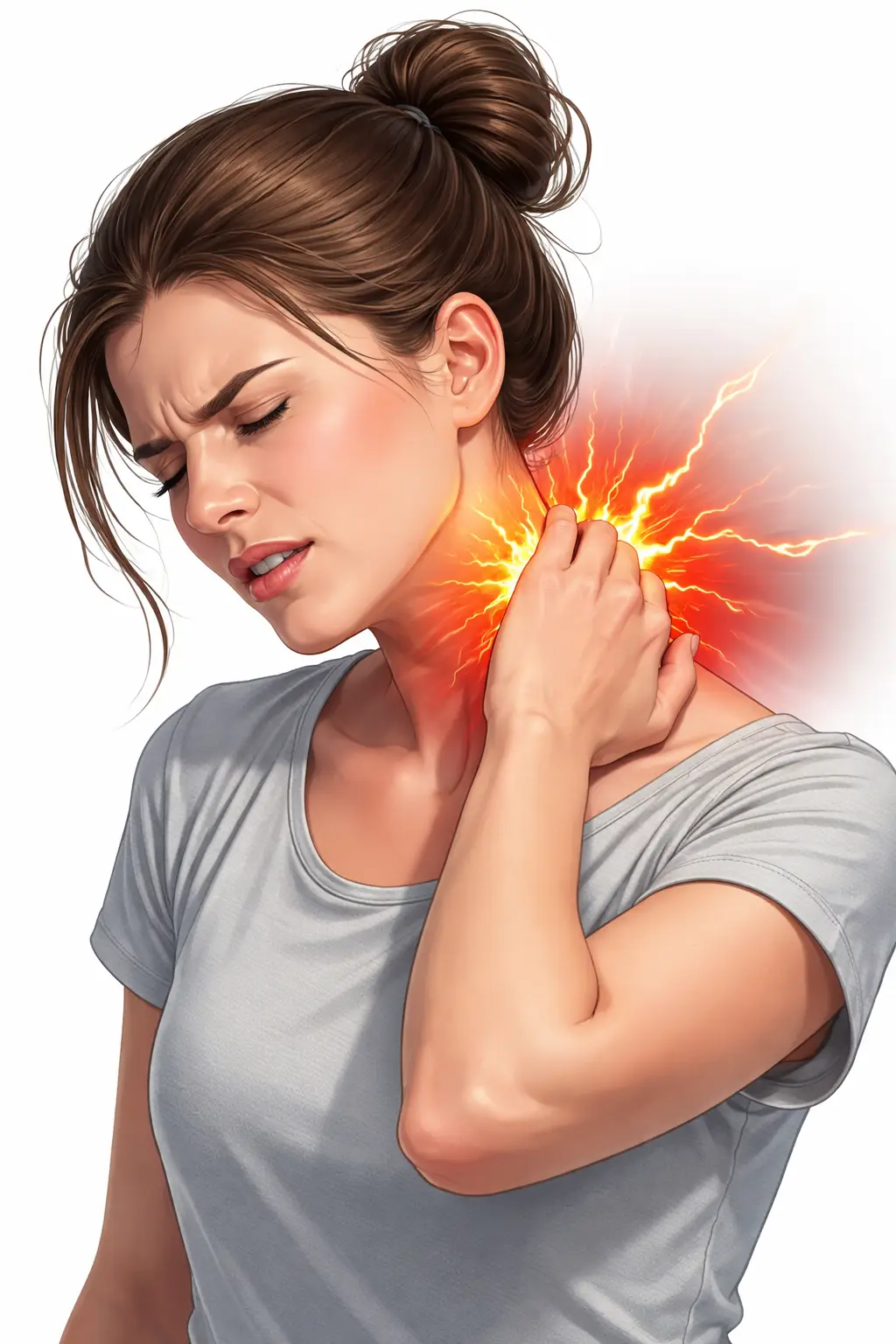
Cervicalgia: Neck pain is one of the most common health complaints in the world today. Millions of people wake up every single day with stiffness, tightness, or pain in their neck that limits how they move, work, and live. For some, it feels like a constant dull ache. For others, it is sharp, stabbing, or even radiating into the shoulders and upper back. Clinically, this condition is referred to as cervicalgia.
But here is the reality that most people are never told: neck pain is rarely just a muscle problem.
Most approaches focus on treating symptoms—stretching the muscles, massaging the area, or taking medications. While these can provide temporary relief, they rarely address the true cause of the problem. That is why so many people feel stuck in a cycle where their neck pain improves for a short time, only to come right back.
At Lavender Family Chiropractic, also known as NeckWise North Sarasota, the focus is different. Instead of chasing symptoms, the goal is to identify and correct the root cause—often found in the upper cervical spine.
What Is Cervicalgia?
Cervicalgia is the medical term used to describe neck pain, but it is far more complex than a simple definition. It is not a single condition—it is a collection of symptoms that can present in many different ways.
Patients commonly describe cervicalgia as:
- Tight neck muscles
- Limited range of motion
- Pain when turning the head
- Stiffness, especially in the morning
- A feeling of pressure at the base of the skull
- Pain that spreads into the shoulders or upper back
Some people also experience headaches, dizziness, or even brain fog along with their neck pain. These additional symptoms are not random—they are clues pointing toward a deeper issue.
Why Neck Pain Keeps Coming Back
One of the most frustrating aspects of neck pain is how persistent it can be. You may stretch, get a massage, or even feel better after a few days of rest, only for the pain to return.
This happens because most treatments are focused on the symptom, not the cause.
Tight muscles are not the problem—they are the response.
Limited range of motion is not the cause—it is the result.
The real question is: what is causing your body to create these symptoms in the first place?
The Role of the Upper Cervical Spine
At the very top of your neck are two critical bones—the atlas (C1) and axis (C2). These bones are unlike any others in your spine. They are designed to support the head and allow for a wide range of motion, but more importantly, they protect the brainstem.
The brainstem is one of the most important structures in the body. It controls balance, coordination, muscle tone, and communication between the brain and the rest of the body.
When the atlas or axis becomes misaligned—even slightly—it can create stress and irritation in this area.
This is where the real problem begins.
How Upper Neck Misalignment Leads to Neck Pain
When the upper cervical spine is misaligned, it changes how the body functions in several key ways.
1. Altered Muscle Tone
The brain relies on constant feedback from the neck to determine how muscles should function. When that input is distorted due to misalignment, the brain responds by increasing tension in the surrounding muscles.
This leads to chronic tightness, especially in the neck and shoulders.
2. Compensation Patterns
Your body is incredibly intelligent. If something is out of alignment, it will compensate to keep you upright and functioning. This compensation often shows up as:
- One shoulder sitting higher than the other
- Head tilt
- Uneven posture
- Increased tension on one side of the neck
Over time, these compensation patterns create strain and pain.
3. Restricted Joint Motion
The atlas and axis are responsible for a large portion of head movement. When they are not aligned properly, normal movement becomes restricted.
This is why many people with neck pain feel like they cannot fully turn their head or look over their shoulder.
4. Neurological Stress
Perhaps the most important factor is the effect on the nervous system.
The brainstem sits directly above the upper cervical spine. Misalignment in this area can disrupt communication between the brain and the body, leading to:
- Increased muscle tension
- Poor coordination
- Balance issues
- Chronic pain patterns
This is why neck pain is often accompanied by other symptoms such as headaches or dizziness.
Tight Neck Muscles Are a Warning Sign
One of the biggest misconceptions about neck pain is that tight muscles are the primary issue.
In reality, tight muscles are a warning sign.
They are your body’s way of trying to stabilize an underlying problem. If the upper cervical spine is misaligned, the muscles will tighten to protect the area.
You can stretch them.
You can massage them.
You can try to relax them.
But until the underlying issue is corrected, they will continue to tighten again.
This is why so many people feel temporary relief after massage therapy, only for the tension to return within days.
Limited Range of Motion Explained
Another common complaint is restricted movement.
You may notice that:
- Turning your head feels stiff
- Looking up or down causes discomfort
- Driving becomes difficult when checking blind spots
This is not just a muscle issue—it is a joint and neurological issue.
When the atlas and axis are misaligned, they disrupt the natural mechanics of the neck. The body responds by limiting movement to prevent further irritation.
In other words, your body is protecting you—but that protection comes at the cost of mobility and comfort.
Why Traditional Treatments Fall Short
Most people with neck pain try a variety of treatments before finding lasting relief.
These often include:
- Pain medications
- Muscle relaxers
- Physical therapy
- Massage therapy
- General chiropractic adjustments
While these approaches can help manage symptoms, they often do not address the root cause—especially if the issue is in the upper cervical spine.
General chiropractic care typically involves twisting or cracking multiple areas of the spine. While this can improve mobility, it may not specifically correct the precise misalignment at C1 and C2.
That precision is everything.
What Is Upper Cervical Chiropractic Care?
Upper cervical chiropractic care is a specialized form of care that focuses exclusively on the atlas and axis.
At Lavender Family Chiropractic (NeckWise North Sarasota), this approach is taken to the highest level of precision.
The goal is not to repeatedly adjust the spine.
The goal is to correct the misalignment and allow the body to stabilize.
NeckWise Care: A Precise and Gentle Approach
NeckWise care is built around the understanding that the body functions best when the upper cervical spine is properly aligned.
Advanced 3D CBCT Imaging
Every patient begins with detailed imaging using 3D cone beam CT scans. This allows the doctors to see the exact position of the atlas and axis from multiple angles.
This level of detail is critical. Guesswork is removed, and every correction is based on objective data.
Customized Corrections
No two patients are the same. Each adjustment is tailored to the individual’s anatomy and misalignment pattern.
The correction itself is extremely gentle. There is no twisting, popping, or cracking.
Instead, a precise, calculated adjustment is delivered to restore alignment.
Functional Nervous System Monitoring
After the correction, the nervous system is monitored using advanced scanning technology. This ensures that the body is responding properly and that the correction is holding.
The goal is not frequent adjustments—it is stability.
What Happens After the Correction
When the upper cervical spine is corrected, the body begins to change in powerful ways.
Muscle Relaxation
As the nervous system normalizes, the muscles no longer need to stay in a protective state. This leads to a reduction in tension and tightness.
Improved Range of Motion
With proper joint alignment, movement becomes more natural and less restricted.
Postural Improvement
The body no longer needs to compensate for misalignment, allowing posture to improve naturally.
Reduced Pain
Because the root cause is addressed, pain begins to decrease without the need for constant symptom management.
The Brainstem Connection
One of the most important aspects of upper cervical care is its relationship to the brainstem.
The brainstem is responsible for regulating many essential functions, including:
- Balance
- Coordination
- Muscle tone
- Autonomic function
When there is stress or interference in this area, the body cannot function optimally.
This is why neck pain is often connected to other symptoms such as:
By correcting the upper cervical spine, pressure and irritation in this area can be reduced, allowing the body to function more efficiently.
Why Precision Matters More Than Force
Many people assume that a stronger adjustment is more effective.
In reality, the opposite is true—especially in the upper cervical spine.
This area requires precision, not force.
Small misalignments can have large effects, and correcting them requires a gentle, calculated approach.
At NeckWise North Sarasota, every adjustment is based on exact measurements, ensuring accuracy and consistency.
A Different Experience for Patients
Patients who come to Lavender Family Chiropractic often notice a difference immediately—not just in how they feel, but in how the care is delivered.
There is no guessing.
There is no aggressive manipulation.
Instead, there is a clear, structured approach focused on results.
Long-Term Results vs Temporary Relief
The goal of upper cervical care is not short-term relief—it is long-term correction.
By addressing the root cause, the body is given the opportunity to heal and stabilize.
This breaks the cycle of recurring pain that so many people experience.
Who Should Consider Upper Cervical Care?
If you are experiencing any of the following, upper cervical care may be worth exploring:
- Chronic neck pain
- Tight neck and shoulder muscles
- Limited range of motion
- Frequent headaches
- Poor posture
Because of the central role of the upper cervical spine, correcting misalignment can have a wide range of benefits.
Patient Experience and Results
Many patients report that after beginning care, they not only experience relief from neck pain but also improvements in overall function.
They feel looser.
They move better.
They sleep better.
And most importantly, they are no longer stuck in a cycle of temporary fixes.
Deep Dive: Upper Cervical Chiropractic Care and Why It Works
Upper cervical chiropractic care is not just a different technique—it is a different philosophy of how the body heals. Instead of chasing symptoms, it focuses on restoring the conditions the body needs to function normally. That distinction is what separates temporary relief from long-term change.
The Atlas as the Control Point
The atlas (C1) sits directly beneath the skull and supports the weight of the head. Because of its position, it acts as a mechanical and neurological “gatekeeper.” Small shifts here can influence how the entire spine and nervous system behave.
When the atlas is misaligned, three things tend to happen simultaneously:
- Mechanical imbalance – The head is no longer centered over the spine, forcing muscles and joints to compensate.
- Neurological distortion – The brain receives altered input from the neck, changing muscle tone and coordination.
- Protective guarding – Muscles tighten to stabilize the area, creating the feeling of stiffness and pain.
This combination explains why neck pain can feel stubborn and recurrent. The system is trying to adapt to a faulty reference point.
The Axis and Rotational Control
The axis (C2) works closely with the atlas to control rotation. Nearly half of your ability to turn your head comes from the relationship between C1 and C2. When this relationship is disrupted, the body restricts motion to avoid further irritation.
That restriction is not a failure—it is a protective response. But over time, it leads to the familiar pattern of stiffness, reduced range of motion, and pain with turning.
Proprioception and the Brain’s GPS
The upper cervical spine is packed with specialized receptors that tell the brain where your head is in space. This system—called proprioception—is critical for balance, posture, and coordinated movement.
When the atlas and axis are misaligned, the brain receives distorted information. Imagine trying to navigate with a GPS that is slightly off—it will constantly make small corrections, even when you are already on the right path.
In the body, those “corrections” show up as:
- Uneven muscle tension
- Postural shifts
- Increased fatigue in the neck and shoulders
- Persistent tightness despite stretching
Correcting the upper cervical spine helps normalize this input so the brain can stop over-correcting.
The Trigeminocervical Connection
There is a direct neurological link between the upper cervical spine and the trigeminal system in the brainstem. This region—often referred to as the trigeminocervical nucleus—integrates sensory information from the head and neck.
When the upper neck is irritated, it can sensitize this system. That is one reason why neck issues often coexist with headaches, facial tension, or pressure at the base of the skull.
By restoring alignment at C1 and C2, the input into this system becomes more normalized, which can reduce the cascade of symptoms that originate from this region.
Gentle, Measured Corrections
A common misconception is that stronger or more forceful adjustments create better results. In the upper cervical spine, precision is far more important than force.
NeckWise care uses a measured approach where the angle, direction, and force of the correction are calculated based on imaging. The goal is to make a specific change—not to mobilize everything indiscriminately.
Because the correction is so precise, it is also gentle. There is no twisting, yanking, or cracking. Instead, a light, targeted input is delivered to guide the bone back toward a more neutral position.
Holding the Correction
One of the defining principles of upper cervical care is that results come from holding the correction—not from frequent adjustments.
After the initial correction, the focus shifts to stability. The body needs time to adapt to the new alignment. During this period:
- Muscles begin to reset their tone
- Posture gradually normalizes
- Movement patterns become more efficient
If the correction holds, the body continues to improve without additional intervention. If it does not, a precise re-check determines what is needed.
This approach is fundamentally different from care models that rely on repeated adjustments at every visit.
Objective Measurement with CBCT and Nervous System Scans
Precision requires measurement. At NeckWise North Sarasota, 3D CBCT imaging is used to visualize the exact position of the atlas and axis. This provides a level of detail that cannot be achieved through palpation alone.
In addition, functional nervous system scans help monitor how the body is responding over time. These scans provide insight into patterns of stress and adaptation in the spine and surrounding tissues.
Together, these tools allow care to be guided by objective data rather than guesswork.
Why Symptoms Improve Beyond the Neck
Because the upper cervical spine influences the brainstem and central nervous system, changes in this area can have effects beyond local neck pain.
As alignment improves, patients often notice changes such as:
- Reduced frequency and intensity of headaches
- Improved balance and coordination
- Less shoulder and upper back tension
- Better sleep and overall recovery
These changes are not random. They reflect improved communication between the brain and the body.
Adaptation Takes Time
While some patients notice immediate changes, true stability develops over time. The body has adapted to the misalignment—often for years—and needs time to recalibrate.
During this phase, it is normal for patterns to shift. Muscles that have been tight for years begin to relax. Areas that have been compensating begin to unload. Movement starts to feel more natural.
Consistency and proper monitoring are key during this process.
The End Goal: Independence from Care
The ultimate goal of upper cervical chiropractic care is not dependency—it is independence.
When the alignment is stable and the nervous system is functioning properly, the body can maintain its own balance. Visits become less frequent, and the focus shifts from correction to periodic check-ins.
This is what long-term change looks like: not constant treatment, but restored function.
Top 15 FAQs About Neck Pain and Upper Cervical Care
1. What is cervicalgia?
Cervicalgia is the medical term for neck pain and can include stiffness, tightness, and limited movement.
2. Why do my neck muscles feel tight all the time?
Muscle tightness is often a protective response to underlying misalignment in the upper cervical spine.
3. Can poor posture cause neck pain?
Yes, but posture is often influenced by deeper structural issues in the upper neck.
4. Why does my neck pain keep coming back?
Because the root cause is often not addressed—only the symptoms are treated.
5. What makes upper cervical care different?
It focuses specifically on the atlas and axis with precise, gentle corrections.
6. Are adjustments painful?
No, they are extremely gentle and do not involve twisting or cracking.
7. How long does it take to see results?
Many patients notice changes quickly, but long-term stability takes time.
8. Can neck pain cause headaches?
Yes, especially when the upper cervical spine is involved.
9. Is imaging necessary?
Yes, precise imaging ensures accurate corrections.
10. Can this help with shoulder pain?
Yes, as neck alignment affects shoulder mechanics.
11. How often do I need adjustments?
The goal is fewer adjustments over time as the body stabilizes.
12. Is this safe?
Yes, it is one of the most gentle forms of chiropractic care.
13. What is the atlas bone?
The atlas (C1) is the top bone in the neck that supports the head.
14. Can this help with dizziness?
Yes, due to the connection between the neck and balance centers in the brainstem.
15. Why choose Lavender Family Chiropractic?
Because of the precision, technology, and focus on root-cause correction.
Schedule a Consultation
Lavender Family Chiropractic (NeckWise North Sarasota)
5899 Whitfield Ave Ste 107, Sarasota, FL 34243
www.chiropractorsarasotaflorida.com
(941)243-3729
To learn more about us go to http://www.chiropractorsarasotaflorida.com
We also service Bradenton, Parrish, Ellenton, Ruskin, Venice, Tampa, St. Pete, Osprey, Longboat, Lakewood Ranch, Myakka City.
If you are in Tampa, Land O Lakes, Fort Myers, or Salt Lake City, you can visit our other locations! NeckWise Upper Cervical. Visit www.neckwise.com
If you are not local, visit www.uccnearme.com to find a doctor in your area
Serving Sarasota, Bradenton, Lakewood Ranch, Parrish, Ellenton, Venice, Osprey, Siesta Key, Longboat Key, Lido Key, Myakka City, Punta Gorda, and St. Petersburg.