Carpal Tunnel Syndrome Relief with Upper Cervical Care at Lavender Family Chiropractic in Sarasota
By Dr. Rusty Lavender, D.C. — upper cervical chiropractor, Lavender Family Chiropractic, Sarasota, FL. Reviewed and updated October 2026.
Our complete guide to neuropathy treatment in Sarasota covers the causes of numbness and tingling, when the neck is the source, and how we evaluate it.
Carpal tunnel syndrome (CTS) is a painful condition that affects millions, causing numbness, tingling, and weakness in the hands and wrists. For Sarasota, Florida, residents, finding effective relief is essential to maintain an active lifestyle, whether it’s typing at work, enjoying outdoor activities, or simply holding a coffee mug. While traditional treatments like splints, medications, and surgery are common, Lavender Family Chiropractic offers a unique, non-invasive solution through upper cervical chiropractic care.
Located at 5899 Whitfield Ave, STE 107, Sarasota, FL 34243, this family-centered practice uses advanced technology and gentle, hands-on techniques to address the root causes of CTS, including atlas misalignment. This blog explores CTS, the role of carpal tunnel doctors in Sarasota, and how Lavender Family Chiropractic’s specialized approach can help you reclaim your hand health.
Understanding Carpal Tunnel Syndrome
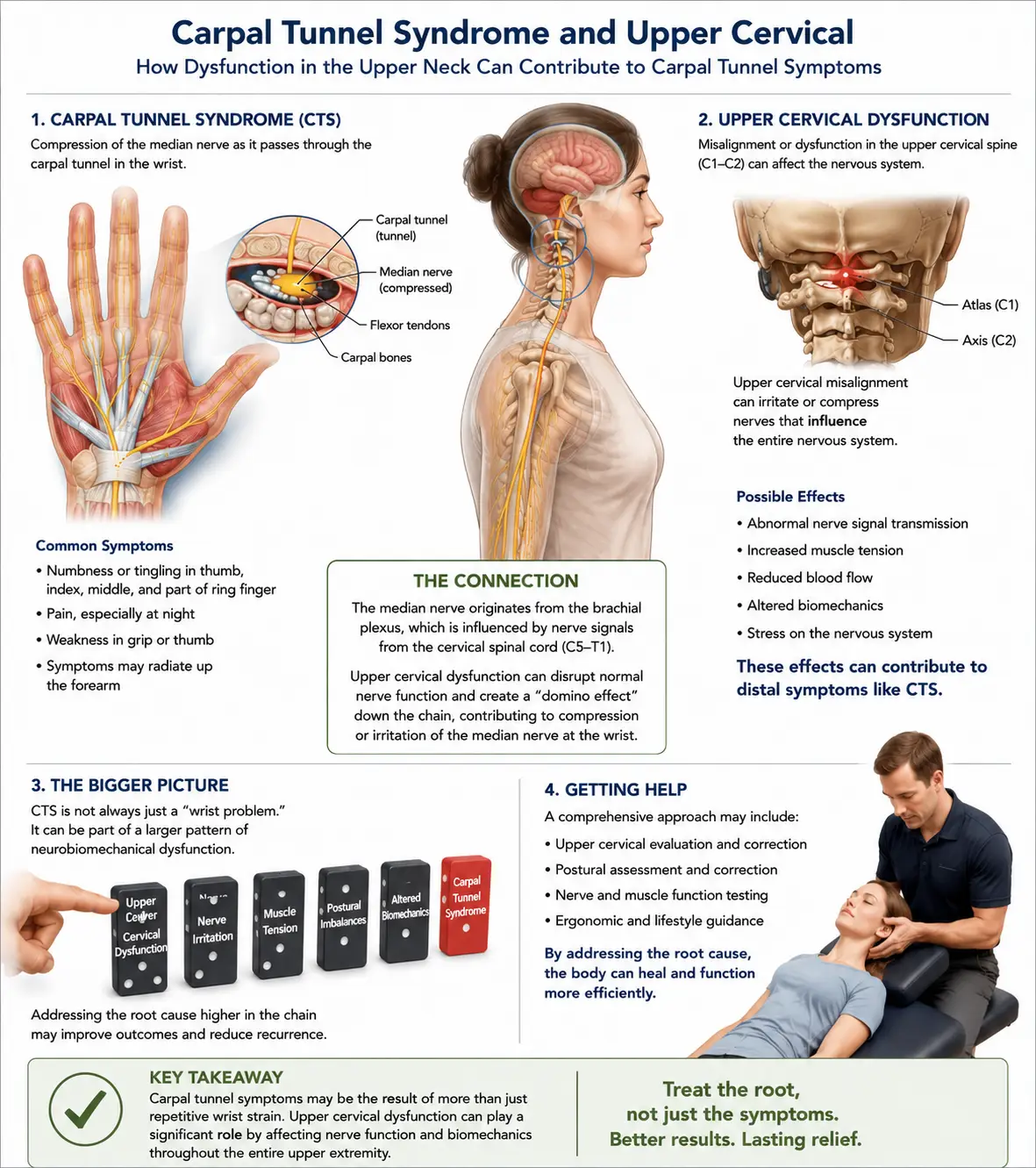
Carpal tunnel syndrome occurs when the median nerve, which runs from the forearm through the wrist into the hand, is compressed within the carpal tunnel—a narrow passageway formed by the carpal bones and the transverse carpal ligament. This nerve controls sensation and movement in the thumb, index, middle, and part of the ring finger, excluding the pinky. Compression leads to symptoms such as:
- Numbness or tingling in the affected fingers
- Pain or burning sensations that may radiate up the arm
- Weakness in the hand, making it hard to grip objects
- Symptoms that worsen at night or during repetitive tasks like typing or driving
CTS is the most common upper extremity entrapment neuropathy, affecting 3–6% of adults in the United States, with an annual cost exceeding $2 billion. Risk factors include repetitive wrist movements, female gender (women have smaller carpal tunnels), obesity, diabetes, thyroid disorders, pregnancy, and rheumatoid arthritis. Occupations involving vibratory tools or extreme wrist positions also increase risk, though the link with keyboard use is debated.
In Sarasota, a coastal city known for its active community, CTS can disrupt daily life, from office work to recreational activities like golf or kayaking. Lavender Family Chiropractic understands these challenges and offers a holistic approach to help Sarasota residents find lasting relief.
Finding a Carpal Tunnel Doctor in Sarasota
Sarasota boasts a robust healthcare community, with specialists who diagnose and treat CTS. These include:
Orthopedic Surgeons
Orthopedic surgeons use physical exams, provocative tests (e.g., Tinel’s, Phalen’s, and Durkan’s tests), and nerve conduction studies or electromyography (EMG) to diagnose CTS. They offer treatments ranging from splinting and corticosteroid injections to carpal tunnel release surgery, which cuts the transverse carpal ligament to relieve nerve pressure. Recovery varies from weeks to months, depending on whether open or endoscopic surgery is performed.
Neurologists and Neurosurgeons
Neurologists at practices like Intercoastal Medical Group (multiple Sarasota locations) diagnose nerve disorders, while neurosurgeons handle surgical interventions for complex CTS cases. They use advanced diagnostics to ensure accurate treatment plans.
Primary Care Physicians
Primary care physicians (PCPs) provide initial assessments, prescribe splints or medications, and refer patients to specialists for persistent symptoms. Intercoastal Medical Group (941-955-6748) is a trusted option for early CTS management.
Physical and Occupational Therapists
Therapists teach exercises to improve nerve mobility, strengthen hand muscles, and optimize ergonomics. Sarasota’s therapy clinics support non-surgical and post-surgical recovery.
Pain Management Specialists
For chronic CTS pain, specialists offer corticosteroid injections or nerve blocks, ideal for patients avoiding surgery.
While these professionals provide effective care, they often focus on the wrist. Lavender Family Chiropractic takes a broader approach, examining the spine and nervous system to address potential upstream causes of CTS, such as atlas misalignment.
Traditional Treatments for Carpal Tunnel Syndrome
Conventional treatments aim to reduce median nerve compression and alleviate symptoms. Depending on severity, options include:
Non-Surgical Treatments
- Wrist Splinting: Nighttime splints keep the wrist neutral, reducing nerve pressure. Effective for mild to moderate CTS, splinting is often the first step.
- Medications: Anti-inflammatory drugs (e.g., ibuprofen) or corticosteroids reduce swelling and pain. Diuretics may decrease fluid retention.
- Corticosteroid Injections: Injections into the carpal tunnel provide temporary relief by reducing inflammation, often paired with physical therapy.
- Physical Therapy: Exercises improve nerve gliding, strengthen muscles, and correct posture. Ergonomic adjustments, like optimizing workstations, are also recommended.
- Lifestyle Changes: Resting the wrist, taking breaks during repetitive tasks, and using ergonomic tools prevent symptom worsening. Ice packs can reduce swelling.
Surgical Treatments
For severe or persistent CTS, carpal tunnel release surgery enlarges the tunnel by cutting the transverse carpal ligament. Performed as open or endoscopic surgery, it requires weeks to months of recovery. Post-surgical rehabilitation restores hand function.
These treatments work for many but may not address symptoms originating beyond the wrist. Lavender Family Chiropractic’s upper cervical approach offers a complementary solution, targeting nerve dysfunction at its source.
Upper Cervical Chiropractic Care at Lavender Family Chiropractic
Lavender Family Chiropractic, Sarasota’s premier upper cervical chiropractic office, specializes in correcting misalignments of the atlas (C1) and axis (C2) vertebrae. These top two spinal bones, located at the base of the skull, protect the brainstem and facilitate nerve communication throughout the body. Misalignments, particularly of the atlas, can disrupt nerve function, potentially contributing to CTS-like symptoms.
Lavender’s Unique Approach
Led by Dr. Rusty Lavender and Dr. Jacob Lavender, with a third experienced upper cervical chiropractor on staff, Lavender Family Chiropractic uses state-of-the-art technology and gentle, hands-on techniques to restore spinal alignment. Their process includes:
- 3D CBCT X-Ray Imaging: This advanced imaging provides detailed, three-dimensional views of the upper cervical spine, allowing precise measurement of misalignments down to one-hundredth of a millimeter. This ensures tailored corrections for each patient.
- Functional Nervous System Scans: Using tools like the Insight Subluxation Station, the team assesses nervous system function to identify how misalignments affect nerve pathways.
- Gentle, Hands-On Adjustments: Unlike traditional chiropractic methods involving popping or twisting, Lavender’s upper cervical adjustments are precise and gentle, avoiding instruments to ensure patient comfort. These corrections realign the atlas and axis, reducing nerve pressure without force.
The practice’s mission is to facilitate the body’s natural healing by optimizing nervous system function. By addressing atlas misalignment, they aim to alleviate CTS symptoms and improve overall well-being, making them a standout choice in Sarasota.
How Atlas Misalignment May Contribute to CTS Symptoms
Lavender Family Chiropractic posits that atlas misalignment can contribute to CTS symptoms through several mechanisms:
- Nerve Pathway Disruption: The median nerve originates from the brachial plexus, formed by nerve roots exiting the cervical spine (C5–T1). Atlas misalignment may affect lower cervical vertebrae, compressing these nerve roots and causing numbness or tingling in the median nerve distribution (thumb, index, middle, and radial half of the ring finger).
- Postural Imbalance: Misaligned atlas vertebrae can alter head and neck posture, leading to compensatory changes in the shoulders, arms, and wrists. Poor posture increases carpal tunnel pressure, exacerbating CTS. Correcting alignment improves posture, reducing wrist strain.
- Inflammation and Tension: Atlas misalignment may cause neck and shoulder muscle tension or inflammation, compressing nerves to the arms. This can worsen CTS symptoms or create referred pain in the hands.
- Holistic Nerve Function: By restoring atlas alignment, Lavender’s adjustments enhance nervous system communication, reducing inflammation and improving nerve function, potentially alleviating CTS symptoms without wrist-focused interventions.
Evidence and Controversy
The connection between atlas misalignment and CTS is supported by anecdotal evidence and chiropractic case studies. For instance, a 2005 study in the Journal of Chiropractic Medicine reported relief in older patients with hand and wrist pain after upper cervical adjustments. Another study on a 42-year-old woman found her CTS symptoms resolved after four weeks of chiropractic care. Lavender Family Chiropractic’s patient testimonials echo these findings, with many reporting reduced hand pain and improved function after atlas corrections.
However, scientific evidence is limited. Most CTS research focuses on wrist pathology, and peer-reviewed studies directly linking atlas misalignment to median nerve compression are scarce. Critics suggest that symptoms attributed to cervical issues may stem from cervical radiculopathy or double-crush syndrome, where nerve compression occurs at multiple sites (e.g., neck and wrist). The National Institutes of Health notes that CTS is misdiagnosed nearly 50% of the time, underscoring the need for thorough evaluation. Lavender’s comprehensive assessments, including 3D imaging and nervous system scans, help differentiate CTS from other conditions, ensuring accurate treatment.
Despite limited evidence, upper cervical care’s non-invasive nature appeals to Sarasota residents seeking alternatives to surgery or medications. Lavender Family Chiropractic’s patient-centered approach and advanced technology make it a trusted option for exploring this connection.
Lavender Family Chiropractic’s Role in Sarasota
Located in the heart of Sarasota, Lavender Family Chiropractic stands out as a family-centered practice dedicated to restoring health through upper cervical care. Their team of three certified upper cervical chiropractors—Dr. Rusty Lavender, Dr. Jacob Lavender, and a third expert—brings extensive experience to treating CTS and related conditions like migraines, vertigo, and fibromyalgia.
The practice uses cutting-edge tools to assess and treat patients:
- 3D CBCT Imaging: Provides precise visualization of the upper cervical spine, ensuring accurate diagnosis and correction.
- Functional Nervous System Scans: Detect nerve dysfunction, guiding personalized treatment plans.
- Gentle Adjustments: Hands-on techniques avoid forceful manipulation, making treatments safe for all ages, including those with arthritis or comorbidities.
Patients begin with a comprehensive consultation, discussing symptoms, health history, and lifestyle factors. The team performs a thorough examination, including X-rays and scans, to identify atlas misalignment or other contributors to CTS. Adjustments are tailored to each patient, aiming to restore spinal alignment and nerve function. Follow-up imaging confirms results, ensuring long-term benefits.
Benefits of Lavender’s Upper Cervical Care for CTS
- Non-Invasive Relief: Adjustments carry minimal risk and no recovery time, unlike surgery.
- Holistic Healing: By targeting the spine and nervous system, Lavender addresses potential root causes of CTS, not just symptoms.
- Gentle and Precise: Hands-on techniques are safe and comfortable, ideal for Sarasota’s diverse population, from retirees to active professionals.
- Broader Benefits: Patients often report relief from neck pain, headaches, or shoulder tension, enhancing overall quality of life.
Limitations and Considerations
- Limited Evidence: While patient success stories are compelling, more research is needed to validate the atlas-CTS link.
- Not a Universal Solution: CTS caused by local wrist issues (e.g., tendon swelling) may require additional treatments. Lavender’s team refers patients to specialists when needed.
- Cost Considerations: Chiropractic care may involve out-of-pocket costs, depending on insurance.
- Need for Comprehensive Diagnosis: CTS symptoms can mimic other conditions (e.g., cervical radiculopathy, thoracic outlet syndrome). Lavender’s advanced diagnostics ensure accurate identification of causes.
Integrating Upper Cervical Care with Conventional Treatments
Lavender Family Chiropractic encourages an integrative approach, combining their upper cervical expertise with conventional CTS treatments for optimal outcomes. Here’s how they collaborate:
- Diagnosis: Start with an orthopedic surgeon or neurologist to confirm CTS via nerve conduction studies or EMG. Lavender’s 3D CBCT imaging and scans complement these diagnostics, identifying cervical contributions.
- Conservative Management: Use splints, physical therapy, and ergonomic adjustments alongside Lavender’s atlas corrections to address wrist and spinal factors. For example, splinting reduces local pressure, while upper cervical care optimizes nerve function.
- Surgical Consideration: If symptoms persist, consult surgeons like those at Schofield, Hand and Bright Orthopaedics. Lavender’s adjustments can support post-surgical recovery by maintaining spinal alignment.
- Lifestyle Optimization: Work with physical therapists to improve posture and ergonomics, and rely on Lavender’s expertise to sustain atlas alignment. Regular breaks and wrist exercises further reduce symptoms.
Lavender’s team collaborates with Sarasota specialists, referring patients when necessary to ensure comprehensive care. Their patient-centered approach prioritizes listening and providing hope, especially for those who’ve tried other treatments without success.
Patient Stories at Lavender Family Chiropractic
Lavender Family Chiropractic’s success stories highlight their impact on CTS patients in Sarasota:
- Emma, a 40-Year-Old Teacher: Emma struggled with hand numbness while grading papers, diagnosed as mild CTS. After splinting failed, she visited Lavender Family Chiropractic. 3D CBCT imaging revealed an atlas misalignment. Gentle adjustments by Dr. Rusty Lavender reduced her symptoms within weeks, allowing her to teach and write comfortably. Emma also noticed less neck stiffness, a bonus from her care.
- Tom, a 55-Year-Old Golfer: Tom’s grip weakness from CTS threatened his golf game. A neurologist suggested surgery, but Tom sought a non-invasive option. Dr. Jacob Lavender’s scans identified nerve interference from an atlas misalignment. After a series of adjustments, Tom’s hand strength improved, and he returned to the Sarasota golf courses pain-free. He continues monthly visits to maintain alignment.
- Lisa, a 30-Year-Old Graphic Designer: Lisa’s typing-intensive job triggered CTS symptoms. Frustrated with medications, she turned to Lavender Family Chiropractic. The team’s precise adjustments and ergonomic advice alleviated her hand pain and improved her posture, enhancing her productivity and comfort.
These hypothetical scenarios, inspired by common chiropractic outcomes, reflect the personalized care at Lavender Family Chiropractic. Patient testimonials praise the practice’s attentive, hope-driven approach, especially for those with complex symptoms.
Practical Tips for Managing CTS in Sarasota with Lavender Family Chiropractic
To manage CTS effectively, combine Lavender’s upper cervical care with practical strategies:
- Seek Early Intervention: Don’t ignore numbness or tingling. Schedule a consultation with Lavender Family Chiropractic to assess atlas alignment and nerve function.
- Optimize Your Workspace: Use ergonomic keyboards and adjust chair height to keep wrists neutral. Lavender’s team offers tailored ergonomic advice for Sarasota’s office workers and retirees.
- Take Breaks: Pause repetitive tasks every 15–30 minutes to stretch hands and wrists. Apps like Stretchly can help.
- Perform Wrist Exercises: Try wrist curls or finger stretches to improve nerve mobility, guided by Lavender’s recommendations or a physical therapist.
- Explore Upper Cervical Care: Visit Lavender Family Chiropractic to evaluate atlas misalignment’s role in your CTS. Their 3D imaging ensures precise diagnosis.
- Stay Active: Enjoy Sarasota’s beaches and parks with low-impact activities like walking or yoga, which promote circulation without wrist strain.
- Track Symptoms: Keep a diary of triggers and progress to share with Lavender’s team, ensuring a personalized treatment plan.
Why Choose Lavender Family Chiropractic in Sarasota
Lavender Family Chiropractic is uniquely positioned to help Sarasota residents with CTS. Their key strengths include:
- Expertise: Three certified upper cervical chiropractors—Dr. Rusty Lavender, Dr. Jacob Lavender, and a third doctor—offer specialized care.
- Advanced Technology: 3D CBCT X-ray imaging and functional nervous system scans provide unparalleled precision in diagnosis and treatment.
- Gentle Techniques: Hands-on adjustments avoid forceful manipulation, ensuring safety and comfort.
- Holistic Focus: By addressing the nervous system, Lavender facilitates the body’s natural healing, offering relief beyond CTS symptoms.
- Community Trust: Located at 5899 Whitfield Ave, STE 107, Sarasota, FL 34243, the practice is a trusted resource for Sarasota’s wellness community.
To schedule an appointment, call (941)243-3729 or visit www.chiropractorsarasotaflorida.com. Their warm, patient-centered environment welcomes those seeking natural relief.
The Future of CTS Treatment in Sarasota
Research into CTS is advancing, with the NIH exploring brain imaging and cellular senescence to understand its mechanisms. Integrative approaches combining chiropractic care, physical therapy, and medical interventions are gaining popularity. In Sarasota, Lavender Family Chiropractic is at the forefront, blending cutting-edge technology with holistic principles to offer hope for CTS sufferers.
While upper cervical care’s role in CTS requires further study, Lavender’s success stories and precise methods suggest it’s a promising complement to traditional treatments. As evidence grows, their approach may become a standard option for non-invasive relief.
Conclusion
Carpal tunnel syndrome can hinder your ability to enjoy Sarasota’s vibrant lifestyle, but relief is within reach. While orthopedic surgeons and other specialists provide effective treatments, Lavender Family Chiropractic offers a unique, non-invasive solution through upper cervical care. By addressing atlas misalignment with advanced 3D imaging and gentle adjustments, Dr. Rusty Lavender, Dr. Jacob Lavender, and their team help patients overcome CTS symptoms and improve overall health.
Whether you’re typing at a desk, kayaking along Sarasota Bay, or playing golf, Lavender Family Chiropractic can help you reclaim your hand function. Contact them at
Frequently Asked Questions
What is carpal tunnel syndrome, and why might the neck be involved?
Carpal tunnel syndrome is compression of the median nerve at the wrist, producing numbness, tingling, and weakness in the thumb and first fingers. The median nerve begins as roots in the lower neck, and a nerve irritated upstream is more vulnerable to compression downstream, a pattern called double crush. Because upper cervical alignment shapes the mechanics of the entire neck, we examine the atlas with cone-beam CT and read nerve function with thermography.
Which kind of carpal tunnel doctor in Sarasota should I see first?
A primary care physician or neurologist can confirm the diagnosis, often with nerve conduction testing, and orthopedic surgeons, physical and occupational therapists, and pain specialists each manage a piece of traditional care. We work alongside all of them and share imaging on request. What we add is an examination of the upper cervical spine, which is rarely included in a wrist workup. If the neck is not involved, we tell you and refer.
What is double crush and how does it change the approach?
Double crush means a nerve pinched in two places produces symptoms neither spot would cause alone. For the median nerve, the first site is often the cervical spine and the second is the wrist. Treating only the wrist leaves the upstream irritation in place, which is why splints and injections sometimes disappoint. Correcting the atlas position addresses the neck mechanics that load those nerve roots. Thermography before and after shows whether nerve regulation evened out.
Can upper cervical care help if I am trying to avoid carpal tunnel surgery?
Surgery decisions stay with your physician or surgeon. What we can do is determine whether the neck is contributing and correct it with a precise, low-force Knee Chest adjustment, no twisting or cracking, when it is. Many patients notice hand numbness and tingling change as the alignment holds, though results vary by person. Care plans are individual and reassessed with thermography at every visit, and we document the findings so your surgeon can factor them in.
Where do carpal tunnel patients from Lakewood Ranch and Bradenton get an upper cervical evaluation?
Our Sarasota office at 5899 Whitfield Avenue, Suite 107, is at the corner of University Parkway and Whitfield, minutes from Lakewood Ranch, Bradenton, and University Park, and about thirty minutes from Venice. The evaluation includes a history, neurological checks of the arm and hand, paraspinal thermography, and 3D cone-beam CT when indicated. We are a cash-pay practice and provide superbills for possible reimbursement. Call (941) 243-3729 to schedule an evaluation.
Schedule With Us!
Lavender Family Chiropractic in Sarasota Florida offers consultations to learn more about you. Click the link below!
https://intake.chirohd.com/new-patient-scheduling/724/lavender-family-chiropractic
Visit our Website!
To learn more about us go to http://www.chiropractorsarasotaflorida.com
We also service Bradenton, Parrish, Ellenton, Ruskin, Venice, Tampa, St. Pete, Osprey, Longboat, Lakewood Ranch, Myakka City.
If you are not local, visit www.uccnearme.com to find a doctor in your area.
Related Posts


Get our upper cervical articles first.
Patients Experience
Popular Posts