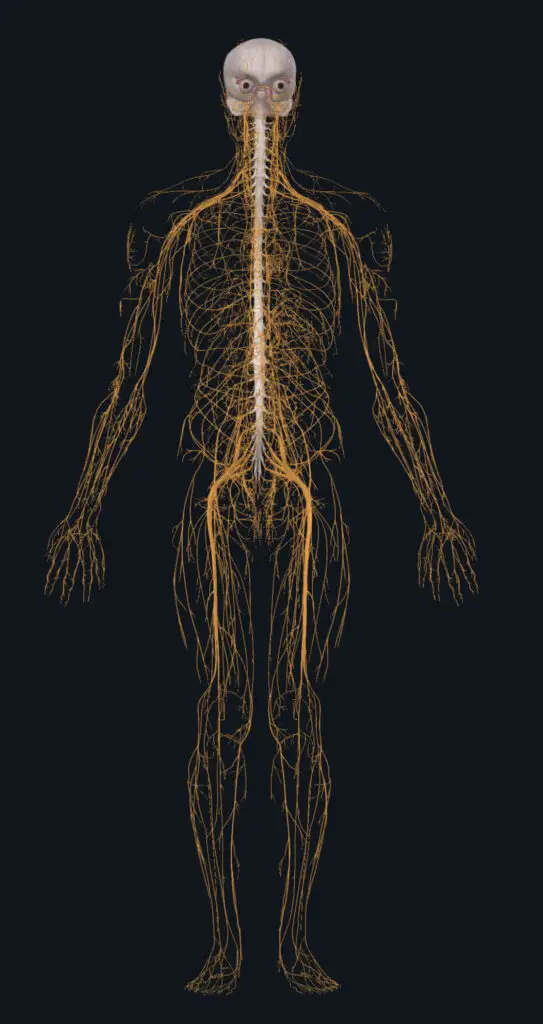
Fibromyalgia Treatment in Sarasota, Florida
Fibromyalgia can be debilitating, affecting the quality of your life and the activities you do. At Lavender Family Chiropractic, we specialize in providing effective fibromyalgia treatment though targeted chiropractic care. Our team in Sarasota, Florida is dedicated to heling you live a life free from the debilitating pain of fibromyalgia.
Fibromyalgia in Sarasota, Florida: Why the Pain Volume Is Turned Up — and the Upper Cervical Connection Most Care Overlooks
By Dr. Rusty Lavender, D.C. and Dr. Jacob Temple, D.C. — upper cervical chiropractors, Lavender Family Chiropractic, Sarasota, FL. Reviewed and updated October 2026.
Fibromyalgia is exhausting in a way that’s hard to explain to anyone who hasn’t lived it. It isn’t one pain in one place — it’s a deep, widespread ache that moves around, flares without warning, and comes bundled with a fatigue that sleep never repairs, a brain fog that makes words slip away mid-sentence, and a body that seems to register ordinary touch, sound, and stress as too much. And layered on top of the symptoms is the disbelief: the normal bloodwork, the clear X-rays, the providers who imply that because they can’t find the damage, the pain must not be real.
The pain is real. What fibromyalgia research has made increasingly clear is that the problem isn’t damage in your muscles and joints — it’s amplification in your nervous system. In fibromyalgia, the volume knob for pain is turned up, and the brake that’s supposed to quiet pain signals is underperforming. Your tissues are sending ordinary signals; your central nervous system is turning them into loud, widespread pain. Understanding that one fact changes everything about how the condition makes sense — and it’s the key to why the upper cervical spine, the region that helps run that pain-control system, is worth a look.
At Lavender Family Chiropractic in Sarasota, Florida, we focus exclusively on the upper cervical spine — the atlas (C1), the axis (C2), and the junction where the skull meets the neck. Because that region is intimately involved in the pain-modulation system that goes wrong in fibromyalgia, it’s a genuinely relevant and rarely-examined factor. Using 3D CBCT imaging, paraspinal infrared thermography, and the low-force Knee Chest Upper Cervical technique, we evaluate and address it as one part of a broader plan. Let’s start with what fibromyalgia actually is.
What Is Fibromyalgia?
Fibromyalgia is a chronic condition defined by widespread musculoskeletal pain, accompanied by fatigue, sleep problems, cognitive difficulty (often called “fibro fog”), and heightened sensitivity to a range of stimuli. It is common — affecting roughly 2% of adults, and considerably more women than men — and yet it is badly under-recognized. Research on the prevalence and characteristics of fibromyalgia in a large national survey found that a large majority of people who meet the criteria for fibromyalgia have never actually received the diagnosis, which helps explain why so many sufferers spend years without answers.
Modern diagnosis has moved away from the old “tender points” exam toward criteria that better capture the condition’s true nature. The American College of Rheumatology criteria are built around a widespread pain index — how many body regions hurt — combined with a symptom severity score that rates fatigue, unrefreshing sleep, and cognitive symptoms, with symptoms present for at least three months and other conditions reasonably excluded. In other words, fibromyalgia is now understood and diagnosed as a whole-body syndrome of amplified pain and associated symptoms, not a localized joint or muscle disease. Diagnosis is made by a physician, often a rheumatologist, and part of the process is ruling out other conditions — thyroid disease, autoimmune disorders, vitamin deficiencies, and others — that can mimic it.
The symptom list runs long because the condition is systemic: widespread and shifting pain; profound fatigue; non-restorative sleep; brain fog and memory lapses; headaches and migraines; jaw pain; digestive problems such as irritable bowel; heightened sensitivity to light, sound, smell, temperature, and touch; numbness and tingling; dizziness; and mood changes that are often a consequence of living with relentless pain rather than a cause of it. Fibromyalgia also keeps notable company: it overlaps heavily with chronic fatigue syndrome, irritable bowel syndrome, migraine, TMJ disorders, and — importantly for our discussion — with hypermobility and dysautonomia.
The Core Problem: A Nervous System That Amplifies Pain
To understand fibromyalgia, and to understand why the neck matters, you have to understand central sensitization. In a healthy nervous system, pain signals travel from the body to the spinal cord and up to the brain, and along the way they are filtered and dialed down by the brain’s own pain-control machinery. This is normal and constant — your nervous system is always deciding how much of a signal to let through.
In fibromyalgia, that filtering breaks down. The central nervous system becomes sensitized: it amplifies incoming signals instead of quieting them, so ordinary sensations get registered as pain and real pain gets registered as severe. A short review of descending pain modulation in fibromyalgia describes the two sides of this failure. On one side, the pain-facilitating pathways are turned up. On the other — and this is the crucial part — the descending inhibitory pathways, the system that’s supposed to send signals down from the brain to suppress pain at the spinal cord, are underactive. The brake is weak. Research also finds elevated levels of excitatory, pain-promoting chemicals in the spinal fluid of fibromyalgia patients, consistent with a nervous system stuck in amplify mode.
This is why fibromyalgia pain is widespread rather than localized, why it moves around, why it flares with poor sleep and stress, and why treatments aimed at the muscles and joints so often disappoint. The problem isn’t primarily in the tissue. It’s in how the nervous system is processing signals — and specifically, in a descending brake that isn’t doing its job.
This amplification also explains fibromyalgia’s strange sensory signature. When the whole system is turned up, a firm hug, a waistband, a cold room, a bright store, or a loud restaurant can register as genuinely painful or overwhelming — a phenomenon clinicians call allodynia, pain from things that shouldn’t hurt. It’s not fragility or exaggeration; it’s a nervous system whose gain is set too high, treating ordinary input as threat. Understanding this helps patients stop blaming themselves for reactions that are, in fact, a measurable feature of the condition.
Hold onto that idea of the descending brake, because where those brake cables run is the entire reason the upper cervical spine belongs in this conversation.
Why the Upper Neck Is Central to Fibromyalgia
This is the part that fibromyalgia care almost never examines, and in our experience it’s often the missing consideration for people who’ve tried everything else. There are two connected reasons the upper cervical spine belongs in the fibromyalgia picture.
One: the pain brake runs through the upper cervical spine
The descending inhibitory pathways — the system that’s supposed to quiet pain, and that is measurably underactive in fibromyalgia — originate in the brainstem and travel downward through the spinal cord to filter incoming pain signals. To get from the brainstem to the rest of the cord, those pathways pass directly through the upper cervical region, the segment surrounded and protected by the atlas and axis. There is no more concentrated or mechanically exposed stretch of the descending pain-control system than the one at the top of your neck.
The implication is direct. If the upper cervical spine is misaligned and creating mechanical stress, muscle guarding, and irritation at this exact junction, the plausible consequence is added interference with a pain-suppression system that is already failing in fibromyalgia. A weak brake that’s also being jostled at its most vulnerable point is a recipe for exactly the amplified, widespread pain that defines the condition. Restoring better alignment in this region aims to reduce that interference and give an overwhelmed pain-modulation system a calmer environment in which to work. This shared mechanism — a convergence of head, face, and upper-neck pain processing in the brainstem — is documented in work on the integration of orofacial, cranial, and cervical input in the trigeminocervical nucleus, which sits right in this region.
Two: the cervical spine can directly drive fibromyalgia-type symptoms
The second reason is more concrete, and it comes from an unexpected place — neurosurgery. A body of clinical research found that a meaningful subset of patients carrying a fibromyalgia diagnosis actually had identifiable problems at the craniocervical junction and upper cervical spinal cord. In a study on the treatment of cervical myelopathy in patients with the fibromyalgia syndrome, investigators evaluated fibromyalgia patients and found many with signs of cervical cord compression or Chiari-type crowding at the base of the skull — and when that compression was addressed, a wide array of symptoms usually attributed to fibromyalgia improved.
We want to be careful and honest about what this does and doesn’t mean. It does not mean everyone with fibromyalgia has cord compression or needs surgery — most do not, and the great majority of fibromyalgia is managed without any such intervention. What it does mean is that the cervical spine is capable of producing the widespread pain, fatigue, and neurological symptoms that get labeled fibromyalgia, and that in some patients the neck is not just associated with the condition — it is driving part of it. That is a powerful reason to actually evaluate the upper cervical spine rather than assume it’s irrelevant.
The company fibromyalgia keeps
There’s a third thread worth naming. Fibromyalgia clusters tightly with hypermobility, chronic fatigue syndrome, and dysautonomia, including POTS — the same constellation that centers on connective tissue and the craniocervical junction. A review of overlapping conditions notes that hypermobility is found in a striking proportion of people with fibromyalgia, ME/CFS, POTS, and long COVID compared with the general population. When a person carries several of these diagnoses at once, the shared thread often runs through connective tissue and the upper cervical region — one more reason this area deserves evaluation in the fibromyalgia patient.
Putting it together
So the upper cervical spine sits at the center of fibromyalgia in two reinforcing ways: it’s the stretch of the nervous system through which the failing pain brake runs, and it’s capable — in a real subset of patients — of directly generating fibromyalgia-type symptoms. A person can have genuine, disabling fibromyalgia that keeps resisting treatment because the upper cervical contribution has never been examined. That’s the gap we work in.
Why Standard Fibromyalgia Care Often Only Goes So Far
Most people with fibromyalgia end up on a familiar path. They’re prescribed medications aimed at the nervous system — duloxetine, pregabalin, amitriptyline, and others — which genuinely help some patients turn down the pain volume. They’re advised to exercise gently, improve sleep, and manage stress, all of which are legitimately important. Some add cognitive behavioral therapy, physical therapy, or pain-management programs.
None of this is wrong, and the best fibromyalgia care combines several of these at once. But many people plateau at partial relief, and there’s a structural reason why. This entire menu works on the pain system from the top down and the outside in — through medication, behavior, and general conditioning. What it rarely does is look at the physical stretch of the nervous system where the failing pain brake actually runs: the upper cervical spine. If that region is adding mechanical interference to an already-underperforming pain-suppression system, then treating everything except that region can leave a real contributor untouched. The relief is genuine but incomplete, and the pain keeps drifting back up.
This is the layer we focus on, and it’s why our work sits alongside — never instead of — the rest of a good plan. The same principles apply here as across all of our upper cervical chiropractic care, but with fibromyalgia the emphasis shifts: we’re not chasing a single painful joint, we’re asking whether the region that governs pain modulation is under mechanical stress. It’s a question almost no one asks a fibromyalgia patient, which is exactly why so many arrive having been evaluated everywhere except the one place that could be amplifying their pain.
There’s also a self-reinforcing cycle worth naming, because breaking it is part of the goal. Pain disrupts sleep; poor sleep lowers the pain threshold further; a lower threshold means more pain and more stress; and stress amplifies central sensitization all over again. Fibromyalgia flares often ride this loop. Calming the nervous system at any point — better sleep, paced activity, reduced mechanical stress on the pain-control system — can take pressure off the whole cycle, which is one reason a multi-angle approach tends to outperform any single intervention.
How Precise Upper Cervical Care Works at Lavender Family Chiropractic
One clarification first. What we do is not the forceful, high-velocity, twisting neck manipulation people picture when they hear “chiropractor.” The Knee Chest Upper Cervical technique is a precise, low-force correction — no twisting, no rotation, no forceful cracking — calculated from your own imaging. For a fibromyalgia nervous system that’s already hypersensitive and easily overwhelmed, that gentleness isn’t optional; it’s the entire logic of the approach, and it’s why the technique is worth considering where forceful manipulation would not be.
Every relationship begins with a thorough consultation. We take your full history — your pain pattern, your fatigue and sleep, your fog, your other diagnoses, any hypermobility, any history of trauma or whiplash, and everything you’ve already tried. We want all of it, because fibromyalgia care works best as a coordinated, multidisciplinary effort and we are one part of it. This consultation is complimentary.
When it’s appropriate to proceed, we use 3D CBCT imaging to measure your upper cervical alignment in three dimensions, and paraspinal infrared thermography to read how your nervous system is functioning along the spine — useful information in a condition defined by nervous system dysregulation. From those findings we calculate a correction specific to you, delivered with the low-force Knee Chest technique, and we pace care gently, because a sensitized system does better with slow, spaced care than with aggressive loading.
We work from customized care plans built around your findings, and we’re honest about scope. Upper cervical care does not cure fibromyalgia, and it is not a substitute for the medical care this condition needs. Please keep working with your rheumatologist or physician, keep taking prescribed medications, and continue the exercise, sleep, and stress strategies that form the backbone of fibromyalgia management. What we offer is attention to the cervical and upper cervical contribution to your amplified pain — the piece that’s so often missing — coordinated with your medical team. If your evaluation raises concern for significant cervical cord involvement, we’ll say so and help direct you to appropriate specialist care.
→ If you’re living with fibromyalgia and want a careful look at the upper cervical piece, call Lavender Family Chiropractic at (941) 243-3729 or schedule a complimentary consultation online. We’re at 5899 Whitfield Avenue, Suite 107, Sarasota, FL 34243 — at the corner of University and Whitfield.
What the Research Says
Here’s the peer-reviewed evidence behind fibromyalgia and its cervical connection.
A short review of descending pain modulation in fibromyalgia details the central abnormality of the condition: heightened pain facilitation and, crucially, underactive descending inhibitory pathways — a weak pain brake — along with evidence of elevated excitatory neurotransmitters in the spinal fluid and altered connectivity in the pain-modulating system. This is the mechanism that grounds the upper cervical connection.
Research on the prevalence and characteristics of fibromyalgia establishes how common the condition is — around 2% of adults — and how frequently it goes formally undiagnosed despite severe symptoms, underscoring both its reality and how often it is missed.
A study on the treatment of cervical myelopathy in patients with the fibromyalgia syndrome documented that a subset of fibromyalgia patients had compressive problems at the cervical cord and craniocervical junction, and that addressing them improved symptoms widely attributed to fibromyalgia — direct evidence that the cervical spine can drive the syndrome in some people.
Work on the integration of orofacial, cranial, and cervical input in the trigeminocervical nucleus describes how pain signals from the head, face, and upper neck converge in the brainstem region the upper cervical spine surrounds — the anatomical basis for why upper-neck dysfunction can feed into widespread pain processing.
Finally, a review of overlapping conditions describes how hypermobility appears in a large share of people with fibromyalgia, ME/CFS, POTS, and long COVID, tying fibromyalgia into the connective-tissue and craniocervical cluster that so often travels together.
Two honest points. First, the science that fibromyalgia is a central-sensitization disorder with a failing pain brake is robust and mainstream. Second, the direct research on upper cervical chiropractic care specifically for fibromyalgia is limited and still developing — it rests largely on mechanism and on the cervical-compression findings above rather than on large trials. We think the responsible way to say it is this: the mechanism is well established, the cervical spine’s capacity to drive these symptoms is documented, and the upper cervical region is a legitimate, under-evaluated factor — not a promised outcome. We’re telling you why it’s worth examining, not overstating what the science has yet shown.
Lifestyle and Self-Care for Fibromyalgia
Because fibromyalgia is a whole-system condition, the people who do best usually work several angles at once. Coordinate specifics with your physician.
Gentle, graded movement. Exercise is one of the best-supported tools in fibromyalgia, but it has to start low and build slowly — overdoing it triggers flares. Walking, water exercise, tai chi, and gentle stretching, increased gradually, retrain the system without overwhelming it.
Protect sleep. Non-restorative sleep both results from and worsens fibromyalgia. Consistent sleep timing, a cool dark room, and working with your provider on sleep quality often produce broad symptom improvement, because sleep is when the pain-regulation system resets.
Pace and manage stress. Stress amplifies central sensitization directly. Pacing activity to stay within your limits, plus slow breathing, calming routines, and stress-reduction practices, help keep the nervous system out of constant high alert.
Anti-inflammatory basics. While there’s no single “fibromyalgia diet,” steady hydration, whole foods, and limiting processed food and excess sugar support general nervous-system function. Many patients also track individual triggers.
Mind the neck. Given the pain-brake connection, sustained forward-head posture and neck strain add load to the very region involved. For related reading on overlapping conditions, see our discussions of chronic fatigue syndrome and the craniocervical connection and neck pain and the upper cervical approach.
Keep your medical team. Fibromyalgia care works best as a team — your physician manages medications and the overall plan, and we address the cervical side. Together that covers more than either alone.
Serving Sarasota and Surrounding Communities
Lavender Family Chiropractic is located at 5899 Whitfield Avenue, Suite 107, Sarasota, FL 34243 — at the corner of University and Whitfield, minutes from downtown Sarasota, Lakewood Ranch, and Bradenton.
We serve patients from across the region, including Sarasota, Bradenton, Lakewood Ranch, Venice, Palmer Ranch, Osprey, Siesta Key, Longboat Key, Lido Key, University Park, Parrish, Ellenton, Myakka City, Punta Gorda, and St. Petersburg. Because fibromyalgia is so often dismissed and the cervical component so rarely evaluated, patients frequently travel a considerable distance to be looked at by someone who takes both seriously — though we’re always mindful that travel and activity can be costly for someone in a flare, and we pace care accordingly.
Top 15 Questions We Hear About Fibromyalgia
Is fibromyalgia a real condition? Yes. Fibromyalgia is a recognized disorder of central pain processing, with defined diagnostic criteria and measurable changes in how the nervous system handles pain. It is not imagined, and it is not simply depression.
Can upper cervical care cure fibromyalgia? No, and we don’t claim it can. It addresses the cervical and upper cervical contribution to amplified pain — often the unexamined piece — as part of a broader, physician-led plan.
Should I still see my rheumatologist or physician? Yes. Fibromyalgia needs proper medical diagnosis and management. We work alongside your physicians, never in place of them.
What actually causes fibromyalgia? It’s understood as central sensitization — the nervous system amplifying pain while its own pain-suppression system underperforms. Triggers and contributors include physical or emotional trauma, infections, poor sleep, genetics, and, for a subset, cervical spine problems.
Why does my whole body hurt when nothing shows up on tests? Because fibromyalgia isn’t tissue damage — it’s amplified processing. Standard tests look for structural damage, which is usually why they come back normal. The problem is in the volume control, not the tissue.
What does my neck have to do with body-wide pain? The descending pathways that are supposed to quiet pain run from the brainstem through the upper cervical spine. Mechanical stress there can add interference to a pain-suppression system that’s already underperforming in fibromyalgia.
Is it true the cervical spine can cause fibromyalgia symptoms? In a subset of patients, yes. Research found that some people diagnosed with fibromyalgia had cervical cord compression, and addressing it improved their symptoms. Most patients don’t have this, but it’s a strong reason to evaluate the neck.
Is the adjustment safe if I’m so sensitive to everything? The forceful, twisting manipulation people picture is not what we do. Our Knee Chest technique is a precise, low-force correction with no twisting or thrusting, specifically suited to a hypersensitive nervous system, and we pace care gently.
Will I need to stop my medications? No. Keep everything your physician has prescribed. Upper cervical care is complementary, and medication decisions belong to your prescriber.
I also have chronic fatigue, IBS, migraines, or POTS — is that connected? Very often, yes. Fibromyalgia clusters with these central-sensitivity and dysautonomia conditions, and they frequently share the connective-tissue and craniocervical threads we evaluate.
Does hypermobility matter? It can. Hypermobility appears in a large share of fibromyalgia patients and can affect the craniocervical junction, which is one more reason the upper neck is worth examining in hypermobile patients.
How long until I might notice a difference? It varies widely. Some notice changes over weeks; others improve gradually or partially; some don’t respond meaningfully. We’re honest about what we see, and we pace care to your sensitivity.
Do you take insurance? We’re a cash-pay, out-of-network office and don’t bill insurance directly. We provide superbills you can submit to your insurance for possible out-of-network reimbursement, depending on your plan.
When should I seek urgent evaluation? New or progressive neurological symptoms — significant weakness, coordination or balance changes, swallowing or speech changes — warrant prompt medical evaluation rather than being assumed to be fibromyalgia.
How do I get started? Call (941) 243-3729 or book online for a complimentary consultation. We’ll review your history, evaluate the upper cervical contribution, and be honest about whether upper cervical care is a reasonable part of your plan and what else may help.
You Deserve to Be Believed
Fibromyalgia is one of the most dismissed conditions in medicine. The invisibility of it — the normal tests, the shifting pain, the exhaustion no one else can see — leaves too many people feeling disbelieved by the very system that’s supposed to help them. If that’s been your experience, we want you to know your pain is real, it has a genuine physiological basis in how your nervous system processes signals, and there is more to examine than you may have been offered.
For a meaningful share of people with fibromyalgia, the upper cervical spine is part of the story — it’s the stretch of nervous system where the failing pain brake runs, and in some patients it directly drives the widespread pain. Addressing it, alongside good medical care, can be part of a picture that finally begins to move.
Call (941) 243-3729 or schedule online to book a complimentary consultation with our doctors. We’re located at 5899 Whitfield Avenue, Suite 107, Sarasota, FL 34243, at the corner of University and Whitfield. Let’s look at the part of your pain that may start at the top of your neck.
Related Articles