Neck Pain Treatment in Lakewood Ranch, FL: Upper Cervical Chiropractic for Neck Pain, Tech Neck and Pinched Nerves
By Dr. Rusty Lavender, D.C. — upper cervical chiropractor, Lavender Family Chiropractic, Sarasota, FL. Reviewed and updated October 2026.
Neck pain is one of the most common health complaints affecting adults and families in Lakewood Ranch, Florida. Whether you are a busy professional commuting to Sarasota, a parent balancing work and athletics with your children, a golfer enjoying the Florida lifestyle, or a retiree staying active in Lakewood Ranch communities, persistent neck discomfort can quietly limit your quality of life. Lakewood Ranch residents come to our North Sarasota office to find out what is actually driving their neck pain.
Many people begin by searching online for a “chiropractor near me” or “neck pain relief Lakewood Ranch.” What they often find are options focused on temporary symptom relief. While short-term relief can be helpful, most people truly want correction. They want to know why their neck hurts and whether it can be corrected without medication or surgery.
At Lavender Family Chiropractic powered by NeckWise North Sarasota, we specialize in natural neck pain relief and structural correction for patients traveling from Lakewood Ranch, Bradenton, Parrish, and surrounding Florida communities. Our approach is different. We focus on the upper cervical spine, the top two bones in the neck, using advanced 3D CBCT imaging and precise, gentle adjustments designed to restore alignment without twisting, popping, or cracking.
This guide explains why neck pain develops, why it so often comes back, what tech neck and a pinched nerve look like from the upper cervical point of view, and how we evaluate Lakewood Ranch patients for a structural cause. If you are looking for the broader picture first, our complete guide to neck pain and the upper cervical spine covers the causes of neck pain, when it points to the top of the neck, and how we evaluate it.
Why Neck Pain Is So Common in Lakewood Ranch, Florida
Lakewood Ranch is one of the fastest-growing master-planned communities in the country. With growth comes busy schedules, long hours on devices, competitive youth sports, active adult recreation, and increased commuting between Lakewood Ranch and Sarasota.
All of these factors contribute to stress on the cervical spine.
Common causes of neck pain in Lakewood Ranch include:
- Prolonged computer and phone use (often called tech neck)
- Auto accidents on I-75 and surrounding roadways
- Golf, tennis, pickleball, and fitness-related strain
- Poor posture from desk work
- Degenerative disc changes
- Stress and muscle tension
- Sleeping positions and unsupportive pillows
- Previous concussions or sports injuries
While these triggers are important, they often are not the full story. Many patients experience recurring symptoms even after addressing posture, massage, stretching, or physical therapy.
The question becomes: why does the pain keep coming back?
The Structural Foundation of the Neck: The Upper Cervical Spine
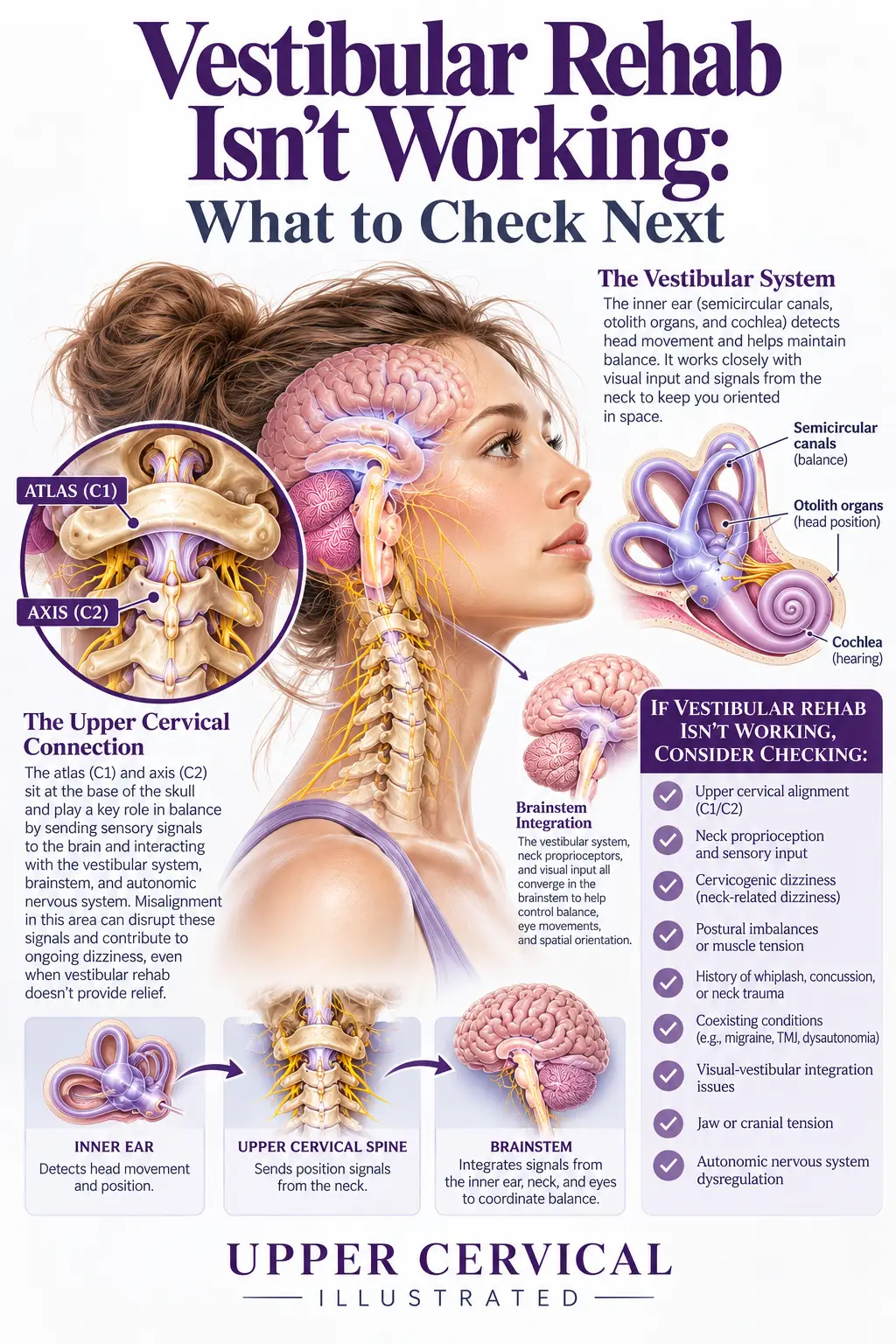
The cervical spine consists of seven vertebrae. The top two, called the atlas (C1) and axis (C2), are uniquely shaped and biomechanically distinct from the rest of the spine.
The atlas supports the skull and allows for nodding motion. The axis allows for rotation. Together, they permit most of the head’s movement.
More importantly, they surround and protect the brainstem.
The brainstem is responsible for regulating balance, muscle tone, coordination, autonomic function, and pain processing. Because of this close relationship, even small misalignments at C1 or C2 can create significant neurological and muscular consequences.
Unlike other spinal segments, the atlas does not have an interlocking disc above it. It relies heavily on ligaments and muscles for stability. That makes it more vulnerable to trauma and repetitive stress.
When the atlas shifts out of alignment due to:
- Whiplash
- Sports injuries
- Falls
- Repetitive poor posture
- Childhood injuries
- Concussions
The body must compensate.
Those compensations often show up as chronic neck pain.
How Upper Cervical Misalignment Leads to Chronic Neck Pain
When the atlas becomes misaligned, several changes occur throughout the body:
- Muscles tighten to stabilize the head.
- The head may shift slightly off center.
- Shoulders may elevate unevenly.
- The spine may curve or rotate to compensate.
- Discs experience uneven pressure.
- Nerves may become irritated.
Over time, this creates inflammation, joint stress, and pain signals.
Patients from Lakewood Ranch frequently report symptoms such as:
- Stiffness at the base of the skull
- Pain radiating into the shoulders
- Tension headaches
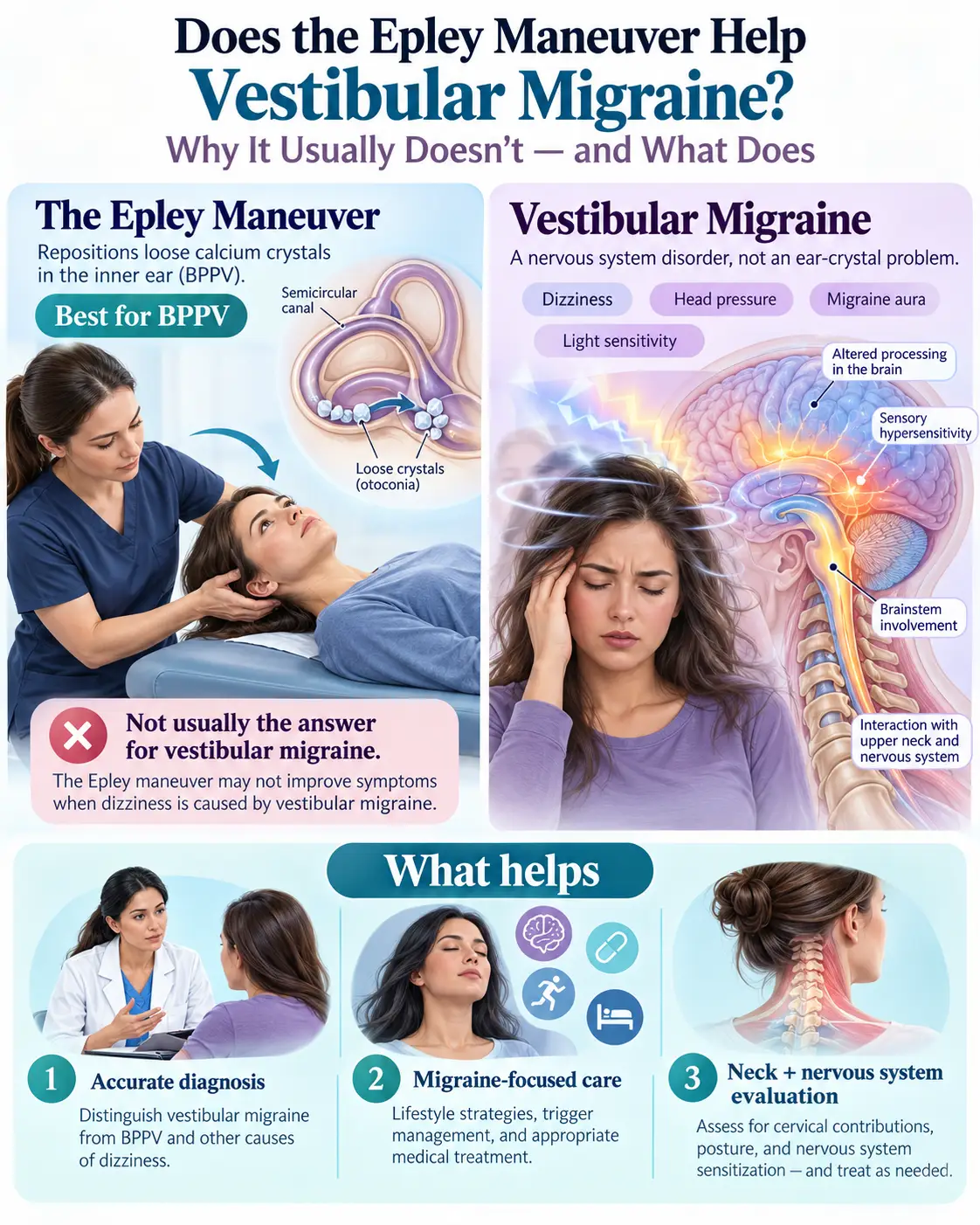
- Migraines
- Reduced range of motion
- Numbness or tingling in the arms
- Pressure behind the eyes
Because the upper cervical spine influences the entire spinal column, correcting this region often creates improvements far beyond just local neck discomfort.
Why Traditional Neck Pain Treatments Often Fall Short
Conventional neck pain management commonly includes:
- Anti-inflammatory medications
- Muscle relaxers
- Steroid injections
- Physical therapy
- General spinal manipulation
While these interventions can provide temporary relief, they may not correct the underlying structural imbalance at the top of the spine.
If the head is not properly balanced over the spine, muscles must constantly compensate. That compensation becomes chronic tension.
Temporary symptom relief does not necessarily equal correction.
At Lavender Family Chiropractic, our focus is on long-term correction through precise upper cervical chiropractic care.
What Makes Lavender Family Chiropractic Different for Lakewood Ranch Patients
Lakewood Ranch residents searching for “upper cervical chiropractor near me” often find our North Sarasota office because of our advanced and highly specific approach.
Our process includes:
1. Comprehensive Consultation
We take time to understand your health history, injuries, lifestyle factors, and goals.
2. Detailed Neurological Examination
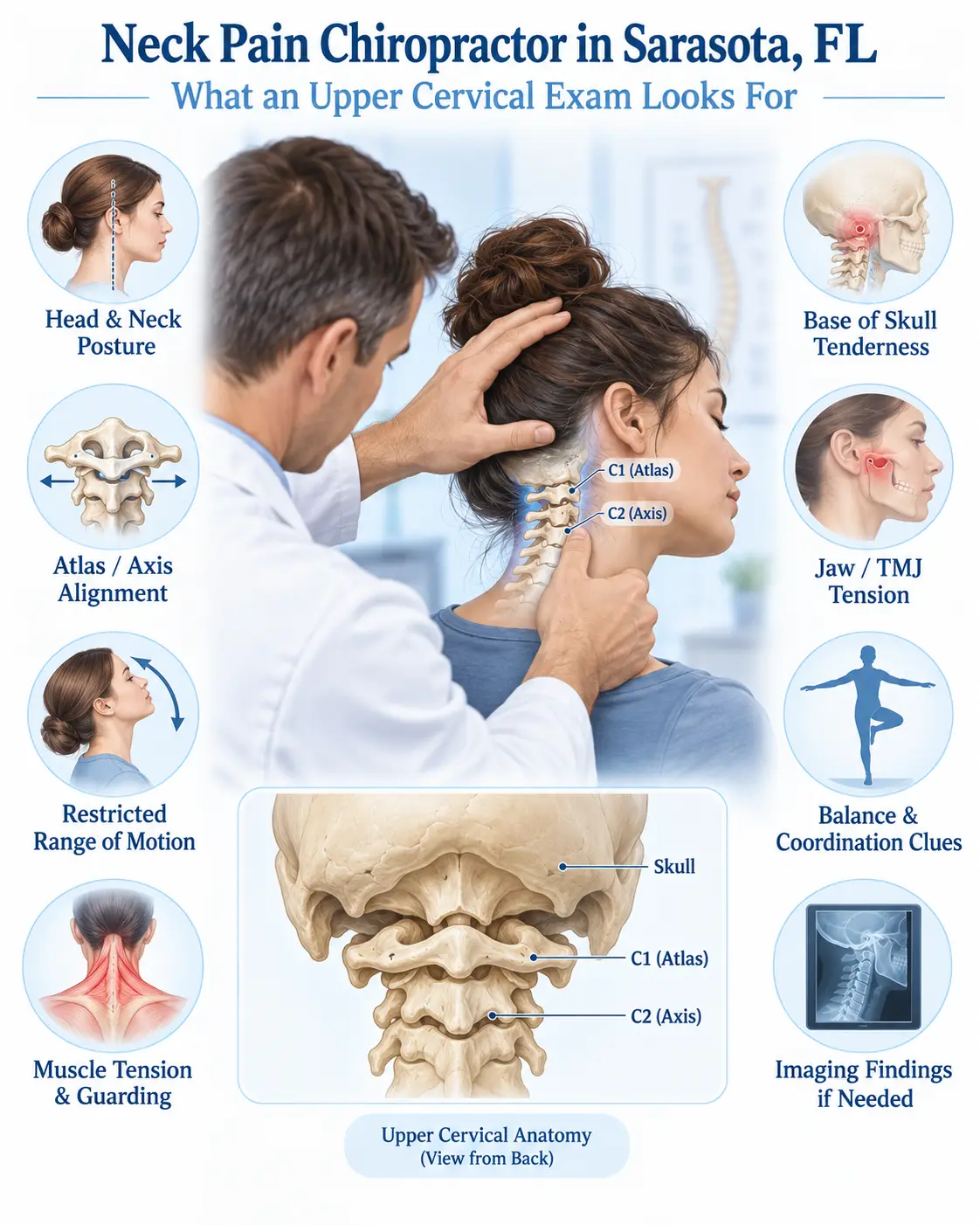
We evaluate balance, coordination, reflexes, posture, and range of motion.
3. 3D CBCT Imaging
We utilize state-of-the-art 3D CBCT imaging to precisely measure the alignment of the atlas and axis. This allows us to see exact angles and misalignment patterns that traditional X-rays may miss.
4. Functional Nervous System Scanning
We perform scans that help assess how spinal misalignment may be affecting the nervous system.
5. Personalized Correction Plan
Each adjustment is tailored specifically to your anatomy and alignment findings.
Our adjustments are gentle and precise. There is no twisting, yanking, or cracking. Many Lakewood Ranch patients are surprised by how light and comfortable the correction feels.
Neck Pain After Car Accidents in Lakewood Ranch
Lakewood Ranch continues to expand, and traffic has increased accordingly. Even minor fender benders can create whiplash injuries.
Whiplash involves rapid acceleration and deceleration forces that strain ligaments and shift the atlas out of alignment.
Symptoms may not appear immediately. Weeks or months later, patients may develop:
- Chronic neck stiffness
- Headaches
- Dizziness
- Brain fog
- Shoulder tension
Upper cervical imaging allows us to detect subtle misalignments that can persist long after the initial accident; our guide to whiplash and the upper cervical spine explains what we look for.
Identifying and correcting a misalignment early may reduce the chance that compensation patterns become chronic.
Tech Neck Chiropractor in Lakewood Ranch: Forward Head Posture and the Upper Neck
Many Lakewood Ranch professionals work remotely or split the day between a laptop, a phone, and a commute down University Parkway. “Tech neck” is the everyday name for what that posture does to the cervical spine: the head drifts forward of the shoulders, the muscles at the back of the neck and base of the skull work overtime to hold it there, and the joints of the lower neck take load they were not designed to carry all day.
The numbers are not small. A biomechanical model of head position found that the neutral adult head loads the cervical spine with roughly 10 to 12 pounds, and that flexing the head forward to 60 degrees, a typical phone-reading angle, raises the effective load to about 60 pounds (Hansraj, Surg Technol Int 2014). A systematic review of people who use handheld devices found neck complaints in anywhere from 17% to 68% of users depending on the group studied, with duration of use the most consistent risk factor (Xie et al., Appl Ergon 2017). And a meta-analysis of forward head posture found a consistent relationship between how far the head sits ahead of the shoulders and both the presence and the intensity of neck pain in adults (Mahmoud et al., Curr Rev Musculoskelet Med 2019).
Here is the part most posture advice skips. If the atlas is already shifted, the head is not sitting centered on the spine to begin with, and every “sit up straight” effort is fighting a structural tilt. Patients tell us they have tried standing desks, posture braces, and stretching routines, and that the forward drift returns within an hour. That pattern is one of the things that makes us look at the top of the neck rather than only at the desk setup.
Our evaluation for tech neck in Lakewood Ranch patients includes a digital posture analysis, 3D CBCT imaging of the atlas and axis, and functional nervous system scanning. When the top of the neck is contributing, correcting it tends to make the ergonomic changes you have already made start to hold. We cover the posture side in more depth in our articles on forward head posture and tech neck.
Neck Pain and Headaches: The Upper Cervical Connection
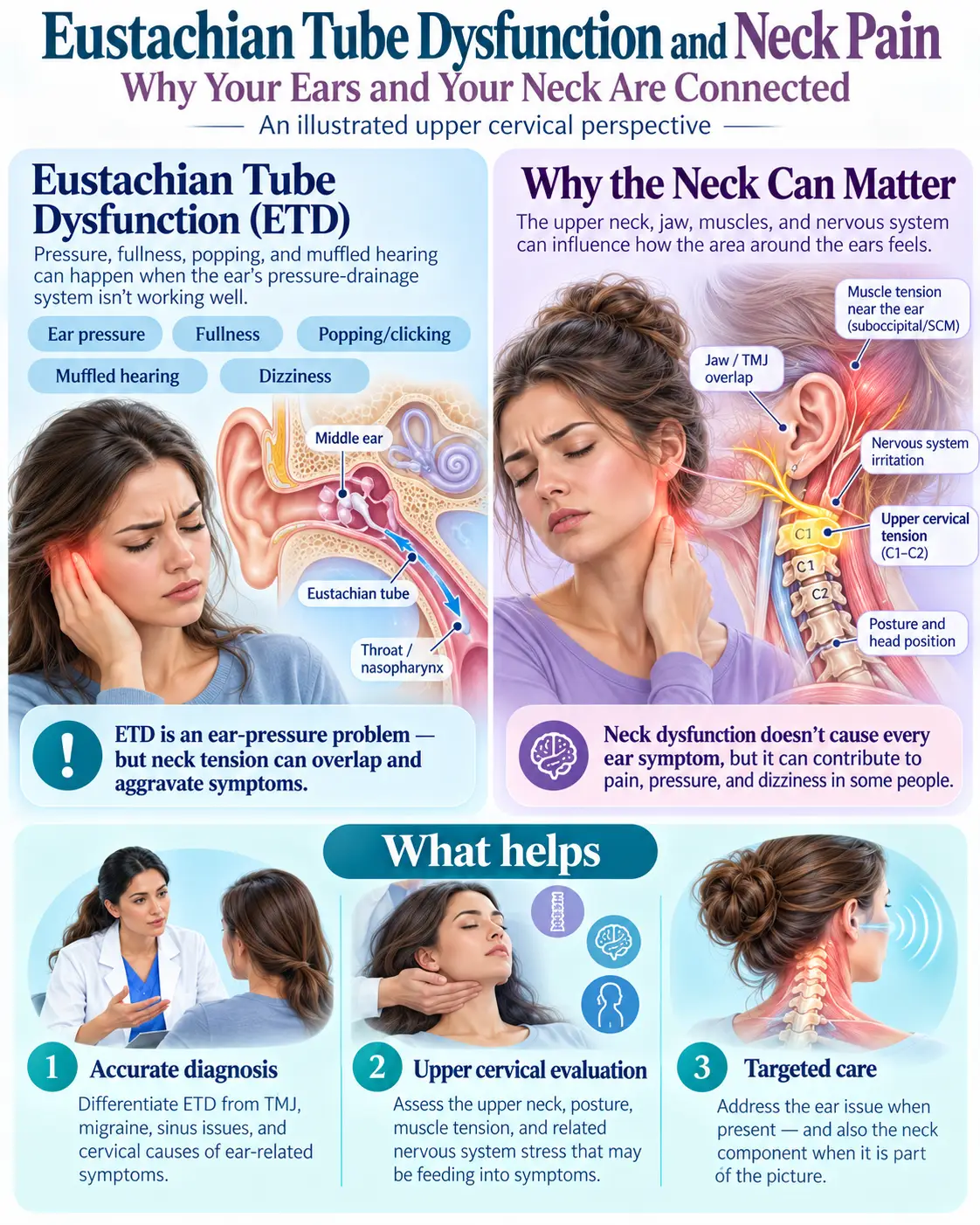
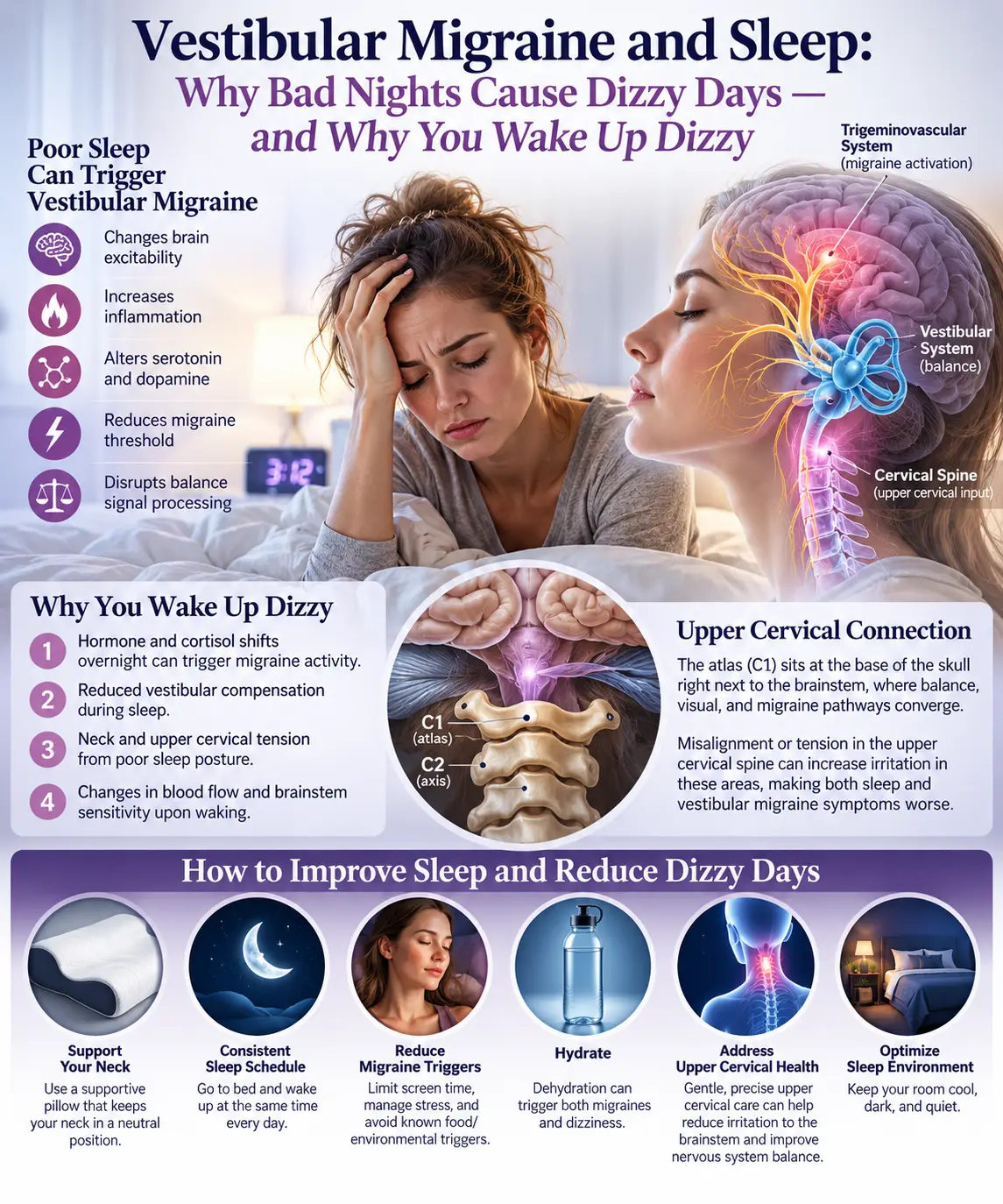
The upper cervical spine has a close relationship with pain pathways connected to the head and face.
Irritation in this region can contribute to:
- Tension headaches
- Migraines
- Occipital neuralgia
- Pressure at the base of the skull
Many Lakewood Ranch patients who initially seek care for headaches discover that the root cause is structural imbalance in the upper neck.
Correcting alignment often reduces both neck pain and headache frequency. Our complete guide to headaches and the upper cervical spine covers tension, cervicogenic, and migraine patterns in detail.
Pinched Nerve in the Neck: Cervical Radiculopathy in Lakewood Ranch Patients
A “pinched nerve” in the neck is the everyday term for cervical radiculopathy: a nerve root leaving the cervical spine is irritated or compressed, usually by a disc or by arthritic narrowing, and the result is pain, numbness, tingling, or weakness that follows that nerve down the shoulder, arm, or hand. The classic population study from Rochester, Minnesota put the incidence at about 83 per 100,000 people per year, most often at the C7 root, with the C6 root next (Radhakrishnan et al., Brain 1994).
Two things about cervical radiculopathy matter for Lakewood Ranch patients deciding what to do. First, the natural course is usually favorable: a systematic review of symptomatic cervical disc herniation with radiculopathy found that most people present with intense pain and moderate disability, and that substantial improvement tends to occur within the first four to six months (Wong et al., Spine J 2014). Surgery is reserved for progressive weakness or pain that does not settle. Second, not every arm symptom is a pinched nerve. Thoracic outlet syndrome compresses the same nerves lower down, at the collarbone; carpal tunnel compresses the median nerve at the wrist; and numbness in both hands at once points away from a single nerve root. Sorting out which one you have is the first job.
Where does the upper neck fit? The nerve roots that produce arm symptoms exit the lower cervical spine, not C1 or C2. But the lower neck does not work in isolation. When the atlas is shifted, the head is carried off center, and the segments below it bend and rotate to keep the eyes level. That compensation loads some discs and facet joints more than others, year after year. We see patients whose C6 or C7 disc is the one producing the arm pain, but whose imaging shows the whole cervical curve organized around a misalignment at the top. Addressing the top of the neck does not replace managing the disc; it changes the mechanics the disc is living under.
Our evaluation for a suspected pinched nerve includes a neurological examination of reflexes, strength, and sensation in the arm, 3D CBCT imaging of the upper cervical spine, and a review of any MRI you already have. Red flags we refer out the same day: progressive weakness, loss of coordination in the hands or legs, or any change in bowel or bladder control. For the full picture of how we approach this, see our article on a pinched nerve in the neck.
Surgery vs. Natural Correction
Some Lakewood Ranch residents are told that degenerative changes mean surgery may eventually be required.
Surgery has its place in severe cases, and we refer when it is indicated. Many people, though, experience meaningful improvement when a structural cause is identified and corrected before invasive options are considered.
Our mission is to provide a natural, conservative option focused on restoring function before invasive procedures are considered.
Long-Term Correction vs. Temporary Relief
Relief-based care aims to reduce symptoms in the moment.
Corrective care aims to stabilize alignment so the body can function properly long term.
Our office emphasizes correction.
As alignment stabilizes, muscles relax, inflammation decreases, and symptoms reduce naturally.
Many Lakewood Ranch patients find that once their upper cervical alignment is stable, they require fewer visits over time.
What to Expect When Visiting from Lakewood Ranch
Our office is at 5899 Whitfield Avenue, Suite 107, right at the corner of University Parkway and Whitfield Avenue, just west of I-75 near UTC and Nathan Benderson Park. From Lakewood Ranch Main Street it is a straight shot west on University Parkway: about 4 miles, under 10 minutes. From Waterside or the Lorraine Road corridor, allow 15 to 20 minutes.
Your first visits include:
- Consultation
- Neurological testing
- Digital posture evaluation
- 3D CBCT imaging
After analyzing findings, we provide a detailed explanation of your specific alignment pattern and create a customized correction plan.
Care typically progresses through phases:
- Correction phase
- Stabilization phase
- Maintenance phase
Each stage is designed to build stability and long-term results.
Why Lakewood Ranch Residents Choose Us for Neck Pain Relief
Patients often tell us they appreciate:
- The thorough imaging process
- Clear explanations
- Gentle adjustments
- Focus on root cause
- Professional, welcoming environment
Our goal is not just to reduce neck pain but to restore structural integrity and nervous system balance.
What Is Upper Cervical Chiropractic Care? A Detailed Explanation for Lakewood Ranch Residents
Upper cervical chiropractic care is a highly specialized form of chiropractic that focuses specifically on the alignment and function of the top two bones in the spine, the atlas (C1) and axis (C2). While traditional chiropractic often addresses multiple regions of the spine using generalized adjustments, upper cervical care concentrates on precise correction of the structural foundation that supports the head and protects the brainstem.
To fully understand upper cervical chiropractic, it is important to understand the unique anatomy of this region.
The atlas is the first cervical vertebra. It sits directly beneath the skull and supports the weight of the head, which can weigh 10 to 12 pounds. The axis, located just below the atlas, allows the head to rotate side to side. Together, these two vertebrae allow for the majority of head movement while simultaneously protecting the transition between the brain and spinal cord.
Unlike other spinal segments, the atlas does not have an intervertebral disc above it. It is stabilized primarily by ligaments and surrounding muscles. Because of this design, it is particularly vulnerable to injury from:
- Car accidents and whiplash
- Falls
- Sports collisions
- Repetitive poor posture
- Concussions
- Childhood trauma
When the atlas shifts even slightly out of alignment, it can alter the way the head balances on the spine. This imbalance causes the body to compensate.
Compensation can show up as:
- Uneven shoulders
- Head tilt
- Pelvic imbalance
- Muscle tension throughout the spine
- Disc stress in the lower cervical spine
Upper cervical chiropractic focuses on detecting and correcting this misalignment with extraordinary precision.
Advanced Imaging for Precision
One of the defining features of upper cervical chiropractic at Lavender Family Chiropractic powered by NeckWise North Sarasota is the use of 3D CBCT imaging.
Traditional X-rays provide a flat, two-dimensional image. While helpful, they do not always reveal subtle rotational misalignments of the atlas.
3D CBCT imaging allows us to visualize the upper cervical spine from multiple angles. We can measure exact degrees of rotation, tilt, and displacement. This removes guesswork and allows for a customized correction plan designed specifically for your anatomy.
For Lakewood Ranch patients seeking long-term neck pain correction, this level of detail is essential.
Gentle, Vector-Based Adjustments
Upper cervical adjustments are not forceful manipulations.
Instead of twisting or cracking the neck, we deliver a gentle, calculated correction based on your imaging findings. The adjustment is performed in a controlled position, using a specific vector designed to guide the atlas back toward proper alignment.
Because the correction is so precise, very little force is required.
Patients often describe the adjustment as light and comfortable. Many are surprised that such a gentle correction can produce meaningful structural changes.
The Brainstem and Nervous System Connection
The brainstem sits directly above the atlas. It acts as a communication hub between the brain and body.
It regulates:
- Muscle tone
- Balance and coordination
- Autonomic functions like heart rate and digestion
- Pain processing pathways
When the atlas is misaligned, it can create mechanical stress around the brainstem region. Even subtle irritation may influence how efficiently signals travel through the nervous system.
Upper cervical chiropractic aims to remove this stress so the nervous system can function optimally.
For many Lakewood Ranch patients, improvements extend beyond neck pain. They may report better sleep, improved posture, fewer headaches, improved balance, and overall enhanced well-being.
Holding the Correction
A key principle of upper cervical care is stability.
Unlike traditional chiropractic, which may involve frequent adjustments to multiple regions, upper cervical care focuses on correcting the primary misalignment and allowing the body to hold that correction.
Once the atlas is properly aligned, the body begins to rebalance.
Muscles relax. Inflammation decreases. Posture improves.
We monitor alignment over time using objective measures and neurological indicators. Adjustments are only delivered when necessary.
This approach reduces over-treatment and supports long-term structural stability.
Corrective Phases of Care
Upper cervical chiropractic typically progresses through three phases:
- Correction Phase. In this stage, we focus on restoring alignment and reducing acute symptoms.
- Stabilization Phase. As the body adapts, visits are spaced out while we monitor stability.
- Wellness or Maintenance Phase. Once alignment is holding consistently, periodic check-ups help ensure long-term structural health.
Lakewood Ranch residents who commit to corrective care often experience lasting improvements rather than recurring cycles of flare-ups.
How Upper Cervical Care Differs from Traditional Chiropractic
Traditional chiropractic may address the entire spine with generalized adjustments based on palpation and range of motion.
Upper cervical chiropractic:
- Focuses specifically on C1 and C2
- Uses advanced 3D imaging
- Delivers gentle, vector-specific corrections
- Emphasizes holding the adjustment
- Monitors nervous system function
Because the upper cervical spine influences the rest of the body’s alignment, correcting this foundation often reduces the need for repeated adjustments elsewhere.
Why This Matters for Neck Pain in Lakewood Ranch
Lakewood Ranch residents lead active, engaged lives. Chronic neck pain can interfere with work, exercise, travel, and recreation.
Upper cervical chiropractic offers a structural, root-cause approach rather than symptom suppression.
By restoring alignment at the top of the spine, we reduce abnormal stress patterns throughout the cervical region.
This allows:
- Improved range of motion
- Reduced muscle tension
- Better posture
- Decreased disc pressure
- Enhanced nervous system communication
For patients who have tried massage, injections, physical therapy, or traditional chiropractic without lasting success, upper cervical care often represents a new path forward.
When the foundation is corrected, the body has the opportunity to heal.
Top 20 FAQs About Neck Pain in Lakewood Ranch, Florida
1. What is the most common cause of neck pain?
Upper cervical misalignment combined with posture stress is extremely common.
2. Can neck pain go away on its own?
Mild cases may improve temporarily, but structural issues often persist without correction.
3. Is upper cervical chiropractic safe?
Upper cervical adjustments are low-force and precise, with no twisting or cracking. The largest prospective study of upper cervical care, covering 1,090 patients, found that reactions after care were mostly mild and short-lived, with no serious adverse event reported.
4. Do adjustments hurt?
Most patients report minimal discomfort and significant relief.
5. How many visits will I need?
Care plans vary based on severity and stability.
6. Can neck pain cause headaches?
Yes. Upper cervical irritation commonly contributes to headaches.
7. Can neck problems cause dizziness?
Yes. The upper cervical spine plays a role in balance and coordination.
8. Is surgery necessary for disc problems?
Not always. Most cervical disc problems with arm symptoms improve substantially within four to six months without surgery, and surgery is generally reserved for progressive weakness or pain that does not settle. Addressing the mechanics above the disc is part of a conservative plan.
9. What makes your office different from traditional chiropractic?
We focus specifically on the upper cervical spine using 3D imaging and gentle corrections.
10. Do you accept insurance?
Our office is out of network with insurance. Many of our patients receive a superbill to submit to their insurance for reimbursement based on their coverage. We offer many different payment options as well as finance options.
11. How soon will I feel better?
Some patients experience changes quickly, while others improve gradually as stability increases.
12. Is this safe for seniors?
Yes. Gentle upper cervical care is appropriate for older adults.
13. Can children benefit from evaluation?
Yes. We evaluate children and teens, and addressing a misalignment early may help before compensation patterns settle in.
14. What if I’ve already tried other treatments?
Upper cervical chiropractic offers a different, highly specific approach.
15. Do I need a referral?
No referral is necessary to schedule a consultation.
16. Is there an upper cervical chiropractor in Lakewood Ranch?
There is no dedicated upper cervical office inside Lakewood Ranch. Our office at University Parkway and Whitfield Avenue is the closest, under 10 minutes west of Main Street, and
17. How far is your office from Lakewood Ranch?
About 4 miles from Main Street, straight west on University Parkway to Whitfield Avenue, just past I-75 and UTC; under 10 minutes. From Waterside, 15 to 20.
18. Can an upper cervical chiropractor help with tech neck?
Tech neck is a posture pattern, and posture is hard to hold when the head is not sitting centered on the spine. We evaluate the top of the neck first; when a misalignment is present, correcting it tends to make the ergonomic changes you have already made start to hold.
19. How do I know if my arm pain is a pinched nerve or something else?
A pinched nerve usually follows one nerve’s path down the arm and may come with weakness in specific muscles. Thoracic outlet syndrome, carpal tunnel, and both-hands numbness point to other causes. A neurological exam and imaging sort it out, and we refer out immediately for progressive weakness or any change in bowel or bladder control.
20. How long does upper cervical care take for neck pain?
It varies with how long the problem has been there and how well the correction holds. Most people notice changes in the first several weeks; stabilization is measured over months, with visits spaced out as the correction holds.
Real Life Results with Lakewood Ranch Neck Pain Patients
1. Amanda L. – Lakewood Ranch, FL “I had constant neck pain that just wouldn’t go away, especially after long days at work. It felt tight, achy, and sometimes would shoot into my shoulders. I had tried everything—stretching, new pillows, even other treatments—but nothing lasted. After starting care, I noticed a real shift. The adjustments were so gentle, but incredibly effective. Over time, the tension released, my posture improved, and I finally feel comfortable again. I can honestly say I have my life back.”
2. Michael D. – Lakewood Ranch, FL “My neck pain was getting worse every year. I couldn’t turn my head fully, and driving became uncomfortable. What stood out to me right away was how detailed the evaluation was—it made sense why I was in pain. After a few weeks of care, I started noticing real changes. Less stiffness, better mobility, and no more constant soreness. Now I can move freely again without worrying about triggering pain. It’s been a huge difference for me.”
3. Rachel S. – Lakewood Ranch, FL “I used to wake up every morning with neck pain and tension headaches. It felt like there was constant pressure at the base of my skull. Since starting care, that pressure has steadily gone away. The approach is completely different than anything I’ve tried—very precise and not aggressive at all. Now I sleep better, wake up without pain, and my neck feels stable for the first time in years. I’m so grateful I found this.”
What the Research Says About Neck Pain
Neck pain is one of the most common musculoskeletal complaints in the world. The Global Burden of Disease analysis estimated roughly 289 million prevalent cases worldwide in 2017 and ranked it among the leading causes of years lived with disability (Safiri et al., BMJ 2020). It also tends to come back: the Bone and Joint Decade Task Force on Neck Pain found that for most adults neck pain is a recurrent or persistent condition rather than a one-time event, with a large share of people still reporting pain one to five years after their first episode (Carroll et al., Spine 2008).
The upper cervical spine carries the densest concentration of position-sensing receptors in the body, and research on neck disorders shows that distorted input from those receptors disturbs postural stability and head-and-eye coordination (Treleaven, Man Ther 2008), which is part of why a neck problem so often brings headaches, dizziness, or a sense of imbalance with it.
On treatment, a randomized trial in the Annals of Internal Medicine compared spinal manipulation, medication, and home exercise with advice for acute and subacute neck pain; at 12 weeks manipulation produced greater pain reduction than medication, and the advantage was still present at one year (Bronfort et al., Ann Intern Med 2012). The largest prospective study of upper cervical care followed 1,090 patients across 83 offices and found high patient-reported improvement and satisfaction, with reactions after care mostly mild and short-lived and no serious adverse event reported (Eriksen et al., BMC Musculoskelet Disord 2011). On the question people are sometimes afraid to ask, the largest population-based study on neck adjustments and stroke, covering nine years of Ontario health records, found the association between chiropractic visits and vertebrobasilar stroke was no different from the association with primary-care visits, consistent with patients seeking care for the early symptoms of a stroke already in progress rather than care causing it (Cassidy et al., Spine 2008).
References
- Safiri S, et al. Global, regional, and national burden of neck pain in the general population, 1990–2017. BMJ.2020;368:m791. PMID 32217608
- Carroll LJ, et al. Course and prognostic factors for neck pain in the general population: Bone and Joint Decade Task Force. Spine. 2008;33(4 Suppl):S75–S82. PMID 18204403
- Treleaven J. Sensorimotor disturbances in neck disorders affecting postural stability, head and eye movement control. Man Ther. 2008;13(1):2–11. PMID 18180194
- Mahmoud NF, et al. The relationship between forward head posture and neck pain: a systematic review and meta-analysis. Curr Rev Musculoskelet Med. 2019;12(4):562–577. PMID 31773477
- Hansraj KK. Assessment of stresses in the cervical spine caused by posture and position of the head. Surg Technol Int. 2014;25:277–279. PMID 25393825
- Xie Y, et al. Prevalence and risk factors associated with musculoskeletal complaints among users of mobile handheld devices: a systematic review. Appl Ergon. 2017;59(Pt A):132–142. PMID 27890121
- Radhakrishnan K, et al. Epidemiology of cervical radiculopathy: a population-based study from Rochester, Minnesota, 1976 through 1990. Brain. 1994;117(Pt 2):325–335. PMID 8186959
- Wong JJ, et al. The course and prognostic factors of symptomatic cervical disc herniation with radiculopathy: a systematic review of the literature. Spine J. 2014;14(8):1781–1789. PMID 24614255
- Bronfort G, et al. Spinal manipulation, medication, or home exercise with advice for acute and subacute neck pain: a randomized trial. Ann Intern Med. 2012;156(1 Pt 1):1–10. PMID 22213489
- Eriksen K, Rochester RP, Hurwitz EL. Symptomatic reactions, clinical outcomes and patient satisfaction associated with upper cervical chiropractic care: a prospective, multicenter, cohort study. BMC Musculoskelet Disord.2011;12:219. PMID 21974915
- Cassidy JD, et al. Risk of vertebrobasilar stroke and chiropractic care: results of a population-based case-control and case-crossover study. Spine. 2008;33(4 Suppl):S176–S183. PMID 18204390
Take the Next Step Toward Natural Neck Pain Relief in Lakewood Ranch
If you are living in Lakewood Ranch, Florida and struggling with chronic neck pain, stiffness, headaches, or radiating symptoms, you deserve answers.
Lavender Family Chiropractic powered by NeckWise North Sarasota is committed to helping Lakewood Ranch residents experience natural neck pain relief and long-term correction.
We combine advanced 3D CBCT imaging, functional nervous system scanning, and gentle precision upper cervical adjustments to address the root cause of neck pain.
Schedule with us!
Lavender Family Chiropractic (NeckWise North Sarasota) 5899 Whitfield Ave Ste 107, Sarasota, FL 34243chiropractorsarasotaflorida.com (941) 243-3729
We also serve Bradenton, Parrish, Ellenton, Ruskin, Venice, Tampa, St. Pete, Osprey, Longboat, Lakewood Ranch, and Myakka City.
If you are in Tampa, Land O Lakes, Fort Myers, or Salt Lake City, you can visit our other locations: NeckWise Upper Cervical, www.neckwise.com.
If you are not local, visit www.uccnearme.com to find a doctor in your area.
If you have been searching for a chiropractor near me in Lakewood Ranch who focuses on correction instead of temporary relief, we invite you to discover the difference of upper cervical chiropractic care.
Your neck supports your head. Your spine supports your life. When alignment is restored, your body functions better.
We look forward to serving you and your family.
Get our upper cervical articles first.