Brachioradial Pruritus vs. Notalgia Paresthetica: Two Neuropathic Itches, Two Different Nerve Territories and Proven Relief in Sarasota and Lakewood Ranch Florida
By Dr. Rusty Lavender, D.C. — upper cervical chiropractor, Lavender Family Chiropractic, Sarasota, FL. Reviewed and updated October 2026.
Notalgia Paresthetica: There is a particular kind of frustration that belongs only to people with neuropathic itch. You point to a spot on your forearm, or between your shoulder blade and your spine, and you tell someone it itches — it burns, it stings, it crawls, it wakes you at two in the morning — and they look at the skin and see nothing. No rash. No hives. No scale. Maybe a few scratch marks you put there yourself. And so the conversation ends with a shrug, a tube of hydrocortisone, and a suggestion to try a different laundry detergent.
If that is your experience, you are not imagining it, and you are not alone. Two of the most common focal neuropathic itch conditions — brachioradial pruritus (BRP) and notalgia paresthetica (NP) — share that exact profile. Both produce relentless itching in skin that looks essentially normal. Both tend to ignore antihistamines. Both respond, at least temporarily, to a bag of ice. And both are strongly associated with the spine, which is why so many people end up in a chiropractor’s office after months or years of dermatologic dead ends.
But they are not the same condition. They occupy different nerve territories, they behave differently, and telling them apart matters — for diagnosis, for what your medical team investigates, and for how a structural approach to the neck and upper back is designed. In this article I want to do three things: draw a clear line between brachioradial pruritus and notalgia paresthetica, explain what they genuinely share underneath the surface, and then explain why, at Lavender Family Chiropractic in Sarasota, the upper cervical spine sits at the center of how we think about both — not because the itch lives in your neck, but because the brake on the itch does.
Notalgia Paresthetica and What Is Brachioradial Pruritus?
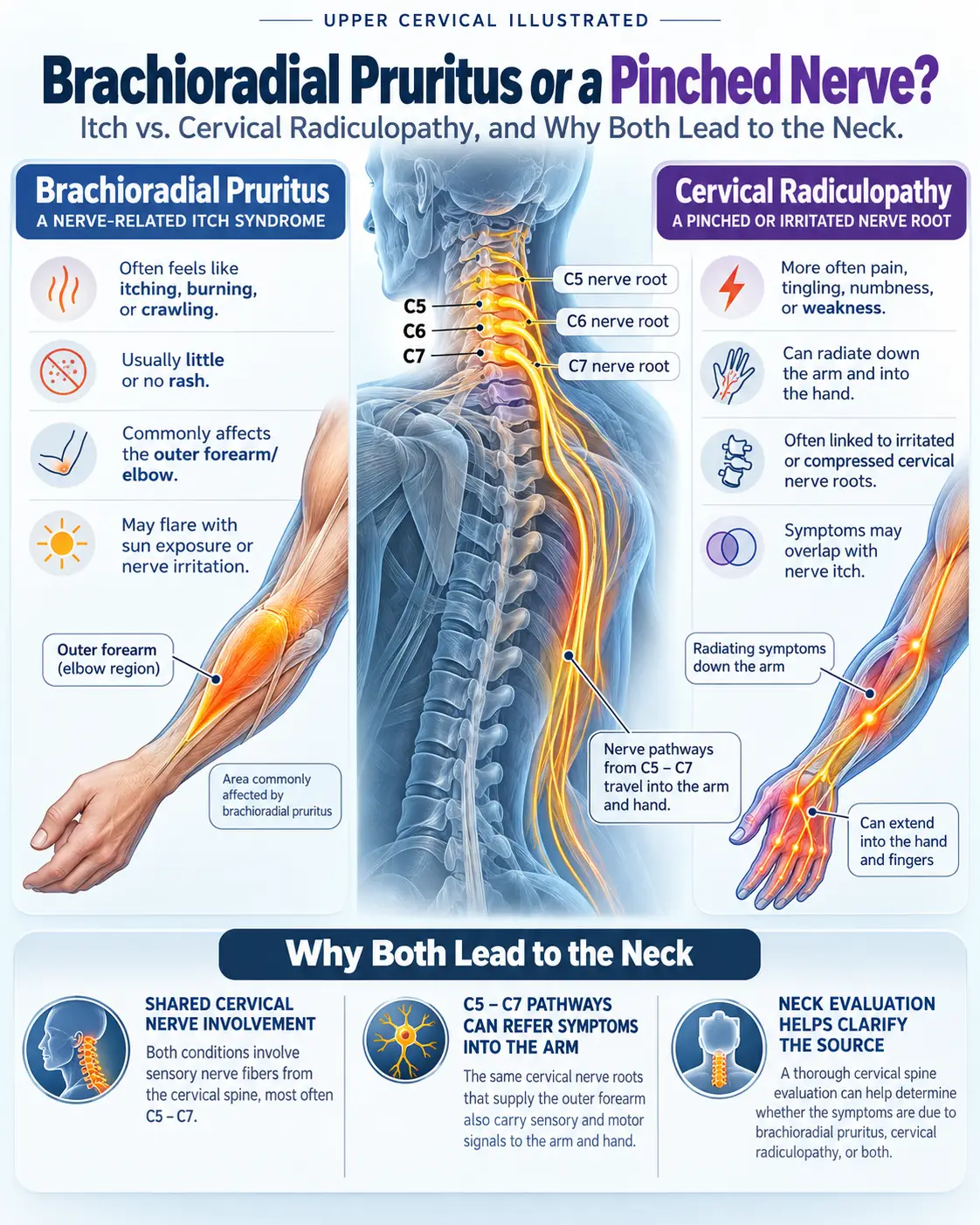
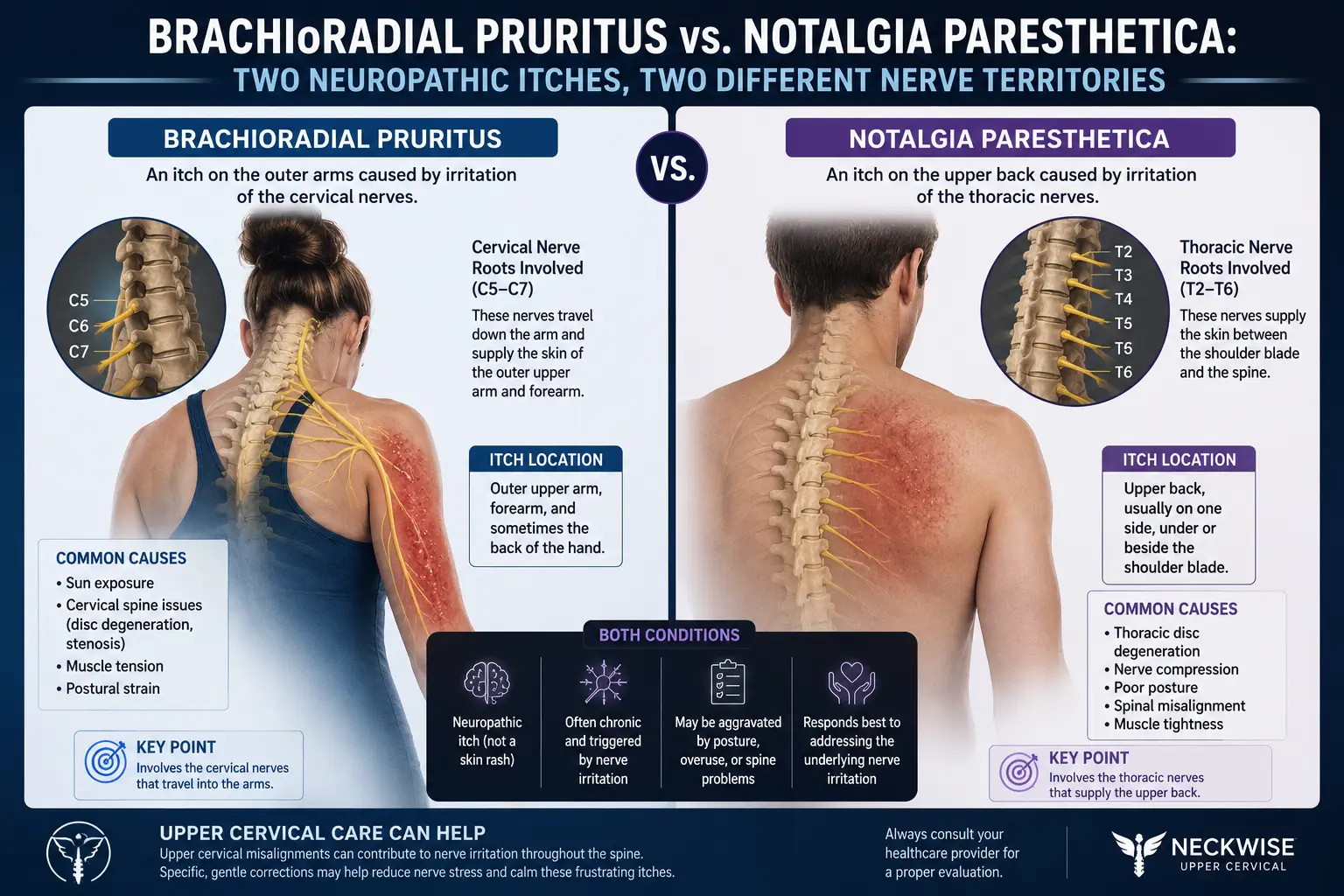
Brachioradial pruritus is a focal neuropathic itch of the dorsolateral upper extremity — the outer, sun-facing surface of the forearm, over the brachioradialis muscle, which is where the condition gets its name. From there it can spread upward to the upper arm and shoulder, and in some people it drifts toward the neck. It typically follows the territory of the C5 and C6 dermatomes, sometimes extending through C8.
What patients describe is rarely a simple itch. The vocabulary is closer to a nerve problem than a skin problem: burning, stinging, prickling, tingling, a deep electric crawl beneath the surface, or an odd sensation of ice-cold and on-fire at the same time. Clinicians call this collection of sensations dysesthesia — abnormal, unpleasant sensation generated by a sensory nervous system that is not reporting reality accurately.
The skin, meanwhile, usually looks unremarkable. There is no primary rash, no erythema, no blistering. What a clinician does see is secondary: excoriations, scabs, lichenified thickened patches, occasionally prurigo nodules — all of it self-inflicted by weeks and months of scratching at something scratching cannot reach.
Brachioradial pruritus is bilateral in roughly three quarters of cases, which is a distinguishing feature worth remembering. It skews toward middle-aged adults, appears more often in fair-skinned individuals, and shows a striking seasonal rhythm. It was first described in Florida in 1968 under the name “brachioradial summer pruritus,” and it has been documented repeatedly in sunny, subtropical regions — which is exactly why Sarasota-area clinicians see it as often as we do. Sun exposure and warm months tend to worsen it. Long sleeves, cloud cover, and winter tend to quiet it.
The single most useful bedside finding is the ice-pack sign. Apply an ice pack to the itching forearm and the symptom drops almost immediately — then returns just as quickly once the ice comes off. This response is considered essentially pathognomonic for BRP, meaning it is characteristic enough to strongly support the diagnosis. It is also a diagnostic clue in a deeper sense: an itch that answers to cold and ignores antihistamines is behaving like a nerve, not like a histamine-driven allergic reaction.
The cervical link is the part most patients are never told. Current thinking describes a bifactorial pathogenesis — ultraviolet exposure damaging small cutaneous nerve fibers on one side, and cervical nerve irritation on the other, with the two interacting. Most BRP patients who receive cervical imaging show something: degenerative joint disease, disc protrusion, osteoarthritic change, or foraminal narrowing. Notably, most of them do not have classic radiculopathy — no arm weakness, no reflex loss, often no neck pain at all. The spine is involved without announcing itself in the usual way.
What Is Notalgia Paresthetica?
Notalgia paresthetica is the upper back’s version of the same story, and its name is literal: notos meaning back, algiameaning pain. It presents as a localized, usually unilateral itch on the upper back — classically along the medial border of the scapula or just below the inferior angle of the shoulder blade, in that maddening zone that is nearly impossible to reach without a backscratcher or a doorframe.
The sensory profile mirrors BRP: pruritus mixed with burning, tingling, coldness, numbness, hyperesthesia (heightened sensitivity), hypoesthesia (reduced sensitivity), or frank nerve pain in the same patch. Patients often say the area feels simultaneously numb and itchy, which sounds contradictory until you understand that both are signs of a sensory nerve that is misfiring rather than a skin that is inflamed.
The visual signature that distinguishes notalgia paresthetica is the hyperpigmented patch — a well-circumscribed area of darkened, sometimes slightly leathery skin sitting right where the itch is. It appears in a substantial share of patients, by some accounts up to two thirds. Importantly, it is not a rash and not the cause of anything. It is post-inflammatory pigment change laid down by years of rubbing, scratching, and friction against the same square of skin. It is a footprint, not a fire. And it is not required for the diagnosis — plenty of NP patients have skin that looks completely normal.
Notalgia paresthetica is classically framed around the thoracic dorsal rami, most often cited as the T2 through T6 levels, whose posterior cutaneous branches pierce the paraspinal musculature at a sharp angle to reach the skin of the upper back. That anatomy has generated one long-standing hypothesis: that the nerve branches get entrapped or irritated as they pass through the multifidus and other paraspinal muscles, particularly when those muscles are chronically tight or asymmetrically loaded.
But the thoracic story is not the whole story. Modern imaging work has repeatedly found cervical involvement in NP patients, not just thoracic. Degenerative change and disc herniation in the mid-to-lower cervical spine — C5-C6, C6-C7 — show up disproportionately in this population. That makes anatomical sense: the lower cervical nerve roots supply sensation to the periscapular region, with C6 mapping toward the angle of the scapula and C7 toward the interscapular area. So a patient with an itch beside the shoulder blade may be dealing with a thoracic dorsal ramus, a lower cervical root, or a combination.
NP is more common in women, typically appears at age forty or older, and — unlike BRP — is usually one-sided.
How to Tell Them Apart
For most patients, the distinction comes down to four practical questions.
Where is it? This is the strongest discriminator. Brachioradial pruritus lives on the arms — specifically the outer, sun-exposed surface of the forearm over the brachioradialis, with possible extension to the upper arm and shoulder. Notalgia paresthetica lives on the upper back, medial to or beneath the shoulder blade. Arm versus back is the first fork in the road, and it is usually obvious.
Is it one side or both? BRP is bilateral in about 75 percent of cases; symmetrical, both-forearm involvement is common and expected. NP is characteristically unilateral, and a single-sided periscapular itch that has stayed on the same side for years is very typical of it.
What does the skin look like? In BRP, the skin is essentially normal apart from scratch damage. In NP, you may find that well-defined hyperpigmented brown patch — a change in color without a change in texture, in the exact location of the itch. If someone points to a coffee-colored oval next to their shoulder blade, that is a strong NP signal. Its absence, though, does not rule NP out.
What makes it worse? Sunlight and heat are the classic BRP aggravators, and the seasonal pattern is often dramatic: worse from spring through fall, quieter in winter, worse after a beach day or a long ride with the windows down. NP does not carry the same photosensitive signature. Its aggravators tend to be mechanical and postural — long hours at a desk, prolonged forward-head posture, carrying a bag on one shoulder, sleeping in a particular position, or a period of increased neck and shoulder tension. NP also frequently travels with a history of neck stiffness or upper back tightness on the affected side.
A fifth question is worth adding: who else is in the picture? BRP is a known companion of cervical degenerative change with a photosensitive overlay, and can occasionally generalize into more widespread itching. NP is more often accompanied by localized paraspinal muscle tenderness and restricted segmental motion in the cervicothoracic region.
And a practical note: the two are not mutually exclusive. Concurrent brachioradial pruritus and notalgia paresthetica have been described in the same patient with cervical degenerative disc disease. If you have an itchy forearm and an itchy shoulder blade, you are not describing two unrelated problems. You may well be describing one nervous system under strain, expressing itself in two territories.
What They Share: Both Are Neuropathic Itch
Underneath the differences in geography, BRP and NP are siblings. Both are classified as neuropathic pruritus: itch generated by a lesion or dysfunction in the somatosensory nervous system itself, rather than by anything happening in the skin.
That single reclassification explains almost every strange feature patients report.
The skin looks normal-ish because the skin is not the problem. The itch is being generated upstream, in nerve tissue, and then referred to a patch of skin the way cardiac pain gets referred to the left arm. The area you want to scratch is the destination, not the origin.
Antihistamines fail because there is no histamine-driven allergic cascade to block. Systemic antihistamines have not demonstrated benefit in brachioradial pruritus, and the same disappointment plays out in notalgia paresthetica. Patients often interpret this as evidence that they are doing something wrong. They are not — they have been handed the wrong key for the lock.
Scratching does not deliver relief — or delivers a second or two of relief followed by a rebound that is worse. In a normal itch, scratching provides real, if temporary, satisfaction. In neuropathic itch, scratching frequently intensifies the discomfort, adds pain, and builds skin damage that further sensitizes the area. This is one of the cruelest features of both conditions, and it is why the skin-damage pattern is so often the only visible sign.
Ice helps, and helps fast. Cooling reduces the firing of the small unmyelinated C fibers that carry itch, which is why the ice-pack sign works in BRP and why cold compresses are widely reported to help NP as well. Cold works on nerve conduction. Steroid cream does not, which is why topical steroids rarely do much for either condition.
Both show spine involvement on imaging. In BRP, cervical degenerative change, foraminal stenosis, and disc pathology are common findings. In NP, cervical and thoracic degenerative change and disc herniation — especially at C6-C7 — appear at significantly higher rates than in comparison groups. Both conditions also feature altered small-fiber innervation in the affected skin, which links the central and peripheral halves of the picture.
Both are underdiagnosed and slow to be identified. Studies of BRP patients have found that fewer than fifteen percent were correctly diagnosed at their first consultation, that nearly seventy percent required evaluation by multiple clinicians, and that most experienced a diagnostic delay exceeding three years. Common misdiagnoses were atopic dermatitis and allergic reaction. NP tells a similar story. If you have spent years being treated for eczema you do not have, that is a known pattern, not a personal failure.
Why the Upper Cervical Spine Is Central to Both
This is the part of the discussion that rarely gets airtime, and it is the part I consider most important — because it explains the observations that the standard model struggles with.
Mechanism one: descending inhibitory control and spinal hyperexcitability
Itch is not a signal that travels in a straight line from skin to brain. It is a signal that gets modulated — turned up or down — at the dorsal horn of the spinal cord, the relay station where incoming sensory fibers hand off to ascending pathways. And a major share of that modulation is performed by descending inhibitory pathways: fiber tracts that originate in the brainstem and travel downward through the spinal cord, continuously damping the sensitivity of dorsal horn neurons. They are, functionally, the nervous system’s volume knob and brake pedal for itch and pain.
The accepted pathophysiology of neuropathic itch leans heavily on this system. When peripheral nerve fibers are damaged or irritated — by ultraviolet exposure, by mechanical irritation at a nerve root, by degenerative change — the dorsal horn does not merely relay a stronger signal. It becomes hyperexcitable. It loses descending inhibitory input and begins amplifying whatever arrives, including inputs that would normally never register as itch at all. This is precisely what is described in BRP as alloknesis: a normally non-itchy stimulus provoking intense itch. It is a cord that has lost its brake.
Now follow the anatomy. Those descending inhibitory pathways originate in the brainstem and must travel through the upper cervical spinal cord to reach every segment below — every cervical level supplying the forearm, every thoracic level supplying the periscapular skin. The upper cervical cord is the single anatomical corridor through which all of that inhibitory traffic passes. And the upper cervical cord is surrounded by the atlas (C1) and the axis (C2) — the two most mobile, least mechanically interlocked vertebrae in the entire spine, the only ones without an intervertebral disc between them, and the ones sitting at the junction where the skull meets the spine.
Put plainly: the upper cervical spine is where the body’s brake on the itch signal lives. If the descending inhibitory system is the mechanism by which neuropathic itch escalates, then the structural region that houses the pathway carrying that inhibition is not a peripheral concern. It is central.
This framework also explains something the purely structural model cannot: why symptom severity so often fails to match imaging severity. Clinicians see patients with dramatic degenerative findings and mild symptoms, and patients with nearly pristine imaging and unbearable itch. If itch intensity were simply a function of how compressed a nerve root is, that mismatch should not exist. If itch intensity is instead a function of how much descending inhibition is reaching the dorsal horn — how effectively the brake is working — then the mismatch is exactly what you would expect. Two people can have identical foraminal narrowing and completely different symptom loads, because the variable that matters most is not visible on the film of the affected level.
A related point about the research literature deserves stating honestly. The published imaging studies in BRP and NP overwhelmingly examine the cervical and thoracic spine at or near the dermatomal level of the symptoms. That is because that is where investigators looked — the dermatome pointed them there, and it was the obvious hypothesis to test. Those studies establish, quite firmly, that spinal involvement is real in these conditions. They do not, and were not designed to, evaluate or exclude an upper cervical contribution. So the honest framing is this: the imaging literature demonstrates spinal involvement at the dermatomal level, and the descending inhibition mechanism above is mechanistic reasoning drawn from established neurophysiology about how itch is modulated. I present it as reasoning, not as a finding from those papers, because that is what it is.
Mechanism two: upstream biomechanics
The second reason the upper cervical spine leads is simpler and purely structural.
The head weighs ten to twelve pounds and balances on the atlas, which is a small ring of bone with shallow, relatively flat joint surfaces. When the atlas shifts out of its proper relationship with the skull above and the axis below, the head tilts. The body will not tolerate a tilted head — the visual and vestibular systems demand level eyes and a level horizon — so it compensates. It compensates by adjusting the alignment of the segments below: the mid and lower cervical spine, the cervicothoracic junction, the upper thoracic segments, and the shoulder girdle mechanics that ride on top of them.
Those compensations are not free. They convert into asymmetric, sustained loading across joints and discs. Held for years and decades, asymmetric loading is exactly the input that produces the findings we then see on imaging: uncovertebral hypertrophy, disc degeneration, facet arthrosis, and foraminal narrowing — concentrated, notably, at C5-C6 and C6-C7, which are the levels most consistently implicated in both brachioradial pruritus and notalgia paresthetica.
That co-location is worth sitting with. C5-C6 and C6-C7 are also the levels that bear the greatest compensatory load when head carriage is off. So the lower-level degenerative change and foraminal narrowing found in these patients may frequently be the accumulated downstream consequence of an uncorrected atlas problem — not the beginning of the story. The imaging shows you where the wear ended up. It does not necessarily show you where the mechanical problem started.
If that is true even part of the time, it reframes the whole approach. Chasing the level that hurts addresses the symptom’s address. Addressing the upper cervical spine addresses the postural driver that has been loading that address for twenty years, while simultaneously addressing the corridor through which descending inhibition travels.
Two mechanisms, one region. That is why we lead with it.
How Precise Upper Cervical Care Fits at Lavender Family Chiropractic
Our approach at Lavender Family Chiropractic is built around precision, and it is deliberately different from what most people picture when they hear the word “chiropractic.”
It starts with a consultation. Before anything else, we want the full narrative: where the itch is, when it started, what it feels like, what makes it better and worse, whether ice helps, what the seasonal pattern looks like, what medications and creams you have tried, what your neck and upper back history includes, and what your medical and dermatologic workup has already covered. Neuropathic itch patients have usually told this story a dozen times to people who were not listening for the spinal pattern. We are.
Then we image, in three dimensions. We use 3D CBCT imaging — cone beam computed tomography — to see the actual architecture of your upper cervical spine. Standard two-dimensional radiographs flatten a three-dimensional structure and are limited in what they can reveal about the true orientation of the atlas and axis relative to the skull. CBCT allows us to measure your specific anatomy rather than apply a generic template. Every patient’s misalignment is unique, and correcting it precisely requires knowing precisely what it is.
We add a functional measurement. Tytron paraspinal infrared thermography scans the skin temperature pattern along both sides of the spine. Because skin blood flow is under autonomic nervous system control, asymmetries in that thermal pattern give us an objective, non-invasive window into how the nervous system is functioning at a given moment — and, over a series of visits, whether that pattern is becoming more stable. In neuropathic itch, where the complaint is sensory and invisible, having an objective functional measure alongside the structural imaging is genuinely valuable.
The correction itself is the Knee Chest Upper Cervical technique. This is a precise, low-force correction delivered with the patient in a specific supported position. It is not high-velocity twisting manipulation. There is no cracking or wrenching of the neck. The contact is specific, the force is light, and the vector is calculated from your imaging. The intent is to restore proper alignment at the atlas and axis with the smallest input capable of producing the change — because in a region this mechanically sensitive, precision does more than force.
Care is delivered through customized care plans. Frequency and duration are based on your imaging, your thermographic pattern, how long you have had symptoms, your age, and how well your correction holds between visits. A person with six months of symptoms and stable holding will follow a different schedule than someone with fifteen years of symptoms and decades of accumulated compensation. We re-measure and adjust as we go.
We coordinate rather than compete. This matters enormously with neuropathic itch. Chronic itch has a genuine systemic differential — liver disease, kidney disease, thyroid disorders, blood disorders including lymphoma and polycythemia, medication effects — and it has a dermatologic differential including primary skin disease and zoster sine herpete. We strongly encourage a physician and dermatologist workup to confirm the diagnosis and rule those causes out. That is not a formality; it is how you make sure you are treating the right thing. If you are taking prescribed medication — gabapentin, pregabalin, amitriptyline, topical capsaicin, anything else — keep taking it as prescribed. Nothing we do replaces your physician’s management, and no medication decision should be made based on this article.
And to be direct about what care can and cannot do: we do not claim to cure brachioradial pruritus or notalgia paresthetica. These are complex neuropathic conditions with multiple contributing factors, including ultraviolet damage to peripheral nerve fibers that no spinal correction addresses. What precise upper cervical care aims to do is restore proper structural alignment and support normal nervous system function, which may help some patients experience meaningful natural relief. Some respond significantly. Some respond partially. Some do not respond, and when that becomes clear, we say so and help you look elsewhere rather than continuing indefinitely.
Ready to Have Your Upper Cervical Spine Evaluated?
If you are dealing with an itch on your forearms or your upper back that has outlasted every cream you have tried, we would like to look at your neck.
Call (941) 243-3729 to speak with our team, or book a new patient appointment online at any time.
Lavender Family Chiropractic 5899 Whitfield Avenue, Suite 107 Sarasota, FL 34243 Corner of University and Whitfield
What the Research Says
- Brachioradial Pruritus (StatPearls, NCBI Bookshelf) — This comprehensive clinical reference describes BRP as a focal neuropathic dysesthesia of the dorsolateral upper extremities arising from cervical nerve root irritation and/or localized cutaneous neuropathy, with ultraviolet exposure acting as a major precipitating factor; it notes that most patients demonstrate cervical spine abnormalities on imaging including degenerative joint disease and foraminal stenosis, that the ice-pack sign is considered pathognomonic, that systemic antihistamines have not demonstrated benefit, and that consultation with a chiropractor or physical therapist may be appropriate, particularly for patients with radiographic evidence of cervical spinal pathology.
- Brachioradial Pruritus: Clinical, Electromyographic, and Cervical MRI Features in Nine Patients (Cureus, 2022) — Shields and colleagues evaluated nine BRP patients with neurological examination, electrodiagnostic testing, and cervical MRI, concluding that BRP in this series was accompanied by chronic cervical radiculopathy involving predominantly the C6 and C5 levels, and recommending that electrodiagnostic study and cervical spine MR imaging be considered essential investigations in the evaluation of BRP.
- Notalgia Paresthetica Responding Positively to Chiropractic Spinal Manipulation: A Case Report (Cureus, 2024) — Trager and colleagues report a 54-year-old woman with a six-year history of right periscapular pruritus whose cervical radiographs showed moderate disc degeneration and foraminal stenosis at C5-C6 and C6-C7 corresponding to the C6 and C7 periscapular sensory distributions; her symptoms improved markedly after chiropractic spinal manipulative therapy directed at the cervicothoracic region with myofascial release, and the authors propose that manipulation may provide mechanoreceptive input that inhibits the transmission involved in pruritus, while cautioning that a single case cannot establish causation.
- Notalgia paresthetica: clinical features, radiological evaluation, and a novel therapeutic option (BMC Neurology, 2020) — Mülkoğlu and Nacır compared imaging in patients with notalgia paresthetica against a control group, detecting cervical and/or thoracic degenerative changes and herniated nucleus pulposus in the NP population, with a significantly higher frequency of herniation at the C6-C7 segment and of cervical degenerative change in the NP group — establishing that spinal pathology in NP is not confined to the thoracic levels traditionally cited.
- Notalgia Paresthetica: Cervical Spine Disease and Neuropathic Pruritus (Cureus, 2021) — Akram presents the case of a 57-year-old woman with a history of neck pain and refractory notalgia paresthetica whose diagnostic imaging revealed cervical degenerative changes at the C5-C6 level, treated with cervical traction; the report advances the cervical theory of NP and reviews the broader sensory profile of the condition, in which pruritus is accompanied by burning, tingling, coldness, hyperesthesia, hypoesthesia, numbness, or nerve pain in the affected region.
Self-Care for Neuropathic Itch
None of these replace clinical care, but they are reasonable, low-risk things you can do while you pursue a diagnosis and a plan.
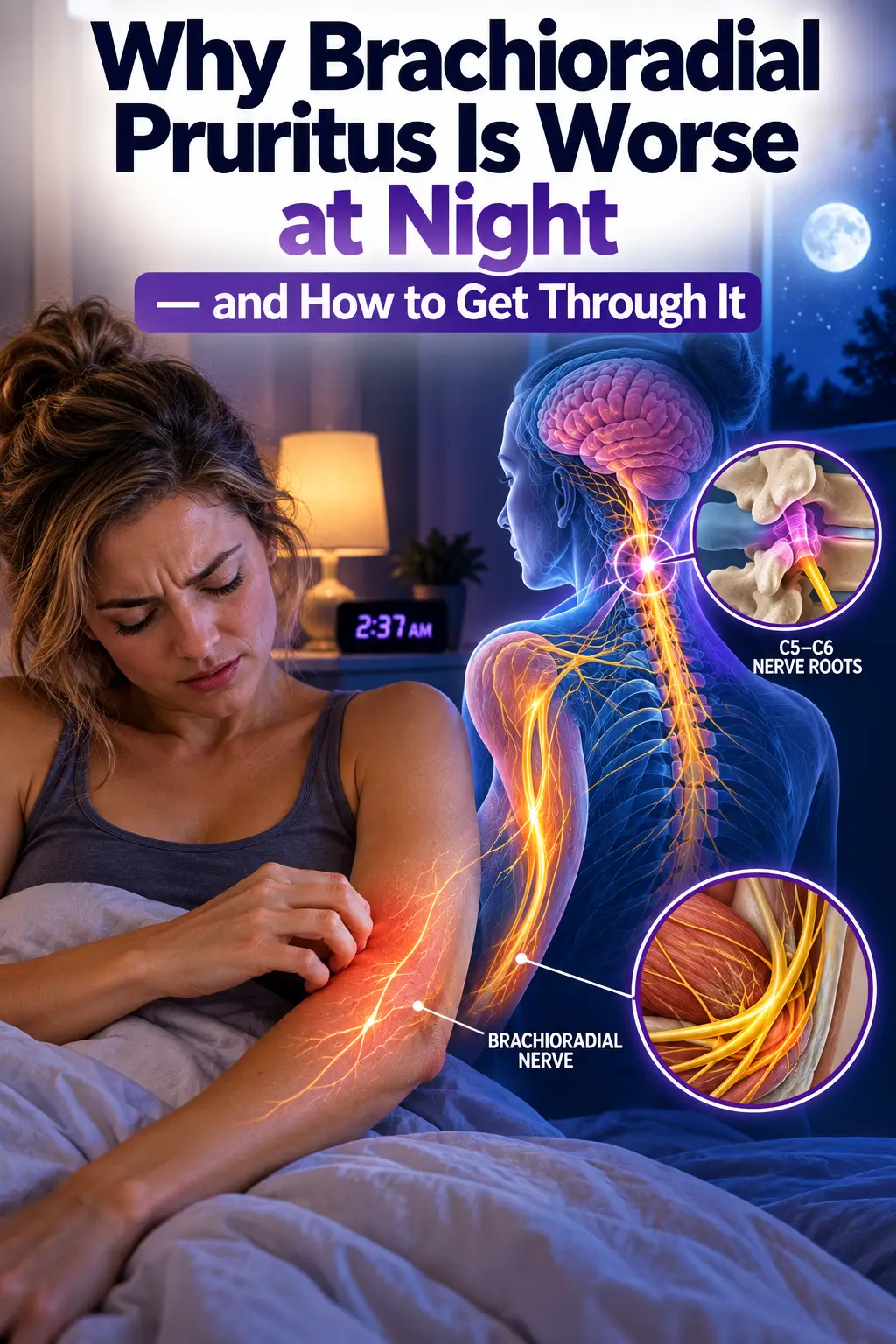
Use cold strategically. An ice pack or a cold damp towel on the affected area is the single most reliable at-home measure for both conditions, and it works because cold reduces the firing of the small nerve fibers carrying the itch. Wrap the ice — never apply it directly to skin — and limit sessions to ten or fifteen minutes. Keep a gel pack in the freezer and one in a cooler for the car. Cool showers before bed can help with the nighttime spike that both conditions are known for.
Take sun protection seriously if you have BRP. This is not optional advice in Florida. Ultraviolet exposure is a well-documented aggravator of brachioradial pruritus, and photoprotection is described as the primary preventive measure. Wear long-sleeved UV-protective clothing on the forearms — lightweight sun sleeves are widely available and comfortable in heat. Apply broad-spectrum sunscreen to the dorsolateral forearms specifically, since they are the exact target zone and the area people most often skip. Minimize direct exposure between roughly 10 a.m. and 2 p.m. Many patients find that consistent photoprotection alone produces a noticeable seasonal difference. Sun protection matters less for NP, where the back is usually covered anyway, but general skin protection is never wasted here.
Interrupt the scratch cycle. Scratching does not help neuropathic itch and actively worsens it by damaging skin, sensitizing the area, and reinforcing the loop. Keep fingernails cut very short. Wear soft long sleeves as a physical barrier. When the urge arrives, substitute cold or firm pressure with a flat palm rather than nails. If you scratch in your sleep, cotton gloves at night are a low-tech option that helps more people than you would expect. For NP, be honest about the backscratcher and the doorframe — those are what build the hyperpigmented patch over time.
Pay attention to neck and upper back mechanics. Both conditions live downstream of a cervical and cervicothoracic spine that is under mechanical strain, and daily habits load that region constantly. Raise your monitor so the top of the screen is at eye level. Stop reading your phone with your chin on your chest — bring the device up instead. Take a movement break every thirty to forty-five minutes and take your neck gently through its full range. Evaluate your pillow: your head should be supported in neutral, neither propped forward nor dropped back, and side sleepers generally need more loft than back sleepers. Avoid carrying a heavy bag on one shoulder day after day, particularly if your NP is on that side. Gentle range-of-motion work is fine; aggressive self-manipulation of your own neck is not something we recommend, and if you are reflexively cracking your neck all day, that is usually a sign of an underlying instability rather than a solution to it.
Support the whole picture. Keep the skin moisturized with a bland, fragrance-free emollient. Manage heat and sweat, which can aggravate both conditions in a Florida summer. Address sleep, since itch worsens with fatigue and fatigue worsens with itch. And take stress seriously — it does not cause neuropathic itch, but it reliably amplifies it.
If you want to go deeper on the arm-itch side specifically, our article on why your elbow and forearm won’t stop itchingwalks through the presentation and the cervical connection in more everyday language.
Serving Sarasota and Surrounding Communities
Lavender Family Chiropractic is located at 5899 Whitfield Avenue, Suite 107, in Sarasota, at the corner of University and Whitfield — a convenient position for patients traveling from either Sarasota or Manatee County.
We welcome patients from Sarasota, Bradenton, Lakewood Ranch, Venice, Palmer Ranch, Osprey, Siesta Key, Longboat Key, Lido Key, University Park, Parrish, Ellenton, Myakka City, Punta Gorda, and St. Petersburg. Because precise upper cervical care is a specialized approach, we regularly see patients who travel a considerable distance for it, and we do our best to build care plans that account for drive time.
Our Gulf Coast location is relevant to this topic in a way most practices’ locations are not. Brachioradial pruritus was first described in Florida and has been repeatedly documented in sunny, subtropical regions. If you live here, spend time outdoors here, and have an unexplained burning itch on your forearms, you are in exactly the population where this condition is most commonly found — and most commonly missed.
Top 15 Questions About Brachioradial Pruritus and Notalgia Paresthetica
1. How do I know whether I have brachioradial pruritus or notalgia paresthetica? Start with location. BRP affects the outer forearms and is bilateral about three quarters of the time. NP affects the upper back near the shoulder blade and is usually one-sided. If sunlight clearly worsens it and it is on your arms, that points to BRP. If there is a well-defined brown patch beside your shoulder blade, that points to NP. A clinician should confirm either.
2. Can I have both at the same time? Yes. Concurrent BRP and NP have been reported in patients with cervical degenerative disc disease. If you have both, it is more likely one nervous system under strain expressing itself in two territories than two separate coincidental conditions.
3. Should I see a dermatologist? Yes. We recommend it, and we recommend it early. A dermatologist can confirm the diagnosis, rule out primary skin disease, and identify conditions that mimic neuropathic itch — including zoster sine herpete, which requires different management entirely. Many of the strongest referrals into structural care come from dermatologists who have identified NP or BRP and recognized the spinal connection. Getting the diagnosis right first is not a delay; it is the foundation.
4. Can you cure my brachioradial pruritus or notalgia paresthetica? No. We do not claim to cure these conditions, and you should be cautious about any provider who does. These are multifactorial neuropathic conditions, and in BRP especially, ultraviolet damage to peripheral nerve fibers is a real contributor that spinal care does not address. What we offer is precise correction of upper cervical alignment to support normal nervous system function, which may help some patients experience meaningful natural relief. Some improve substantially, some partially, some not at all. We track objective measures and tell you honestly what we are seeing.
5. Why don’t antihistamines work? Because these are not histamine-driven allergic conditions. The itch is generated by dysfunction in sensory nerve tissue, not by mast cell release in the skin, so a medication that blocks histamine receptors has nothing relevant to block. Systemic antihistamines have specifically not demonstrated benefit in BRP.
6. Why does ice work so well? Cold slows conduction in the small unmyelinated C fibers that carry itch signals. In BRP the response to ice is so consistent and immediate that the ice-pack sign is regarded as characteristic of the condition. Relief lasts only while the area stays cold, which is itself diagnostic information — it tells you the problem is a nerve firing pattern rather than an inflammatory process.
7. Do I need an MRI? That is your physician’s call. MRI is the preferred modality when cervical spine assessment is warranted, and it is often reserved for patients who do not respond to standard therapy or who have progressive symptoms. Our 3D CBCT imaging serves a different purpose — it evaluates the bony architecture and alignment of the upper cervical spine to guide a precise correction. The two are complementary, not interchangeable.
8. Do I need to have neck pain for my neck to be involved? No, and this catches many people off guard. Retrospective studies of BRP patients note that few report neck pain despite the high prevalence of cervical abnormalities on imaging. Sensory nerve fibers can be irritated enough to alter itch signaling without producing the pain, weakness, or reflex changes of classic radiculopathy.
9. Is your adjustment the kind where you twist my neck? No. The Knee Chest Upper Cervical technique is a precise, low-force correction delivered with you in a specific supported position. There is no twisting, no rotation of the head, and no forceful thrust. The contact is specific and the vector is calculated from your own 3D imaging. Patients who have avoided chiropractic because of the imagery associated with high-velocity manipulation are frequently surprised by how gentle it is.
10. How long before I know whether this is helping? It varies with how long you have had symptoms and how well your correction holds. We use objective measures — repeat thermographic scans and assessment of whether the correction is holding between visits — alongside your own reporting, so we are not relying on impressions alone. We set expectations at the report of findings and reassess at defined intervals. If we are not seeing change in a reasonable window, we tell you.
11. Do you take my insurance? We are a cash-pay, out-of-network practice. We are not contracted with insurance carriers, which allows us to build care around your clinical needs and imaging findings rather than around what a carrier will authorize. We provide superbills you can submit to your insurance company for possible out-of-network reimbursement, and many patients use HSA or FSA funds. We discuss costs plainly and in full before care begins. Call (941) 243-3729 with any financial questions — we would rather answer them upfront than have them be a surprise.
12. Should I stop my gabapentin or other prescribed medication? No. Keep taking everything as prescribed. Medication changes are between you and your prescribing physician, and abrupt discontinuation of gabapentinoids in particular can carry a risk of rebound pruritus. Our care is designed to work alongside your medical management, not to replace it. If your symptoms change meaningfully, tell your prescriber and let them make the call.
13. Could my itch be caused by something systemic? It could, and this is why the medical workup matters. Chronic itch can be driven by liver disease, kidney disease, thyroid dysfunction, blood disorders, medication effects, and other systemic causes. A diffuse, widespread pattern of itch is inconsistent with NP and should prompt evaluation for metabolic, gastrointestinal, oncologic, or infectious causes. Basic laboratory testing is a reasonable part of any chronic itch evaluation. Get it done.
14. Why would correcting my upper neck help an itch in my forearm or my mid-back? Two reasons. First, the descending inhibitory pathways that dampen itch signaling at the spinal cord originate in the brainstem and travel through the upper cervical cord to reach every level below — so the upper cervical region is the corridor through which the brake on itch signaling passes. Second, upper cervical misalignment drives compensatory loading down the entire cervical and thoracic chain, and the degenerative change and foraminal narrowing seen at C5-C6 and C6-C7 in these patients may be the downstream result of that loading rather than the origin of the problem.
15. What actually happens at my first visit? A thorough consultation and history, a physical and neurological examination, 3D CBCT imaging of your upper cervical spine, and a Tytron thermographic scan. We then analyze your imaging and bring you back for a report of findings, where we walk you through exactly what we found, whether we believe we can help, and what a customized care plan would involve. If we do not think upper cervical care is appropriate for your situation, we will tell you that directly and point you toward what might be. You can book online here or reach us through our contact page. If you would prefer to schedule with Dr. Jacob Temple, let our front desk know and they will arrange it.
Take the Next Step
An itch that has lasted for years, that no cream touches, that lives in skin that looks perfectly normal, is not a skin problem you have failed to solve. It is a nervous system problem that has been looked at in the wrong place.
Whether your itch is on your forearms or beside your shoulder blade, the spine is part of the conversation — and the upper cervical spine, where the descending brake on itch signaling passes through and where the mechanical loading of everything below begins, deserves to be evaluated properly. Get your medical and dermatologic workup done. Keep taking what your physician prescribed. And then let us take a precise, three-dimensional look at your atlas and axis and tell you honestly whether we think we can help.
Call (941) 243-3729 to schedule your consultation, or book your new patient appointment online.
Lavender Family Chiropractic 5899 Whitfield Avenue, Suite 107 Sarasota, FL 34243 Corner of University and Whitfield
Serving Sarasota, Bradenton, Lakewood Ranch, Venice, Palmer Ranch, Osprey, Siesta Key, Longboat Key, Lido Key, University Park, Parrish, Ellenton, Myakka City, Punta Gorda, and St. Petersburg.
Related Articles
Start here: Brachioradial Pruritus: The Complete Guide to the Itch That Creams Won’t Touch — our comprehensive pillar resource on brachioradial pruritus, covering symptoms, the ice-pack sign, the cervical spine connection, the full differential, medical treatment options, and how precise upper cervical care fits into the picture. If you are researching BRP, this is the article to read next.
- Brachioradial Pruritus – Overview
- The Ice-Pack Sign Explained
- Why Antihistamines & Steroid Creams Don’t Work
This article is for educational purposes and is not medical advice. It does not diagnose any condition or establish a doctor-patient relationship. Chronic itch warrants evaluation by a physician and dermatologist to confirm the diagnosis and rule out systemic and dermatologic causes. We do not claim to cure brachioradial pruritus, notalgia paresthetica, or any other condition. Continue all prescribed medications unless directed otherwise by your prescribing physician. Individual results vary.

Get our upper cervical articles first.