Vestibular Migraine: An Upper Cervical Perspective on Migraine-Driven Vertigo and Dizziness
By Dr. Rusty Lavender — Lavender Family Chiropractic, Sarasota, FL
If the room seems to spin, tilt, or sway for no obvious reason, and if those episodes keep returning without warning, you are living with one of the most disorienting experiences a person can have. For many people in Sarasota and across Southwest Florida, that recurring dizziness turns out not to be a problem in the inner ear alone, but a form of migraine. Vestibular migraine is now recognized as one of the most common causes of recurrent vertigo in adults, yet it remains under-diagnosed and frequently misunderstood, in part because so many people who have it never develop the classic pounding headache they associate with the word “migraine.”
At Lavender Family Chiropractic, we care for people whose lives have been reshaped by episodes of vertigo, imbalance, visual sensitivity, and the anxiety that comes from never quite knowing when the next attack will hit. Our focus is the upper cervical spine, the top two vertebrae of the neck, and the way this region communicates with the brainstem structures that govern both migraine biology and balance. We use a precise, low-force approach called the Knee Chest Upper Cervical technique, guided by detailed imaging, to address dysfunction in this area. We do not treat vestibular migraine as a stand-alone practice, and we do not present chiropractic as a replacement for medical diagnosis. Instead, we work alongside the neurologists, ENT physicians, and vestibular therapists who manage this condition.
This article is meant to be a thorough, honest guide. We will explain what vestibular migraine is, how it is diagnosed, what researchers currently understand about its mechanisms, and why the upper cervical spine sits at the center of the conversation. We will be candid about what upper cervical care can and cannot do, we will share the red flags that mean you should seek emergency care, and we will answer the questions we hear most often from patients across Sarasota, Bradenton, Lakewood Ranch, and the surrounding communities.
What Is Vestibular Migraine?
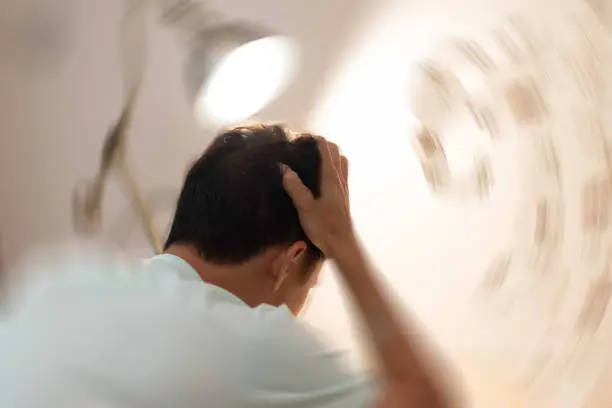
Vestibular migraine is a condition in which the biology of migraine produces episodes of vertigo and dizziness. Rather than the throbbing head pain most people picture, the defining feature of vestibular migraine is a disturbance of the vestibular system, the network that tells your brain where your head is in space and keeps your gaze and posture steady. When that system misfires during a migraine event, the result can be a spinning sensation (vertigo), a rocking or swaying feeling, unsteadiness on the feet, or a sense of being pulled or tilted.
One of the most surprising facts about this condition, and one of the main reasons it goes unrecognized for so long, is that many patients do not have a headache at all during an attack. Some have never had prominent headaches in their lives, though most have a personal history or a family history of migraine somewhere in the picture. The dizziness may arrive on its own, or it may travel with other migraine features such as sensitivity to light, sensitivity to sound, visual disturbances, nausea, and a strong desire to lie still in a dark, quiet room. Because the vertigo can dominate the experience while head pain stays in the background or absent, patients often spend months or years being evaluated for inner-ear disorders before migraine is considered.
Vestibular migraine differs from other common causes of vertigo in important ways. Benign paroxysmal positional vertigo, or BPPV, produces brief, intense spinning triggered by specific head movements, such as rolling over in bed or tipping the head back, and each spell typically lasts under a minute. Meniere’s disease tends to combine vertigo with fluctuating hearing loss, ringing in the ear, and a feeling of fullness on one side, with attacks that can run for hours. Vestibular neuritis usually causes a single, prolonged bout of severe vertigo, often after a viral illness, that gradually improves over days to weeks. Vestibular migraine, by contrast, is recurrent, its attacks range widely in length, and it is strongly linked to migraine features and migraine triggers. Distinguishing among these is a job for a qualified clinician, because the treatment paths differ.
The diagnosis of vestibular migraine is not a guess. It is defined by consensus criteria established by the Barany Society together with the International Headache Society, and reflected in the International Classification of Headache Disorders. In broad terms, those criteria require recurrent vestibular symptoms of moderate or severe intensity, lasting anywhere from five minutes to seventy-two hours; a current or past history of migraine; migraine-like features occurring during at least half of the vestibular episodes, such as headache with migraine characteristics, light and sound sensitivity, or visual aura; and, critically, the exclusion of other conditions that could better explain the symptoms. That last point matters enormously. A vestibular migraine diagnosis is partly a diagnosis of exclusion, which is why ruling out BPPV, Meniere’s disease, vestibular neuritis, and more serious central causes is an essential step rather than an optional one.
The symptom picture can include spontaneous vertigo, vertigo triggered by head motion, positional vertigo, visually induced dizziness (for example, in busy supermarket aisles or scrolling screens), general imbalance, brain fog, and heightened sensitivity to motion. Between attacks, some people feel completely normal; others carry a persistent, low-grade unsteadiness or a heightened sensitivity to visual movement that never fully settles. This variability is part of what makes the condition so frustrating to live with and so important to evaluate carefully.
The Mechanisms: Trigeminovascular, Vestibular, and Sensory Processing
To understand why the neck may matter, it helps to understand what is happening inside the head during a vestibular migraine, while being honest that the full picture is still coming into focus. Researchers agree on several key players, but they also agree that the pathophysiology of vestibular migraine is incompletely understood.
The first key system is the trigeminovascular system. Migraine is fundamentally a disorder of the brain’s sensory processing, and the trigeminal nerve, the large nerve that carries sensation from the face and much of the head, is central to it. During a migraine, the trigeminal system becomes activated and sensitized. Nerve endings release signaling molecules, most notably calcitonin gene-related peptide, or CGRP, which promotes inflammation around blood vessels and amplifies pain and sensory signaling. CGRP has become such an important part of the migraine story that an entire class of modern migraine medications is built around blocking it. This same trigeminovascular activation and CGRP signaling are thought to play a role in vestibular migraine, helping explain why a migraine process can generate vestibular symptoms.
The second system is, of course, the vestibular system itself, whose central hubs, the vestibular nuclei, sit in the brainstem. Here is where the story becomes interesting. The brainstem is a densely interconnected place, and the vestibular nuclei sit in close proximity to the structures that process migraine signals. When the migraine machinery is running hot, that heightened activity can spill into or modulate the vestibular pathways, producing vertigo, motion sensitivity, and imbalance. In effect, the brain’s balance circuitry becomes caught up in the migraine event.
The third piece is best described as a disorder of sensory processing. A useful way to think about migraine, and vestibular migraine in particular, is as a state in which the brain has a lowered threshold for certain stimuli and processes ordinary sensory input abnormally. Light feels too bright, sound feels too loud, and motion, both real motion and the visual impression of motion, feels overwhelming or destabilizing. In vestibular migraine, this abnormal sensory processing extends to the signals that maintain balance, so that normal head movement or a busy visual environment can provoke dizziness. Researchers describe multiple candidate mechanisms, including cortical spreading depression, altered brainstem processing, ion channel differences, and central sensitization, and different attacks may involve different combinations.
It is worth repeating the honest caveat: while these mechanisms are supported by growing evidence, no single unifying model fully explains vestibular migraine, and experts continue to debate the details. What is reasonably clear is that vestibular migraine is a brain-based, sensory-processing condition in which the trigeminal and vestibular systems interact within the brainstem. That understanding is exactly why the upper cervical spine deserves a place in the conversation.
Why the Upper Cervical Spine Is Central
Here is the connection that guides our work at Lavender Family Chiropractic, and it rests on well-established neuroanatomy rather than speculation.
The trigeminal nerve does not process its signals in isolation. Sensory input from the trigeminal system converges, in the brainstem, with sensory input from the upper cervical spine, specifically the nerves of the first three cervical segments, C1, C2, and C3. These streams of information meet and are integrated in a shared region of the brainstem often described as the trigeminocervical complex, or trigeminocervical nucleus. In practical terms, the brain does not maintain a perfectly clean boundary between “signals from the head” and “signals from the upper neck.” They pour into the same processing area and influence one another. This is the well-documented anatomical basis for why neck problems can generate head symptoms, and why head conditions and neck conditions so often travel together.
Now layer in the vestibular piece. The vestibular nuclei, the brainstem hubs for balance, sit in the same neighborhood. So we have three streams converging in a small region of the brainstem: trigeminal input (the migraine engine), upper cervical input (from the top of the neck), and vestibular input (balance). When one of these streams is sending distorted or excessive signals, it can raise the overall level of excitability in that shared territory. This is where the concept of sensitization becomes practical. If the upper cervical spine is dysfunctional, it can feed a steady stream of aberrant sensory input into that convergence zone, contributing to a lower threshold for the whole system, the very kind of lowered threshold that makes a migraine event, including a vestibular migraine attack, easier to trigger.
There is a second, complementary reason the upper neck matters, and it concerns balance directly. The muscles and joints of the upper cervical spine are extraordinarily rich in proprioceptors, tiny sensors that report the position and movement of your head relative to your body. Your brain fuses this neck-based proprioceptive information with signals from the inner ears and the eyes to build a single, coherent sense of where you are and how you are moving. When the upper cervical region is not moving or reporting normally, the proprioceptive signal it sends can be distorted, and that distorted input has to be reconciled with the eyes and the inner ears. That mismatch can add to feelings of dizziness, unsteadiness, and disorientation, particularly in a nervous system that is already sensitized by migraine biology. In a person prone to vestibular migraine, poor-quality neck input is one more destabilizing voice in an already crowded room.
Put those two ideas together, and the rationale for upper cervical care becomes clear. The goal is not to “treat the migraine” directly and it is certainly not to claim a cure. The goal is to reduce a contributing source of sensory noise. By addressing dysfunction at the top of the neck, precise upper cervical care aims to lower the baseline of aberrant cervical input feeding the trigeminocervical convergence, and to improve the quality of proprioceptive information the brain uses for balance. In a condition defined by a lowered threshold and abnormal sensory processing, reducing one input source that the nervous system has to fight against is a reasonable, biologically grounded objective. We pursue that objective with a careful, low-force method, and always as one part of a broader, medically coordinated plan.
How Precise Upper Cervical Care Works at Lavender Family Chiropractic
Our approach begins with careful evaluation, because vestibular migraine is a medical diagnosis and the safest, most responsible care starts by making sure the right diagnosis is in place. If you have not already been evaluated by a neurologist or an ENT physician, we will encourage that step, and we routinely coordinate with those specialists. Ruling out BPPV, Meniere’s disease, vestibular neuritis, and central causes of vertigo is not a formality; it is the foundation of appropriate care. We see our role as complementary to medical management, never as a substitute for it.
Within our office, we practice the Knee Chest Upper Cervical technique, a precise, low-force method focused specifically on the top of the cervical spine. This is not high-velocity, twisting manipulation. The contact is gentle and specific, designed to address dysfunction in the upper cervical region with as little force as possible. Many patients who were nervous about having their neck “cracked” are relieved to learn how measured and controlled this technique is.
Precision depends on knowing exactly what we are working with, and that is where our imaging and measurement tools come in. We use 3D cone-beam computed tomography to visualize the unique anatomy of your upper cervical spine in three dimensions, so that any correction is tailored to your individual structure rather than a generic average. We also use paraspinal infrared thermography with the Tytron system, a non-contact way to assess patterns of nervous-system activity along the spine and to track how you are responding over time. Together, these tools let us be specific about what we do and objective about how we monitor progress.
From there, we build a customized care plan around your history, your findings, and your goals. Every person who walks through our door with dizziness is different, and the plan reflects that. To learn more about the method and philosophy behind this work, you can read about our approach to upper cervical chiropractic care, and you can meet our team before you ever schedule a visit.
A word on expectations and honesty. Upper cervical care does not cure vestibular migraine, and it is not a replacement for the care of your neurologist, ENT, or vestibular therapist. Our aim is to reduce a contributing source of sensory input and cervical dysfunction so that your nervous system has fewer stressors to contend with. Some patients notice meaningful changes; others do not, and vestibular migraine responds best to a combination of strategies, medical and otherwise. We will always be straightforward with you about what we can reasonably work toward.
Ready to talk about your situation? Call Lavender Family Chiropractic at (941) 243-3729, or book a new-patient visit online. We are located at 5899 Whitfield Avenue, Suite 107, Sarasota, FL 34243, at the corner of University and Whitfield.
What the Research Says
We think it is important to point you toward the primary literature so you can read it yourself and discuss it with your physicians. Here are five sources that inform the way we understand this condition. We use only these references, and we describe each one accurately.
First, the diagnostic framework. The consensus paper on the diagnostic criteria for vestibular migraine lays out the defined criteria used to identify the condition, including the requirement for recurrent vestibular symptoms of moderate or severe intensity lasting between five minutes and seventy-two hours, a history of migraine, migraine features during attacks, and the exclusion of other causes. This is the backbone of a responsible diagnosis and the reason medical evaluation is essential.
Second, on mechanisms, the review titled New Insights into the Pathophysiology of Vestibular Migraine explores how migraine biology generates vestibular symptoms, discussing the interplay between trigeminal activation, brainstem processing, and the vestibular system, while acknowledging how much remains uncertain. It is a useful map of the leading theories.
Third, for a practical look at management, the comprehensive practical review of vestibular migraine treatment surveys the range of approaches used to manage the condition, including lifestyle and trigger strategies, vestibular considerations, and medical options, framing treatment as multi-pronged rather than reliant on any single intervention.
Fourth, the narrative review on vestibular migraine pathophysiology and treatment brings together current understanding of the mechanisms and the treatment landscape, reinforcing both the trigeminovascular and central sensory-processing themes and the honest reality that the science is still developing.
Fifth, on the anatomy at the heart of our clinical rationale, the paper on the trigeminocervical nucleus and its integration of orofacial, cranial, and cervical input describes how sensory information from the head, face, and upper cervical spine converges within a shared brainstem region. This is the neuroanatomical foundation for why upper cervical input can influence head-related symptoms, and why we focus our attention where we do.
Reading these alongside your neurologist or ENT is a good way to make informed decisions about your own care.
Lifestyle and Self-Care
Because vestibular migraine is a threshold condition, one in which the nervous system is more easily provoked, much of the day-to-day management centers on reducing the load of triggers and supporting a steady internal environment. None of the following is a substitute for medical care, but many patients find these habits genuinely helpful, and they cost little to try.
Identify and manage your triggers. Common migraine triggers include irregular sleep, skipped meals, dehydration, alcohol, caffeine swings, certain foods, bright or flickering light, strong smells, and stress. A simple diary that tracks attacks alongside sleep, meals, hydration, and stressors can reveal patterns over a few weeks. The point is not to live in fear of everything, but to spot your personal provokers and smooth out the biggest ones.
Protect your sleep. Few things destabilize a migraine-prone nervous system faster than erratic sleep. Aim for consistent bed and wake times, even on weekends, and treat sleep as a non-negotiable part of your management, not an afterthought.
Stay hydrated and eat on a regular schedule. Dehydration and blood-sugar dips are frequent, avoidable triggers. In the Florida heat, hydration deserves particular attention. Regular, balanced meals keep the internal environment steadier.
Build vestibular-friendly habits. Busy visual environments, scrolling screens, and rapid head movements can provoke symptoms. Moving deliberately, taking breaks from screens, and easing into position changes can reduce provocation. If your physician has referred you for vestibular rehabilitation, those guided exercises can help the brain adapt over time; follow your therapist’s specific plan.
Mind your posture and neck. Long hours hunched over phones and laptops load the neck and can add to the sensory noise we discussed earlier. Setting up your workspace so your screen is at eye level, taking movement breaks, and being mindful of prolonged forward-head positions all support the upper cervical region. If you are curious about the neck-dizziness relationship, our article on whether neck pain can cause dizziness explores it in more depth.
Manage stress deliberately. Stress is one of the most commonly reported migraine triggers, and stress-reduction practices, whether breathing exercises, gentle movement, or simply protecting downtime, can lower the overall load your nervous system carries.
Small, consistent adjustments tend to matter more than dramatic ones. Pick one or two changes, give them a few weeks, and build from there.
Serving Sarasota and Surrounding Communities
Lavender Family Chiropractic is proud to serve individuals and families throughout Southwest Florida who are living with vertigo, dizziness, and migraine-related conditions. From our office at the corner of University and Whitfield, we welcome patients from Sarasota, Bradenton, Lakewood Ranch, Venice, Palmer Ranch, Osprey, Siesta Key, Longboat Key, Lido Key, University Park, Parrish, Ellenton, Myakka City, Punta Gorda, and St. Petersburg. Whether you are driving in from the beach communities along the coast or from the growing neighborhoods inland, we aim to make focused upper cervical care accessible and to coordinate thoughtfully with the medical providers you already see. If dizziness has made driving stressful, we are happy to help you plan a visit that feels manageable.
Top 15 Questions About Vestibular Migraine and Upper Cervical Care
1. Can upper cervical care cure my vestibular migraine? No. Upper cervical care does not cure vestibular migraine and is not a substitute for medical care. Our goal is to address dysfunction at the top of the neck and reduce a contributing source of sensory input, as one part of a broader, medically coordinated plan.
2. Should I still see a neurologist or ENT? Yes. Vestibular migraine is a medical diagnosis defined by specific criteria, and it should be diagnosed and managed by qualified physicians. We work alongside neurology and ENT, and we encourage that evaluation if you have not already had it.
3. How is vestibular migraine different from Meniere’s disease? Meniere’s disease typically pairs vertigo with fluctuating hearing loss, ear ringing, and a sense of fullness in one ear, often with attacks lasting hours. Vestibular migraine centers on migraine biology and features, with hearing usually spared. Only a qualified clinician can distinguish them, which is why medical evaluation matters.
4. How is it different from BPPV? BPPV causes brief, intense spinning triggered by specific head positions, with each spell lasting less than a minute, and it often responds to specific repositioning maneuvers. Vestibular migraine attacks vary widely in length and are tied to migraine features and triggers. The two require different approaches, so an accurate diagnosis is essential.
5. Why do I get dizzy attacks but no headache? This is one of the most common and confusing aspects of the condition. Many people with vestibular migraine have little or no head pain during attacks. The vestibular symptoms can dominate while headache stays minimal or absent, which is exactly why the condition is so often missed at first.
6. What are the red flags that mean I should seek emergency care? Sudden, severe vertigo accompanied by neurological signs, such as trouble speaking, weakness or numbness on one side, double vision, a severe sudden headache unlike any before, difficulty walking, or loss of consciousness, is a medical emergency. Do not wait; call 911 or go to the emergency room, because these can signal a serious central cause.
7. Is your technique the same as having my neck cracked? No. The Knee Chest Upper Cervical technique is a precise, low-force method focused on the upper cervical spine. It is not high-velocity, twisting manipulation. The contact is gentle and specific.
8. Do you take insurance? We are a cash-pay, out-of-network practice. This lets us focus on individualized care rather than insurance restrictions. We provide superbills you can submit to your insurance company for possible out-of-network reimbursement.
9. What is a superbill and how does it work? A superbill is an itemized receipt of the care you received, with the codes your insurer needs. You pay at the time of service, then submit the superbill to your insurance company yourself to seek any out-of-network reimbursement your plan may allow. Reimbursement depends on your specific policy.
10. How much does care cost? Costs depend on your individual evaluation and customized care plan, which we discuss transparently before beginning. We build plans around your findings and goals rather than one-size-fits-all arrangements.
11. Why do you use 3D CBCT imaging and thermography? The 3D cone-beam CT lets us see your unique upper cervical anatomy in three dimensions so any care is tailored to your structure, and Tytron paraspinal thermography gives us an objective, non-contact way to assess nervous-system patterns and track your response over time. Precision and measurement guide everything we do.
12. How long before I might notice a change? This varies from person to person, and there are no guarantees. Vestibular migraine responds best to a combination of strategies. We use objective measures to monitor progress and will be honest with you about what we are seeing.
13. Can lifestyle changes really make a difference? Many patients find that managing triggers, protecting sleep, staying hydrated, easing visual and postural stress, and reducing stress lowers how easily attacks are provoked. These habits support, but do not replace, medical care.
14. Is upper cervical care safe for someone with vertigo? Our method is a precise, low-force approach, not forceful manipulation, and we begin only after appropriate evaluation and, when needed, coordination with your physicians. We take your history and imaging into account for every person we care for.
15. What if I have already tried medication without full relief? Many people with vestibular migraine use a layered approach, combining medical management, lifestyle strategies, vestibular rehabilitation, and complementary care. If your neck may be contributing to your symptoms, addressing upper cervical dysfunction can be one additional piece to explore alongside your existing medical plan.
Closing
Living with recurrent vertigo is exhausting, and the uncertainty of not knowing when the next attack will come can be just as draining as the dizziness itself. You do not have to sort it out alone. Vestibular migraine deserves an accurate medical diagnosis and a thoughtful, layered plan, and for some people, addressing the upper cervical spine is a meaningful part of that plan. At Lavender Family Chiropractic, our doctors offer precise, low-force upper cervical care, guided by 3D imaging and thermography, and coordinated with the neurologists and ENT physicians who help manage this condition.
If you are ready to talk about whether your neck may be contributing to your symptoms, we would be glad to meet you. Call us at (941) 243-3729, schedule a new-patient visit online, or stop by our office at 5899 Whitfield Avenue, Suite 107, Sarasota, FL 34243, at the corner of University and Whitfield. You can also reach us through our contact page. Take the next step toward steadier days, and call (941) 243-3729 today.
Related Articles